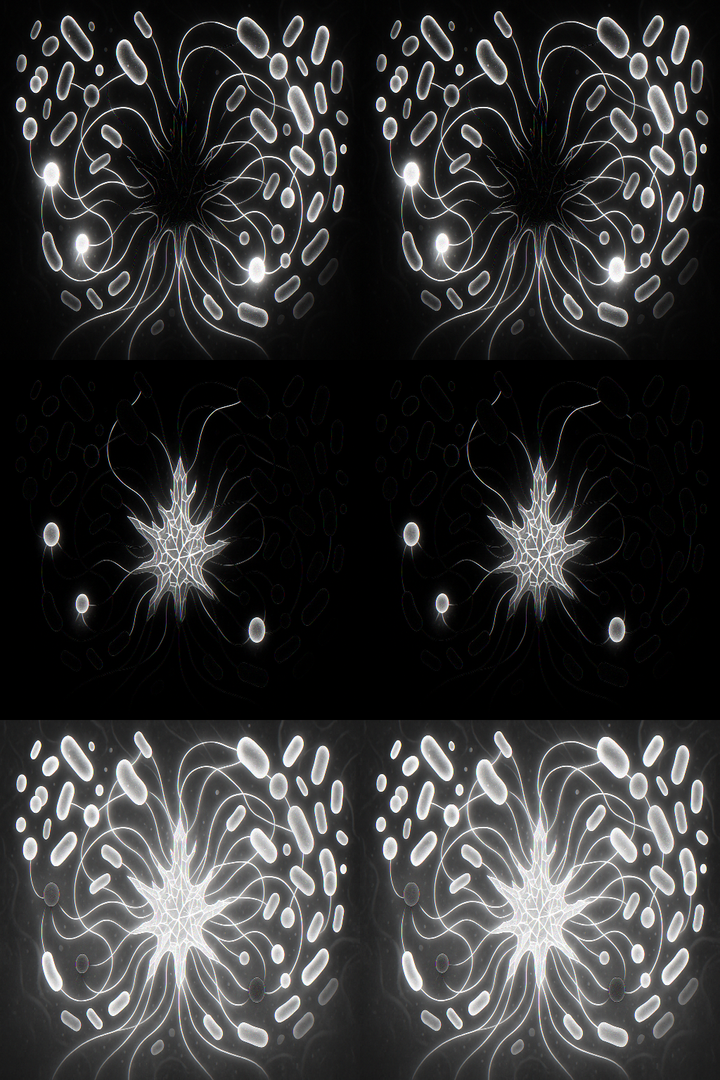
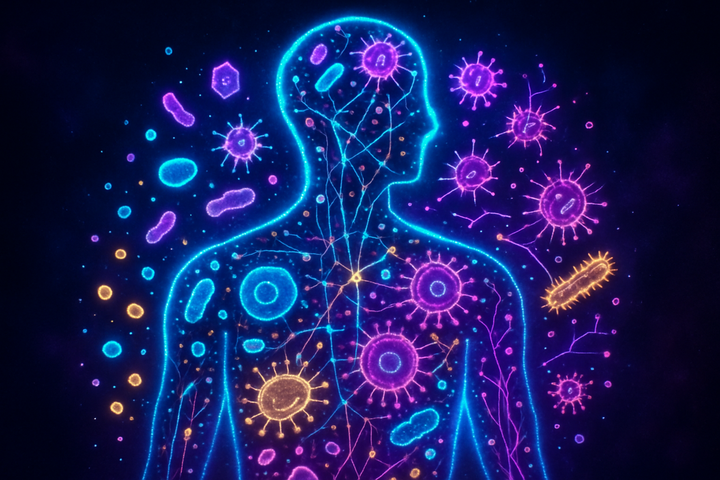
Your Microbiome Is Your Immune System's Teacher Your immune system didn't figure itself out alone. The trillions of microbes in your gut were its teachers — calibrating tolerance, training responses, and shaping defenses that last a lifetime.
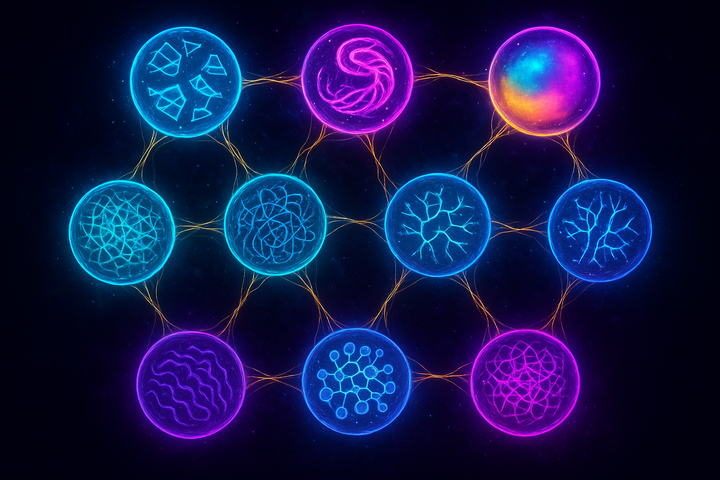
The Nine Hallmarks of Aging: A Framework for Decline Aging isn't one process — it's at least twelve distinct, interacting forms of cellular breakdown. López-Otín's hallmarks framework is how longevity science organizes the problem of biological decline.
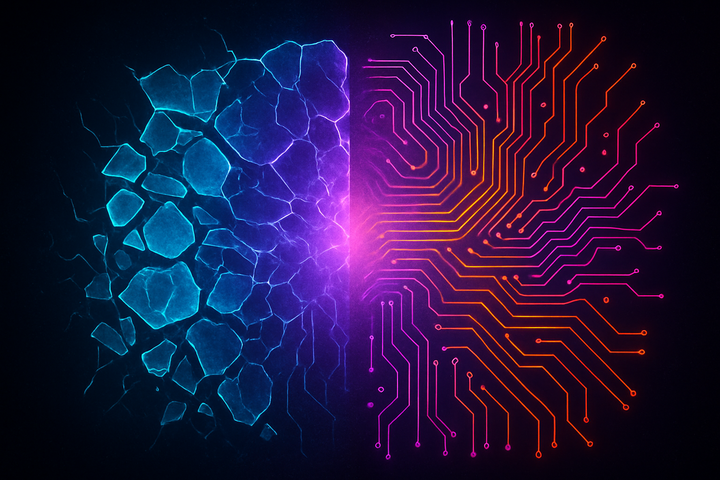
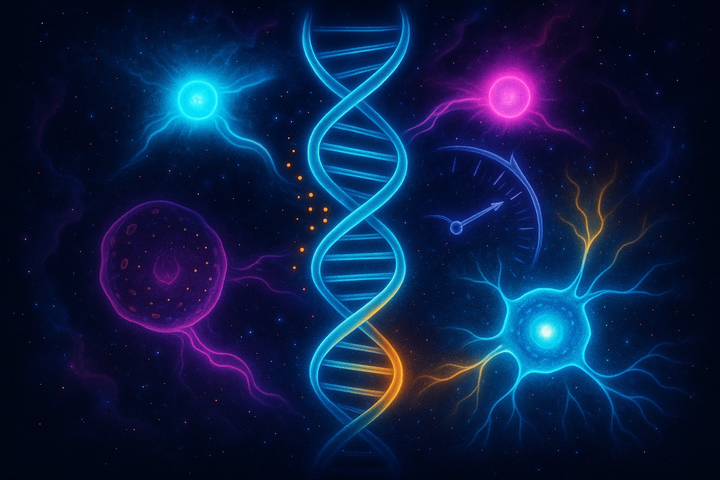
Is Aging a Disease? The Case for Programming The standard model says aging is entropy — wear and tear accumulating over time. A growing body of evidence says it's a program, with genetic switches and epigenetic drift as the mechanism. That distinction changes what intervention looks like.
Longevity Science Why do we age at all? Evolution has no incentive to keep you healthy past reproductive age. Modern longevity science is mapping the molecular mechanisms behind decline — and finding targets that might slow it down.
Living With Your Multitudes: A Coherence Synthesis The holobiont framing isn't metaphor — it has testable predictions. Your microbiome is a functional organ that coevolved with you, and the coherence between host and microbes is as important as the genetics of either.
Parabiosis: Young Blood and Old Bodies When old mice share circulation with young mice, the old mice get measurably younger — better muscle function, sharper cognition, reduced inflammation. The experiments are reproducible; identifying the active factors has been far messier, and clinical hype has run well ahead of the science.
Yamanaka Factors: Reversing Cellular Age Shinya Yamanaka won the Nobel Prize for reprogramming adult cells into stem cells. Now researchers want something more precise: dial the clock back on aging without wiping out what makes a cell a liver cell or a neuron.