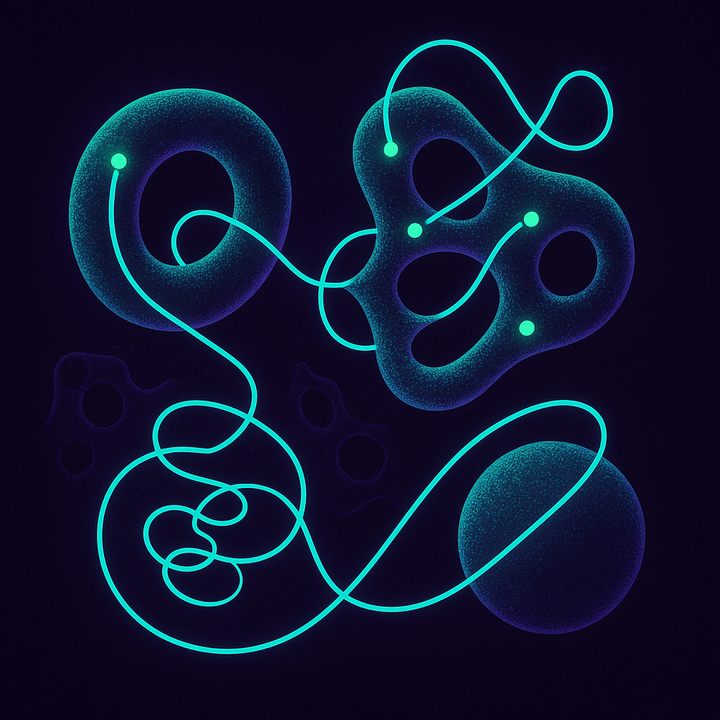
Holes, Loops, and Voids: The Topology of Getting Stuck Betti numbers expose the structural shape of belief systems and relationships. Topological features—disconnection, recurring loops, sealed voids—resist change more than any geometry.
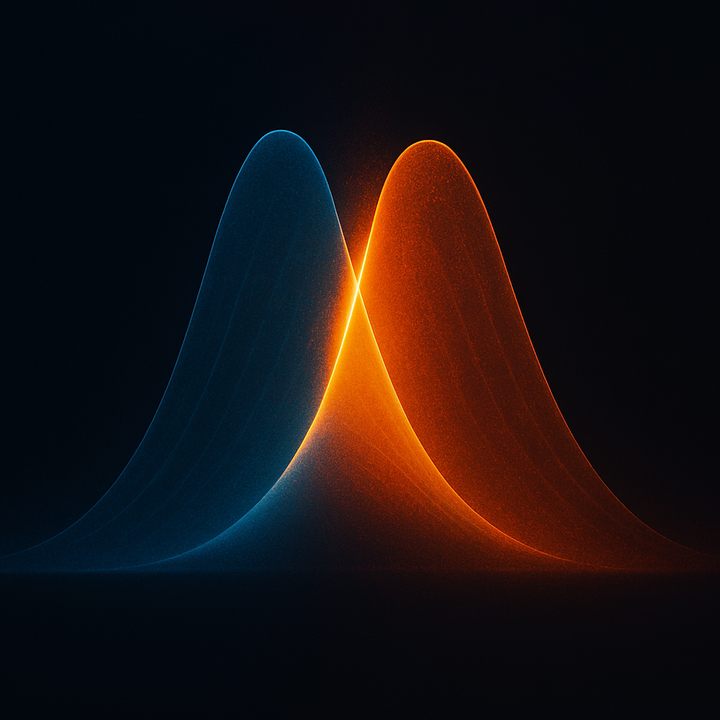
The Math Behind "Something Feels Off" Kullback-Leibler divergence explains subjective discord: the measurable gap between predictive models and reality across psychology, relationships, and culture.
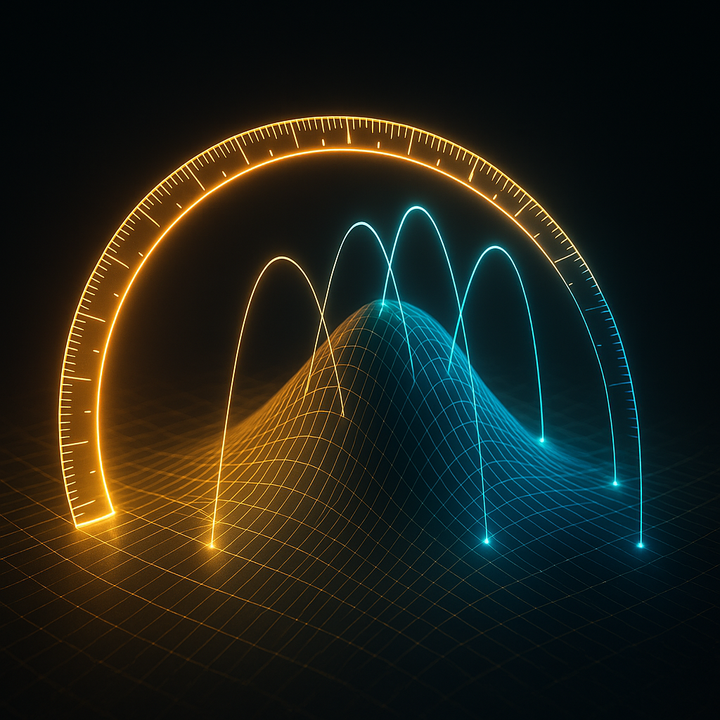
Why Some People Feel Everything More Sharply: Curvature Explained High-curvature belief systems amplify tiny changes into intense reactions, while low-curvature minds shift gradually. Understanding sensitivity through information geometry reveals why trauma reshapes our emotional landscapes.
The Shape of Surprise: What Information Geometry Actually Measures The Fisher information metric measures how distinguishable beliefs are in predictive space. Explains why some therapeutic changes are geometrically difficult to traverse.
Your Mind Is a Point on a Surface You Can't See Every belief is a point on an invisible manifold. Learn how information geometry reveals why some mental transitions flow naturally while others feel impossible.
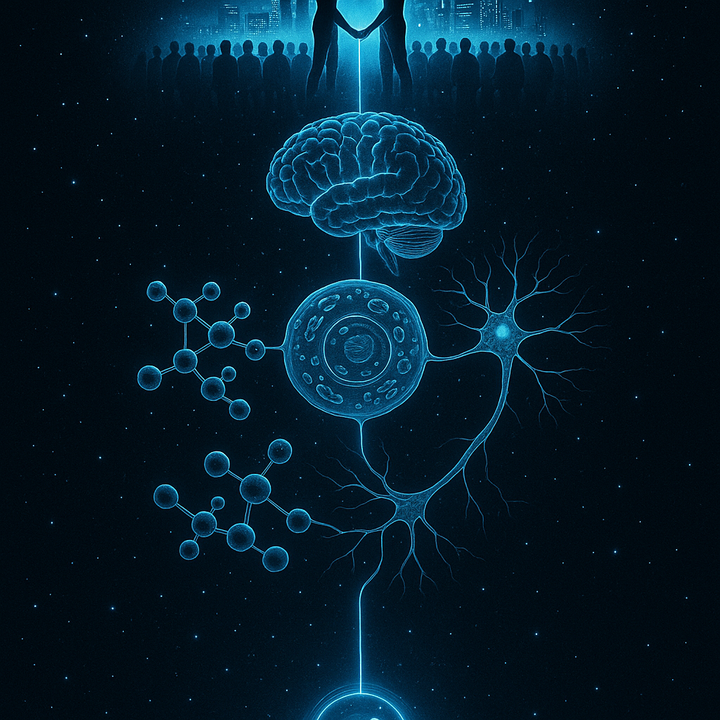
The Unified Theory of Staying Alive: From Atoms to Cultures A single principle—coherence under constraint—governs self-organizing systems across all scales. Trauma is coherence collapse; healing is restoration.
Meaning Is Not in Your Head; It's in the Pattern Meaning emerges from coherence between systems and environments, not as mental content. Discover how successful prediction creates the feeling of meaning from molecules to cultures.