Synthesis: Geometry as the Mathematics of Space Geometry began as a practical tool for measuring land. It ended up revealing that space itself has a shape—and that shape determines how the universe behaves.
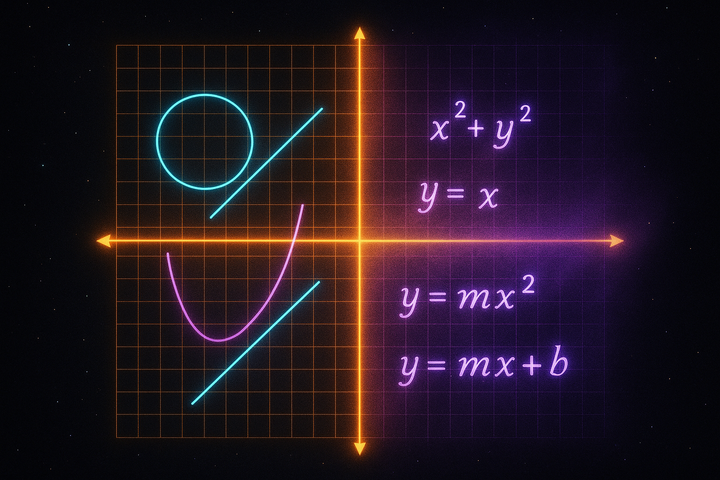
Coordinate Geometry: Where Algebra Meets Geometry A circle is a shape. A circle is also x² + y² = r². Coordinate geometry is the insight that you can flip between those two descriptions freely — and that bridge transformed mathematics.
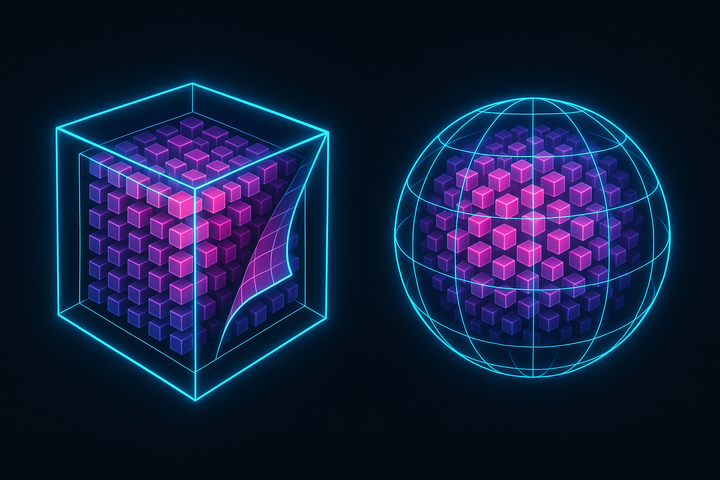
Volume and Surface Area: Three-Dimensional Measurement Volume scales as the cube of linear dimension; surface area scales as the square. This gap shapes biology, engineering, and physics in ways that feel counterintuitive until you see the math — then you see it everywhere.
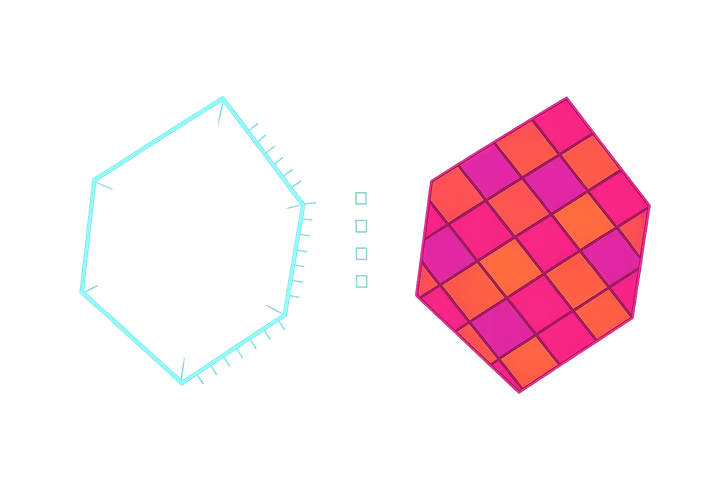
Area and Perimeter: Measuring Two-Dimensional Space Area and perimeter both measure 2D space, but differently — and they vary independently in surprising ways. A circle maximizes area for a given perimeter, and that fact has real consequences in biology and engineering.
Circles: The Shape of Constant Distance A circle is just the set of all points at a fixed distance from a center — a deceptively simple definition that generates π, radian measure, tangent lines, and the geometry underlying everything from wheels to wave functions.
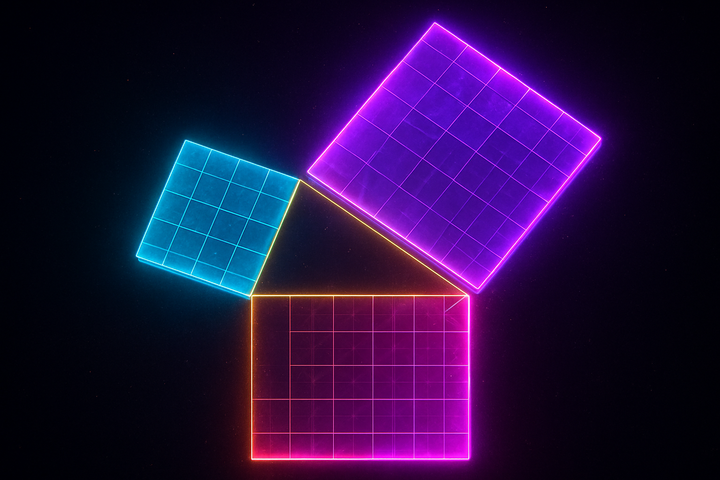
The Pythagorean Theorem: a² + b² = c² and Why It Matters The Pythagorean theorem has over 370 known proofs — more than any other theorem in mathematics. That abundance hints at something deep: a² + b² = c² isn't an isolated fact but a consequence of how flat space is put together.
Triangles: The Simplest Polygon and the Strongest Shape You can distort a square without breaking it — just push on a corner and it becomes a parallelogram. A triangle can't be deformed without changing side lengths. That rigidity makes it the structural workhorse of both geometry and engineering.