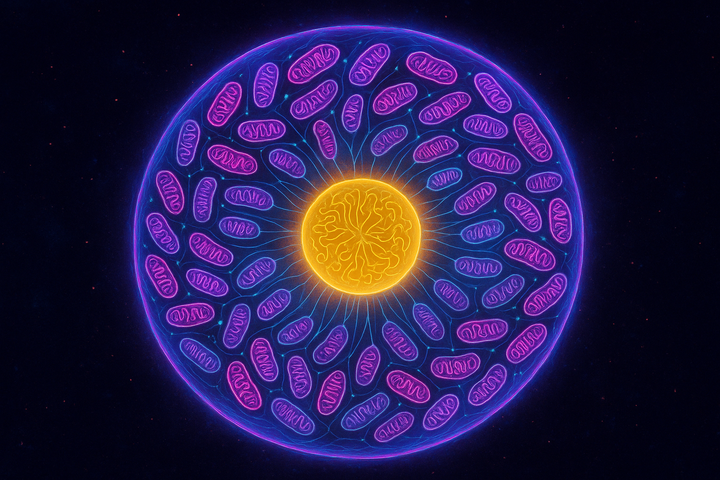
Every Cell Runs on an Ancient Bacterial Engine About 1.5 billion years ago, a cell swallowed a bacterium and didn't digest it. That accident became the mitochondrion — and it changed the trajectory of all complex life on Earth.
The Warburg Effect: Cancer's Metabolic Signature Normal cells burn glucose efficiently with oxygen. Cancer cells largely ferment it — even when oxygen is present. Otto Warburg noticed this in 1924 and won a Nobel Prize. A century later, we're finally understanding why cancer cells prefer this wasteful strategy, and how to use it against them.
Mitophagy: Clearing Out Damaged Mitochondria Your cells don't repair damaged mitochondria — they eat them. Mitophagy is a selective autophagy pathway that tags dysfunctional mitochondria for destruction, and its failure is implicated in Parkinson's, aging, and metabolic disease.
NAD+ and Aging: David Sinclair's Bet David Sinclair's bet is straightforward: aging is an information problem, NAD+ is part of the repair machinery, and replenishing it might reverse the epigenetic damage that accumulates with age. The mouse data is compelling. The human data is still being gathered. The debate is genuinely unsettled.
Engineering Life from Scratch What happens when you treat DNA like code and cells like hardware? Synthetic biology lets scientists — and now undergrads — build living systems from scratch, reprogramming organisms to do things evolution never imagined.
Synthetic Biology Synthetic biology treats genetic circuits like transistors — composable, programmable parts. Researchers have built bacterial sensors for landmines, yeast producing antimalarial drugs, and cells that compute logical operations. The design-build-test cycle is accelerating.
Synthesis: The Symbiont Within The mitochondria story connects endosymbiosis, maternal inheritance, oxidative stress, and the evolution of multicellular life. Here's how those threads weave into a single, stranger picture of what you are.