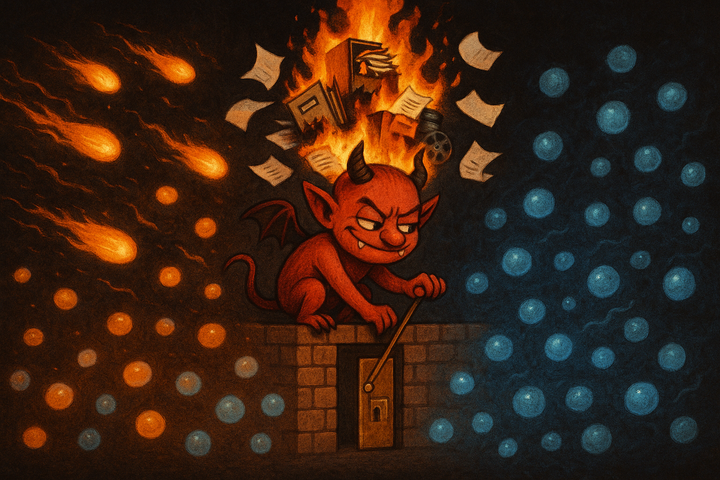
Maxwell's Demon: The Thought Experiment That Wouldn't Die A tiny demon sorts molecules by speed, creating order for free — or so it seems. Physicists spent 150 years killing Maxwell's Demon, and the answer turned on the nature of information itself.
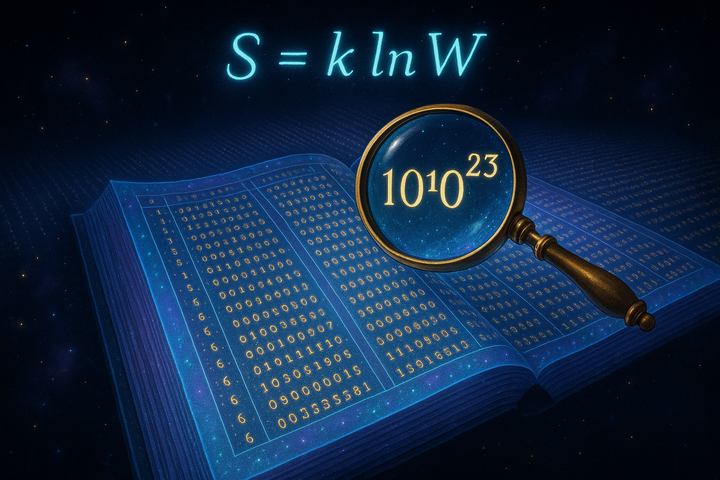
Entropy: The Second Law's Enforcer Entropy isn't just disorder — it's the quantity that gives the Second Law of Thermodynamics its teeth. It explains why heat never flows backward, why perpetual motion is impossible, and why the past differs from the future.
The Third Law: Absolute Zero and the Unreachable Floor Absolute zero isn't just very cold — it's a mathematical asymptote. The Third Law says entropy approaches a minimum as temperature drops, and actually reaching 0 K would take an infinite number of steps. Nature draws a hard line.
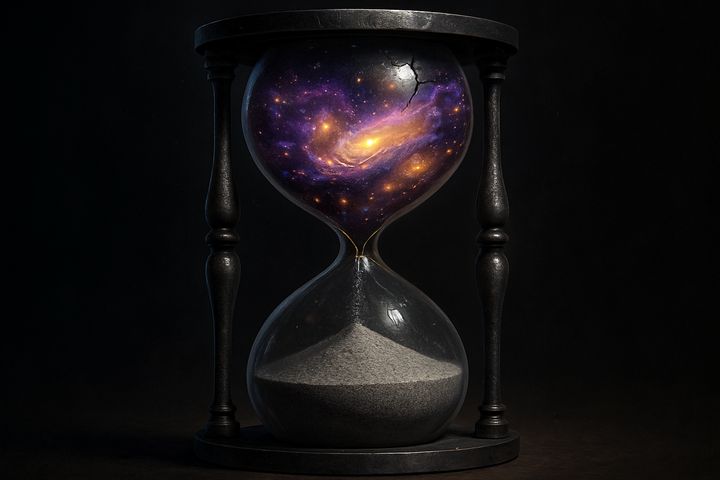
The Second Law: Why Time Has a Direction Every other law of physics is time-symmetric. Run the equations backward and they still work. The Second Law is the exception — entropy increases, and that asymmetry is the only reason the past differs from the future.
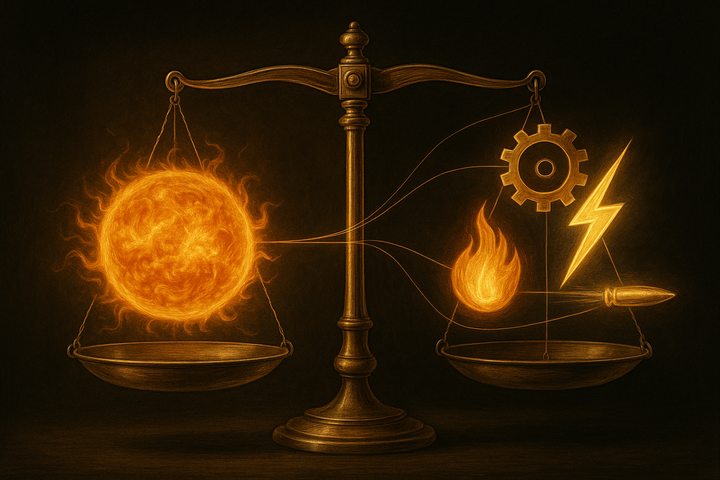
The First Law: Energy Cannot Be Created or Destroyed Energy can't appear from nowhere or vanish into nothing — the universe keeps perfect books. The first law of thermodynamics and why that single constraint shapes all of physics.
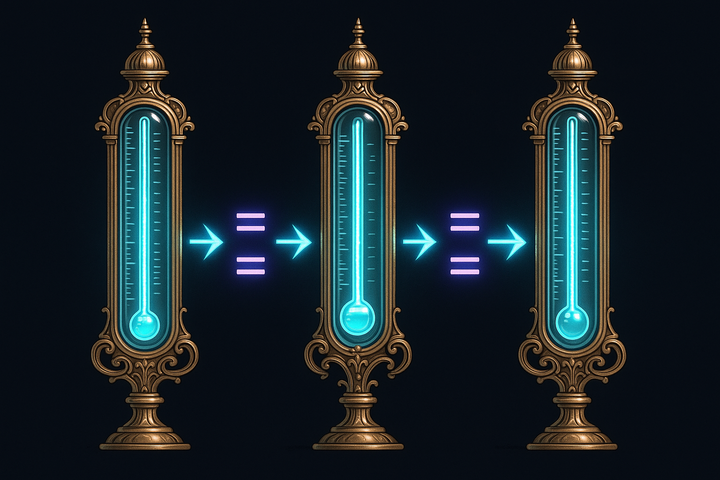
The Zeroth Law: Why Temperature Makes Sense Temperature seems obvious until you ask why it's well-defined. The Zeroth Law is the answer: thermal equilibrium is transitive, which means we can assign a single number — temperature — to any system in equilibrium. Without it, thermometers wouldn't work.
The Four Laws of Thermodynamics: The Universe's Operating System You can't win. You can't break even. You can't quit the game. The four laws of thermodynamics don't just describe energy — they set the hard limits on everything that can ever happen.