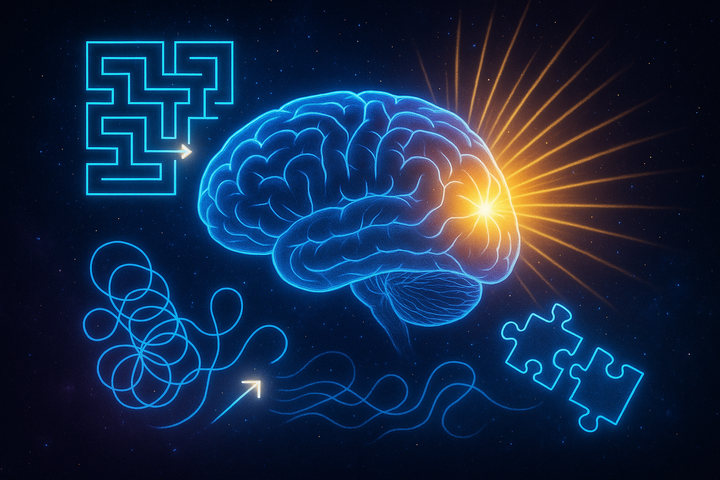
Epiphany and Insight: When Solutions Appear You stop thinking about the problem. Then, in the shower or on a walk, the answer arrives fully formed. Neuroscience is finally mapping what happens in the brain during those moments of sudden insight.
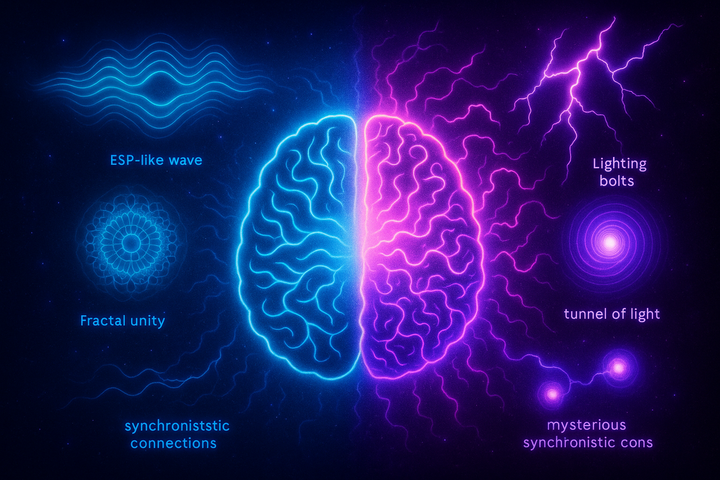
Mystical Experience: The Neuroscience of Unity The feeling that boundaries dissolve and everything is one has a measurable neural signature. Psilocybin, meditation, and spontaneous mystical states all suppress the default mode network similarly. The oldest human experience is getting its first mechanistic explanation.
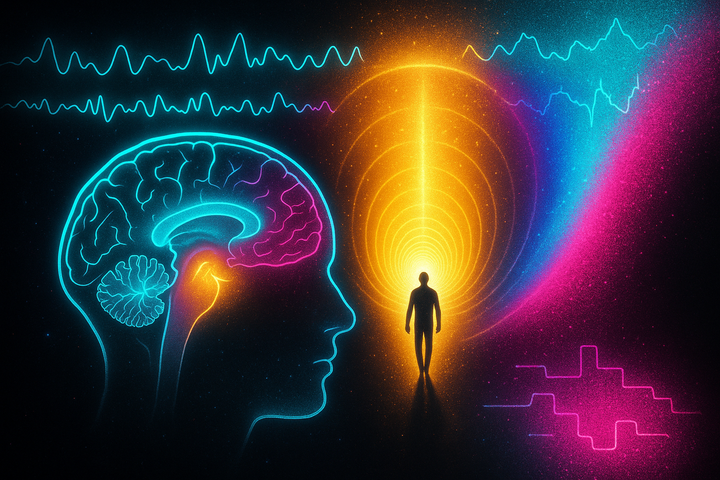
The Near-Death Experience: Neuroscience of Dying Near-death experiences feel more real than ordinary life to those who have them. The neuroscience of a dying brain — surging gamma waves, oxygen starvation, REM intrusion — suggests why, without fully explaining the experience away.
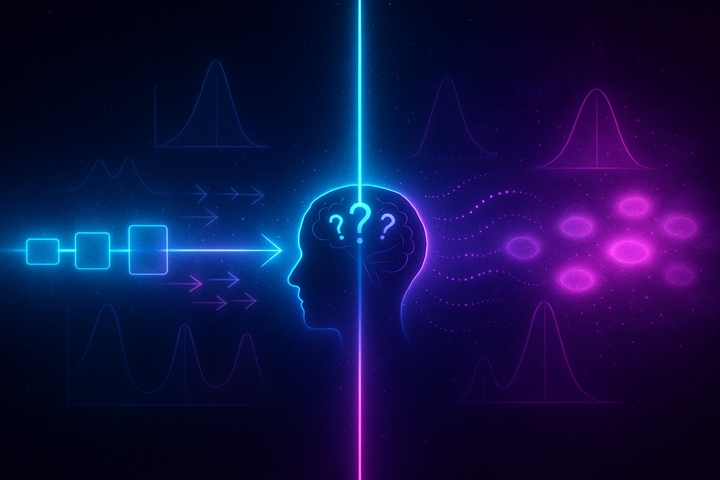
Precognition: Can We Know the Future? Daryl Bem ran nine experiments that appeared to show people responding to stimuli before they appeared. The paper passed peer review at a top journal. Then the replication attempts began — and the story got complicated in the best possible way.
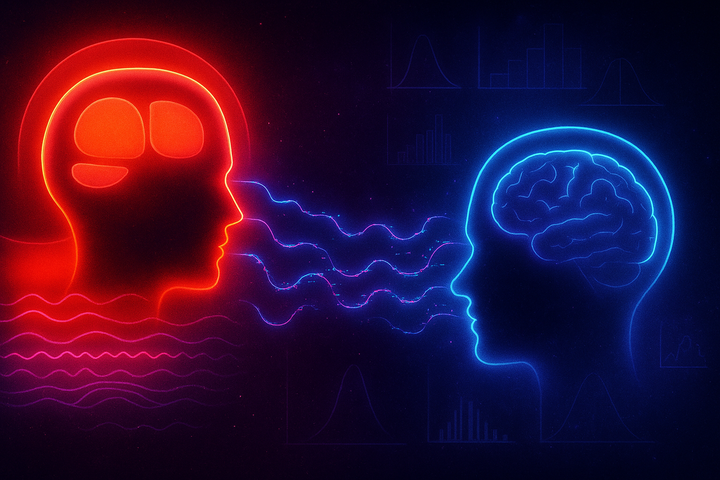
Telepathy: What the Research Actually Shows Parapsychology has been running controlled telepathy experiments since the 1970s. The meta-analyses are statistically significant. The effect refuses to replicate cleanly. This is a case study in what happens when evidence is real but interpretation is contested.
The Science of Anomalous Experience Anomalous experiences—precognition, out-of-body states, mystical insight—are easy to mock and hard to study. This piece takes the scientific literature seriously, without either credulity or reflexive skepticism.
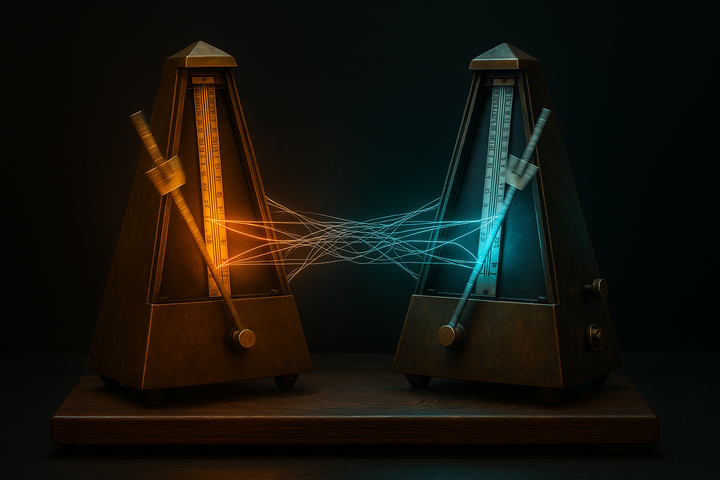
Synthesis: Attachment as Coherence - A Unified Theory of Relational Regulation Attachment isn't just emotional bonding — it's two nervous systems synchronizing into a shared dynamical state. Polyvagal theory, predictive processing, and geometric models of affect all point to the same underlying structure.