Active Inference Applied
Active inference isn't just a brain theory — it's a framework for building AI that acts to minimize surprise rather than maximize reward. Here's what that looks like when applied.

Karl Friston's Free Energy Principle is beautiful theory. But can you actually build something with it?
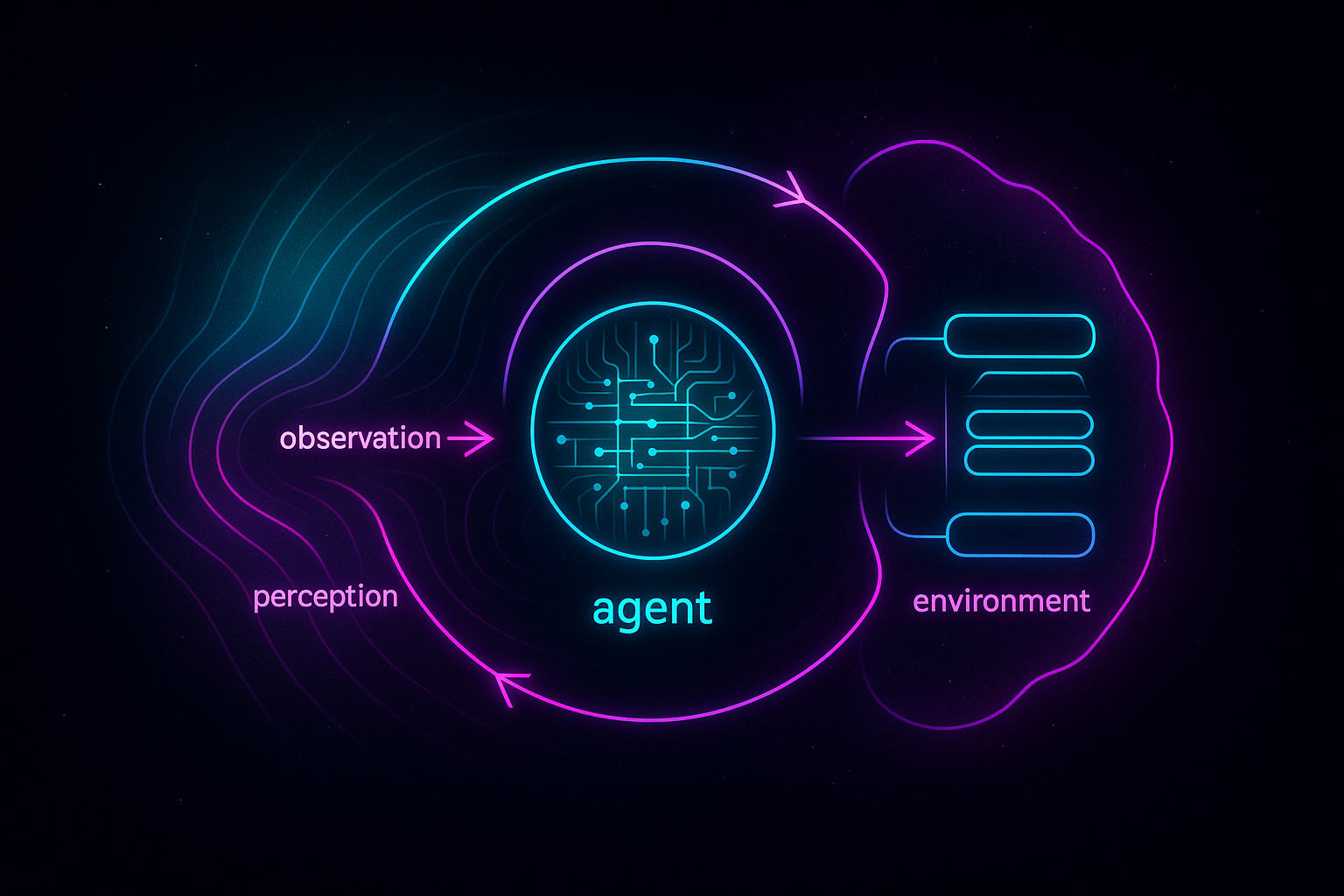
The answer is yes. Active inference—the action-oriented extension of the Free Energy Principle—is moving from blackboards to codebases, from theoretical neuroscience to working AI agents. Researchers are building robots that navigate uncertainty, language models that plan ahead, and autonomous systems that maintain coherence in complex environments, all using active inference as their underlying mathematics.
This isn't just another AI architecture. It's a principled framework for building agents that perceive, decide, and act in unified ways—systems that don't separate perception from action, planning from learning, or exploration from exploitation.
Why This Matters for Coherence
Active inference agents maintain coherence by minimizing expected free energy: they seek states that are both unsurprising given their model of the world and informative about the world's actual structure. This creates systems that balance exploitation and exploration naturally, that learn through acting, and that exhibit goal-directed behavior without explicit reward functions.
Understanding applied active inference helps us understand what coherence maintenance looks like when formalized as mathematics and implemented in code.
What This Series Covers
This series explores practical implementation of active inference for AI systems, robotics, and autonomous agents. We'll examine:
- How to construct generative models for active inference agents
- Expected free energy as the objective function for action
- Message passing and belief propagation in practice
- Available software tools from PyMDP to RxInfer
- How active inference compares to reinforcement learning
- Active inference for embodied robotics
- Hierarchical architectures for complex planning
- Integration with large language models
By the end of this series, you'll understand why the question "How do you build coherent AI agents?" has a mathematically principled answer—and how that answer is being translated into working systems.
Articles in This Series









Comments ()