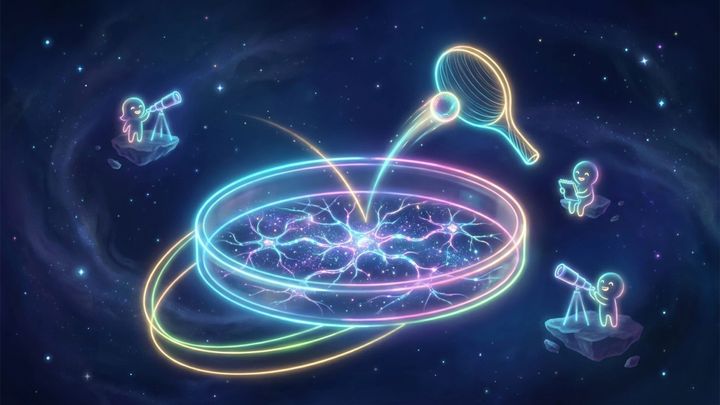
Brain Cells in a Dish Learned to Play Pong. What That Says About Sensory Overload A dish of brain cells learned Pong (and later Doom) by acting to make its world less surprising. What that might say about loud rooms and sensory overload.
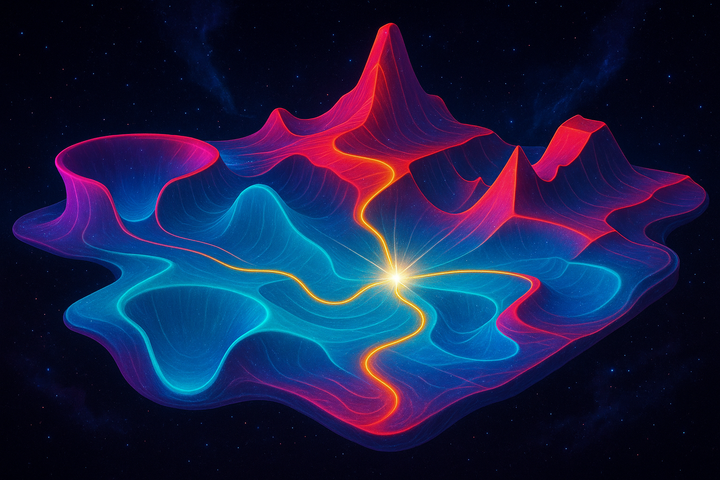
Synthesis: Free Energy as the Logic of Becoming Synthesis: Free Energy as the Master Variable We've traveled through Gibbs free energy from formula to function—from ΔG = ΔH - TΔS to protein folding, membrane potentials, and the persistence of diamonds. Now we step back. What does it all mean? Free energy is not merely a thermodynamic quantity.
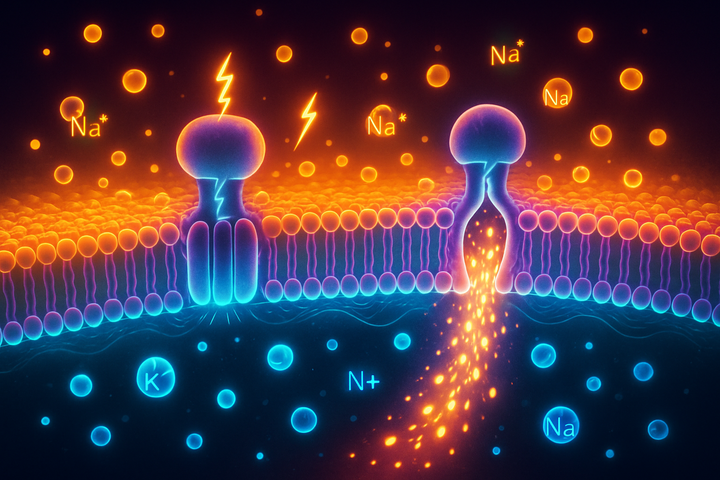
Membrane Potential: Gibbs Free Energy Across Barriers Membrane Potentials: Free Energy Across the Cell Every neuron maintains a voltage across its membrane—about -70 mV inside relative to outside. This isn't a trivial detail. It's a thermodynamic battery, charged by burning ATP and discharged to send signals. Membrane potentials store free energy in
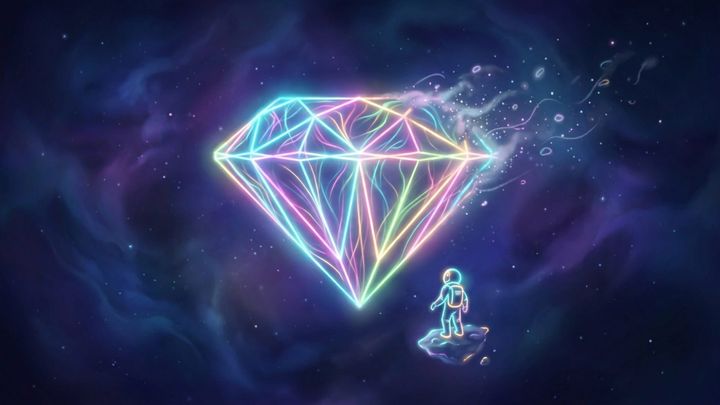
Diamonds and Graphite: Thermodynamics vs Kinetics Your engagement ring should slowly become pencil lead. Thermodynamics says so. Kinetics says not yet, and kinetics has the bigger number.
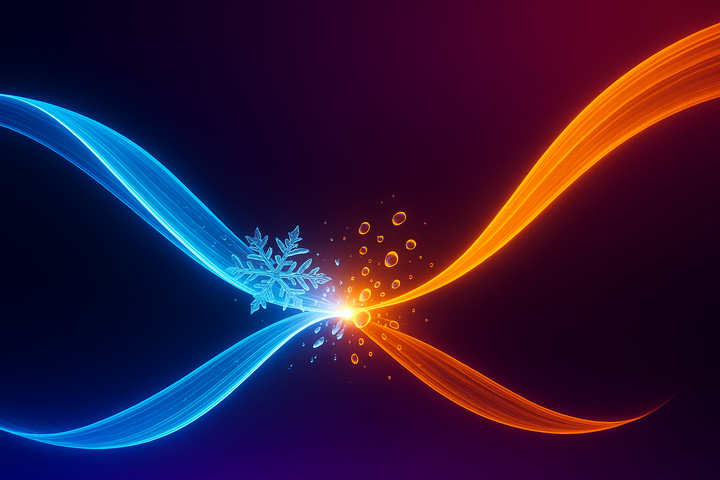
Phase Transitions: Why Ice Melts at Exactly 0°C Phase Transitions: When Free Energy Surfaces Cross Water freezes at 0°C. This seems like a fact about water, but it's really a fact about free energy. At that precise temperature, the free energy curves of ice and liquid water cross. Above, liquid wins. Below, ice wins. At
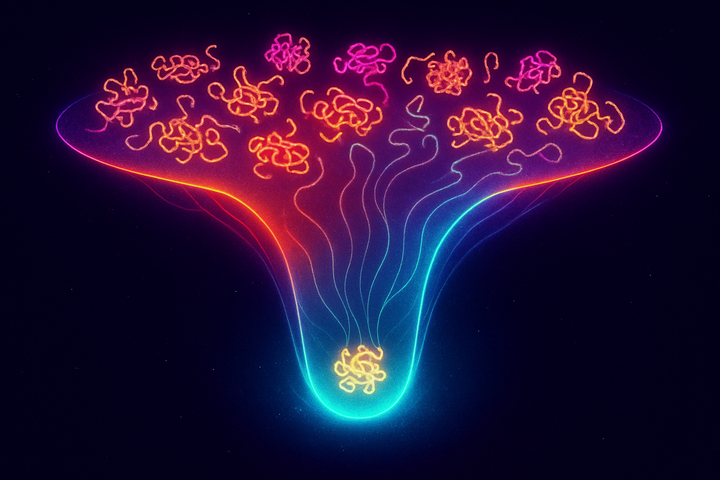
Protein Folding: Finding the Free Energy Minimum Protein Folding: Free Energy's Masterpiece A protein emerges from the ribosome as a linear chain of amino acids. Within milliseconds to seconds, it folds into a precise three-dimensional structure—a shape that determines its function. This is the protein folding problem, and it's fundamentally a
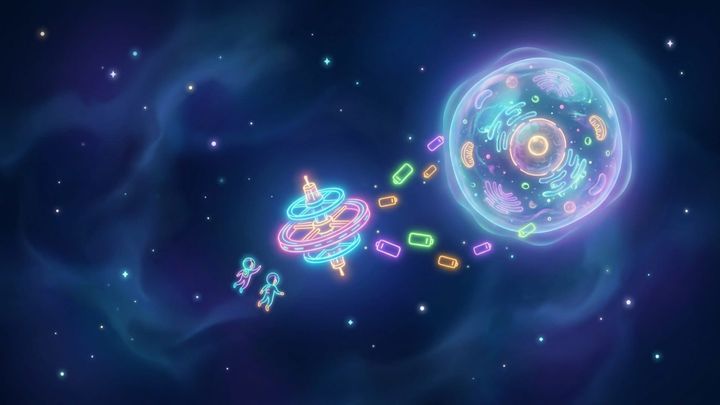
ATP Hydrolysis: The Gibbs Free Energy That Runs Your Body Cells don't run on ATP's textbook number. They run on how far they keep ATP from equilibrium.