Is Aging a Disease? The Case for Programming
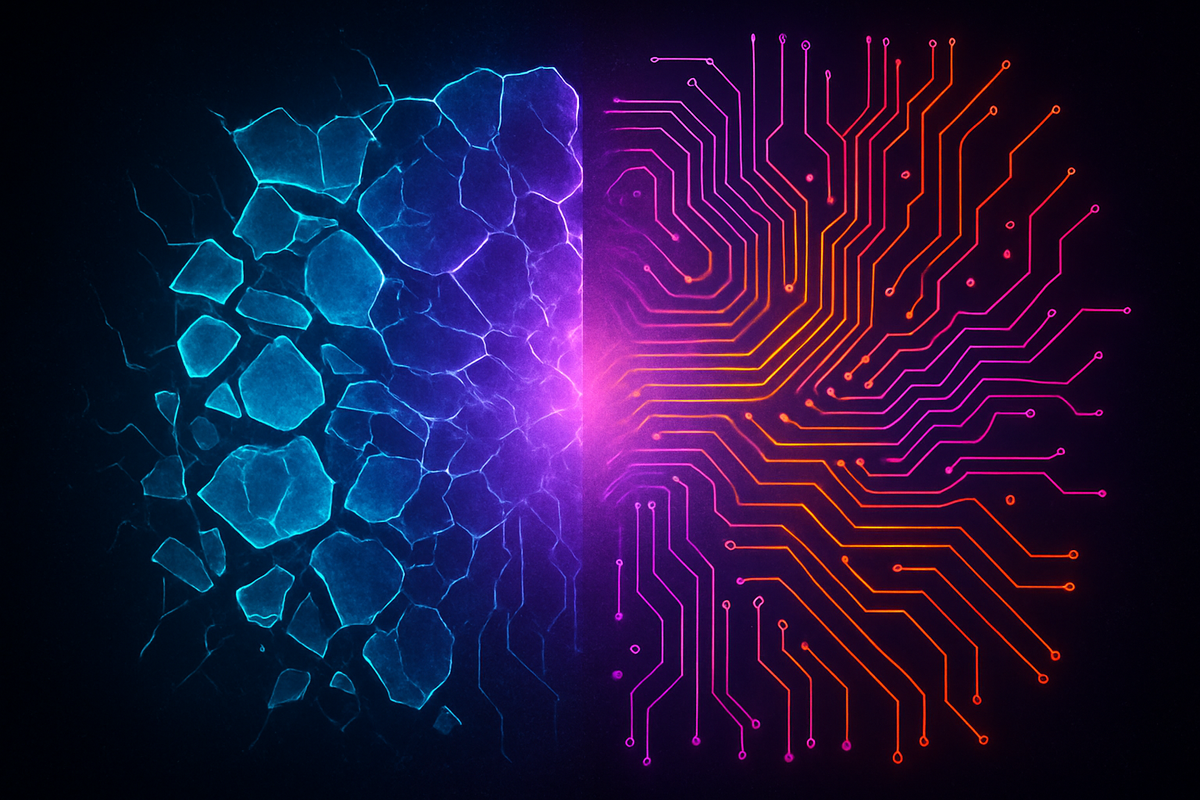
The standard model says aging is entropy — wear and tear accumulating over time. A growing body of evidence says it's a program, with genetic switches and epigenetic drift as the mechanism. That distinction changes what intervention looks like.
Is Aging a Disease? The Case for Programming
Series: Longevity Science | Part: 2 of 7 Primary Tag: FRONTIER SCIENCE Keywords: aging, disease, programmed aging, damage accumulation, David Sinclair, longevity
The Damage Accumulation View
The traditional view of aging is stochastic damage accumulation. Life is chemistry, chemistry produces byproducts, byproducts cause damage. DNA acquires mutations. Proteins get oxidized. Mitochondria accumulate errors. Cells become dysfunctional. In this view, aging is entropy made biological. The second law of thermodynamics applied to organisms. Everything falls apart eventually; organisms just have maintenance systems that delay the inevitable. The hallmarks of aging fit this framework reasonably well. Genomic instability, telomere shortening, proteostasis loss—these all look like accumulated damage from the wear and tear of living. If this view is right, the implications are modest. You can optimize maintenance systems. You can reduce damage rates. But you can't stop the fundamental process because it's just physics. Entropy always wins. You might extend lifespan somewhat, but radical life extension is thermodynamically impossible. This was the dominant view in gerontology for decades. Aging was an engineering problem with declining returns: patch what you can, but the machine wears out.
The Programmed Aging View
The alternative view is that aging is programmed—not just damage, but a regulated biological process that unfolds according to developmental logic. The evidence is subtle but substantial: Consistency across individuals: If aging were pure random damage, you'd expect huge variance. Some people's DNA would accumulate mutations faster; some slower. But aging follows remarkably consistent patterns. Epigenetic clocks can predict biological age with uncanny precision across diverse populations. The hallmarks progress at similar rates. This consistency suggests program, not randomness. Regulation by conserved pathways: The same genes and pathways that regulate aging in worms also regulate it in flies, mice, and humans. Insulin/IGF-1 signaling, mTOR, sirtuins—these are ancient, conserved, and manipulable. If aging were just damage, why would it be so precisely regulated? Rapid reversibility: Some aging phenotypes reverse quickly under certain conditions—too quickly for damage repair. Epigenetic reprogramming can restore youthful gene expression patterns within days. Old blood factors can make young mice look old; young blood factors can make old mice look younger. This suggests information loss and restoration, not physical damage and repair. Developmental continuity: Development is programmed—no one disputes this. You progress from embryo to infant to child to adult through regulated genetic programs. The programmed aging view says: why would the programming stop at adulthood? Maybe aging is just the final developmental stage, running on the same underlying logic. David Sinclair at Harvard has become the most prominent advocate for the programmed view, specifically the information theory of aging. His argument: the epigenome is like software running on the genome hardware. Aging is not hardware damage (mutations) but software corruption (epigenetic drift). And corrupted software can, in principle, be restored from backup.
The Evolutionary Puzzle
If aging is programmed, you immediately hit an evolutionary puzzle: why would natural selection favor a program that kills you? The naive answer—"for the good of the species"—doesn't work. Evolution operates on individuals and genes, not species. A mutation that extended your reproductive lifespan would spread, even if it harmed the species by creating too many old organisms. Group selection arguments are theoretically possible but evolutionarily weak. The classic evolutionary explanation, from Peter Medawar and George Williams, is antagonistic pleiotropy: genes that benefit you when young but harm you when old can spread if the early-life benefits outweigh the late-life costs. Evolution "sees" reproduction more clearly than post-reproductive survival. Genes that help you reproduce at 20 will spread even if they kill you at 70, because reproductive success has already been achieved. In this view, aging isn't directly selected for. It's a side effect of selection against late-life effects. Evolution is near-sighted, favoring early benefits even at late costs. But here's what's interesting: this mechanism could produce something that looks programmed without being designed. The conserved pathways aren't a program for death—they're programs for early-life function that happen to cause late-life decline. The consistency isn't design; it's the regularity of developmental pathways running their course past their adaptive window. This doesn't settle the question of whether aging is "really" programmed or "really" damage. It suggests the distinction might be less clear-cut than either camp admits. Aging might be damage that occurs through programmed processes—or programs that manifest as damage accumulation.
The Information Theory
Sinclair's information theory of aging offers a specific version of the programmed view: 1. The genome contains the complete information needed to build a young organism 2. The epigenome—the pattern of gene regulation—is what makes cells express their specific identities 3. Aging is primarily epigenomic information loss, not genomic damage 4. The original information isn't destroyed—it's still there in the genome 5. Therefore, restoring the correct epigenomic information should restore youth The evidence supporting this view: Yamanaka factors: In 2006, Shinya Yamanaka showed that you could take a fully differentiated adult cell and reprogram it back to a pluripotent state (capable of becoming any cell type) using just four transcription factors. These iPSCs (induced pluripotent stem cells) reset their epigenetic age to near zero. This was stunning. It meant cellular identity wasn't permanent. The epigenetic information that made a skin cell a skin cell could be erased and rewritten. The "backup" of the original developmental program was still accessible. Partial reprogramming: Full Yamanaka reprogramming makes cells lose their identity entirely—useful for making stem cells, not so useful for rejuvenation (you don't want your brain cells becoming pluripotent). But partial reprogramming—activating the factors briefly or incompletely—seems to reset epigenetic age without erasing cell identity. In mice, partial reprogramming has reversed age-related changes in various tissues. It extends lifespan in progeroid (accelerated aging) mice. It's being explored in normal aging mice with promising early results. Epigenetic clocks reverse: When you rejuvenate cells through reprogramming, epigenetic clock age goes down. This isn't just cells looking younger—they measure younger by the most validated biomarkers of biological age. The clock can run backward. If the information theory is right, the implications are radical. Aging becomes a software problem. The hardware (genome) is mostly fine. The software (epigenome) has corrupted, but the original is backed up. Restore the backup, restore youth.
The Critics
The programmed/information view has critics, and their points deserve consideration: Genomic damage is real: Mutations do accumulate. Cancers do arise from genomic instability. Progerias from DNA repair defects do exist. You can't hand-wave away the hardware damage component. Epigenetic reprogramming has limits: Yamanaka factors work in culture. They work somewhat in mice. Whether they'll translate to humans, whether the effects will last, whether they'll cause cancer (the factors include oncogenes)—these are open questions. Correlation isn't causation: Epigenetic clocks correlate with age, but that doesn't mean epigenetic changes cause aging. They might be markers of downstream damage, not drivers of it. The evolutionary argument cuts both ways: If antagonistic pleiotropy explains aging, then the programs involved might be too deeply integrated into development to safely modify. You might not be able to reprogram aging without breaking development. The honest assessment: the programmed view is ascendant, supported by dramatic experimental results, but not proven. The damage view isn't dead. The truth likely involves both—damage that occurs through programmed processes, plus programs that become dysregulated by damage.
What If Aging Were Classified as a Disease?
Let's entertain the programmed view and ask: what would happen if we actually classified aging as a disease? Research funding: The NIH spends billions on individual diseases of aging but relatively little on aging itself. Classifying aging as a disease would reorient funding toward root causes. Drug development: The FDA would have to define endpoints for "treating aging." Currently, you can't run a trial with "aging" as the indication. This is a major bottleneck. Clinical trials have to pick specific diseases (e.g., "this drug reduces cardiovascular events in elderly patients") even when the mechanism is broadly anti-aging. Insurance and access: If aging were a disease, interventions that slow it would be treatments, not "wellness" luxuries. Insurance might cover metformin for longevity, not just diabetes. Access would change. Social and ethical implications: This is where it gets complicated. If aging is a disease, is being old being sick? Does this medicalize a normal life stage? Does it create pressure to "treat" people who are happy aging naturally? Does it exacerbate inequality if only the rich can afford anti-aging treatments? The WHO briefly considered adding an "aging-related" disease code to the International Classification of Diseases in 2018, then backed off. The scientific debate is ongoing; the policy debate is even more contentious.
The Practical Takeaway
Does it matter whether aging is "really" a disease or a program or damage accumulation? For the individual deciding what to do with their own life, maybe not. The interventions that work—caloric restriction, exercise, certain drugs—work regardless of the underlying philosophy. Take care of yourself, and the metaphysics takes care of itself. But for the research enterprise, for policy, for medicine's orientation toward the fundamental problem of human decline, the framing matters enormously. The programmed view says: there's a root cause, it's knowable, it's addressable. The goal isn't to manage decline—it's to reverse it. That's a different research program, a different clinical approach, a different social conversation. The damage view says: manage what you can, extend what's extensible, accept limits. That's more modest but perhaps more grounded. My read: the evidence increasingly favors the programmed view, or at least the "damage through programs" synthesis. The dramatic results from epigenetic reprogramming, the conserved regulatory pathways, the reversibility of aging phenotypes—these point toward a problem more solvable than pure entropy would suggest. Aging may not be "just physics." It may be biology—and biology can be engineered.
Further Reading
- Sinclair, D.A. & LaPlante, M.D. (2019). Lifespan: Why We Age—and Why We Don't Have To. Atria Books.
- Kirkwood, T.B.L. (2005). "Understanding the odd science of aging." Cell.
- de Magalhães, J.P. (2012). "Programmatic features of aging originating in development: aging mechanisms beyond molecular damage?" FASEB Journal.
- Ocampo, A. et al. (2016). "In Vivo Amelioration of Age-Associated Hallmarks by Partial Reprogramming." Cell.
- Gems, D. & de Magalhães, J.P. (2021). "The hoverfly and the wasp: A critique of the hallmarks of aging as a paradigm." Ageing Research Reviews.
This is Part 2 of the Longevity Science series, exploring the biology of aging and interventions to extend healthspan. Next: "Zombie Cells and the Drugs That Kill Them."


Comments ()