The Anthropology of Institutions
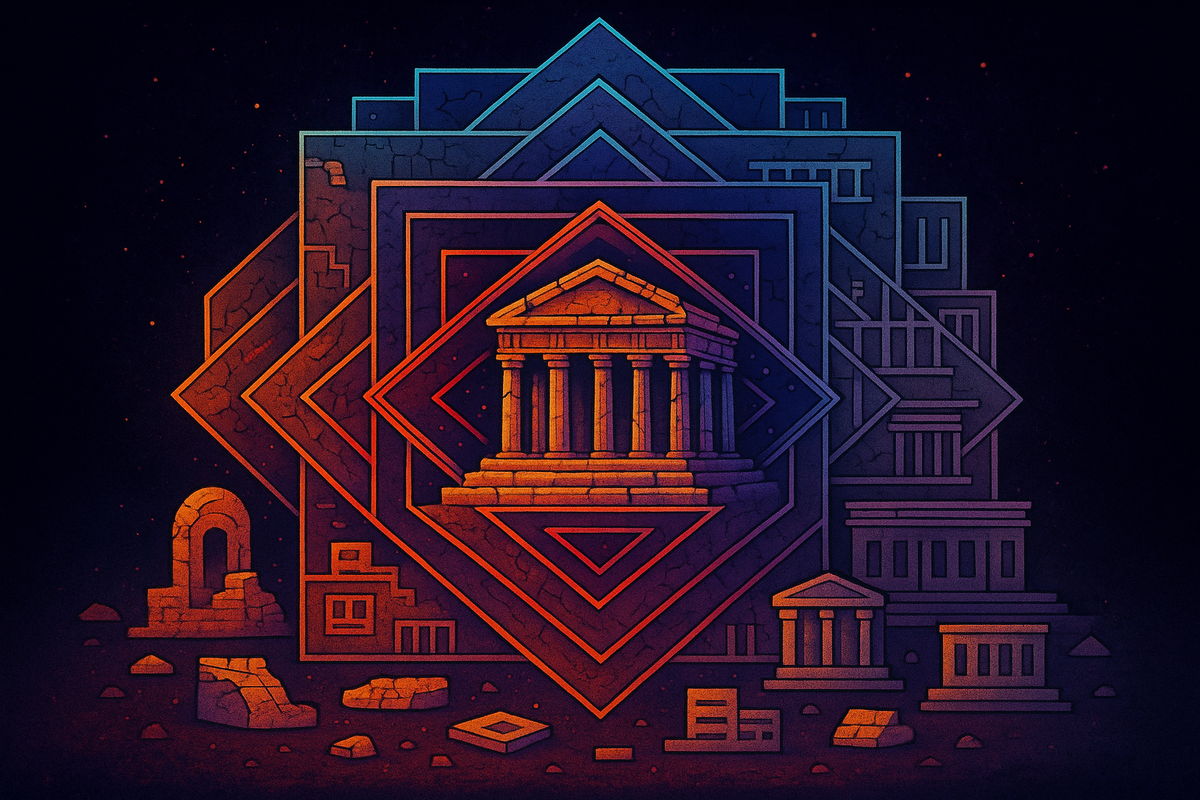
The standard story of civilization — small bands, then chiefs, then states — is contradicted by the archaeological record. What actually preceded modern institutions is weirder, and more hopeful.
The Anthropology of Institutions
Everything You Learned About Civilization Is Wrong
The story goes like this: Humans were nomadic hunter-gatherers for hundreds of thousands of years. Then we invented agriculture around 10,000 BCE. Agriculture meant surplus. Surplus meant specialization. Specialization meant hierarchy. Hierarchy meant states. States meant civilization.
A straight line from wandering bands to the Roman Empire.
This story is a just-so tale. And the evidence increasingly contradicts it.
Hunter-gatherers built monumental architecture before agriculture. Early farming communities were often egalitarian. Hierarchies emerged, collapsed, and were deliberately dismantled. People who knew about agriculture chose to abandon it. States formed, fell apart, and reformed in different configurations.
The actual history of human institutions is far weirder—and far more interesting—than the simple progression we were taught.
The Core Insight
Humans are institutionally creative in ways we've systematically underestimated.
We didn't stumble up a ladder from bands to tribes to chiefdoms to states. We experimented. We tried things. We abandoned complexity when we didn't like what it did to us. We reinvented social organization over and over, in configurations that the standard story says shouldn't have been possible.
The implications are both hopeful and terrifying:
- Hopeful: If institutions aren't natural progressions but human choices, we have more freedom to redesign them than we thought. - Terrifying: If civilizations can deliberately dismantle themselves, we might be watching that happen.
Understanding how institutions actually work—not the myths we tell about them—is survival knowledge for this moment.
The Series
[The Weirdness of Human Prehistory](/civilization-origins-wrong/) — Introduction to the new archaeology. What we thought we knew and what the evidence actually shows.
[Graeber and Wengrow: The Dawn of Everything](/graeber-dawn-of-everything/) — The book that rewrote prehistory. Why the standard narrative was always a creation myth, not a history.
[James Scott: Seeing Like a State](/james-scott-seeing-like-state/) — Why large institutions fail in predictable ways. The need for legibility and what it destroys.
[Graeber on Debt](/graeber-debt-first-5000-years/) — Money didn't emerge from barter—it emerged from debt. And how societies handle debt reveals their power structure.
[Dunbar's Number: The Cognitive Limit](/dunbars-number-150/) — Can you only maintain 150 relationships? What the number means and what it doesn't.
[Göbekli Tepe: The Temple Before the Farm](/gobekli-tepe-religion-agriculture/) — 11,000-year-old monumental architecture built by hunter-gatherers. The discovery that inverted the narrative.
[Primary State Formation](/state-formation-primary-states/) — Where do states actually come from? The archaeological evidence is sparse and contested.
[Synthesis: The Creative Human](/human-creativity-institutions-synthesis/) — Integrating the findings. What the new anthropology reveals about what we are and what we might become.
Why This Matters Now
We're living through institutional crisis.
Trust in governments, media, churches, universities, and corporations is declining across the developed world. New institutions—platforms, DAOs, decentralized networks—are emerging without clear rules or precedents. The old legitimacy structures are fracturing; the new ones haven't stabilized.
The standard history tells us institutions evolve in one direction: toward more complexity, more hierarchy, more centralization. The actual history suggests institutions can go anywhere—up, down, sideways, into configurations we haven't imagined.
That's either terrifying or liberating, depending on what we do with the knowledge.
Begin with [The Weirdness of Human Prehistory](/civilization-origins-wrong/) to understand how wrong the standard story has been.
Comments ()