ATP Hydrolysis: The Gibbs Free Energy That Runs Your Body
Every movement you make is powered by a single molecular transaction: ATP hydrolysis releasing −30.5 kJ/mol of Gibbs free energy. Understanding this number unlocks how life itself is energetically organized.
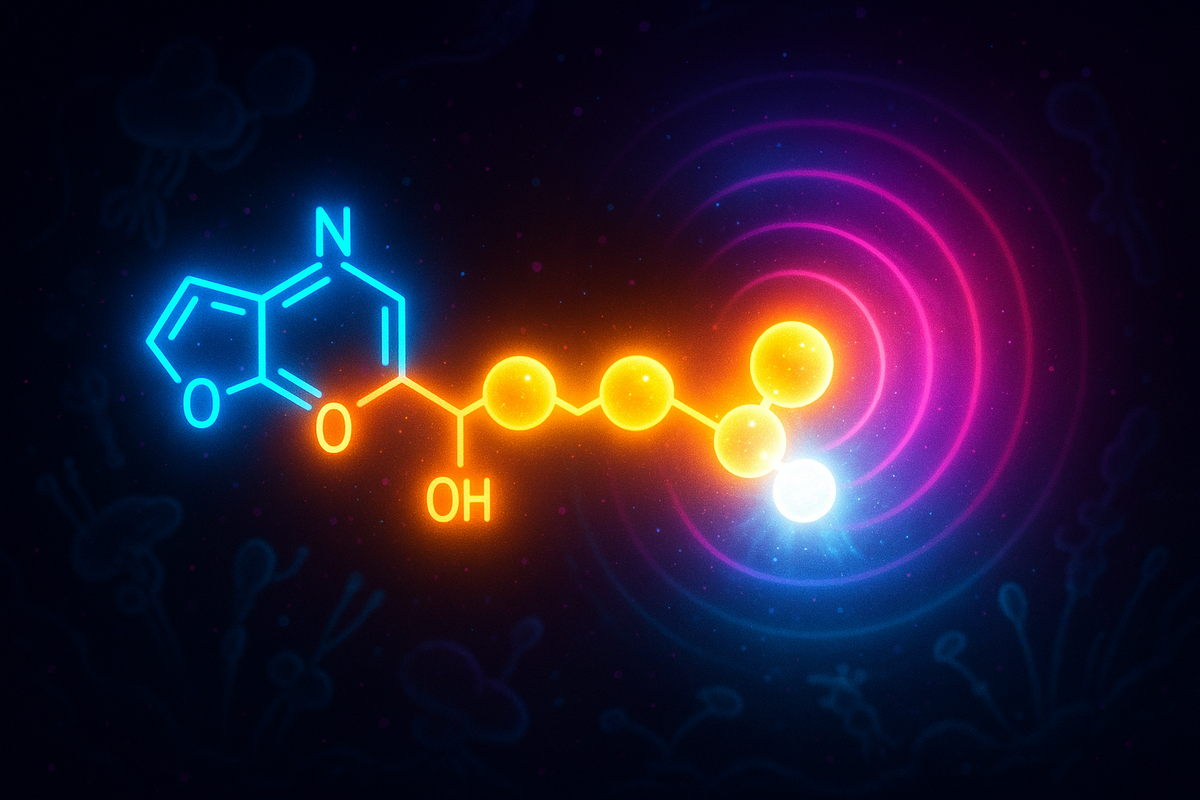
ATP and Free Energy: Biology's Energy Currency
Every second, your body hydrolyzes 10^21 ATP molecules. By day's end, you've turned over roughly your body weight in ATP. This single molecule powers everything—muscle contraction, nerve impulses, protein synthesis, cell division.
ATP isn't the most energy-rich molecule. It's not the most abundant. It's not even particularly stable. But it's the right currency—not too big, not too small, kinetically stable but thermodynamically unstable.
Understanding ATP through Gibbs free energy reveals why life chose this particular molecule and how cells maintain the far-from-equilibrium conditions that define being alive.
The Structure of ATP
Adenosine triphosphate: adenine + ribose + three phosphate groups.
The phosphate groups carry the energy. Each phosphate is negatively charged at physiological pH. Three negative charges clustered together repel each other electrostatically. Breaking one off releases strain energy.
ATP → ADP + Pi (inorganic phosphate)
This hydrolysis releases about 30.5 kJ/mol under standard biological conditions. Not from breaking a "high-energy bond" (a misleading term), but from the difference in stability between reactants and products.
The pebble: The energy isn't stored in the bond. It's released when the products become more stable than the reactants. That's what free energy measures.
Standard vs Cellular Conditions
The textbook value: ΔG°' = -30.5 kJ/mol (at pH 7, 1 mM Mg²⁺, 25°C, 1 M concentrations)
But cells don't maintain 1 M concentrations. Actual cellular concentrations: - [ATP] ≈ 1-10 mM - [ADP] ≈ 0.1-1 mM - [Pi] ≈ 1-5 mM
The actual free energy change:
ΔG = ΔG°' + RT ln([ADP][Pi]/[ATP])
With typical cellular values: ΔG ≈ -50 to -65 kJ/mol
Cells maintain ATP/ADP ratios far from equilibrium, making each ATP hydrolysis release more energy than the standard value suggests. This requires constant energy input (food, respiration) but provides a larger thermodynamic driving force for cellular work.
Why ATP?
Why did evolution settle on ATP? Several properties make it ideal:
1. Kinetic stability ATP doesn't spontaneously hydrolyze in water, even though it's thermodynamically favorable. The activation energy is high enough that ATP persists until an enzyme catalyzes the reaction. You can store currency without it evaporating.
2. Thermodynamic instability When catalyzed, ATP hydrolysis releases substantial free energy—enough to drive most cellular processes but not so much that it's wasteful.
3. Intermediate position ATP sits in the middle of the biological energy hierarchy. It can accept energy from higher-energy molecules (food, reduced carriers) and transfer it to lower-energy processes (biosynthesis, transport).
4. Coupling capability ATP hydrolysis can be coupled to unfavorable reactions, making the overall ΔG negative. The phosphate transfer mechanism is enzymatically versatile.
The pebble: ATP is biology's goldilocks molecule—unstable enough to release energy, stable enough to store it, and coupled enough to transfer it anywhere.
Energy Coupling
Most cellular reactions are thermodynamically unfavorable. Protein synthesis, ion pumping, muscle contraction—all have positive ΔG values. How do they happen?
Energy coupling: Pair an unfavorable reaction with ATP hydrolysis. If the combined ΔG is negative, the coupled reaction proceeds.
Example: Glutamine synthesis
Glutamate + NH₄⁺ → Glutamine + H₂O ΔG°' = +14.2 kJ/mol (unfavorable)
Coupled with ATP hydrolysis:
Glutamate + NH₄⁺ + ATP → Glutamine + ADP + Pi ΔG°' = +14.2 + (-30.5) = -16.3 kJ/mol (favorable)
The enzyme glutamine synthetase couples these reactions, using ATP to phosphorylate glutamate first, making the intermediate reactive toward ammonia.
This is the fundamental trick of metabolism: pay with ATP to make thermodynamics run your way.
The Phosphorylation Potential
The ratio [ATP]/[ADP][Pi] determines how much work ATP hydrolysis can perform. This ratio, expressed as free energy, is the phosphorylation potential.
Cells maintain phosphorylation potentials of -50 to -65 kJ/mol—far above the standard value of -30.5 kJ/mol. This requires:
1. Continuous ATP synthesis (mitochondria, glycolysis) 2. Continuous ATP consumption (maintaining the ratio) 3. Compartmentalization (different ratios in different locations)
If ATP/ADP equilibrated, the phosphorylation potential would drop to zero. No work could be done. The cell would be dead.
The pebble: Life is measured by the distance from equilibrium. A living cell maintains high phosphorylation potential; a dead cell reaches equilibrium.
ATP Synthesis
ATP is synthesized primarily by:
1. Oxidative phosphorylation (mitochondria) The electron transport chain creates a proton gradient across the inner membrane. ATP synthase uses this gradient to drive ATP synthesis:
ADP + Pi → ATP ΔG°' = +30.5 kJ/mol (unfavorable)
But coupled to proton flow down the gradient: ~3 H⁺ flowing down + ADP + Pi → ATP + ~3 H⁺ inside ΔG < 0 (favorable, because the proton gradient provides free energy)
Each NADH yields ~2.5 ATP. Each FADH₂ yields ~1.5 ATP. Complete glucose oxidation produces ~30-32 ATP.
2. Substrate-level phosphorylation (glycolysis) Direct transfer of a phosphate group from a high-energy intermediate to ADP:
1,3-bisphosphoglycerate + ADP → 3-phosphoglycerate + ATP
The intermediate has ΔG°' of hydrolysis more negative than ATP, so the transfer is favorable.
3. Photophosphorylation (chloroplasts) Similar to oxidative phosphorylation, but the proton gradient is created by light-driven electron transport.
ATP in Muscle Contraction
Muscle illustrates ATP coupling beautifully.
The myosin head binds ATP, which causes it to release from actin. ATP hydrolysis (still bound) cocks the head into a high-energy configuration. When myosin rebinds actin, phosphate release triggers the power stroke—the head pivots, pulling the actin filament. ADP release completes the cycle.
Each cycle: - Converts ATP → ADP + Pi - Produces ~5-10 pN of force over ~10 nm - Does ~5-10 × 10^-21 J of mechanical work
The thermodynamic efficiency is about 40-50%—remarkably high for a molecular machine.
At rest, you consume ATP slowly. During intense exercise, ATP consumption increases 100-fold. Cellular [ATP] barely changes because synthesis matches consumption. The system is beautifully regulated.
Membrane Transport
Moving ions against their concentration gradients requires work. The Na⁺/K⁺-ATPase demonstrates the thermodynamics:
3 Na⁺(in) + 2 K⁺(out) + ATP → 3 Na⁺(out) + 2 K⁺(in) + ADP + Pi
The ion gradients store free energy—about 20 kJ/mol for Na⁺ across a typical cell membrane. Pumping three Na⁺ out costs ~60 kJ. Two K⁺ flowing down their gradient provides ~20 kJ. Net cost: ~40 kJ, covered by ATP hydrolysis (~50 kJ under cellular conditions).
The Na⁺/K⁺-ATPase consumes roughly 25% of cellular ATP in neurons—the price of maintaining the resting membrane potential and enabling action potentials.
The ATP Cycle
ATP isn't consumed; it cycles:
Catabolism: Food → ADP + Pi → ATP (capturing free energy from oxidation) Anabolism: ATP → ADP + Pi → biosynthesis, transport, motion (releasing free energy for work)
The molecules shuttle back and forth. Your body contains only about 250 grams of ATP at any moment, but cycles through 40-70 kg per day—the mass equivalent turning over every 1-2 minutes.
This rapid cycling is why ATP works as currency. It's not a storage battery (that's fat and glycogen). It's liquid cash—immediately available, constantly circulating.
Creatine Phosphate: The Battery
Muscle cells maintain a backup energy system. Creatine phosphate (PCr) has a more negative ΔG°' of hydrolysis than ATP:
PCr + H₂O → Creatine + Pi (ΔG°' = -43 kJ/mol)
This allows: PCr + ADP → Creatine + ATP (ΔG°' = -13 kJ/mol)
Creatine kinase rapidly equilibrates this reaction. When ATP is consumed, PCr donates its phosphate to maintain [ATP]. The PCr pool provides a ~10-second buffer for intense activity, buying time for oxidative phosphorylation to ramp up.
Athletes take creatine supplements to increase PCr stores—legitimate enhancement of the thermodynamic buffer.
GTP, UTP, CTP: The Other Currencies
ATP isn't alone. GTP powers protein synthesis and signal transduction. UTP drives carbohydrate metabolism. CTP enables lipid synthesis.
All have similar ΔG°' values for hydrolysis (~-30 kJ/mol). Why multiple currencies?
Specificity and regulation. Each currency serves different pathways, allowing independent control. Protein synthesis can be regulated by [GTP] without affecting carbohydrate metabolism.
The currencies interconvert through nucleoside diphosphate kinase: ATP + GDP ⇌ ADP + GTP (ΔG°' ≈ 0)
ATP is the primary source, the others are specialized.
Free Energy and Information
There's a deep connection between ATP and information processing.
Each bit of cellular information—each correct amino acid inserted, each DNA base copied accurately—requires energy. Proofreading mechanisms that catch errors consume ATP. Higher accuracy costs more energy.
Landauer's principle (from information theory) states that erasing one bit requires at least kT ln 2 joules. Cellular information processing operates near this limit, with ATP providing the thermodynamic payment.
Life is information maintained against entropy. ATP is the currency that pays for that maintenance.
Summary
ATP is the universal energy currency because: - It releases useful amounts of free energy (~50-65 kJ/mol in vivo) - It's kinetically stable but thermodynamically unstable - It couples easily to diverse cellular reactions - It cycles rapidly through synthesis and hydrolysis
Cells maintain ATP/ADP ratios far from equilibrium. This far-from-equilibrium state is what distinguishes living from dead. When the ratio equilibrates, biochemistry stops.
The pebble: You don't run on ATP. You run on the distance between your ATP concentration and equilibrium. That distance is what it means to be alive.
Further Reading
- Nelson, D. L. & Cox, M. M. (2017). Lehninger Principles of Biochemistry. W.H. Freeman. - Nicholls, D. G. & Ferguson, S. J. (2013). Bioenergetics 4. Academic Press.
This is Part 7 of the Gibbs Free Energy series. Next: "[Protein Folding: Free Energy's Masterpiece](/protein-folding-free-energy/)"


Comments ()