When the Immune System Attacks Itself: Autoimmunity and the Failure of Tolerance
The immune system's most important skill is restraint — knowing what not to attack. When that tolerance fails, the body turns its full arsenal on itself. Here's what goes wrong.
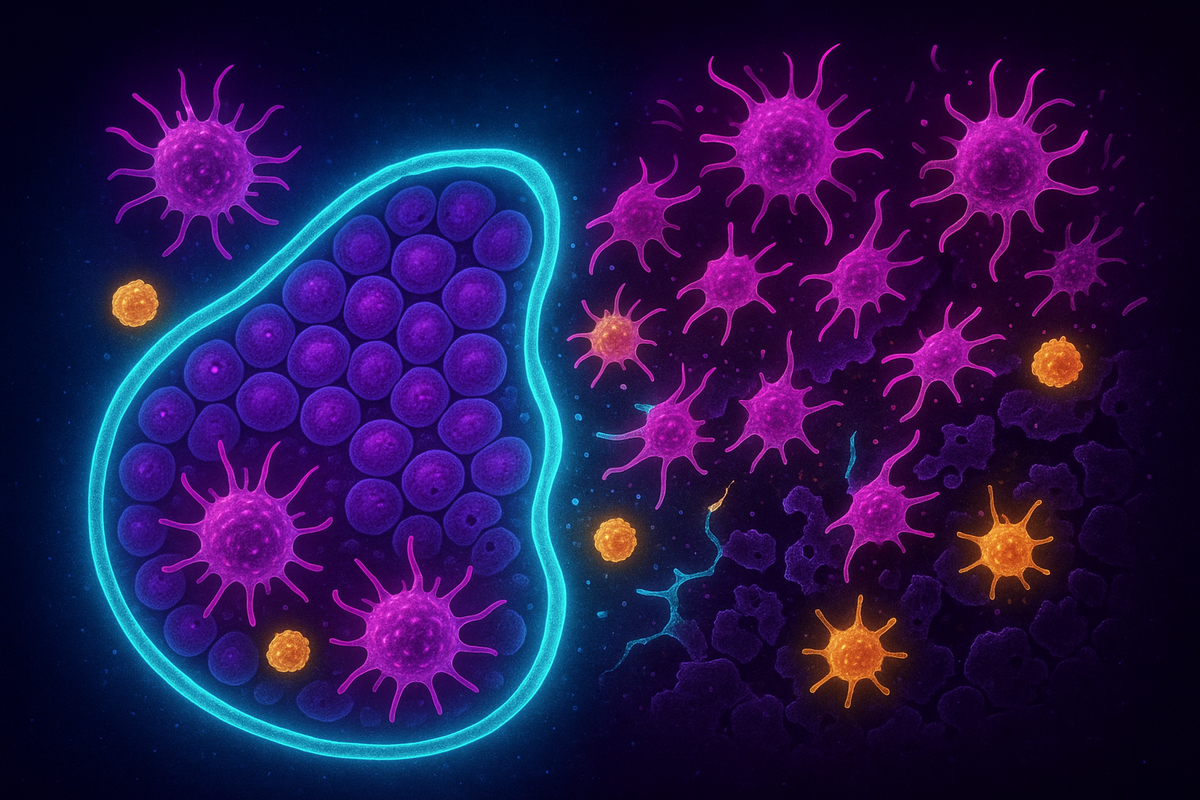
When the Immune System Attacks Itself: Autoimmunity and the Failure of Tolerance
Series: New Immunology | Part: 6 of 8 Primary Tag: FRONTIER SCIENCE Keywords: autoimmunity, tolerance, rheumatoid arthritis, multiple sclerosis, lupus, regulatory T cells
How Tolerance Is Supposed to Work
Remember that the adaptive immune system generates receptor diversity randomly. V(D)J recombination produces billions of different T and B cell receptors capable of recognizing virtually any molecular shape. But "any molecular shape" includes shapes that exist on your own tissues. Every person generates lymphocytes that could attack their own body. This isn't a defect—it's an inevitable consequence of random receptor generation. The system needs mechanisms to identify and neutralize these self-reactive cells. These mechanisms are called tolerance, and they operate at two levels:
Central Tolerance
During development, T cells mature in the thymus and B cells mature in the bone marrow. In these tissues, young lymphocytes are tested: does your receptor bind strongly to self-antigens? In the thymus, developing T cells encounter cells presenting a vast array of self-proteins. If a T cell binds self-antigen too strongly, it receives death signals—it's deleted through apoptosis. This is negative selection. An estimated 95% of T cells die in the thymus, many because they failed this test. A gene called AIRE (autoimmune regulator) is crucial here. AIRE causes thymic cells to express proteins from tissues throughout the body—insulin, thyroid proteins, neural proteins—allowing T cells to be tested against antigens they'd otherwise encounter only peripherally. Mutations in AIRE cause APECED, a severe autoimmune syndrome affecting multiple organs. Without AIRE, self-reactive T cells escape to cause havoc. B cells undergo a similar process in the bone marrow. Strong self-antigen binding triggers receptor editing (trying to change the receptor) or deletion. Central tolerance eliminates the most obviously self-reactive lymphocytes. But it's not perfect. Some self-reactive cells slip through.
Peripheral Tolerance
Self-reactive cells that escape central tolerance are handled by peripheral tolerance mechanisms: Anergy: A lymphocyte that encounters its antigen without proper co-stimulation (the "second signals" from dendritic cells that indicate real danger) becomes functionally unresponsive. It's alive but can't activate. Deletion: Self-reactive cells encountering antigen under non-inflammatory conditions may receive apoptotic signals and die. Regulatory T cells (Tregs): Perhaps the most important peripheral mechanism. Tregs are a subset of CD4+ T cells that actively suppress other immune cells. They're marked by the transcription factor FOXP3 and are essential for maintaining tolerance. Without Tregs, the immune system attacks everything—a condition called IPEX syndrome, which is fatal without bone marrow transplant. Ignorance: Some self-antigens are sequestered in immunologically privileged sites (the eye, the brain, the testes) or present at such low levels that lymphocytes never encounter them. The cells aren't tolerized—they're just never activated. Together, these mechanisms maintain tolerance in healthy individuals. But they can fail.
How Tolerance Breaks
Autoimmunity emerges when tolerance fails. Multiple factors contribute:
Genetic Susceptibility
Autoimmune diseases cluster in families. If one identical twin has type 1 diabetes, the other has about 40-50% risk. But it's not 100%—genes matter, but they're not destiny. The strongest genetic associations are with MHC genes (called HLA in humans). Certain HLA alleles dramatically increase autoimmune disease risk. HLA-B27 confers a 90-fold increased risk for ankylosing spondylitis. HLA-DR4 increases rheumatoid arthritis risk by 4-5 fold. Why HLA? These molecules determine which peptides can be presented to T cells. Certain HLA alleles may present self-peptides that happen to resemble pathogen peptides, or may present self-peptides that escaped thymic tolerance, or may interact with self-reactive T cells in ways that promote rather than prevent activation. Beyond HLA, hundreds of other genetic variants contribute smaller risks—genes affecting cytokine signaling, cell death pathways, and immune regulation.
Environmental Triggers
Genetics loads the gun; environment pulls the trigger. Autoimmune diseases require something to initiate the attack: Infections: Molecular mimicry—pathogen proteins that resemble self-proteins—can trigger cross-reactive immune responses. Rheumatic fever, where antibodies against streptococcal bacteria cross-react with heart tissue, is the classic example. Gut microbiome: Microbiome composition influences immune calibration (we covered this earlier). Dysbiosis associates with multiple autoimmune conditions. Environmental exposures: Smoking increases rheumatoid arthritis risk. UV exposure affects lupus. Vitamin D deficiency correlates with multiple sclerosis. The specifics vary by disease. Tissue damage: Injury or infection can expose antigens normally hidden from the immune system, triggering responses against previously ignored self-proteins.
Failure of Regulatory Mechanisms
Even with genetic susceptibility and environmental trigger, autoimmunity requires failure of regulatory mechanisms: Treg dysfunction: Reduced numbers or impaired function of regulatory T cells allows effector T cells to run unchecked. Checkpoint failure: The same checkpoints (CTLA-4, PD-1) that prevent excessive immune responses and that tumors exploit for protection also prevent autoimmunity. Polymorphisms in these genes associate with autoimmune disease. Inflammatory feedback loops: Once autoimmunity starts, tissue destruction releases more self-antigens, recruiting more immune cells, causing more destruction. The process becomes self-sustaining.
The Major Autoimmune Diseases
Rheumatoid Arthritis
The immune system attacks joint linings (synovium). Chronic inflammation destroys cartilage and bone, causing joint deformity and disability. Pathology: T cells, B cells, macrophages, and cytokines (especially TNF-α and IL-6) all contribute. Autoantibodies (rheumatoid factor, anti-CCP antibodies) are diagnostic markers. Treatment: Methotrexate is first-line. Biologics blocking TNF-α, IL-6, or T cell activation have transformed management.
Multiple Sclerosis
T cells attack the myelin sheath surrounding nerve axons in the brain and spinal cord. Demyelination disrupts nerve conduction, causing neurological symptoms—vision problems, weakness, coordination difficulties. Pathology: Autoreactive T cells (Th1 and Th17) and B cells infiltrate the central nervous system. The blood-brain barrier breaks down. Treatment: Multiple disease-modifying therapies reduce relapse rates, ranging from injectables to oral medications to potent infusions. None cure the disease.
Type 1 Diabetes
T cells destroy the insulin-producing beta cells in the pancreas. Without insulin, blood sugar regulation fails, requiring lifelong insulin injection. Pathology: Primarily T cell-mediated, with CD8+ T cells killing beta cells. Autoantibodies against islet cells and insulin are diagnostic. Treatment: Insulin replacement. Immunotherapy to prevent beta cell destruction has been challenging; a recent drug (teplizumab) can delay onset but doesn't prevent it completely.
Systemic Lupus Erythematosus (SLE)
The immune system attacks multiple organs—skin, joints, kidneys, brain, blood cells, heart, lungs. Lupus is the great imitator, presenting in myriad ways. Pathology: Autoantibodies against nuclear antigens (DNA, histones) are characteristic. Immune complexes deposit in tissues, triggering inflammation. Treatment: Immunosuppression tailored to organ involvement. New biologics targeting B cells (belimumab) or interferon pathways have improved outcomes.
Inflammatory Bowel Disease
Crohn's disease and ulcerative colitis involve immune attack on the gut. Chronic inflammation damages the intestinal lining, causing pain, bleeding, and malnutrition. Pathology: Complex interplay of genetics, microbiome, and immune dysfunction. The immune system may be reacting to commensal bacteria in genetically susceptible individuals. Treatment: Anti-inflammatory drugs, immunosuppressants, biologics (anti-TNF, anti-integrins, anti-IL-23).
Current Treatment Paradigm
The standard approach to autoimmunity is immunosuppression: turn down the immune response so it stops attacking. Non-specific immunosuppression: Corticosteroids broadly suppress inflammation. They work but have significant side effects with long-term use. Disease-modifying therapies: Methotrexate, azathioprine, mycophenolate, and others suppress immune cell proliferation or function more selectively than steroids. Biologics: Antibodies or fusion proteins targeting specific cytokines or cell populations. Anti-TNF revolutionized rheumatoid arthritis treatment. Anti-CD20 (rituximab) depletes B cells. Anti-IL-17 treats psoriasis. The problem: none of these restore tolerance. They suppress the immune system broadly, increasing infection risk and sometimes cancer risk. Stop treatment, and disease typically returns. The holy grail is tolerance induction: reprogramming the immune system to specifically tolerate the relevant self-antigens while maintaining responsiveness to everything else. This would cure rather than control autoimmune disease.
Toward Tolerance Restoration
Experimental approaches aim for more specific tolerance: Antigen-specific therapies: Expose the immune system to the target self-antigen under tolerogenic conditions—hoping to induce anergy or expand Tregs specific to that antigen. Phase 2 trials in MS and type 1 diabetes have shown some promise. Treg therapies: Expand Tregs ex vivo and infuse them back, or design Tregs with CARs specific for the target tissue. Early clinical trials are underway. Tolerogenic dendritic cells: Engineer dendritic cells to present self-antigens in ways that induce tolerance rather than immunity. Epigenetic reprogramming: Alter the epigenetic state of pathogenic T cells to become less inflammatory or convert them to Tregs. Microbiome modulation: Restore healthy gut microbiome to recalibrate immune system. Early evidence suggests this might help in some autoimmune conditions. None of these has achieved reliable tolerance restoration yet. The field is rich with ideas and early-phase trials, but the breakthrough therapy hasn't arrived.
The Coherence Frame
Autoimmunity is a coherence failure: the boundary between self and other has become blurred, and the immune system attacks what it should protect. The tolerance mechanisms—central and peripheral—are coherence-maintaining processes. They ensure the immune repertoire is calibrated to recognize danger without recognizing self. When these mechanisms fail, the system loses its coherent mapping between threat and response. The challenge of treatment is re-establishing coherent self/non-self discrimination. Broad immunosuppression blurs all discrimination—you attack neither self nor pathogens effectively. Tolerance restoration would recover discrimination—attack pathogens, protect self. This is why autoimmunity is hard to cure. The defect isn't in a single cell or molecule; it's in the system's organizational logic. Restoring coherence requires reprogramming the discriminatory behavior of the whole immune system, not just suppressing one part. The hope is that understanding the tolerance mechanisms at the molecular level will eventually reveal how to reset them—how to reprogram a dysregulated system back to coherent self-recognition.
Further Reading
- Anderson, M.S. & Bluestone, J.A. (2005). "The NOD mouse: a model of immune dysregulation." Annual Review of Immunology.
- Sakaguchi, S. et al. (2020). "Regulatory T Cells and Human Disease." Annual Review of Immunology.
- Theofilopoulos, A.N. et al. (2017). "The multiple pathways to autoimmunity." Nature Immunology.
- Serra, P. & Santamaria, P. (2019). "Antigen-specific therapeutic approaches for autoimmunity." Nature Biotechnology.
This is Part 6 of the New Immunology series, exploring the frontier of how immunity shapes health and disease. Next: "Your Brain Has an Immune System."


Comments ()