Bioelectric Medicine: Clinical Implications of Cellular Coherence
Cells don't just process chemistry — they maintain electrical states that guide growth, regeneration, and tissue patterning. Bioelectric medicine targets those states directly, with implications from wound care to developmental disorders.
Bioelectric Medicine: Clinical Implications of Cellular Coherence
Series: Basal Cognition | Part: 9 of 11
The conventional story of medicine is chemical. We treat disease by administering molecules that bind to receptors, block enzymes, kill pathogens. The body is a biochemical machine, and treatment means finding the right molecular key for the right molecular lock.
But there's another story emerging—one where the body's fundamental control system isn't primarily chemical at all. It's electrical. And if Michael Levin and his collaborators are right, learning to modulate bioelectric coherence could transform how we treat everything from chronic wounds to cancer to developmental disorders.
This isn't science fiction. It's happening now, in clinical trials and research labs worldwide. And the implications go far beyond any single disease—because what we're really learning is how to speak the electrical language cells use to coordinate, communicate, and maintain the coherent patterns we call "health."
The Bioelectric Control Layer
We've known for decades that nerve and muscle cells use electrical signals. That's obvious—neurons fire action potentials, hearts beat via coordinated depolarization. But Levin's work revealed something far more fundamental: all cells maintain voltage gradients across their membranes, and these gradients form coherent patterns that guide development, regeneration, and tissue maintenance.
These aren't just metabolic byproducts. They're information. Bioelectric fields function as a computational layer sitting between genes and anatomical outcomes—translating genomic possibility into actual morphology through spatially distributed voltage patterns.
The key word is distributed. Individual cell voltages matter less than the collective field they create together. A tissue's bioelectric state is an emergent pattern arising from ion channel activity across thousands or millions of cells, creating a coherent signal that tells cells where they are, what they should become, and when something has gone wrong.
In AToM terms, this is coherence implemented electrically—a low-dimensional attractor state that tissue maintains through active regulation, minimizing surprise about its own structure. Health is what it feels like when cellular prediction error stays low. Disease is what happens when that coherence collapses.
And if disease is loss of bioelectric coherence, then the clinical question becomes obvious: can we restore it?
The Wound That Won't Close
Chronic wounds are a massive clinical problem. Diabetic ulcers alone affect 15% of diabetics, often leading to amputation. Standard care focuses on infection control, debridement, moisture balance—all important, but they miss the deeper issue.
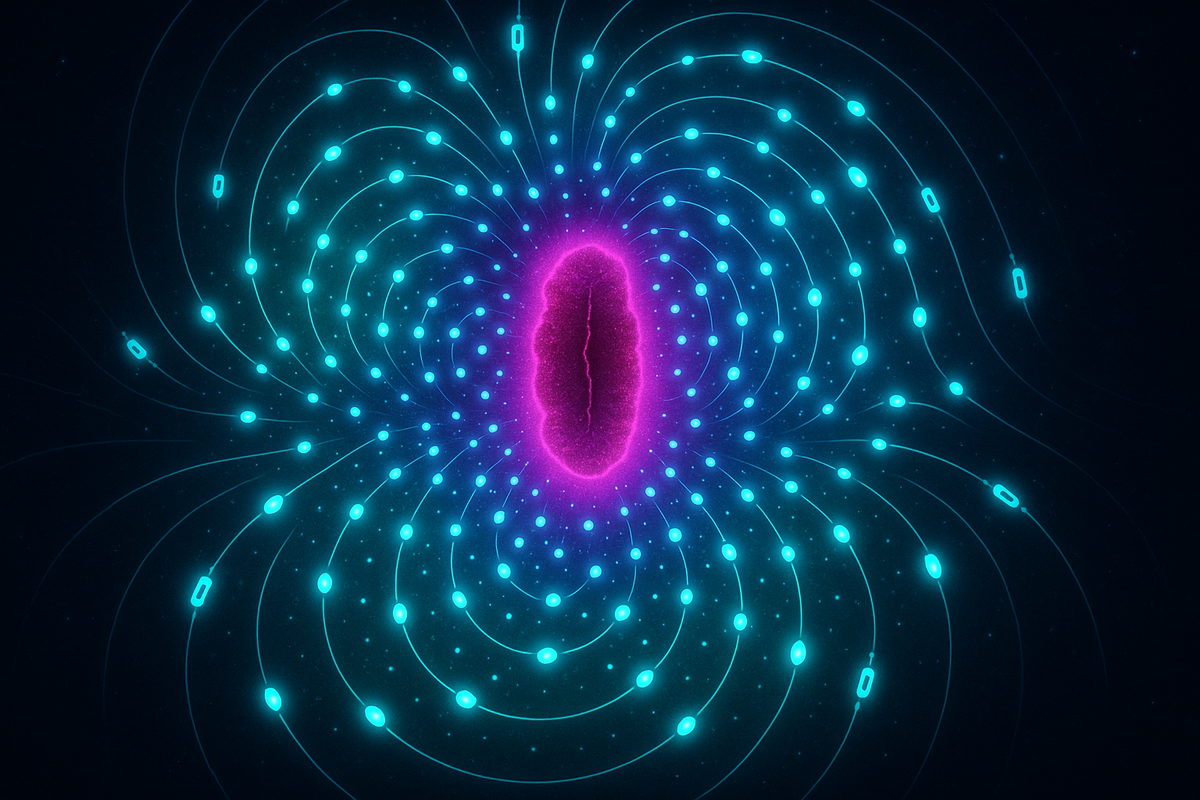
Healthy wounds close because cells at the injury site receive coherent bioelectric signals telling them to migrate, proliferate, and rebuild. These signals emerge from the "wound potential"—a characteristic voltage gradient that forms at injury sites, creating an electric field that guides epithelial cells inward like iron filings following magnetic field lines.
But in chronic wounds, this bioelectric coherence never forms properly. The voltage gradient is weak, noisy, or absent. Without it, cells don't know which way to migrate. The wound becomes electrically incoherent—and therefore stuck.
Bioelectric medicine intervenes directly. Applied electric fields can restore the missing coherence, essentially providing cells with the directional information they need. Multiple clinical trials have shown that pulsed electromagnetic field therapy (PEMF) and microcurrent stimulation accelerate healing in diabetic ulcers, pressure sores, and surgical wounds.
This isn't mystical "energy medicine"—it's precision guidance. The applied field doesn't heal the wound directly; it restores the informational context cells need to heal themselves. You're not treating the wound. You're restoring its computational substrate.
Min Zhao at UC Davis has spent decades mapping these wound potentials with extraordinary precision. Her work shows that amphibians and fish—champion regenerators—maintain much stronger wound fields than mammals. The implication is clear: mammalian regenerative capacity isn't fundamentally limited by our genes. It's limited by our bioelectric coherence.
And coherence can be restored.
Bioelectric Reprogramming of Tissue Identity
Here's where things get genuinely radical. If bioelectric patterns tell cells what to become, can changing those patterns reprogram tissue identity?
Levin's lab has shown this repeatedly. Induce the right voltage pattern in developing tadpole tissue, and you can convert cells destined to become gut into functional eye tissue—complete with lens, retina, and visual connections to the brain. The genome didn't change. The bioelectric context did.
Or consider planarian flatworms, which can regenerate entire bodies from tiny fragments. Their bioelectric patterns function as anatomical set points—target morphologies encoded in voltage distributions. Levin's group demonstrated that briefly altering these patterns creates worms that regenerate different head shapes, including ones with heads normally found only in different species. And here's the kicker: the altered anatomy persists through subsequent regenerations, even though the initial electrical intervention was transient.
The bioelectric pattern became a stable attractor—a coherent state the tissue now actively maintains. You modified the control software, and the system updated its own blueprint accordingly.
For clinical medicine, this suggests therapeutic possibilities that sound like science fiction but rest on demonstrated mechanisms:
Inducing regeneration in non-regenerative contexts. If mammalian tissues fail to regenerate because they don't maintain appropriate bioelectric fields, then restoring those fields might unlock latent regenerative programs. Early evidence suggests it works—targeted bioelectric intervention has induced partial limb regeneration in frogs, which normally don't regenerate limbs at all.
Normalizing developmental disorders. Many birth defects arise not from genetic impossibility but from disrupted morphogenetic signaling. If the disruption is bioelectric, then voltage modulation during development might correct it—potentially even in cases where the underlying genetic defect remains.
Reprogramming diseased tissue. If cancer is coherence collapse—cells losing connection to tissue-level bioelectric patterns—then reconnecting them might restore normal behavior without killing them.
That last one isn't speculation. It's been demonstrated.
Depolarizing Cancer
Tumors are electrically aberrant. Cancer cells typically show depolarized membrane potentials compared to healthy tissue—voltage differences that correlate with malignant behavior. The more depolarized the cell, the more aggressive the cancer.
Why? Because voltage isn't just a marker—it's part of the control system. Depolarized cells stop listening to tissue-level coordination signals. They prioritize local proliferation over collective function. They become electrically isolated from the coherent field that would normally constrain them.
Levin's work suggests a stunning possibility: what if you could normalize cancer cells' electrical state, reconnecting them to tissue-level coherence?
His lab induced melanoma in tadpoles (via oncogene injection), then manipulated bioelectric signaling in the developing tissue. The result: oncogene-positive cells that should have formed tumors instead integrated normally, contributing to healthy tissue architecture without malignant behavior. The genetic defect remained—but the bioelectric coherence was restored, and coherence won.
This isn't chemotherapy. No cells were killed. The intervention changed the informational context, and cells revised their behavior accordingly.
Clinical translation is early-stage but active. Multiple research groups are exploring voltage-gating ion channels as cancer targets—not to kill tumor cells but to normalize their electrical coupling to surrounding tissue. Early results in brain tumors (gliomas) suggest that modulating chloride channel activity can reduce proliferation and invasion without cytotoxic effects.
The therapeutic logic is fundamentally different from conventional oncology. Instead of declaring war on rogue cells, you're restoring the communication infrastructure that keeps cellular collectives coherent. You're not destroying aberrant parts—you're reintegrating them into functional wholes.
Ion Channels as Therapeutic Targets
If bioelectric coherence is clinically modifiable, then ion channels—the molecular machinery that controls voltage—become precision intervention points.
This is already happening, though not yet under the "bioelectric medicine" banner. Many existing drugs are ion channel modulators: antiarrhythmics, anticonvulsants, local anesthetics, diabetes medications. We've been doing bioelectric medicine for decades without fully recognizing it as such.
But the new framework suggests far more targeted possibilities:
Spatially specific voltage modulation. Rather than systemically altering ion channel function, optogenetics and chemogenetics allow researchers to activate or silence specific channels in specific tissues. This enables restoration of local coherence without global disruption—fixing the voltage gradient in a wound bed without affecting cardiac rhythm, for instance.
Developmental timing interventions. Brief voltage modulation during critical developmental windows can have lasting effects because bioelectric patterns function as morphogenetic attractors. Short-term intervention shifts the system into a different stable state, which it then maintains autonomously.
Bioelectric diagnostics. If disease involves loss of voltage coherence before biochemical or anatomical changes become obvious, then mapping tissue voltage distributions could enable earlier detection. Voltage imaging is improving rapidly—it's not inconceivable that future diagnostics will include bioelectric profiling alongside genetic and biochemical tests.
The challenge is specificity. Ion channels are promiscuous—the same channels appear in multiple tissues with different functional roles. Modulating them systemically risks off-target effects. But emerging technologies (optogenetics using light-sensitive channels, designer receptors activated by synthetic ligands) enable increasingly precise targeting.
And as we map tissue-specific bioelectric signatures of health and disease, we'll gain a clearer picture of which voltage patterns to restore in which contexts. We're building a bioelectric pharmacopeia—a catalog of voltage distributions that correspond to desired biological outcomes.
Plasticity as Therapeutic Resource
One of the most profound implications of Levin's work is that biological systems are far more plastic than we assumed. Fixed fate isn't coded immutably in genomes—it's maintained dynamically through bioelectric coherence. And dynamically maintained systems can be dynamically altered.
This explains why xenobots—living machines built from frog skin cells—exhibit novel behaviors. The cells carry the frog genome but operate in a radically different bioelectric context. Without the voltage patterns that normally define "frog skin," the same cells can navigate, self-repair, and even replicate in ways the genome never "intended."
Therapeutically, this plasticity is a feature, not a bug. It means:
Tissue doesn't have to be destroyed and replaced. If cells are performing aberrant functions because they're receiving aberrant bioelectric signals, restore the signals and the cells may recover function.
Developmental programs can be reactivated in adults. Regeneration isn't locked in the past—it's gated by bioelectric conditions. Create the right conditions, and developmental capacities thought to be lost may resurface.
Aging might be partially bioelectric. If stem cell exhaustion and tissue dysfunction in aging involve degradation of bioelectric coherence (not just accumulation of mutations), then maintaining or restoring voltage patterns could preserve function.
The flip side is risk. Plasticity cuts both ways. Bioelectric interventions that successfully reprogram one tissue might inadvertently destabilize another. The same field patterns that induce regeneration in a wound could, in different contexts, trigger inappropriate cell proliferation.
This is why bioelectric medicine requires sophisticated understanding of tissue-specific coherence signatures. You're not just turning knobs—you're tuning a high-dimensional dynamical system. Precision matters.
But the fundamental insight remains: biological possibility is vastly larger than genetic determinism suggested. The genome provides constraints, but bioelectric patterns navigate within those constraints, selecting which potentials become actual. And navigable systems can be steered.
From Lab Bench to Clinic
Where does bioelectric medicine stand clinically? The honest answer: early, but accelerating.
Mature applications:
- Electrical stimulation for wound healing (FDA-approved devices, multiple clinical trials)
- Spinal cord injury rehabilitation (epidural stimulation restoring motor function)
- Deep brain stimulation for Parkinson's, depression, OCD
- Vagus nerve stimulation for epilepsy and depression
Emerging applications:
- Bioelectric modulation for cancer (early trials)
- Developmental defect correction (animal models, not yet human)
- Regeneration induction in non-regenerative tissues (research stage)
- Bioelectric diagnostics (proof-of-concept)
Conceptual frontier:
- Tissue reprogramming via voltage pattern engineering
- Multi-scale coherence restoration (cellular to organ level)
- Predictive bioelectric modeling for personalized intervention
The progression mirrors any paradigm shift: what begins as fringe hypothesis becomes validated mechanism, then experimental therapy, then standard of care. We're somewhere between stages two and three.
The bottleneck isn't whether bioelectric coherence matters—that's established. It's translating complex research findings into deployable clinical tools. You can't hand a surgeon an optogenetics rig and say "restore voltage coherence." You need:
- Imaging systems that map tissue bioelectrics non-invasively
- Targeted intervention methods safe enough for clinical use
- Decision frameworks for which voltage patterns to restore when
- Training for clinicians who learned medicine as chemistry, not electrophysiology
These are solvable problems. The conceptual foundation is sound. The mechanisms are real. The question is speed of translation.
The Coherence-Based Medical Paradigm
Zoom out from specific applications, and what you see is a fundamental shift in how we understand biological control.
The 20th-century paradigm was bottom-up and reductionist: genes make proteins, proteins perform functions, accumulate enough functions and you get an organism. Disease meant broken molecules. Treatment meant fixing or replacing them.
Bioelectric medicine suggests a different architecture: genes enable possibilities, but coherent field dynamics select which possibilities actualize. The control system is distributed, electrical, and computational. Disease means loss of coordination—not necessarily broken parts but disrupted communication between functioning parts.
This maps directly onto the AToM framework's core claim: coherence is more fundamental than components. What matters isn't whether individual cells have correct genomes but whether they maintain collective voltage patterns that enable coordinated function. Meaning equals coherence over time—and at the tissue scale, coherence is implemented bioelectrically.
From this view, medicine's goal shifts. Not just to eliminate dysfunction but to restore the conditions under which systems self-organize into health. Not to replace broken parts but to re-establish the informational context that allows existing parts to coordinate.
This isn't replacing pharmaceutical or surgical interventions—it's adding another level of specificity. Sometimes you need to kill the bacteria (chemistry works). Sometimes you need to remove the tumor (surgery works). But sometimes the root problem is communicational—cells that could function properly but are receiving incoherent signals.
For those cases, bioelectric medicine offers something conventional approaches don't: the ability to speak the native language of cellular coordination.
Practical Translation
What does this mean for someone not running a bioelectric research lab?
First: awareness that voltage matters. When evaluating treatment options for chronic conditions—especially those involving tissue dysfunction, failed healing, or aberrant growth—ask whether bioelectric factors have been considered. Technologies like PEMF therapy, microcurrent stimulation, and nerve stimulation aren't fringe alternatives—they're evidence-based interventions targeting real mechanisms.
Second: understanding plasticity. The fact that cells are smarter than we thought—that they respond not just to molecular signals but to bioelectric context—means prognosis isn't purely genetic. Tissues retain adaptive capacity if the right informational substrate is restored.
Third: patience with emerging science. Bioelectric medicine is moving from mechanism to application, but clinical translation takes time. The interventions most grounded in research (wound healing, neuromodulation) are available now. The more speculative applications (cancer normalization, limb regeneration) remain experimental. The science is ahead of the clinic—as it should be.
And fourth: recognition that health is coherence. Whether we're talking about individual cells maintaining voltage, tissues coordinating regeneration, or entire organisms navigating environments, the underlying pattern is the same: functional systems minimize prediction error by maintaining coherent states over time. Medicine that targets coherence directly isn't treating symptoms—it's addressing the dynamics that generate symptoms.
When Friston's Free Energy Principle meets Levin's bioelectric fields, what emerges is a picture of living systems as active inference implemented across scales. Cells predict their bioelectric contexts, act to confirm those predictions, and participate in tissue-level patterns that coordinate collective survival.
Disease disrupts that process. Bioelectric medicine aims to restore it.
The Question of Control
One final consideration: should we be doing this?
Manipulating bioelectric coherence means intervening in the control layer that guides development, identity, and function. The power is real—we've seen cells reprogrammed, tumors normalized, anatomies altered. With power comes risk.
The xenobot experiments raised eyebrows precisely because they demonstrated that biological outcomes aren't genetically fixed. If you can take frog cells and construct novel organisms simply by changing their bioelectric configuration, you've crossed a threshold. You're not just treating disease—you're engineering living systems.
Levin himself is clear-eyed about this. The same tools that might cure cancer or restore lost limbs could, in other hands, create biological outcomes we can't predict or control. Bioelectric reprogramming is powerful because it targets the computational layer where complex outcomes emerge from simple rules. That makes it elegant—and potentially dangerous.
The ethical framework can't be "don't touch it"—we're already touching it every time we use electrical stimulation therapeutically. The framework has to be: understand deeply, intervene precisely, monitor carefully.
This means:
- Rigorous mapping of tissue-specific bioelectric signatures before intervention
- Conservative clinical translation with extensive safety monitoring
- Public discourse about acceptable uses (healing yes, enhancement maybe, weaponization never)
- Recognition that bioelectric control is dual-use technology
But refusing to develop bioelectric medicine because it's powerful is refusing to treat suffering we could alleviate. The plasticity that makes cells reprogrammable is the same plasticity that makes chronic wounds healable and developmental defects correctable. The technology is neutral. The application determines ethics.
And the application is up to us.
What Comes Next
Bioelectric medicine is still young. Many questions remain unanswered:
- How stable are bioelectrically induced changes across different tissue types?
- Can we predict long-term outcomes of developmental bioelectric interventions?
- What are the limits of biological plasticity—which anatomies are accessible via voltage modulation?
- How do we scale findings from model organisms to human clinical contexts?
But the foundational claim is beyond doubt: bioelectric coherence is a legitimate therapeutic target, voltage patterns carry morphogenetic information, and modulating them can alter biological outcomes in clinically meaningful ways.
The next decade will likely see:
- Expansion of FDA-approved bioelectric devices for wound healing and tissue repair
- First-in-human trials for bioelectric cancer interventions
- Refined optogenetic and chemogenetic tools for clinical voltage modulation
- Integration of bioelectric diagnostics into standard medical imaging
- Theoretical frameworks unifying bioelectric medicine with active inference and coherence theory
We're moving from "interesting research finding" to "working clinical paradigm." The pace depends on funding, regulatory frameworks, and clinical courage—but the direction is set.
Because once you understand that cells communicate electrically, that tissues maintain voltage coherence, and that health is the attractor state that emerges when bioelectric patterns stay stable—you can't un-see it.
You're not treating biochemistry anymore. You're treating information geometry made flesh.
And the geometry can be reshaped.
This is Part 9 of the Basal Cognition series, exploring how intelligence emerges at every scale of biology.
Previous: Regeneration as Coherence Repair: How Bodies Remember Their Form
Next: From Cells to Selves: How Biological Coherence Scales
Further Reading
- Levin, M. (2021). "Bioelectric signaling: Reprogrammable circuits underlying embryogenesis, regeneration, and cancer." Cell, 184(8), 1971-1989.
- Zhao, M. (2009). "Electrical fields in wound healing—An overriding signal that directs cell migration." Seminars in Cell & Developmental Biology, 20(6), 674-682.
- Tseng, A., & Levin, M. (2013). "Cracking the bioelectric code: Probing endogenous ionic controls of pattern formation." Communicative & Integrative Biology, 6(1), e22595.
- Blackiston, D., Adams, D. S., Lemire, J. M., Lobikin, M., & Levin, M. (2011). "Transmembrane potential of GlyCl-expressing instructor cells induces a neoplastic-like conversion of melanocytes via a serotonergic pathway." Disease Models & Mechanisms, 4(1), 67-85.
- Herrera-Rincon, C., Pai, V. P., Moran, K. M., Lemire, J. M., & Levin, M. (2017). "The brain is required for normal muscle and nerve patterning during early Xenopus development." Nature Communications, 8, 587.
- Mathews, J., & Levin, M. (2018). "The body electric 2.0: recent advances in developmental bioelectricity for regenerative and synthetic bioengineering." Current Opinion in Biotechnology, 52, 134-144.
Comments ()