Cognitive Mythology
Myths aren't failed science — they're cognitive compression algorithms. The hero's journey persists across cultures because it encodes something true about how minds process experience and transmit meaning.

Cognitive Mythology
Myths aren't failed science. They're successful compression algorithms.
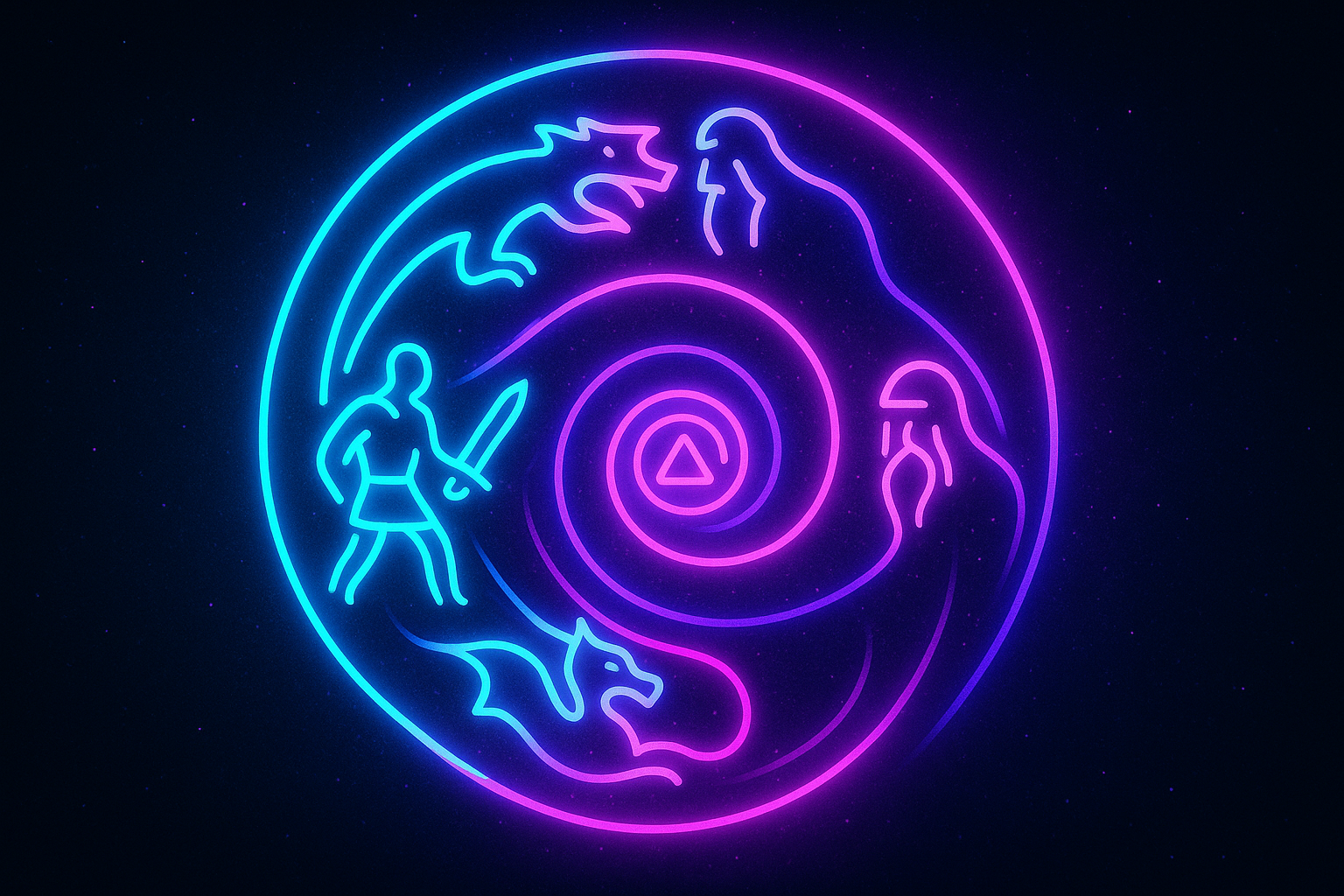
Every culture develops stories about heroes descending into underworlds, tricksters disrupting order, mothers protecting children, and cycles of death and rebirth. Not because these narratives describe literal events, but because they encode navigational instructions for human coherence—packaged in forms that stick in memory and transmit across generations.
Joseph Campbell noticed the structural similarities. Vladimir Propp mapped the recurring functions. Pascal Boyer explained why certain concepts spread while others die. What they discovered: myths aren't arbitrary. They're cognitive technology optimized for transmission, shaped by the same evolutionary pressures that shaped human brains.
Cognitive mythology studies myths not as texts to interpret but as functional systems for coherence maintenance—understanding what they compress, why they persist, and how they work.
Why This Matters for Understanding Coherence
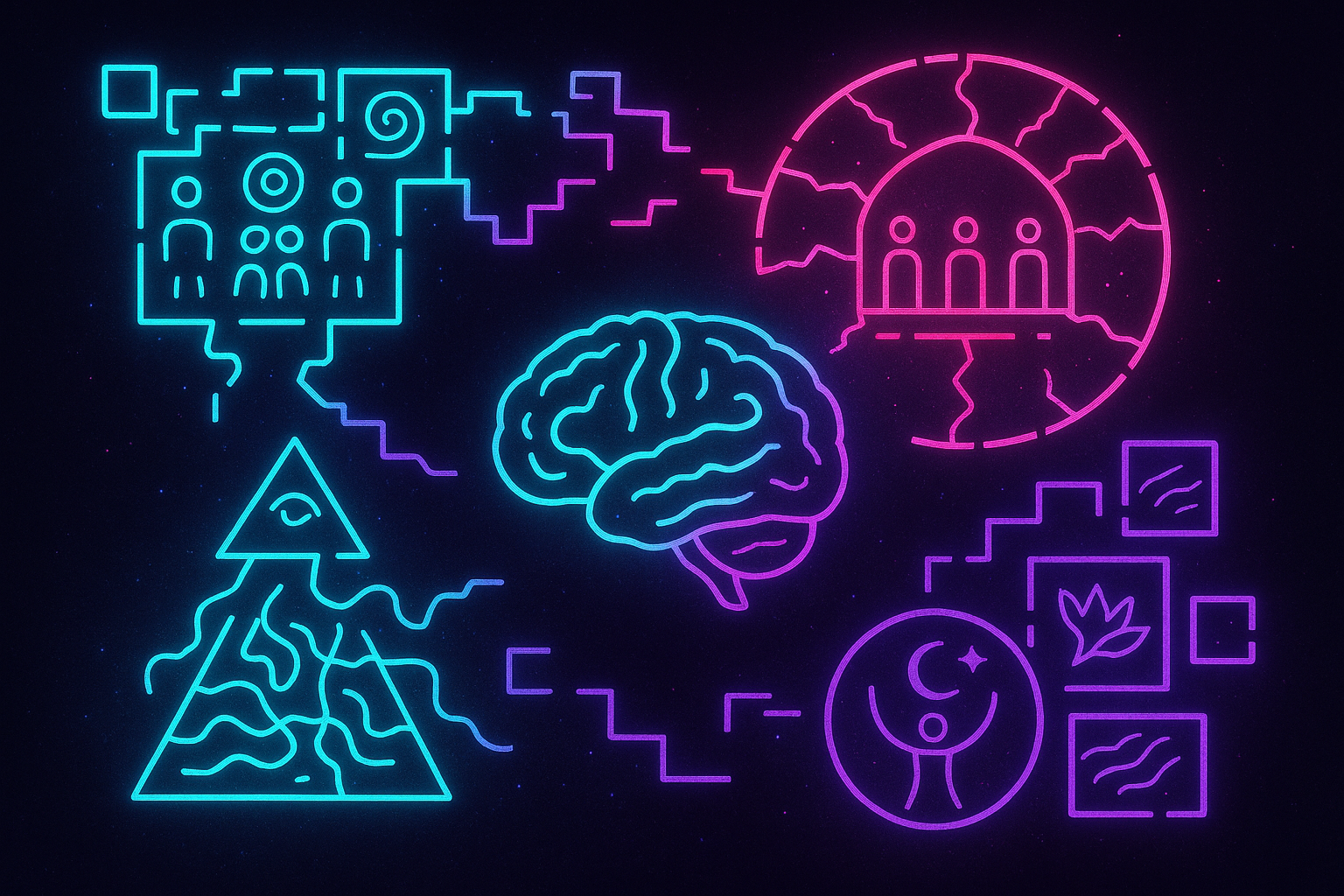
Human lives involve recurring challenges: navigating status hierarchies, managing aggression, forming partnerships, raising children, dealing with loss, maintaining identity through change. These aren't problems you solve once. They're structural features of existence requiring ongoing navigation.
Myths compress successful navigational strategies into memorable patterns. The hero's journey isn't just story structure—it's a template for coherence under extreme conditions: departure from stable attractor, navigation through high-curvature crisis, integration of new capacity, return transformed.
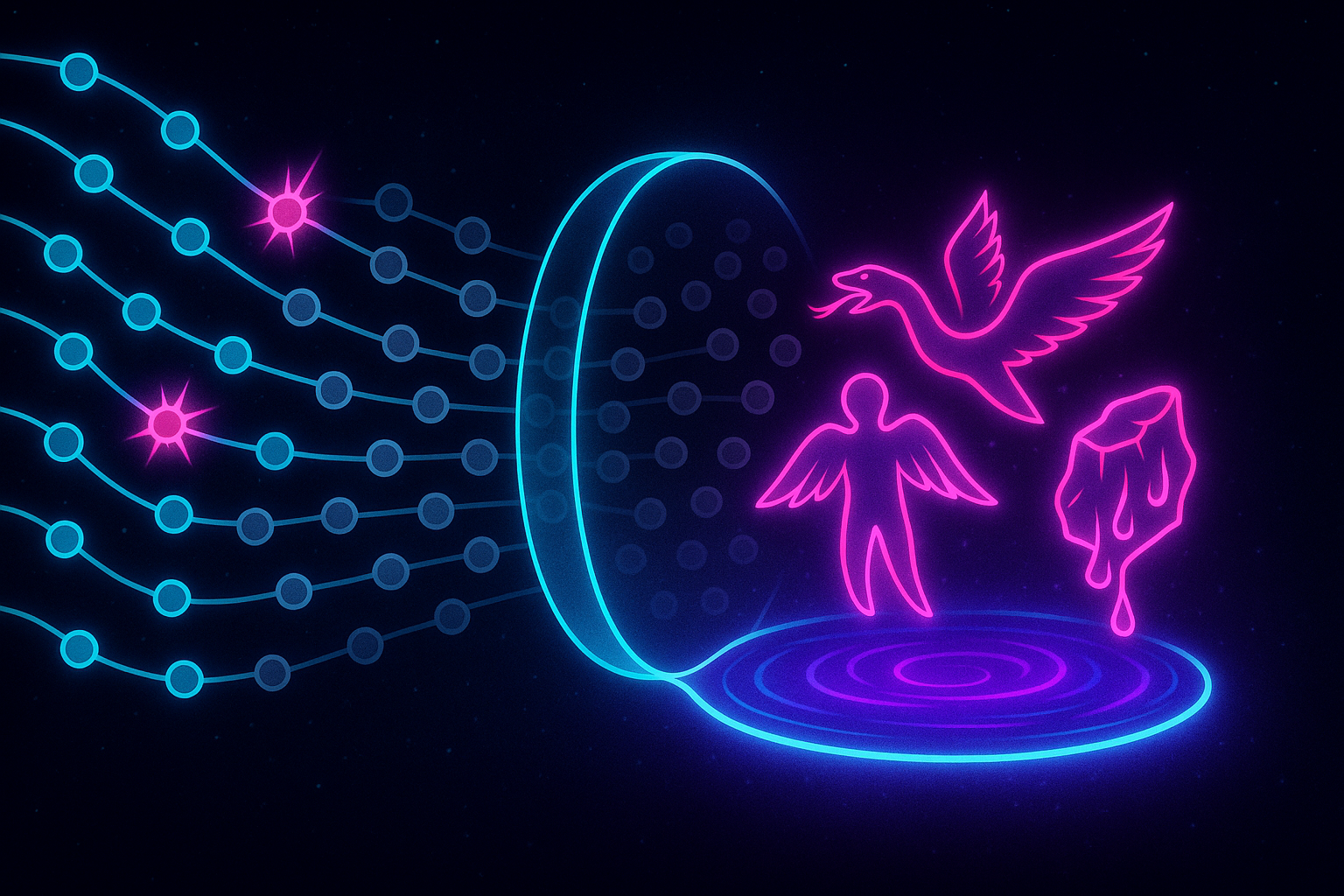
Boyer's "minimally counterintuitive concepts" explain why gods and spirits populate myths: they violate just enough expectations to be memorable while remaining comprehensible. A tree that talks is interesting. A tree that talks, flies, grants wishes, and speaks only in riddles is too much—too many violations, too hard to transmit.
Myths that survive cultural evolution are those that balance memorability with functional wisdom. They're not primitive—they're sophisticated information technology built from narrative rather than silicon.
Understanding myths as compression algorithms clarifies why they worked historically, why modern conditions broke them, and what conscious myth-making might involve.
Articles in This Series





Comments ()