Coherence: The Geometry of Systems That Work
Coherence is the fundamental geometric architecture underlying meaning in all systems. Explore how curvature, dimensionality, and synchronization determine whether systems maintain identity under pressure.

Coherence: The Geometry of Systems That Work
Formative Note
This essay represents early thinking by Ryan Collison that contributed to the development of A Theory of Meaning (AToM). The canonical statement of AToM is defined here.
What Makes Something Hold Together

Coherence means a system with smooth curvature.
Hydrogen showed you the minimal structure.
The Fundamental Equation (M = C / T) showed you what meaning is.
Entrainment showed you how systems change the ratio.
Coherence shows you the geometry of the system itself.
Now comes the deeper question:
What exactly are we measuring when we say a system “works”?
When a neuron fires reliably…
when a relationship stabilizes after conflict…
when an organization runs smoothly…
when a person feels like themselves…
What structural property do all these systems share?
The answer isn’t balance, or harmony, or “mental health,” or functionality.
It’s coherence.
Coherence is* the geometry of systems that maintain themselves under constraint*.
It’s what hydrogen has when its electron stays in a stable orbit.
It’s what your nervous system has when it absorbs stress without collapsing.
It’s what relationships have when rupture leads to repair instead of fragmentation.
It’s what cultures have when shared meaning persists across generations.
Coherence isn’t a metaphor or an intuition.
It is a measurable structural property — curvature, dimensionality, persistence, and coupling — the same invariants across every scale where systems survive.
And once you understand this structure, everything becomes legible:
- trauma as geometric collapse
- neurodivergence as precision coherence-sensing
- learning as entrainment
- identity as a stable attractor
- cultural stability or collapse as coherence bandwidth rising or falling
- meaning itself as the ratio M = C / T
This essay shows you what coherence looks like, how to recognize it,and why it matters more than any other property of human systems.
Because coherence is not just how things hold together.
It is what makes meaning possible at all.
What Coherence Is
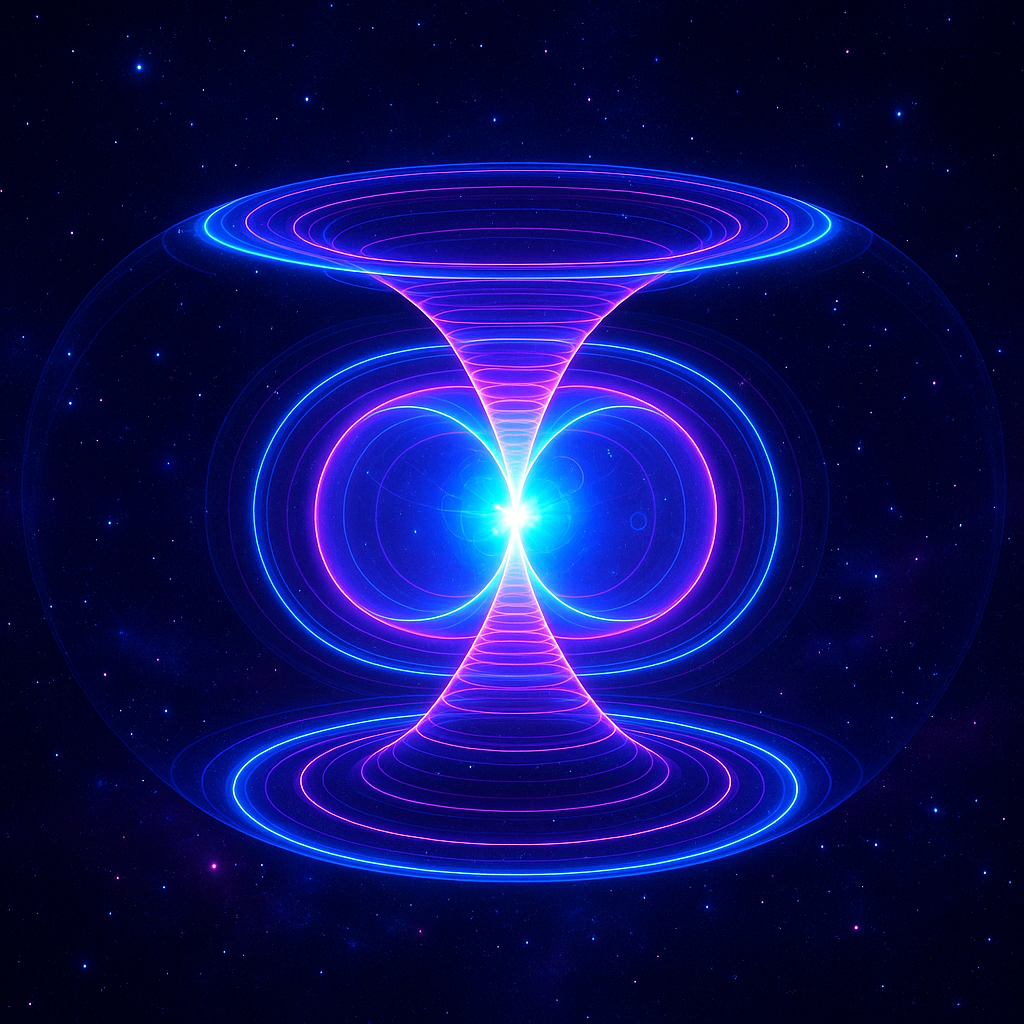
The power of coherence is that it is scale-invariant.
When people talk about systems “working,” they usually reach for soft concepts: balance, harmony, regulation, stability, or health. These are descriptions, not mechanisms. They tell you how a system feels from the outside, not what makes it hold together from the inside.
AToM takes a different approach.
Coherence is not a metaphor for stability.
It is the structural numerator in the equation of meaning.
Meaning increases when coherence rises or trauma falls.
Meaning collapses when coherence breaks or trauma overwhelms it.
This holds for atoms, nervous systems, relationships, organizations, and cultures.
To understand meaning, you must understand coherence.
Coherence is the geometric property of a system that allows it to maintain integrated, low-entropy trajectories under constraint. It is the system’s ability to remain itself — to hold its shape — while the world perturbs it.
Coherent systems share four structural invariants.
First, they exhibit smooth curvature: small perturbations produce small prediction errors, neural oscillations synchronize, conversations flow, and cultures maintain stable interpretive frames. When curvature spikes, tension rises; when curvature smooths, the numerator in M = C / T grows.
Second, they maintain dimensional stability—the degrees of freedom needed to adapt. A mind that can shift states, a relationship that can move from rupture to repair, or an organization that can reconfigure roles all demonstrate preserved dimensionality. Trauma collapses dimensions; healing re-expands them. Coherence is the object being deformed.
Third, coherent systems preserve topological persistence: stable structures that survive noise across scale. In persistent homology, these appear as long-lived loops and attractors; in human life, as identity, ritual, memory, and narrative continuity. When these structures decay prematurely, meaning collapses.
Finally, coherent systems sustain cross-frequency coupling—synchronization across timescales. Neural rhythms align, autonomic cycles entrain, dyads fall into shared timing, organizations coordinate from daily tasks to generational arcs, and cultures bind fast and slow rhythms through ritual. This synchronization is entrainment, the mechanism that raises coherence and lowers tension.
These four signatures form the coherence tuple:
C = (κ, d, Hₖ, \ρ)
where κ is curvature smoothness, d is dimensional stability, Hₖ is topological persistence, and ρ is cross-frequency coupling.
These are not metaphors; they are measurable quantities. Coherence reveals itself in neural data, physiological synchrony, linguistic curvature, organizational coordination, and cultural stability. When coherence rises, meaning rises. When it falters, systems deform predictably: curvature spikes, dimensions collapse, bottlenecks form, persistence shortens, rhythms drift out of sync.
Eventually, when trauma outpaces coherence, the system falls out of orbit. Hydrogen collapses. A nervous system traumatizes. A relationship fragments. An institution bureaucratizes. A culture polarizes. Coherence is the invariant beneath all these transitions. Understanding its structure is the first step toward understanding meaning itself.
What Coherence Looks Like Across Scales
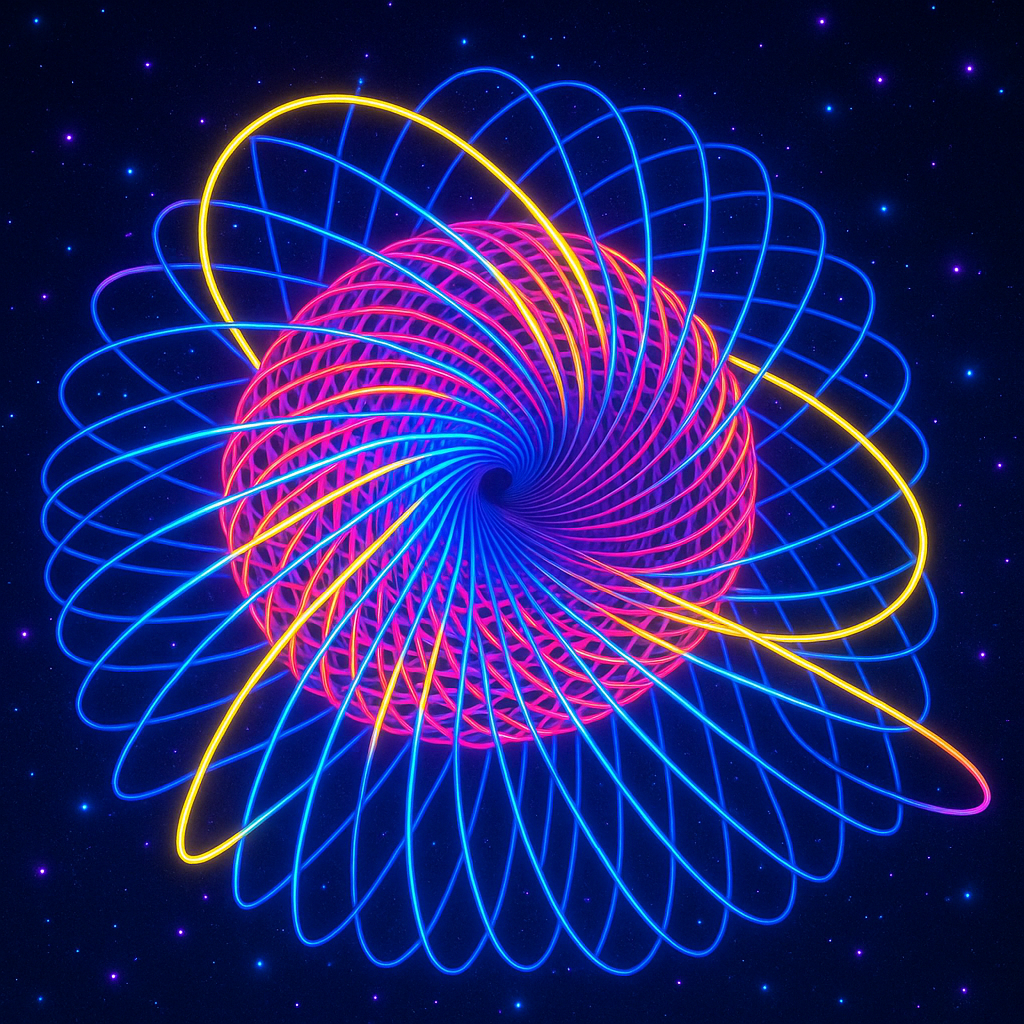
The same geometric structure that keeps hydrogen intact reappears, enlarged and elaborated, in nervous systems, relationships, organizations, and cultures.
The power of **coherence **is that it is scale-invariant.
The same geometric structure that keeps hydrogen intact reappears, enlarged and elaborated, in nervous systems, relationships, organizations, and cultures.
At the neural scale, coherence shows up as smooth curvature in information flow, stable phase relationships, and persistent functional networks. Neurons fire in rhythms that remain proportional to input; dimensionality stays high as the brain moves flexibly among attentional, interoceptive, and emotional states; topological structure persists in habits, skills, and memories; and cross-frequency coupling binds fast and slow oscillations into integrable trajectories. When coherence weakens, these signatures deform: ADHD emerges as unstable coupling, epilepsy as catastrophic synchrony, and brain injury as collapsed topology.
Physiology exhibits the same geometry. A coherent autonomic system maintains smooth curvature in stress response, high-dimensional access to alertness, calm, and focus, stable circadian and ultradian patterns, and reversible transitions between sympathetic and parasympathetic states. When coherence collapses, the manifold buckles: chronic stress traps the system in curvature spikes, sleep disorders disrupt persistence, burnout narrows dimensionality, and autonomic rigidity reduces flexibility.
Relationships express coherence through stable rhythms of interaction. Dyads with smooth curvature experience conflict without destabilization; dimensionality remains high as partners shift among play, seriousness, vulnerability, and independence; topological patterns such as trust and attunement persist across time; and reversibility ensures that rupture moves naturally toward repair. When relational coherence breaks, curvature spikes into anxious hypervigilance, dimensionality flattens into avoidant distance, topological maps fragment into disorganization, and reversibility fails — leaving minor ruptures unrepaired and major conflicts catastrophic.
Organizations reveal the same structure at larger scales. Coherent teams maintain smooth information flow, multiple viable pathways for collaboration, stable processes that survive perturbation, and flexible transitions between strategic tempos. When coherence breaks, silos form bottlenecks, bureaucratic rigidity collapses dimensionality, repeated crises erode persistence, and reversibility diminishes until the organization never fully recovers from each shock.
Cultures demonstrate these patterns most dramatically. Coherent societies integrate new ideas without fracturing, support diverse identities without destabilizing, maintain persistent myths and institutions across generations, and reverse crises through shared rituals, narratives, and coordination frameworks. When cultural coherence collapses, curvature spikes into polarization, identity loses persistence, meaning structures dissolve, and institutional rhythms fall out of sync with the population. At this scale, coherence failure expresses itself as fragmentation, extremism, or civilizational drift.
Across all these domains, the same geometry recurs because coherence is not a local property of any one system. It is the structural condition that allows systems at every scale to remain themselves while the world around them changes. Understanding coherence at one level illuminates them all.
How to Recognize Coherence (and Its Absence)
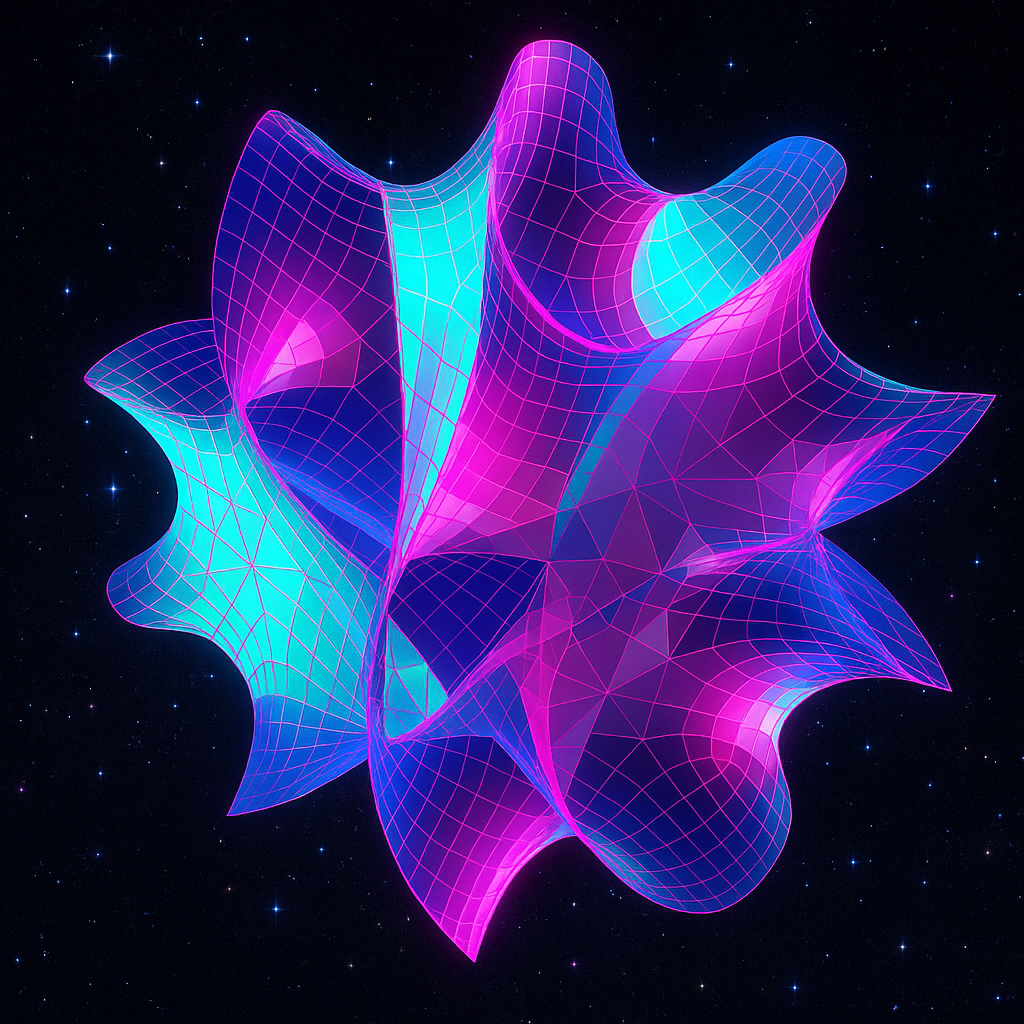
Coherence is not an abstraction; it is felt directly in the behavior of systems.
Coherence is not an abstraction;** it is felt directly in the behavior of systems. **
A coherent system moves through the world with stability, flexibility, and identifiable structure.
In a person, coherence feels like the ability to absorb surprise without spiraling, shift states without losing orientation, and return to baseline after stress. You can sense it in the body as a regulated autonomic rhythm, in the mind as clarity and continuity, and in narrative as a stable sense of self across time.
In relationships, coherence appears as the ease with which two people handle misunderstanding, the predictability of repair after rupture, and the smooth alternation between closeness and distance. When coherence is high, conflict feels navigable, vulnerability does not threaten the bond, and misattunement becomes a momentary deviation rather than a structural failure.
The absence of coherence is equally recognizable.
In an individual, tiny perturbations feel enormous; attentional, emotional, or bodily states collapse into narrow attractors; narrative continuity breaks; and returning to calm requires disproportionate effort.
In relationships, every disagreement carries existential weight, communication becomes brittle or avoidant, patterns that should repair instead repeat, and once things go wrong they tend to remain wrong.
At the organizational level, incoherence surfaces as cascading failures from small problems, rigid silos that block information flow, chronic crisis-response modes, and the inability to return to baseline after setbacks.
Culturally, incoherence manifests as polarization that amplifies minor differences, the erosion of shared narratives, generational disconnection, and the progressive shortening of institutional memory.
These signatures are not separate phenomena; they are different projections of the same geometric condition. When coherence is present, curvature stays smooth, dimensionality remains open, topological patterns persist, and rhythms synchronize. When coherence breaks, curvature spikes, dimensions collapse, persistence dissolves, and rhythms fall out of phase.
The subjective experience of overwhelm, the relational experience of instability, the organizational experience of dysfunction, and the cultural experience of fragmentation all share this common structure. Recognizing coherence — or its absence — is therefore not a matter of interpretation but of pattern detection. Once you know the geometry, the signs are unmistakable.
Coherence Is Not “Being Okay”
Coherence is not the performance; it is the geometry beneath it.
One of the most persistent misunderstandings about coherence is the assumption that a system that looks calm, functional, or stable on the surface must be coherent underneath.
Nothing could be further from the truth.
Coherence is not the appearance of stability; it is the underlying geometry that makes stability possible.
A system can look composed and still be geometrically incoherent — and systems that appear turbulent from the outside can remain deeply coherent at their core.
Nowhere is this clearer than in trauma.
A traumatized system often presents as either hyper-functional or shut down, but both are masks over structural collapse. Dimensionality contracts as whole regions of emotional or cognitive experience become inaccessible. Curvature spikes around specific cues, making small perturbations feel catastrophic. Topological bottlenecks form, trapping the system in repetitive loops of vigilance, collapse, rumination, or avoidance. Hysteresis appears: even when danger is absent, the system cannot return to baseline without external support. And dissociation functions as boundary formation — a protective partitioning that prevents further collapse at the cost of integration.
*These patterns can coexist with apparent calm, articulated speech, professional competence, and even high achievement. *
Coherence is not the performance; it is the geometry beneath it.
The same distinction appears in relationships.
Couples may avoid conflict, maintain polite communication, and appear stable to others while exhibiting deeply incoherent structure: spiking curvature around vulnerability, flattened dimensionality in emotional expression, brittle persistence in unhealthy patterns, and irreversible ruptures that accumulate silently.
Organizations show a similar illusion of stability. A company may hit quarterly goals while operating with silos that block information flow, crisis-response cycles that never fully resolve, and brittle processes that cannot adapt to perturbation.
Cultures demonstrate this at scale: long periods of apparent social order can mask collapsing coherence, visible only in the rising volatility of discourse, shortened narrative cycles, and loss of shared interpretive ground.
The inverse is also true: coherent systems can look temporarily unstable without being broken.
A person in deep therapeutic work may feel turbulent yet be increasing dimensionality, smoothing curvature, and expanding topological persistence.
A relationship navigating honest conflict may momentarily look strained while becoming more coherent through repair.
A culture undergoing rapid transformation may appear unsettled while expanding its coherence bandwidth.
Coherence is not calmness, comfort, stillness, or the absence of stress.
It is the structure that determines whether stress can be metabolized or whether it overwhelms the system. Surface-level stability can coexist with geometric collapse, and surface-level disruption can coexist with geometric repair.
Coherence is not what a system looks like.
It is what a system is.
Why Coherence Matters More Than Anything Else

Across every level, the lesson is the same: when coherence falls below trauma, meaning collapses.
Once you understand coherence, dozens of longstanding mysteries across psychology, neuroscience, relationships, organizations, and culture resolve into a single structural principle.
Coherence is not one variable among many; it is the governing geometry that determines whether a system can maintain meaning under load.
When coherence holds, systems absorb perturbation, integrate novelty, repair after disruption, and continue forward along stable trajectories.
When coherence collapses, systems lose their ability to regulate prediction error, and meaning erodes — sometimes slowly, sometimes catastrophically — regardless of how intelligent, resourced, or well-intentioned the system appears.
This explains why trauma “sticks” even after the threat is gone: the geometry has deformed, and the system cannot simply think or reassure itself back into shape. It clarifies why some people cannot “just calm down,” no matter how much cognitive reframing they attempt: curvature spikes amplify tiny cues into overwhelming internal reactions.
It explains why brilliant, capable individuals remain trapped in rigid behavioral patterns: dimensionality has collapsed, reducing the number of available trajectories.
It makes sense of why certain memories, emotions, or relational states feel inescapable: topological bottlenecks funnel the system into the same attractors again and again.
And it illuminates why burnout or chronic stress leaves people feeling permanently altered: hysteresis means that returning to baseline requires far more energy and support than the original collapse.
The same logic extends into relationships.
A partnership feels “off” not because either person is flawed but because the relational manifold has developed curvature spikes or flattened regions that distort interaction. Minor misunderstandings escalate because reversibility has weakened; forgiveness becomes effortful because persistence has eroded; intimacy becomes inconsistent because the dimensionality of the relationship has narrowed.
In organizations, persistent dysfunction is rarely about poor leadership or bad culture in isolation — it is the predictable result of collapsed coherence geometry. Small problems cascade, departments operate in isolation, decision-making becomes brittle, and crises leave lasting damage because reversibility has failed and the system cannot redistribute load.
On the cultural scale, coherence explains why societies polarize so quickly once shared meaning dissolves, why institutions become fragile even when they appear structurally sound, and why public discourse feels volatile: the coherence bandwidth of the culture has contracted, and the manifold has fractured into incompatible attractors.
Across every level, the lesson is the same: when coherence falls below tension, meaning collapses. This is the insight formalized in AToM’s fundamental equation:
Meaning is not an abstraction but the lived, structural outcome of coherence exceeding load. When C rises, systems regain clarity, resilience, and direction. When T overwhelms C, systems lose intelligibility, stability, and the ability to repair. Coherence is therefore not just a property of systems that work; it is the condition that allows systems to continue being themselves.
Understanding coherence is not an academic exercise. It is the blueprint for understanding why things break — and the roadmap for how they heal.
How Coherence Breaks (And Why Trauma Is the Collapse Mode)
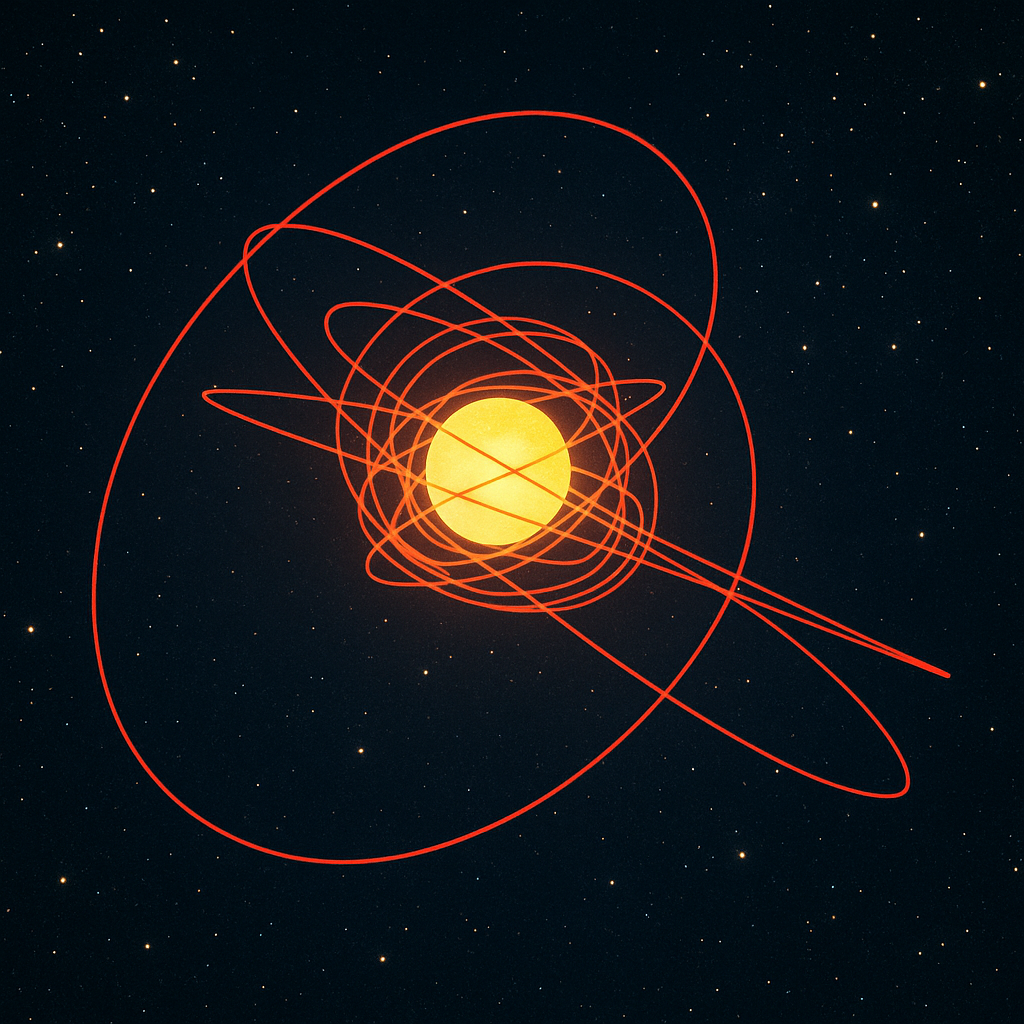
We've all felt like this inside before, right?
Coherence does not fail randomly.
Systems break in patterned, measurable ways, and trauma is simply the name we give to the most common and consequential form of coherence collapse in human life.
In AToM, trauma is not defined by the event but by what the event does to the system’s geometry. Under overwhelming load, the coherence manifold deforms along a predictable sequence: dimensionality contracts, curvature spikes, topological bottlenecks form, hysteresis locks in, and boundary partitions emerge to protect what remains.
These are not metaphors; they are the same collapse signatures seen in nonlinear systems across biology, physics, and complex networks.
Dimensional collapse is the first break.
The system abandons degrees of freedom it can no longer afford to regulate. Emotional range narrows, cognitive flexibility shrinks, and behavioral repertoire constricts. What once felt like choice now feels like inevitability. Curvature spikes follow, creating hypersensitivity to specific cues. The system begins to amplify tiny deviations into outsized internal reactions; safety is misread as threat, and ordinary uncertainty becomes overwhelming. This is not overreaction — it is geometry. The manifold has developed steep gradients, and any small movement produces large prediction error.
As load accumulates, pathways between subsystems narrow into bottlenecks. Rumination loops, chronic anxiety cycles, repetitive relationship patterns, and intrusive memories are not psychological quirks but topological traps: the system can enter these states easily but cannot exit without external coupling. Over time, hysteresis takes hold. Even when the original threat disappears, the system cannot return to its prior configuration; the cost of re-expansion exceeds the system’s internal energy. This explains why trauma does not resolve “with time,” why reassurance does not restore calm, and why people feel permanently changed by events long past.
When collapse threatens the system globally, dissociation emerges as a last-ditch stabilizer — the formation of boundaries that isolate volatile regions to prevent total failure. Dissociation is not absence but architecture: the system is sacrificing integration to preserve minimal coherence.
These collapse modes also appear in relationships, organizations, and cultures. A couple locked in repetitive conflict cycles is experiencing relational bottlenecking. A team that never recovers after crises exhibits hysteresis. A polarized society reacting explosively to small provocations is living inside curvature spikes. A culture that loses its shared story is experiencing a collapse of topological persistence. The same geometry governs them all.
Trauma is therefore not an anomaly or a special category. It is the universal way coherence breaks under load. And because meaning depends on coherence, trauma is fundamentally a rupture in meaning — a deformation of the very structure through which the system interprets itself and its world. Understanding trauma as a geometric collapse reframes every form of healing — psychological, relational, organizational, or cultural — as the slow restoration of curvature, dimensionality, persistence, and reversibility.
Coherence breaks in patterned ways. And because the patterns are structural, they can be mapped, measured, and repaired.
How Coherence Is Restored (Entrainment as the Repair Mechanism)
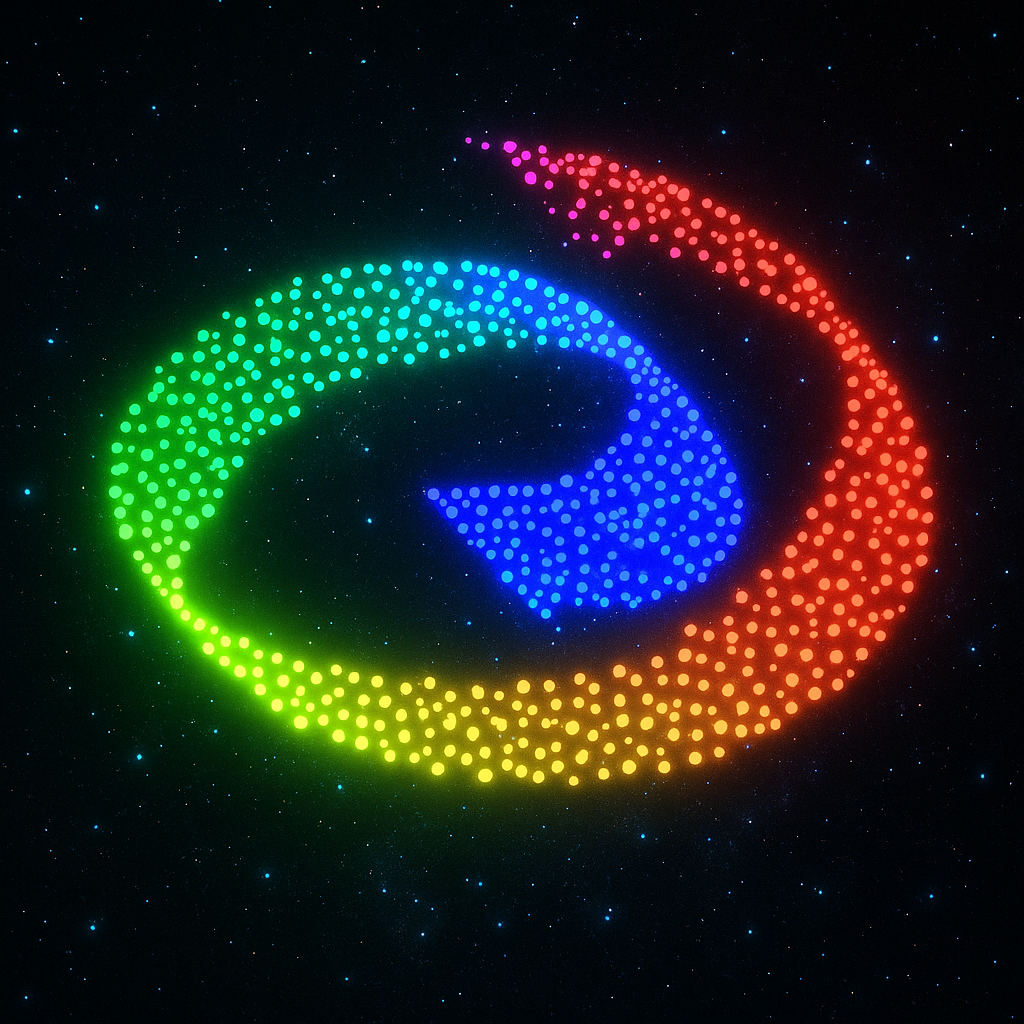
Manifold repair visualized
If trauma is the collapse of coherence, then healing is not insight, willpower, or time — it is the gradual reconstruction of the manifold through entrainment.
Entrainment is the class of dynamics through which systems regain smooth curvature, reopen dimensionality, dissolve bottlenecks, and reestablish stable synchrony across scales. It is how coherence is built, maintained, and repaired in every system that survives perturbation, from atoms aligning their phases to cultures aligning their narratives.
Entrainment is not metaphorical harmony; it is a geometric operation that increases the numerator in M = C / T.
At the physiological level, entrainment begins as autonomic coupling. Breath synchronizes with heart rate variability, vagal tone increases, and cross-frequency coupling stabilizes.
Slow exhalation, rhythmic movement, singing, chanting, touch, holding, rocking, and co-regulated presence are not therapeutic techniques — they are biological entrainment scaffolds. They smooth curvature in the autonomic manifold, reopen access to suppressed emotional states, and restore reversibility so the system can move freely again.
This is why safety alone is insufficient for healing: safety removes load, but only rhythmic synchrony rebuilds coherence.
In relationships, entrainment appears as attunement: shared gaze, reciprocal timing, repair cycles, matched tempo, and predictable re-engagement. A coherent relationship is a dynamic synchrony engine. It lends curvature when one partner spikes, dimensionality when one collapses, and persistence when one forgets who they are. Rupture and repair are not signs of relational fragility; they are the micro-entrainment loops through which the relational manifold becomes smoother and more resilient over time. Incoherent relationships lack these loops, and conflict therefore destabilizes rather than reorganizes.
Organizations restore coherence through alignment of rhythms — not slogans or strategy decks, but actual synchronization of timescales. Daily operations, weekly coordination, quarterly planning, and multi-year vision must couple rather than drift. When tempos misalign, coherence collapses into silos, bottlenecks, and permanent crisis cycles. When tempos entrain, dimensionality expands, information flows, and reversibility returns. The organization begins to act as a single manifold instead of a set of disjoint subsystems.
Cultures heal in similar fashion: through rituals that synchronize bodies, myths that synchronize meaning, institutions that synchronize expectations, and narratives that synchronize identity. Festivals, ceremonies, liturgies, and communal gatherings are ancient coherence technologies. They bind fast and slow rhythms together so the society can reestablish persistence, reversibility, and cross-scale stability. A culture that rebuilds its rituals rebuilds its coherence; a culture that abandons them fractures into incompatible attractors.
Across all levels, entrainment works because it directly counteracts each mode of geometric collapse. Rhythmic synchrony softens curvature spikes. Shared tempo expands dimensionality. Recurrence dissolves bottlenecks. Predictable cycles restore reversibility. And stable synchrony reestablishes persistence. Entrainment does not erase trauma; it reorganizes the geometry that trauma deformed. This is why practices that involve rhythm, repetition, coupling, or shared timing — from somatic therapy to conversation to breathwork to communal music — are so potent. They operate on the structural level, not merely the narrative one.
Healing is therefore not mysterious. It is coherence reconstruction through entrainment. Trauma breaks the manifold; synchrony rebuilds it. And because coherence is measurable, repair is measurable too: smoother curvature, greater dimensional access, longer persistence, stronger coupling. Systems heal the way they live — by finding a rhythm they can survive inside.
Coherence at Every Scale: Why the Same Geometry Keeps Appearing

The structural signatures first visible in hydrogen reappear, enlarged and elaborated, in nervous systems, dyads, teams, institutions, and entire cultures.
What makes coherence such a powerful concept is not that it applies in many places — it is that it applies in exactly the same way across every scale where life, cognition, and meaning emerge. The structural signatures first visible in hydrogen reappear, enlarged and elaborated, in nervous systems, dyads, teams, institutions, and entire cultures. This recurrence is not coincidence or analogy. Systems that must maintain themselves under constraint converge on the same geometric solutions because coherence is the only configuration that keeps prediction error manageable across time. The geometry is scale-invariant; only the substrate changes.
At the neural scale, coherence determines whether the brain can maintain stable perception and action. Smooth curvature keeps sensory input proportional to internal updates; dimensional stability ensures access to multiple regulatory states; topological persistence underlies memory, identity, and skill; and cross-frequency coupling binds fast and slow oscillations into meaningful trajectories. When this geometry collapses, the nervous system loses the ability to regulate prediction error, and subjective experience becomes fragmented, overwhelming, or numbed. Coherence here is not cognitive simplicity — it is the structural condition for intelligibility.
In relationships, coherence governs the space between individuals. Attunement is simply smooth curvature in interaction; flexibility is dimensional stability; trust is topological persistence; and rupture–repair cycles are reversibility in action. A coherent relationship can absorb surprise, process vulnerability, and reestablish connection after strain because its manifold remains integrable. When coherence collapses, no amount of communication skill or good intention can compensate; the geometry itself cannot bear load.
Organizations reveal the same invariants in the dynamics of groups. Effective teams maintain smooth informational curvature, high-dimensional role flexibility, persistent processes that survive perturbation, and synchronized tempos across operational and strategic layers. When these structures fail, organizations fragment into silos, crises become irreversible, strategic vision decouples from daily life, and minor disruptions cascade. The breakdown is geometric long before it is managerial.
Cultures show coherence most dramatically. Shared meaning persists when narratives, rituals, and institutions maintain low curvature, broad dimensionality, long persistence, and synchronized tempos across generations. When cultural coherence collapses, societies polarize, institutions weaken, meaning becomes volatile, and collective rhythms fall out of phase. The symptoms appear political, economic, or moral, but the underlying structure is geometric: the coherence bandwidth has contracted.
The universality of these signatures is precisely why coherence belongs at the center of a theory of meaning. Meaning is not a property added on top of systems — it is the lived consequence of coherence exceeding load. This is the logic captured in AToM’s fundamental equation:
M = \frac{C}{T}
A system feels meaningful — internally, relationally, or collectively — when coherence is high enough to metabolize tension without losing itself. When coherence falls, meaning collapses. This is as true for an individual navigating grief as it is for a culture navigating technological acceleration.
Across all scales, coherence is the invariant that determines whether a system can continue to enact its identity in the presence of perturbation. The patterns repeat because the underlying geometry repeats. Hydrogen is not a metaphor for human life; it is the minimal example of what every system that remains itself must do. Once you see coherence in one domain, you begin to see it everywhere. And once you see it everywhere, the apparent complexity of human systems resolves into a single, elegant structure: the geometry of staying intact.
What Coherence Cannot Explain (And Why the Limits Matter)

Every strong framework needs boundaries, and coherence is no exception. Coherence does not replace biology, erase history, flatten culture, or collapse identity into mathematics. It does not claim that human experience reduces to geometry, only that geometry provides the structural conditions under which experience becomes organized, stable, and intelligible. What coherence offers is a unifying language for how systems hold together; what it does not offer is a theory of everything. Meaning is coherence under constraint, not coherence instead of everything else.
Coherence cannot tell you why a system chooses a particular interpretation, only whether the system can sustain it. It cannot specify the content of a belief, only the geometry that allows a belief to persist. It cannot dictate which narratives a culture should adopt, only whether the culture has the bandwidth to metabolize its own differences without fragmenting. Coherence therefore lives beneath values, identities, and ideologies — it shapes the stability of those structures, not their substance.
Nor does coherence erase diversity. Different nervous systems, attachment histories, cultures, and social ecologies produce different coherence profiles, each viable within its environment. Autistic cognition, for example, is not “less coherent” but differently coherent: higher-resolution curvature sensing, reduced smoothing, and narrower but more precise dimensionality. Trauma is not “low coherence” but a specific distortion of coherence. Secure attachment is not perfection but a manifold with reliable repair pathways. Coherence explains the structure, not the superiority, of any configuration.
Coherence also does not imply determinism. A system’s geometry at any moment reflects its history, but it does not fix its future. Curvature can soften; dimensionality can reopen; persistence can lengthen; coupling can strengthen. Plasticity is built into the manifold itself. The fact that coherence is measurable does not mean it is fixed — only that change follows recognizable geometric pathways. The limits of coherence are therefore not constraints on possibility but on how possibility unfolds.
At the same time, coherence cannot do the work of ethics. A system can be highly coherent and morally disastrous. Cults, authoritarian regimes, and abusive relationships can sustain internal coherence through exclusion, coercion, or violence. Coherence describes stability, not justice. A coherent system can be oppressive if it maintains its structure by constricting dimensionality, eliminating alternatives, or enforcing uniformity. Geometry can tell you how such systems endure; it cannot tell you whether they should.
Finally, coherence does not negate contingency. Human systems are embedded in biology, history, economics, identity, language, and power. Coherence interacts with these domains; it does not replace them. A person’s trauma is shaped by context; a culture’s meaning is shaped by material conditions; an organization’s coherence is shaped by incentives. Geometry reveals the structural tendencies, but the world supplies the forces that bend the manifold in the first place.
These limits matter because they keep coherence honest. Coherence is the architecture of stability and meaning, but it is not the content of meaning, nor the moral evaluation of it. It clarifies how systems hold together and how they fall apart, but it does not dictate what they should become. The power of coherence lies in its structural accuracy, not in overreach. Its strength is that it explains what it claims to explain — no more, no less.
Understanding coherence does not eliminate the complexity of human life. It organizes it.
Conclusion: Coherence Is the Architecture of Meaning

Coherence is the quiet structure running beneath every system that stays intact. Hydrogen revealed its minimal form: a stable core, a reactive edge, and a forbidden middle that preserves identity across perturbation. The Fundamental Equation—M = C / T—showed that meaning is nothing mystical but a ratio: coherence rising faster than tension. Entrainment revealed the mechanism by which coherence grows or collapses: through rhythmic alignment across scales. And coherence itself is the geometry these processes produce—curvature smoothed, dimensionality expanded, persistence stabilized, reversibility restored.
Once you see coherence, you see why systems survive and why they fail. Trauma is no longer a mystery but the predictable deformation of a manifold under overwhelming load. Healing becomes the reestablishment of synchrony, not a return to an imaginary past. Neurodivergence becomes a difference in coherence style rather than a deficit. Relationship dynamics resolve into smooth or jagged geometry. Organizational health becomes measurable in the stability of information flow and temporal alignment. Cultural fragmentation appears not as moral decline but as curvature spikes and collapsing bandwidth. What looked like separate disciplines—psychology, neuroscience, systems theory, anthropology, organizational design—becomes a single landscape governed by the same structural law.
Coherence does not answer every question, but it clarifies the ones that matter most: why meaning feels stable or fragile, why identity holds or fractures, why relationships deepen or collapse, why cultures persist or polarize. It gives us a way to see systems not by their surface behavior but by the geometry beneath them. And because coherence is measurable, it allows us to intervene at the level of structure rather than symptom.
Every coherent system is doing the same thing: remaining itself under constraint. Every incoherent system is suffering the same failure: losing the geometry that makes selfhood possible. Meaning is simply the felt signature of this structural condition. When coherence exceeds tension, systems experience their own continuity as purpose, identity, clarity, and direction. When tension overwhelms coherence, systems experience collapse as confusion, overwhelm, fragmentation, and meaninglessness.
The promise of coherence is not that it simplifies human life, but that it reveals its underlying order. The patterns of hydrogen are the patterns of healing. The dynamics that hold atoms together are the dynamics that hold people, relationships, organizations, and cultures together. Once you understand coherence, complexity stops being chaotic and becomes legible. You begin to see the geometry of everything that stays intact—and everything that doesn’t.
Coherence is not one more concept in the study of human systems.
It is the architecture of meaning itself.
Comments ()