Cross-Frequency Coupling: The Stack of Rhythms
From circadian cycles to neural oscillations, your body coordinates rhythms across timescales. Modern environments systematically disrupt this coupling, fragmenting integrated function. Part 8 of Polyvagal Through the Coherence Lens.
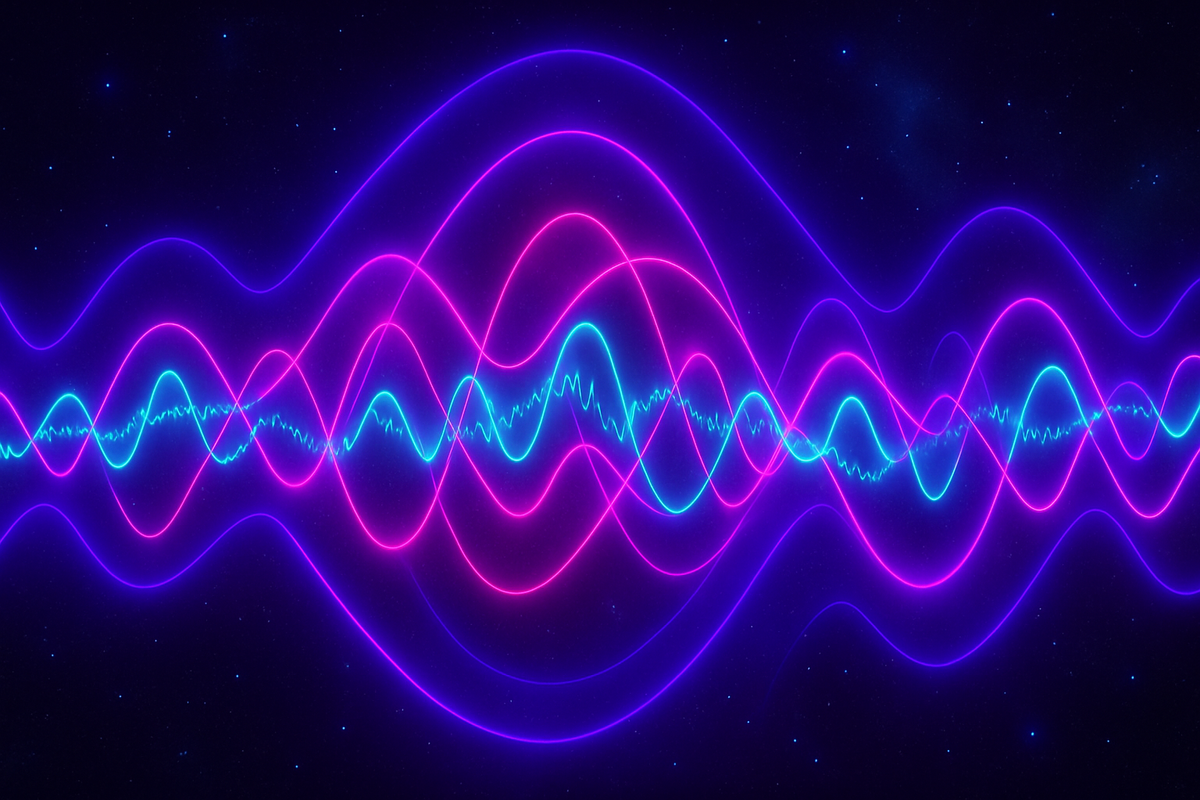
Cross-Frequency Coupling: The Stack of Rhythms
Part 8 of Polyvagal Through the Coherence LensYour body isn't one rhythm. It's a stack of rhythms that must stay in phase.The previous articles have examined the heart-breath relationship—a single coupling between two oscillators. But the autonomic nervous system involves far more than two rhythms. Circadian cycles span 24 hours. Ultradian rhythms pulse every 90-120 minutes. Respiratory cycles repeat every 4-6 seconds. Cardiac oscillations happen roughly once per second. Neural rhythms operate at millisecond timescales.These different frequencies must coordinate. Faster rhythms nest within slower ones. The phase of the slow rhythm gates the behavior of the fast rhythm. When this multi-scale organization holds, the system achieves coherence across timescales. When it breaks, the system fragments—each timescale operating semi-independently, producing chaos at the interfaces.The Hierarchy of RhythmsThe body's oscillations organize hierarchically:Circadian (24 hours): The master clock. Governed by the suprachiasmatic nucleus, entrained by light. Sets the backdrop for all other rhythms. Determines when the system is oriented toward activity versus rest.Ultradian (90-120 minutes): Cycles of alertness, focus, and metabolic activity that pulse throughout the day. Sleep stages follow ultradian patterns. Attention and performance fluctuate on these rhythms.Cardiac (seconds): The heartbeat and its variability. Modulated by respiration, emotional state, and cognitive load.Respiratory (seconds): The breath cycle. The most accessible handle on autonomic state.Neural oscillations (milliseconds to seconds): Brain rhythms that organize cognition—delta, theta, alpha, beta, gamma. Each frequency band serves different computational functions.For coherent function, these rhythms must couple. The circadian cycle should modulate ultradian patterns—sharper alertness cycles during day, flatter during night. Ultradian rhythms should influence cardiorespiratory dynamics—shifts in metabolic demand affecting breath and heart. Respiratory cycles should modulate cardiac timing—the RSA relationship. And neural oscillations should coordinate with all of this—attention and cognition tracking with physiological state.What Coupling Looks LikeWhen cross-frequency coupling is intact:The morning cortisol pulse (circadian) prepares the system for the day's demands. Ultradian cycles distribute energy across the working hours, with natural dips around mid-morning and mid-afternoon. Cardiac and respiratory rhythms respond to task demands—accelerating during focus, slowing during breaks. Neural oscillations shift appropriately—beta and gamma during engaged cognition, alpha during rest, theta during memory consolidation.The system functions as one integrated whole despite operating at multiple timescales. Faster rhythms serve slower rhythms. Slower rhythms contextualize faster ones. Information flows across the frequency hierarchy.What Decoupling Looks LikeWhen cross-frequency coupling fails:The circadian signal is weak or desynchronized. The system doesn't know if it's day or night. Ultradian rhythms become erratic—attention fluctuates unpredictably rather than following coherent cycles. Cardiorespiratory dynamics lose their connection to metabolic demand and cognitive state. Neural oscillations decouple from bodily rhythms—the brain runs on its own timing, disconnected from physiological context.The signature of decoupling is unpredictability at the interfaces. The body is tired but the mind races. The mind is foggy but the body is activated. Sleep comes at wrong times. Alertness peaks and crashes without pattern. The system operates as fragments rather than a unified whole.Modern Life as Decoupling MachineContemporary environments systematically attack cross-frequency coupling.Artificial light disrupts circadian entrainment. The suprachiasmatic nucleus evolved to track sunrise and sunset. Electric light, especially the blue-enriched light of screens, sends false timing signals. The circadian anchor drifts.Constant stimulation overrides ultradian cycles. The natural 90-120 minute rhythm of attention is interrupted by notifications, meetings, and the expectation of perpetual availability. The system never completes a full ultradian cycle before being yanked into another demand.Sedentary behavior weakens cardiorespiratory coupling. Without regular rhythmic movement, the heart-breath relationship degrades. The mechanical entrainment that should reinforce coupling doesn't happen.Fragmented schedules introduce noise at every timescale. No consistent wake time. No consistent meal timing. No consistent work rhythm. The system has nothing stable to entrain to.Chronic stress depletes the resources needed to maintain coupling. The vagal brake weakens. Sympathetic activation overrides the coordinated oscillations that coupling requires.The result is a population experiencing coherence failure not because of any single insult but because of systematic disruption across the entire frequency stack.The Coherence GeometryIn AToM terms, cross-frequency coupling is the ρ component of the coherence tuple—how well different timescales and levels integrate.Balanced ρ means oscillations at different frequencies constrain and support each other. The slow rhythms provide context; the fast rhythms provide responsiveness. Information flows up and down the hierarchy. The manifold is integrated across scales.Excessive coupling means rigidity. The system is too tightly locked. Faster rhythms cannot deviate from their prescribed relationship to slower rhythms. Flexibility is lost. The system cannot adapt to novel demands.Insufficient coupling means fragmentation. The different timescales operate independently. There's no information flow between them. The manifold has topologically separated into disconnected regions—one for circadian function, one for cardiorespiratory function, one for neural function—with no coherent integration.Cross-frequency coupling is the signature of multi-scale coherence. Without it, local coherence at each timescale is possible, but global coherence—the integration that produces unified function—fails.Restoring CouplingIf modern life disrupts coupling, what restores it?Circadian anchoring: Consistent wake time, morning light exposure, evening darkness. Give the master clock a strong signal to entrain to. Everything downstream depends on this anchor.Ultradian honoring: Work in 90-minute blocks with genuine breaks. Don't override the natural attention rhythm. Let ultradian cycles complete before transitioning.Rhythmic movement: Daily exercise that involves sustained rhythmic activity—running, swimming, cycling, walking. The mechanical entrainment reinforces cardiorespiratory coupling. The metabolic demands create coherent signals across the frequency stack.Meal timing: Regular eating times provide another entrainment signal. Metabolic rhythms couple to feeding rhythms. Erratic eating fragments the ultradian layer.Sleep protection: Sufficient sleep allows the system to complete its restorative cycles. Sleep deprivation doesn't just cause tiredness—it disrupts coupling at every level.Intentional rhythm: Build predictable structure into the day, the week, the year. The system needs temporal landmarks to organize around.The Integration TestCross-frequency coupling is a test of multi-scale integration.It asks: Does this system function as one thing across timescales? Does the circadian layer communicate with the ultradian layer? Does the cardiorespiratory layer respond to both? Do neural oscillations coordinate with physiological state?When coupling is strong, you experience flow—the sense that different aspects of yourself are working together, that your body and mind are in the same conversation, that your days have coherent rhythm.When coupling is weak, you experience fragmentation—the sense that different parts of you are operating on different schedules, that your body and mind are strangers, that time is a series of disconnected episodes rather than a coherent flow.This is what coherence feels like from the inside. Not a single rhythm but the coordination of rhythms. Not one oscillation but the phase-locking of oscillations across the entire stack.The Polyvagal ConnectionPolyvagal states influence cross-frequency coupling.Ventral vagal dominance supports coupling. The myelinated vagus coordinates multiple systems. The social engagement state involves flexible integration across timescales—responsive to moment-to-moment demands while maintaining coherent longer-term patterns.Sympathetic dominance tends to disrupt coupling. The system prioritizes immediate response over long-term coordination. Faster rhythms decouple from slower ones. The circadian and ultradian contexts become less relevant as the system focuses on the threat at hand.Dorsal vagal shutdown produces erratic coupling. The system is no longer coherently managing any of its rhythms. Different timescales fluctuate independently. The integration that ventral vagal function enables has collapsed.This is why autonomic state matters for overall function. It's not just about whether you're calm or activated. It's about whether your system can maintain the multi-scale coordination that coherent function requires.Next: Trauma as Oscillatory Patterns—why you can't out-think a timing problem, and where trauma actually lives in the nervous system.Series: Polyvagal Through the Coherence LensArticle: 8 of 15Tags: cross-frequency coupling, circadian rhythm, autonomic nervous system, coherence, polyvagal
Comments ()