The Dark Tetrad: When Sadism Joins the Party
The dark triad—narcissism, Machiavellianism, psychopathy—was already unsettling. Adding everyday sadism creates the dark tetrad, a model that more accurately captures how cruelty actually operates in ordinary life.
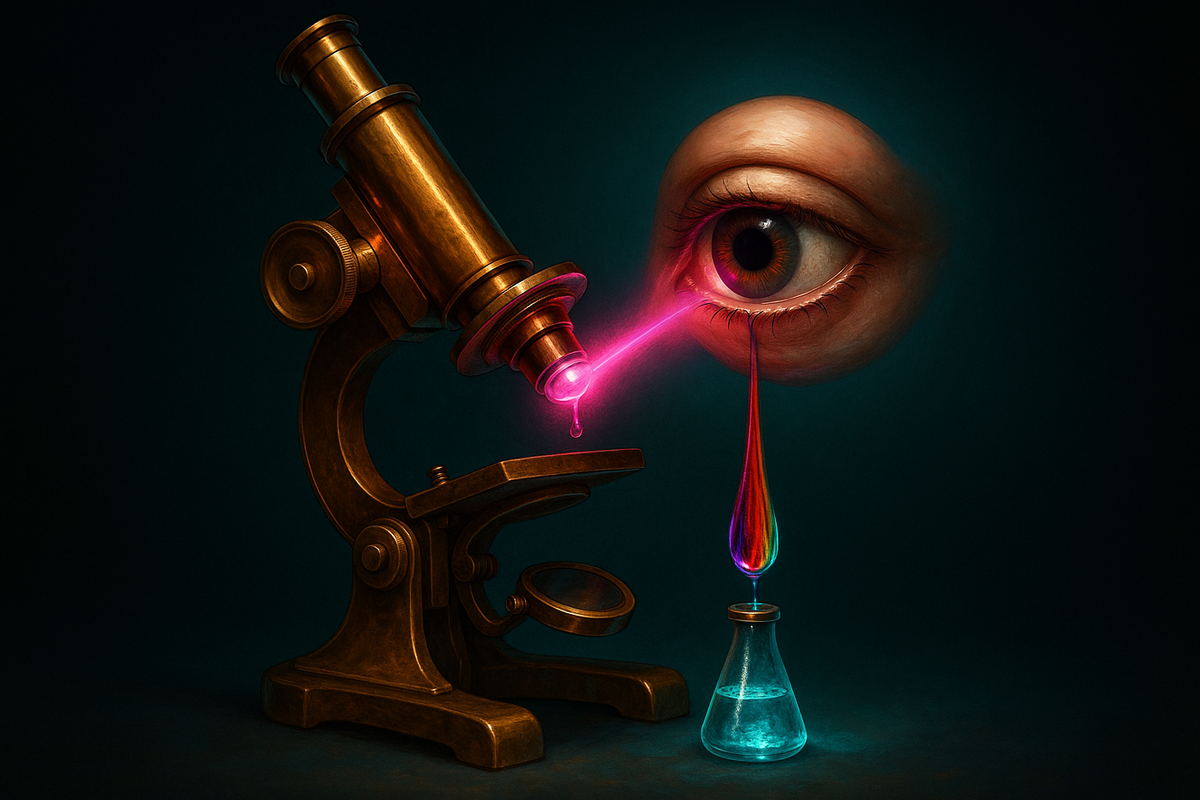
The Dark Tetrad: When Sadism Joins the Party
The Dark Triad had a good run. For two decades, narcissism, Machiavellianism, and psychopathy defined psychology's map of malevolence. Then researchers started noticing a pattern: the three traits predicted exploitation, manipulation, and harm—but they didn't fully capture everyday cruelty. People who enjoyed causing pain, who sought out opportunities to humiliate or hurt others, who found pleasure in suffering—these individuals weren't always high on the classic triad. They needed their own category.
Enter everyday sadism, and with it, the Dark Tetrad. Sadism is the enjoyment of cruelty. Not instrumental harm (that's Machiavellianism), not impulsive harm without remorse (that's psychopathy), not reactive harm to protect a fragile ego (that's narcissism)—but harm pursued for its own sake because causing pain feels good.
The Dark Tetrad emerged in 2013 when personality researchers Paulhus and Jones systematically tested whether sadism added explanatory power beyond the original three traits. It did. In controlled studies, sadists chose to inflict pain even when there was no strategic benefit, no thrill from risk, no ego threat to avenge. They killed bugs longer than necessary in lab tasks. They delivered louder noise blasts to supposed competitors. They volunteered to punish others in experimental games and then showed physiological arousal—pleasure—when administering punishment.
This isn't clinical sadism, the paraphilia involving sexual gratification from pain. This is subclinical trait sadism distributed across the population, measurable through validated instruments, and predictive of real-world behavior: cyberbullying, trolling, enjoying violent entertainment, cruel humor, and instrumental aggression that goes beyond what's strategically necessary.
The four-factor model better captures the landscape of human malevolence. Not because everyone who's cruel is a sadist, but because sadism explains variance the triad missed.
What Sadism Adds: The Pleasure Component
The Dark Triad traits predict harm through different mechanisms. Narcissists harm reactively when their ego is wounded. Machiavellians harm instrumentally when it serves strategic goals. Psychopaths harm impulsively due to emotional deficits. But none of them necessarily enjoy the harm itself.
Sadism is fundamentally about positive reinforcement from causing suffering. The sadist doesn't harm because they lack empathy (though that helps). They harm because inflicting pain activates reward circuits. Brain imaging studies show sadists exhibit heightened activation in the ventral striatum—the brain's reward center—when viewing others in pain. Where most people show empathic distress (anterior insula activation, aversive response), sadists show approach motivation and pleasure.
This creates a distinct behavioral signature. Where a psychopath might lie reflexively because truth has no weight, a sadist might lie elaborately to maximize the victim's later discovery and humiliation. Where a Machiavellian might betray an ally when the strategic calculation shifts, a sadist might betray an ally just to watch them suffer—and do so even when it harms their own interests.
The key diagnostic: does the person seek out opportunities to cause suffering, and do they show positive affect when doing so? If harm is instrumental or impulsive, it's not sadism. If harm brings visible enjoyment, lingers longer than necessary, or gets pursued at cost to the perpetrator—that's sadistic.
Measuring Sadism: From Bug-Crushing to Trolling
How do you measure the enjoyment of cruelty without running ethically horrifying experiments?
The Short Sadistic Impulse Scale (SSIS) uses self-report items like:
- "I enjoy seeing people hurt."
- "I would enjoy hurting someone physically, sexually, or emotionally."
- "People would enjoy hurting others if they gave it a go."
Critics reasonably point out that socially undesirable traits suffer from underreporting. True. But research converges across methods.
Behavioral tasks provide convergent validity. In the "bug-crushing paradigm," participants are told they can kill bugs (actually a computer simulation) to help scientific research. They choose how many bugs to kill and how long to extend each bug's death. High sadism scorers kill more bugs and grind them longer—well beyond what the "science" requires. They're not deriving strategic benefit. They're not demonstrating fearlessness. They're enjoying it.
In noise blast paradigms, participants deliver unpleasant noise to supposed competitors (actually confederates). Sadists choose louder blasts, longer durations, and show physiological arousal patterns consistent with reward rather than aggression or stress.
In online behavior studies, trait sadism predicts trolling—posting inflammatory content to provoke distress—independent of the Dark Triad. Sadists seek out opportunities to cause suffering online because the cost is low and the feedback is immediate. They'll argue in bad faith not to win but to frustrate. They'll dox not for justice but to terrorize. They enjoy the suffering their actions cause.
The measurement converges: self-report, behavioral tasks, real-world online behavior, and physiological markers all point to a stable trait dimension involving reward sensitivity to others' pain.
Sadism's Relationship to the Dark Triad
Sadism correlates with the Dark Triad (r = .30 to .50 depending on the facet) but remains empirically distinct. Factor analyses recover four separate dimensions. The shared variance likely reflects common roots in antagonism, callousness, and low empathy. But the unique variance matters.
Sadism + Psychopathy is the most dangerous combination. Psychopathy provides emotional deficits—no guilt, no empathy, no fear. Sadism provides motivation—positive reward from causing pain. Together they predict predatory aggression, serial offending, and torture. Criminal psychopaths high in sadism commit more violent crimes, show more gratuitous cruelty, and exhibit lower recidivism if treated specifically for sadistic features (though effective treatments remain elusive).
Sadism + Narcissism produces vindictive cruelty. The narcissist's rage provides the trigger; sadism provides the enjoyment. These individuals don't just retaliate—they savor the retaliation. They'll destroy someone's reputation not just to restore their ego but because watching them suffer feels good. The punishment exceeds the crime because the excess is pleasurable.
Sadism + Machiavellianism produces strategic cruelty. The Machiavellian calculates when harm serves their interests; sadism makes them willing to absorb costs for the pleasure of inflicting it. These individuals might harm someone even when strategically suboptimal because the enjoyment outweighs the rational calculation. They're Machiavellian most of the time but willing to defect from strategy for pleasure.
Pure sadism (low on the other three) is less common but exists. These individuals aren't grandiose, aren't strategic masterminds, don't lack fear or guilt globally—but they derive pleasure from causing pain. They might feel bad about it afterward. But in the moment, the reward circuit fires.
Evolutionary and Developmental Origins
Why does sadism exist? Why would evolution preserve a trait that motivates costly harm?
Dominance enforcement: In hierarchical social species, inflicting pain establishes and maintains rank. Sadism might represent an exaggerated dominance strategy—individuals who enjoyed inflicting pain became more effective at maintaining status. The pleasure reinforces the behavior, making dominance enforcement more consistent and credible.
Punishment and norm enforcement: Human cooperation depends on costly punishment—someone has to pay the cost to punish defectors. If punishing feels good, it's no longer costly. Sadism might be an evolutionary byproduct of reward circuits reinforcing prosocial punishment. The problem: the mechanism doesn't discriminate between justified and unjustified harm.
Intraspecific competition: Harming rivals serves reproductive interests. Sadism might represent a psychological adaptation for competitive contexts where reducing rivals' fitness (through physical harm, social humiliation, or resource damage) increases one's own. The pleasure ensures the behavior persists.
Pathological byproduct: Maybe sadism isn't adaptive at all. Maybe it's a breakdown in empathy circuits paired with intact or hyperactive reward circuits—a developmental mismatch that persists because it's rare enough not to generate strong selection against it.
Developmental research shows early-onset callous-unemotional traits in children predict later sadism. Kids who enjoy hurting animals, find others' distress funny, or seek out opportunities to cause pain show stable trajectories into adolescent and adult sadism. Adverse childhood experiences—abuse, neglect, witnessing violence—correlate with sadism, but so do genetic factors. Twin studies suggest heritability around .40–.50.
Sadism likely results from gene-environment interactions: genetic predispositions toward low empathy and high reward sensitivity, combined with environmental factors that normalize cruelty or fail to punish it.
Sadism in Everyday Life: Recognizing the Patterns
Sadism isn't rare. Subclinical trait sadism shows up across contexts.
Workplace bullying: Some managers don't just make strategic decisions that hurt employees—they enjoy the power, the humiliation, the fear. They'll call someone into the office just to watch them squirm. They'll frame someone for failure when it serves no organizational goal. The behavior persists because it's intrinsically rewarding.
Online trolling: The internet provides low-cost, high-reward environments for sadists. They can cause suffering with minimal consequences and immediate feedback. Trolls who persist despite bans, who invest hours crafting maximally hurtful messages, who track victims across platforms—these aren't just impulsive or strategically antagonistic. They're deriving pleasure.
Relational aggression: Some people don't just compete socially—they engineer situations where someone else suffers maximum humiliation. They'll expose secrets at the worst possible moment. They'll orchestrate social exclusion and watch the fallout. They'll befriend someone just to betray them more painfully.
Cruel humor: There's a difference between dark humor (taboo subjects, uncomfortable truths) and cruel humor (mockery that targets vulnerable individuals). Sadists gravitate toward humor that humiliates. They're the ones laughing at the painful prank, forwarding the embarrassing video, making the targeted joke that crosses from funny to vicious.
Punishment enthusiasts: People who derive satisfaction from harsh punishment—whether in parenting, criminal justice, or organizational contexts—often score high on sadism. They don't just want rule-breakers punished; they want them to suffer. The suffering is the point.
The pattern: harm that exceeds instrumental necessity, persists despite cost, and brings visible positive affect.
The Dark Tetrad and Aggression
The four traits predict different aggression profiles.
Narcissism predicts reactive aggression: Threaten the ego, get explosive retaliation. Narcissists aren't necessarily aggressive by default—they're aggressive when wounded.
Machiavellianism predicts instrumental aggression: Harm serves strategic goals. Machiavellians aggress when the cost-benefit ratio favors it, not spontaneously.
Psychopathy predicts impulsive aggression: Low fear, low empathy, high impulsivity. Psychopaths aggress in the moment without planning or remorse.
Sadism predicts appetitive aggression: Harm is pursued for intrinsic reward. Sadists seek out opportunities to cause pain because it feels good.
In real-world contexts, the traits combine. A high Dark Tetrad individual might show:
- Reactive aggression when their status is threatened (narcissism)
- Instrumental aggression when harming someone advances their goals (Machiavellianism)
- Impulsive aggression when opportunity presents and inhibition is low (psychopathy)
- Appetitive aggression that exceeds strategic necessity because inflicting pain is rewarding (sadism)
This makes prediction difficult but pattern recognition clearer. If someone's cruelty consistently exceeds what their goals require, if they seem to enjoy causing suffering, if they seek out opportunities to harm—they're likely high in sadism.
Why the Tetrad Matters More Than the Triad
The Dark Triad was useful. The Dark Tetrad is more accurate.
Better prediction: Adding sadism improves prediction of bullying, trolling, violent crime, and gratuitous cruelty beyond what the triad captures. Studies show that sadism accounts for unique variance in antisocial behavior even after controlling for narcissism, Machiavellianism, and psychopathy.
Clearer mechanisms: The triad explained harm through ego protection, strategic calculation, and emotional deficit. The tetrad adds reward-driven harm. This clarifies why some individuals pursue cruelty even when it's strategically costly, emotionally exhausting for them, and serves no ego function—because it's intrinsically pleasurable.
Distinct interventions: If sadism is reward-driven, interventions need to address the reinforcement structure. You can't reason someone out of behavior that's neurologically rewarding. You need to either reduce the reward (through habituation, competing reinforcers, or pharmacological intervention) or increase the cost (through consequences, social sanctions, or empathy training that introduces competing aversive response).
Cultural insight: Recognizing sadism as distinct helps explain phenomena the triad doesn't capture well. Why do public executions draw crowds? Why does schadenfreude exist across cultures? Why do some people enjoy revenge beyond strategic necessity? Because humans have a sadistic dimension—usually mild, usually constrained by empathy and social norms, but present.
The Coherence Geometry of Sadistic Exploitation
Dark Tetrad individuals destabilize your coherence to maintain theirs. But sadism introduces a wrinkle: the sadist destabilizes your coherence because that destabilization itself is rewarding.
Where the psychopath harms you without caring, the sadist harms you while caring specifically about your suffering. They're tracking your distress, modeling your pain, predicting your responses—not to empathize, but to maximize the harm. They're running a predictive model of you, but it's inverted: instead of minimizing your prediction error to facilitate coordination, they're maximizing it to increase suffering.
This makes sadistic exploitation particularly damaging to psychological coherence. You're not just navigating unpredictability (Machiavellianism) or emotional absence (psychopathy) or volatile ego demands (narcissism). You're being actively hunted. Someone is modeling your vulnerabilities, identifying what hurts most, and targeting those areas systematically.
The sadist is an adversarial optimizer running on your state-space. They learn your sensitivities, predict your reactions, and engineer situations that maximize your suffering. This is active inference inverted—instead of acting to minimize prediction error (bring world closer to model), they act to maximize your prediction error (destabilize your model of the world).
The result: relationships with high-sadism individuals feel uniquely violating. You're not just being used (Machiavellianism) or ignored (psychopathy) or walked on eggshells around (narcissism). You're being studied and tortured. The intimacy of cruelty—the fact that they understand you well enough to hurt you precisely—creates psychological harm that persists long after the relationship ends.
This is coherence parasitism in its purest form: your suffering becomes their reward. They maintain their hedonic coherence by extracting it from you.
What's Ahead: Mapping the Dark Landscape
The Dark Tetrad provides a fuller map, but specific traits need unpacking:
- Dark Empaths — What happens when cognitive empathy combines with dark traits: the most dangerous profile
- Psychopathy Spectrum — Factor 1 vs Factor 2, adaptive vs criminal, why your surgeon might score high
- Narcissism Types — Grandiose vs vulnerable narcissism look nothing alike
- Machiavellianism Unpacked — The strategic manipulator's patient long game
- Malevolent Creativity — When and why dark traits predict success
- Detection Science — Research-backed behavioral signatures for identifying high Dark Tetrad individuals
- The Light Triad — Psychology's counter-model and what it reveals
- Coherence Parasitism — The full geometry of how exploitation destabilizes meaning
Adding sadism to the model isn't pessimistic—it's realistic. Most people aren't sadistic. But some are. Understanding the trait means recognizing when harm exceeds strategic, reactive, or impulsive explanations—when someone is causing suffering because it feels good.
That's not a moral judgment. That's the geometry of how certain reward circuits interact with social behavior. And understanding the geometry means you can see the pattern before it traps you.
Series: Dark Personality Science | Part: 2 of 10
This is Part 2 of the Dark Personality Science series, exploring the psychology of traits that predict exploitation and harm. Next: "Dark Empaths: The Most Dangerous Personality Type?"
Further Reading
- Paulhus, D. L., & Jones, D. N. (2015). "Measuring dark personalities." In G. J. Boyle, D. H. Saklofske, & G. Matthews (Eds.), Measures of Personality and Social Psychological Constructs (pp. 562-594). Academic Press.
- Buckels, E. E., Jones, D. N., & Paulhus, D. L. (2013). "Behavioral confirmation of everyday sadism." Psychological Science, 24(11), 2201-2209.
- Pfattheicher, S., & Schindler, S. (2015). "Understanding the dark side of costly punishment: The impact of individual differences in everyday sadism and existential threat." European Journal of Personality, 29(4), 498-505.
- Reidy, D. E., Zeichner, A., Foster, J. D., & Martinez, M. A. (2008). "Effects of narcissistic entitlement and exploitativeness on human physical aggression." Personality and Individual Differences, 44(4), 865-875.
- Nell, V. (2006). "Cruelty's rewards: The gratifications of perpetrators and spectators." Behavioral and Brain Sciences, 29(3), 211-224.
- Međedović, J., & Petrović, B. (2015). "The Dark Tetrad: Structural properties and location in the personality space." Journal of Individual Differences, 36(4), 228-236.
Comments ()