The Default Mode Network: What Your Brain Does When You're Not Doing Anything
Neuroscientists once dismissed brain activity during rest as noise. Then they found the default mode network — a highly organized system that activates precisely when you stop focusing on the world.
The Default Mode Network: What Your Brain Does When You're Not Doing Anything
In 2001, a neurologist at Washington University named Marcus Raichle was staring at brain scans and getting frustrated. His data had a problem. Certain brain regions kept lighting up when they weren't supposed to—specifically, when subjects were doing nothing. Lying in the scanner between tasks. Waiting for instructions. Resting. For years, researchers had treated this as noise. You subtract the "rest" condition from the "task" condition to see what the task activates. The rest period was supposed to be baseline. Blank. Zero. Except it wasn't zero. It was negative. The "resting" brain was more active in certain regions than the "working" brain. Everyone had been throwing away this data for decades. Literally discarding it. Correcting for it. Treating it as artifact. Raichle decided to look at the noise. What he found changed everything we thought we knew about what brains are for.
The Discovery Nobody Wanted
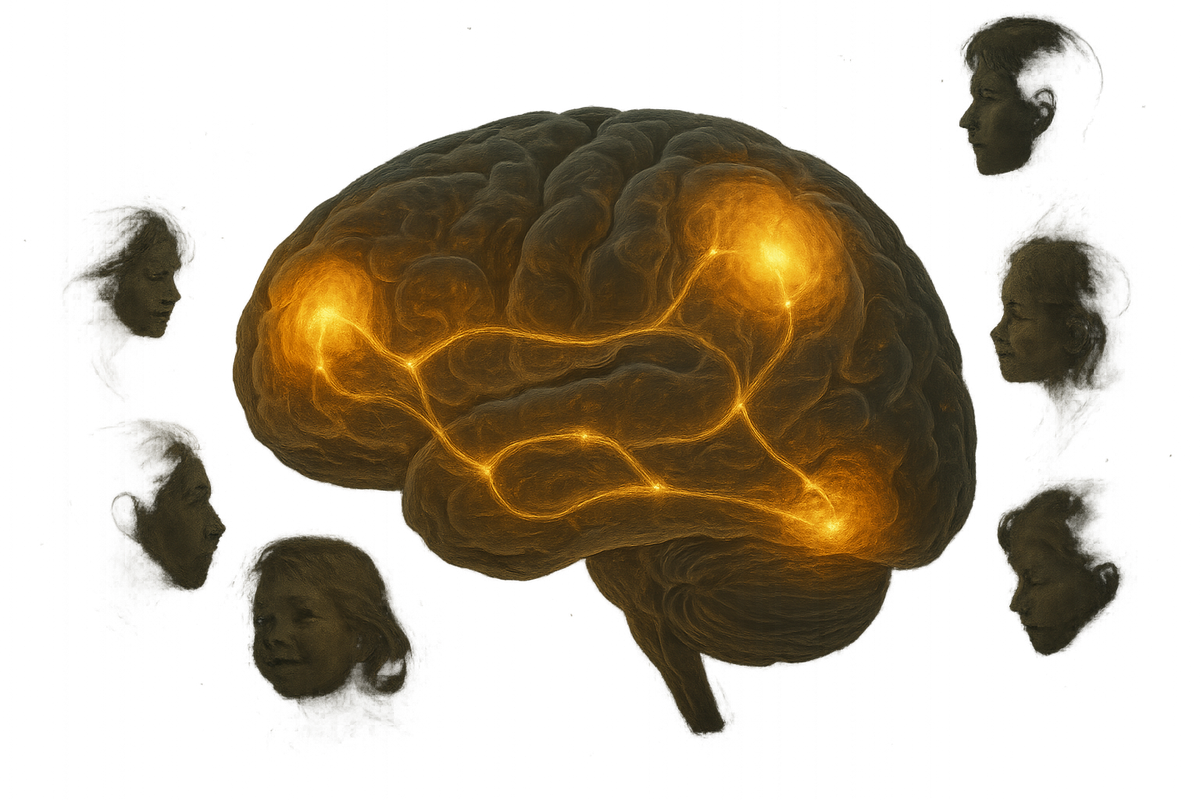
Here's what Raichle saw: the same regions lit up every single time subjects weren't focused on the outside world. The medial prefrontal cortex. The posterior cingulate. The angular gyrus. These areas formed a network—anatomically connected, functionally synchronized—and they activated reliably whenever people stopped paying attention to external tasks. Daydreaming. Mind-wandering. Remembering the past. Imagining the future. Thinking about other people. Thinking about yourself. All of that stuff that feels like "nothing"? From the brain's perspective, it's something very specific. Raichle called it the default mode network. The mode your brain defaults to when nothing else demands its attention. And the name turned out to be more profound than he realized. Because here's the thing that nobody expected: the default mode network doesn't just turn on when you rest. It's always on. External tasks don't activate your brain—they suppress the default mode. The moment the task ends, it springs back. Like a flywheel that keeps spinning. Like a program that's always running in the background, doing something so important that the brain only reluctantly pauses it. Your brain's ground state isn't idle. It's imaginative. The question became: what the hell is it imagining?
You Are a Simulation
The default mode network does something specific. It simulates. When you remember last Christmas, that's default mode. When you imagine your vacation next summer, default mode. When you wonder what your friend is thinking about you, default mode. When you consider who you are as a person, what you value, what you want—default mode. The network generates mental models of situations you're not currently in. It runs scenarios. It time-travels. It perspective-takes. It builds and maintains the story of you. Here's where it gets wild: the posterior cingulate cortex—one of the core default mode hubs—is the most densely connected region in the entire brain. More connections per square millimeter than anywhere else. It's a nexus. An integration hub. Information from everywhere converges here. And when this region is damaged, patients don't just lose specific abilities. They lose their sense of being a continuous person moving through time. They can't form new autobiographical memories. They can't imagine future scenarios. The thread of self-continuity snaps. The medial prefrontal cortex, the other main hub, does something equally strange. It activates when you think about yourself—your traits, your preferences, your memories. But it also activates when you think about people close to you. Your mother. Your best friend. Your spouse. The brain represents the self and intimate others in overlapping neural territory. Stop and think about that. The region that represents "you" also represents the people you love. Neurally speaking, you and your closest relationships are partially the same thing. This isn't metaphor. This is what the scans show. The boundaries we experience between self and other are softer, in neural terms, than they feel from the inside. The self is not a fortress. It's a meeting ground. The default mode network doesn't just think about the self. It constructs the self. And it never stops constructing.
The Price of Having a Self
So the brain invests massive resources in running self-simulations continuously. Evolution is ruthlessly economical. It doesn't maintain expensive systems for no reason. Twenty percent of your metabolic budget goes to the brain. A significant chunk of that goes to the default mode network, running all the time. Whatever it's doing, it must be worth the cost. The current theory is that the default mode maintains the self-model—and you need a self-model to function. Think about it. Every decision you make requires predicting what future-you will want. Every social interaction requires modeling how others see you. Every plan requires imagining a self that will execute it. You can't navigate the world without a running simulation of the thing that's doing the navigating. When you daydream about the future, you're not wasting time. You're practicing possible selves. Testing scenarios. Updating the model of who you might become. Studies show that people who are better at self-projection—imagining themselves in future situations—make better long-term decisions. The simulation has real-world consequences. When you ruminate about the past, you're consolidating narrative identity. Making sense of what happened. Integrating it into the story. This is how memory works: not as a recording but as a reconstruction, edited each time you access it. When you wonder about other minds, you're calibrating social cognition. Modeling the models that other people have of you. Humans are social animals, and the ability to model other minds is essential for cooperation, competition, and connection. The self that feels so solid, so obviously just there—it's actually a process. An ongoing construction project. And the default mode network is the construction crew, working 24/7, maintaining a story you didn't even know you needed. You are not a thing. You are a verb. And the verb is "selfing."
When the Default Mode Breaks
Once you understand what the default mode does, psychiatric symptoms suddenly make sense in a new way. Depression. Here's what brain imaging shows: depressed patients have hyperactive default mode networks. The simulation engine is running hot—but it's stuck. The same scenarios, over and over. Past failures on repeat. Future catastrophes playing out. The self-model becomes relentlessly self-critical, and the person can't escape it. Depressed people aren't thinking about nothing. They're trapped in thought. They can't stop the simulation. They can't get out of their own heads. Literally—they have decreased ability to suppress the default mode during tasks. The inside won't leave them alone. The system that's supposed to help you imagine positive futures has become a torture chamber of negative predictions. Schizophrenia. The default mode network shows abnormal connectivity with other networks—the boundaries are blurred. Content that should be tagged as "internally generated" gets misattributed to external sources. The simulation bleeds into perception. Thoughts feel like voices. Imagined scenarios feel like real events. The self-model can't distinguish itself from the world. This isn't just "losing touch with reality." It's a breakdown in the machinery that labels internal content as internal. When that tag fails, your own thoughts seem to come from outside you. Alzheimer's disease. The default mode network is affected early and severely. The posterior cingulate—that crucial hub—shows reduced activity even before symptoms appear. The regions that maintain your sense of being a continuous person are the same regions that degenerate first. This explains something haunting: Alzheimer's doesn't just steal memories. It steals the self. Patients don't just forget facts—they forget who they are. Family members become strangers. Personal history becomes disconnected fragments. Because the machinery that maintains identity is the machinery that's breaking down. ADHD. The default mode network doesn't suppress properly during tasks. It keeps intruding. Mind-wandering. Intrusive thoughts. Difficulty sustaining attention on things that aren't intrinsically interesting. This might be a default mode that's too strong—that won't quiet down when it should. The ADHD experience of "I can't focus, my thoughts keep pulling me away" makes sense if the default mode is essentially competing with task-positive networks—and winning too often. Same network. Different pathologies. Different points of failure in the system that constructs and maintains the self.
The Monks Were Right (Sort Of)
For millennia, contemplative traditions have said the self is illusory. Constructed. A process rather than a thing. Western philosophy argued about it. Buddhists meditated on it. Mystics wrote poetry about it. Modern neuroscience now has an answer: they were onto something. Meditation specifically targets the default mode network. Studies of experienced meditators show something striking: reduced default mode activity during meditation. The mind-wandering quiets. The self-referential thinking softens. The constant simulation... pauses. And meditators describe exactly this. The sense of the usual "I" becoming less solid. The narrative track going quiet. The simulation suspending. For a moment, the construction stops—and what's left is just awareness, without the story. But here's the nuance: different meditation practices do different things. Focused attention meditation—concentrating on the breath, for instance—suppresses the default mode through top-down control. You're overriding the default with focused attention. Similar to any absorbing task. The mechanism is suppression. Open awareness meditation does something weirder. The default mode stays active, but its connectivity pattern changes. Instead of being locked in self-reference, it becomes more integrated with present-moment sensory networks. The simulation continues, but it's held more lightly. The self becomes transparent to itself. Long-term meditators—we're talking thousands of hours—show structural changes in default mode regions. The posterior cingulate actually shrinks slightly. The connections between default mode and attention networks become stronger and more flexible. The system becomes more controllable. The brain physically reorganizes in response to practice. The self-construction process becomes more visible, more optional, less automatic. Meditation doesn't destroy the self. It reveals the self as construction—and makes the construction more responsive, less stuck, more able to update. This is what contemplatives mean when they say the self is "empty." They don't mean you don't exist. They mean you're a process, not a thing. And processes can be observed, modified, made more fluid. You can watch yourself being constructed in real time. And that changes everything.
Ego Death and the Psychedelic Evidence
Want direct evidence that the self is constructed by the default mode network? Disrupt the network and see what happens. Psilocybin, LSD, and other psychedelics reliably decrease activity and connectivity in the default mode network. The same regions that Raichle identified. The same network that builds the self-model. And what do people report? "Ego dissolution." "Loss of self." "Becoming one with everything." The boundaries of self-and-other soften or disappear entirely. The simulation stops running—and people discover that awareness continues even without a narrative self to anchor it. This isn't mystical speculation. It's correlation, documented across multiple neuroimaging studies. The degree of default mode network disruption correlates with the intensity of ego dissolution reported. More disruption, more dissolution. Less disruption, less dissolution. Robin Carhart-Harris at Imperial College London has mapped this relationship precisely. The self is not an illusion—but it is constructed, and when you disrupt the constructor, the construction stops. The self isn't a passenger observing the brain. The self is something the default mode network does. Turn off the network, and the self—not awareness, but the model of self—evaporates. It comes back, of course. The moment the drug wears off, the simulation restarts. You reconstitute. You resume being you. The construction project picks up where it left off. But now you know something: you're optional. The awareness that was there during dissolution didn't need you to exist. The self is a layer—useful, important, but not fundamental. Beneath it, something else continues. The self is a feature, not a bug. But it's also not the operating system.
What Are You Really Doing Right Now?
Here's the practical implication: the next time you're daydreaming, spacing out, mind-wandering—you're not doing nothing. You're doing the most fundamental thing your brain does. You're constructing yourself. The narrative running in your head right now? That's the default mode network building the story of you. The worries about tomorrow? Predictive self-simulation. The memories of yesterday? Maintenance of narrative continuity. The sense of being a self, reading these words, having preferences and goals and a perspective? That's the construction project running in real time. You can watch it. Right now. Notice the thoughts arising. Notice who they seem to be happening to. Notice the sense of self that seems to be observing. That sense of self is the simulation. The observer is part of what's being observed. There's no little person inside watching—there's just the process, continuously generating the experience of someone being here. This isn't depressing. It's liberating. Because if the self is constructed, it can be reconstructed. The stories you tell yourself about who you are—those are default mode activity. The predictions you make about what you can and can't do—default mode. The rumination that keeps you stuck—default mode. You can interrupt the simulation. You can update the model. You can change the construction. Not effortlessly. Not overnight. But systematically, through attention, through practice, through the environments and relationships and thoughts you reinforce. Every time you catch yourself in negative self-narrative and redirect, you're editing the simulation. Every time you imagine a different future, you're running a different scenario. The self-model is plastic. The construction is ongoing. The crew takes direction. The self is not fate. It's function. Marcus Raichle looked at data everyone else was throwing away and found the brain's actual job. The brain doesn't primarily react to the world. It primarily simulates one—including the self that's supposedly doing the reacting. For decades, we asked "what does the brain do when it's working?" The default mode network reveals a better question: "What does the brain do when we stop interrupting it?" The answer: it builds a world. It builds a story. It builds you. You're not just in the simulation. You are the simulation. The question is: now that you know, what will you do with it?


Comments ()