Derivatives Explained
The derivative is a philosophical puzzle that mathematicians solved with limits: what does 'speed at a single moment' even mean? Once you see the geometry, the algebra stops being arbitrary and starts being inevitable.

In 1666, a plague closed Cambridge University. A 23-year-old student named Isaac Newton went home to his family's farm. In the next two years, he invented calculus, discovered the laws of motion, and figured out that white light contains all colors.
The calculus part started with a question: how do you measure speed at a single instant?
Average speed is easy—distance divided by time. But instantaneous speed? You'd need distance traveled in zero time, which gives you 0/0. Undefined. Meaningless.
Newton found a way around the paradox. Instead of asking "what is the speed at this instant?", he asked: "what speed are we approaching as the time interval shrinks toward zero?"
That limit is the derivative. And it changed everything.
The Core Insight
The derivative measures instantaneous rate of change.
Your speedometer shows a derivative: position changing over time, right now, at this instant. The slope of a curve at a point is a derivative. The marginal cost of producing one more unit is a derivative.
Formally: the derivative of f(x) at point a is:
f'(a) = lim[h→0] (f(a+h) - f(a)) / h
The slope between two points, as those points get infinitely close.
This lets you:
- Predict where a system is heading
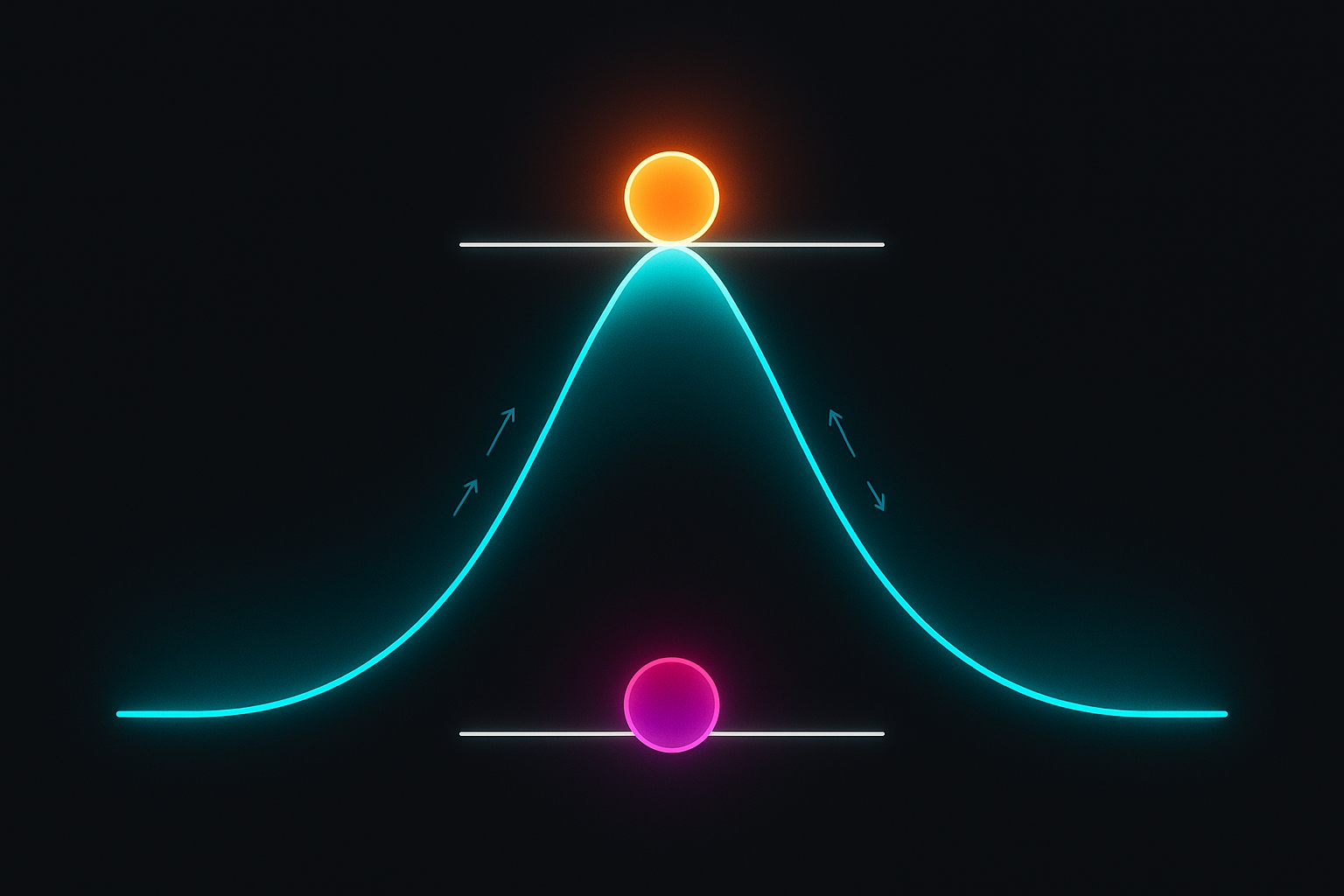
- Find maxima and minima (where the derivative equals zero)
- Model anything that changes—physics, economics, biology, engineering
What This Series Covers
The Foundation:
- What Is a Derivative? — Slope at a point through limits
- Limits — The mathematics of "approaching"
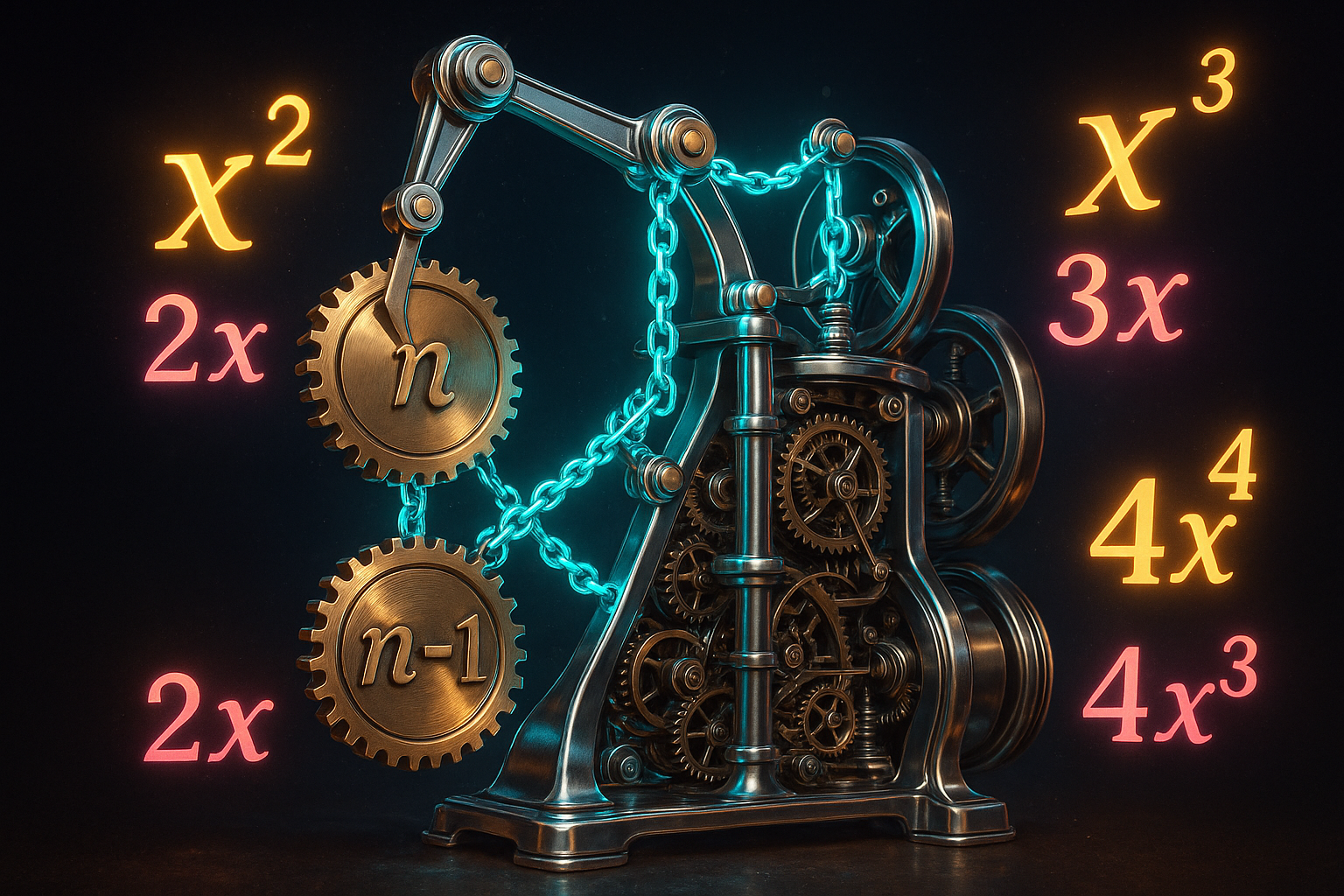
- The Power Rule — Why d/dx(xⁿ) = nxⁿ⁻¹
The Rules:
- Chain Rule — Derivatives of nested functions
- Product Rule — When functions multiply
- Quotient Rule — Derivatives of fractions
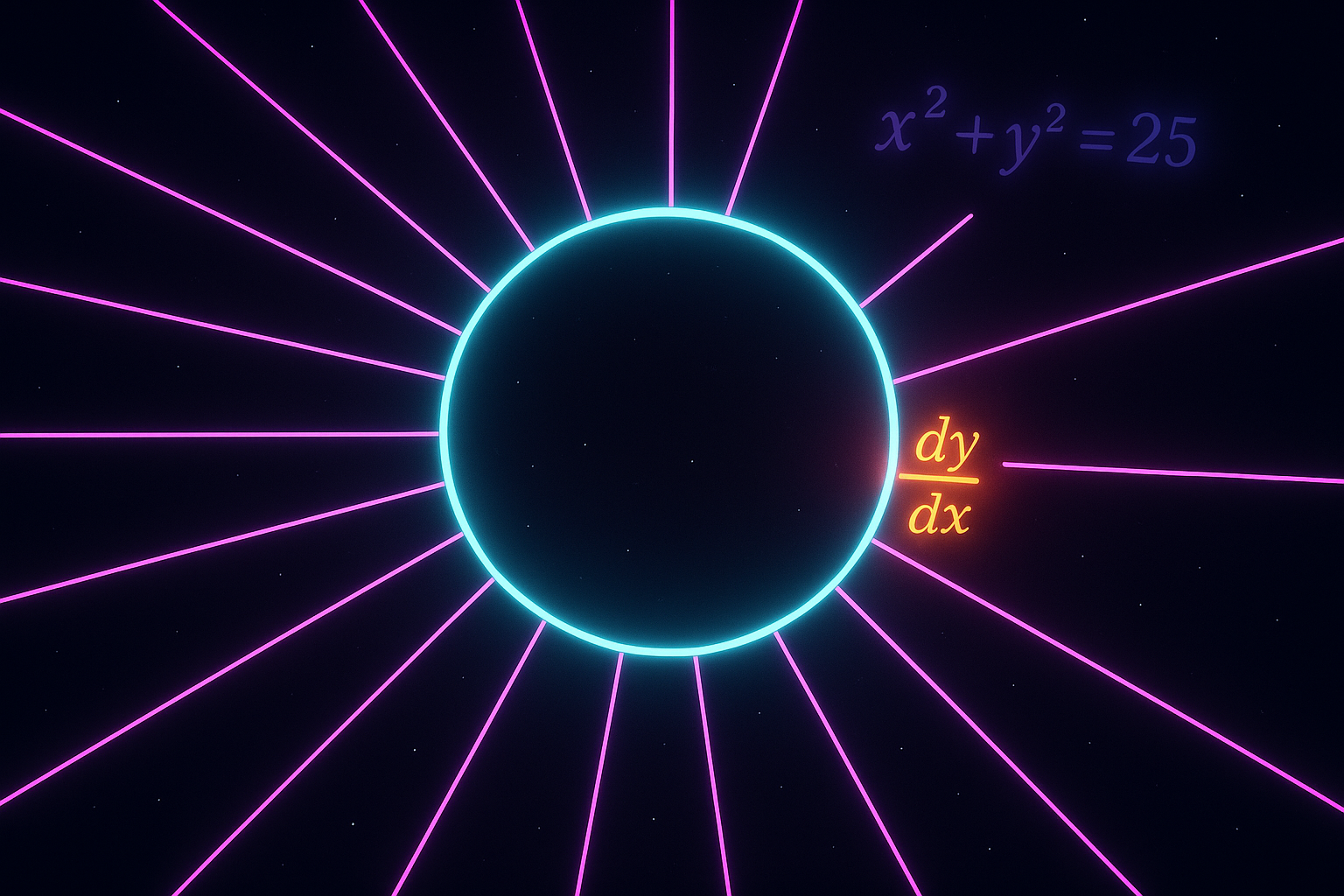
- Implicit Differentiation — When y hides inside the equation
The Applications:
- The Derivative of eˣ — The function that is its own rate of change
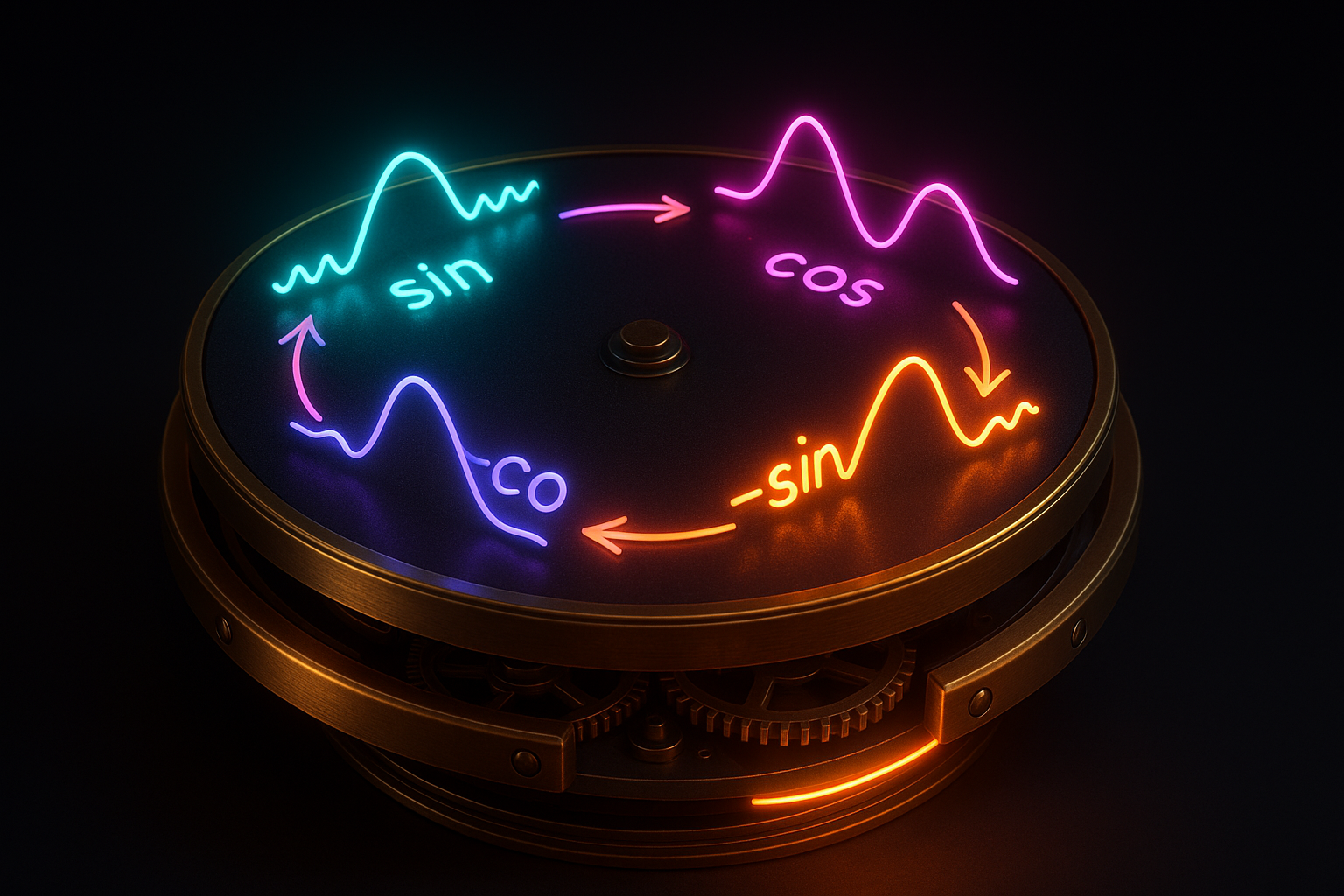
- Derivatives of Trig Functions — Why sine becomes cosine
- Related Rates — How changes propagate through systems
- Optimization — Finding peaks and valleys
- Synthesis — The derivative as the language of change
Where Derivatives Rule
- Physics: Velocity is the derivative of position. Acceleration is the derivative of velocity.
- Economics: Marginal cost, marginal revenue, elasticity—all derivatives.
- Machine Learning: Gradient descent finds minima by following derivatives.
- Biology: Population growth rates, reaction rates, neural firing rates.
Anything that changes has a derivative. Understanding derivatives means understanding change itself.
This is the hub page for the Derivatives series, exploring the mathematics of instantaneous rates of change.
The Series







Comments ()