Digital Folklore
Every culture generates folklore — stories, rituals, and shared symbols that transmit values and bind communities. Digital culture is no different; it just runs on algorithmic platforms at internet speed.
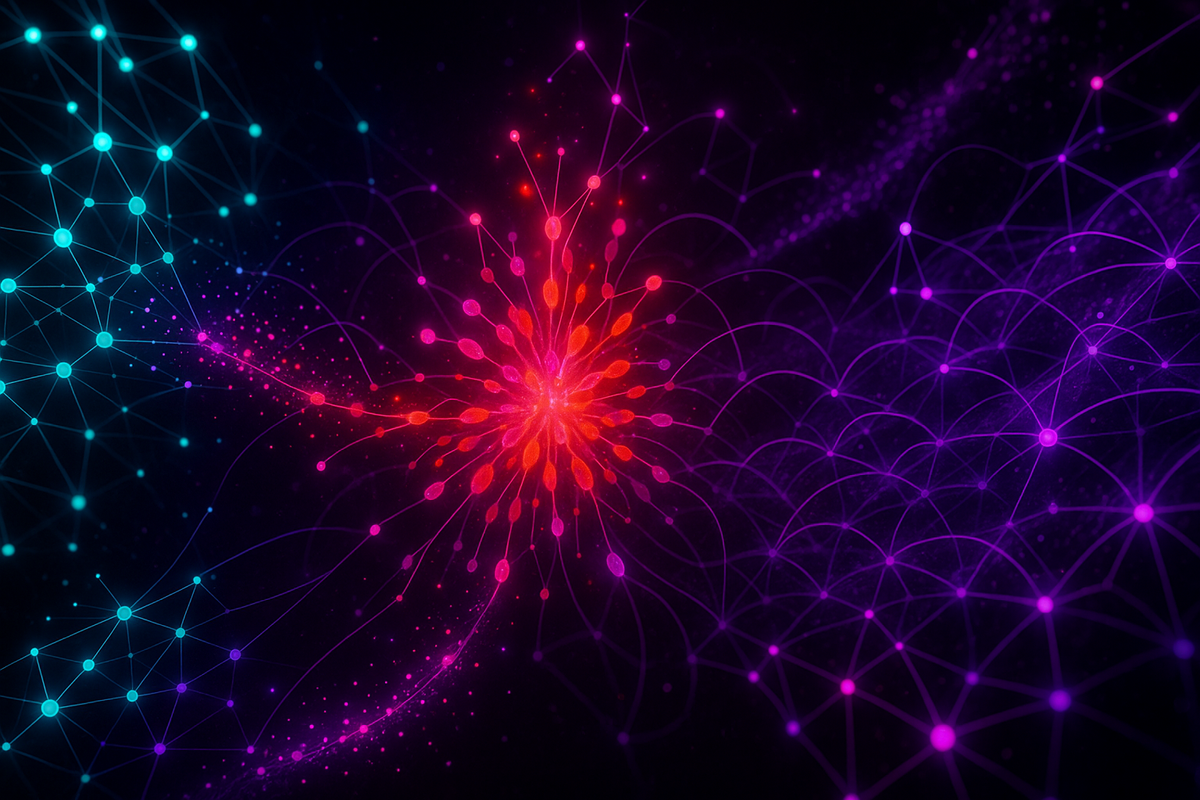
Memes spread like myths. Fandoms function like religions. World-building creates coherence when reality feels chaotic. Digital platforms aren't just communication tools—they're mythic ecosystems, breeding contemporary folklore at internet speed.
This series explores how ancient cognitive machinery meets algorithmic infrastructure. The same neural patterns that made myths stick across millennia now make memes go viral. The same social mechanisms that synchronized communities through ritual now coordinate fandoms across continents. The difference isn't the underlying dynamics—it's the transmission speed and the scale.
What You'll Discover
**How Memes Work Like Myths** — They're not random jokes. They're minimal units of cultural meaning, optimized for transmission through the same cognitive vulnerabilities that made religious concepts spreadable.
**Why Platforms Shape Culture** — Twitter, TikTok, Reddit, Instagram each function as distinct selection environments. Different algorithmic rules breed different folklore. Understanding platform ecology explains why certain narratives thrive where they do.
**What Fandoms Actually Are** — Distributed ritual systems. They generate collective coherence through shared mythology, interpretive traditions, gathering practices, and identity formation. They're doing what religions have always done.
**Why Fictional Worlds Matter** — World-building isn't escapism. It's coherence engineering. When consensus reality fragments, constructed universes provide stable reference frames, meaning laboratories, and shared identity anchors.
**How Digital Spaces Function as Sacred Space** — TikTok exhibits features of temple architecture. Content creators entrain audiences parasocially. The algorithm becomes oracle. Understanding this clarifies what's actually happening when you scroll.
The Stakes
We're living through a transition in meaning infrastructure. Traditional mythic transmission happened face-to-face, embedded in communities, constrained by geography. Digital folklore is accelerated, distributed, commodified, and algorithmically mediated.
This creates both opportunity and danger. The opportunity: myth-making can become conscious, participatory, and globally accessible. The danger: engagement-optimized systems that exploit mythic machinery for profit, disconnected from the coherence needs of actual humans.
Learning to navigate this landscape requires understanding both the ancient patterns and the novel infrastructure. How folklore works in human brains. How algorithms shape cultural evolution. How to distinguish coherence-supporting narratives from manipulation. How to participate in myth-making responsibly.
Who This Series Is For
If you've ever wondered why you can't stop scrolling. If you've felt more connected to a fictional universe than the news. If you've recognized that your relationship with a content creator feels oddly intimate despite being one-directional. If you've noticed that online communities exhibit cult-like dynamics. If you're building platforms, creating content, or just trying to maintain your sanity in the meme stream—this series is for you.
The Journey
We'll start with the fundamental insight: memes are myths, using the same cognitive machinery. Then explore how different platforms shape their evolution. Investigate fandoms as full ritual systems and world-building as coherence technology. Examine specific cases like TikTok and parasocial relationships. Learn about mythopoeia—the conscious construction of mythology. And develop discernment tools for evaluating what digital folklore actually serves you.
By the end, you'll understand digital culture not as something separate from ancient meaning-making, but as its latest iteration. Mythology at internet speed. And you'll have frameworks for participating consciously rather than being unconsciously shaped by the stream.
Articles in This Series
Comments ()