Digital Rituals: Can Entrainment Work Without Bodies in the Same Room
Can people synchronize across a screen? Digital rituals — from Twitch watch parties to Zoom church services — achieve partial entrainment, but embodied co-presence carries signals no bandwidth can replicate.
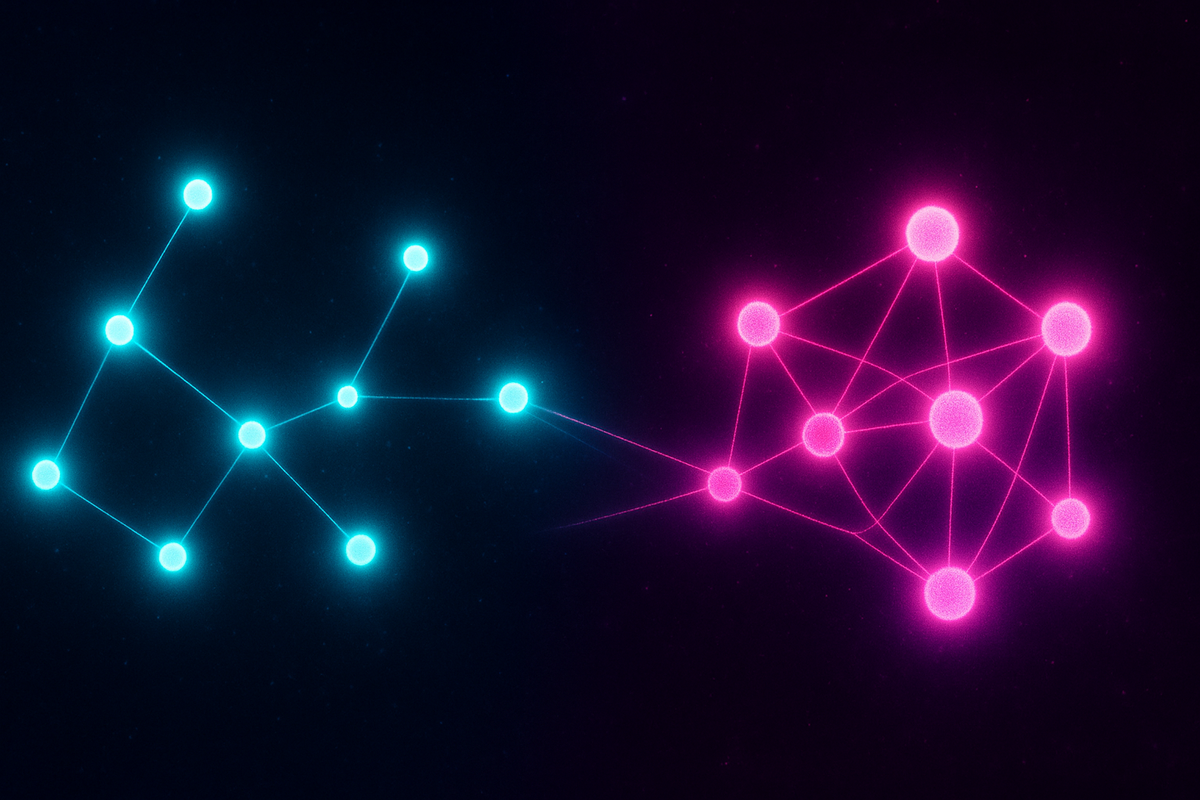
Digital Rituals: Can Entrainment Work Without Bodies in the Same Room?
Series: Ritual Entrainment | Part: 8 of 11
March 2020. Global pandemic. Churches, mosques, temples, and synagogues suddenly empty. Concert venues dark. Stadiums silent. Every ritual container that depended on physical co-presence—shut down.
Within weeks, the experiments began. Zoom church services. Virtual concerts. Online meditation groups. Twitch watch parties. Discord listening sessions. The entire ritual apparatus of human culture attempting to migrate to screens.
Some of it worked. Much of it didn't. And the difference reveals something fundamental about entrainment.
The question isn't whether digital interaction can create connection—obviously it can. The question is whether it can create entrainment—synchronized nervous system states that generate collective coherence. Can you phase-lock oscillators through fiber optic cable? Can screens substitute for shared space? Can parasocial relationships generate communitas?
The answer is complex: digital tools can support weak entrainment, but cannot replicate the full power of embodied co-presence. Understanding why reveals both the possibilities and hard limits of virtual ritual.
What Works: Temporal Synchrony and Shared Attention
Entrainment requires coupling—some mechanism by which one oscillator influences another. Physical proximity provides multiple coupling channels simultaneously. Digital interaction drastically reduces the available bandwidth.
But it doesn't eliminate coupling entirely.
Synchronized watching creates minimal but real entrainment. When thousands watch a Twitch streamer simultaneously, they share temporal experience. The streamer's pacing, emotional display, and content structure create a shared rhythm. Chat responses synchronize to stream events. Not strong coupling, but not zero.
Virtual concerts that maintain real-time performance (not pre-recorded) provide stronger coupling. The artist responds to chat feedback, adjusts pacing to audience energy. Viewers see each other's reactions in chat, creating social feedback loops. Artists report feeling energy from the virtual audience, suggesting bidirectional coupling exists, though weakened.
Online meditation sessions via video can coordinate breathing and posture across distance. The visual feedback of seeing others breathing creates mirror neuron activation. Explicit breath counts provide rhythmic structure. Group accountability maintains practice. Not as powerful as in-person sangha, but measurably better than solo practice.
Synchronous gameplay in multiplayer games creates coordination demands that produce real entrainment. Voice chat synchronizes speech rhythms. Coordinated gameplay actions require temporal alignment. Success produces shared reward. Gaming guilds develop genuine community bonds through sustained synchronized activity.
These all share a key element: temporal synchrony. Everyone is doing the thing at the same time. Asynchronous interaction (forums, comments, recorded content) doesn't produce entrainment—it's information exchange without oscillator coupling.
What Doesn't Work: The Missing Body
The pandemic forced a mass experiment in virtual religiosity. Results were stark: for many traditions, digital services felt hollow, performative, and draining rather than energizing.
Why?
Because the primary coupling mechanisms ritual relies on—proprioceptive, acoustic, electromagnetic, tactile—don't transmit through screens.
You can't couple through breathing when you can't hear breathing. Video compression eliminates subtle acoustic information. You see someone's chest move but don't hear the breath sounds that would entrain your own respiratory rhythm.
You can't couple through proximity when you're alone. The electromagnetic field from heartbeats, the pressure waves from voices, the subtle pheromones, the mirror neuron activation from peripheral awareness of others moving—all require physical co-presence.
Movement doesn't synchronize through screens. You can see the yoga teacher's pose, but you don't see the twenty other students also moving through the flow. The all-to-all visual coupling that makes in-person classes powerful is reduced to one-to-many watching.
The visceral dimension disappears. Bass frequencies you feel in your chest don't transmit through laptop speakers. The embodied resonance that makes live music or drumming circles powerful is absent. You're hearing a compressed representation, not experiencing the vibration.
Touch is completely eliminated. No hand-holding, no collective sway, no physical contact that creates direct coupling between nervous systems.
The result: you're observing ritual, not participating in it. The experience becomes performative rather than transformative. You might get useful content, but you don't get entrainment.
Parasocial Entrainment: The Simulation of Connection
Parasocial relationships—one-directional emotional connections to media figures—create something that feels like connection but structurally isn't entrainment.
Successful streamers, YouTubers, and podcasters cultivate parasocial bonds through consistency, emotional authenticity, and direct address. You feel like you know them. They feel like friends. Regular viewers develop genuine affection.
But is this entrainment?
The consistency creates rhythmic structure—you know when the stream goes live, what to expect, the pacing and style. Your attention synchronizes to their schedule. This is weak temporal coupling.
The emotional display can create resonance—you laugh when they laugh, feel tension when they feel tension. Mirror neurons activate, creating neural coupling to observed emotion.
The community of other viewers creates horizontal bonds. You recognize usernames, develop inside jokes, coordinate chat responses. This is real social connection, even if mediated.
But crucially: the coupling is asymmetric. The streamer doesn't entrain to you (except in aggregate). You entrain to them. It's consumption, not communion.
This is still valuable. Humans can get real benefit from parasocial relationships—ask anyone whose depression was helped by a comfort streamer or motivational creator. The one-to-many format allows scaling that physical ritual cannot match.
But it's not the same as bidirectional entrainment where all oscillators influence each other. It's more like a metronome—useful for creating personal rhythm, but not collective coherence.
Hybrid Models: Digital Enhancement of Physical Practice
The most promising use of digital tools isn't replacing physical ritual but augmenting it.
Coordination across distance for local gathering. A global movement announces a synchronized time. Local groups gather physically and participate simultaneously with groups worldwide. Physical proximity provides entrainment; digital tools provide scale and coordination.
Digital community between physical gatherings. Discord servers, group chats, forums where physically-gathering communities maintain connection between meetings. The physical gatherings create strong entrainment; digital tools maintain weak coupling during separation, preventing complete desynchronization.
Remote instruction with local embodiment. Following a live-streamed class while in a room with local participants. You get expert instruction scaled digitally plus physical co-presence entrainment. Many yoga studios maintained this during lockdown—students Zoomed the teacher but practiced together in small pods.
Asynchronous learning, synchronous practice. Study ritual structure, theology, or technique through digital content, then apply in physical gathering. Digital as preparation, not substitute.
Amplification of intention. Using digital tools to coordinate intention—mass meditations, prayer times, collective action—where the coordination is digital but the practice is local and embodied.
These models recognize digital interaction's strength (scale, coordination, information transmission) while respecting its limitations (weak coupling, limited embodiment).
The Pandemic's Lessons
COVID-19 forced the largest experiment in virtual ritual in human history. What did we learn?
Zoom fatigue is real and instructive. Video calls drain energy in ways in-person interaction doesn't. Partly, this is cognitive load from processing delayed audiovisual signals. But it also reflects absence of entrainment's energizing effects. In-person synchronized interaction is restorative. Virtual interaction is costly.
Some communities translated better than others. Traditions emphasizing teaching and discussion adapted well—lectures, classes, discussions work via video. Traditions emphasizing embodied practice, music, and collective movement struggled. Intellectual content transmits; somatic entrainment doesn't.
Attendance diverged. Some communities saw increased digital attendance—people who couldn't physically attend due to distance, disability, or scheduling could now participate. Other communities hemorrhaged members—without the ritual hook of entrainment, nominal participants stopped attending.
New digital-native practices emerged. Online communities that formed during lockdown developed novel practices optimized for the medium—watch parties, synchronized meditation via apps, distributed singing where individuals record parts that get mixed. Innovation rather than attempting to port existing practices.
Physical practice became precious. When it resumed, in-person gatherings felt intensely meaningful. The contrast with digital interaction made the value of embodied co-presence visceral. People cried at being in rooms together again.
The lesson: digital tools don't replace embodied ritual. They can supplement, coordinate, and maintain connection, but cannot substitute for physical entrainment.
Can AI Mediate Better Entrainment?
Future possibilities: artificial intelligence designed specifically to facilitate digital entrainment.
Real-time biofeedback synchronization. Wearables detect heart rate, breathing, arousal. AI adjusts pacing, music, visual stimuli to coordinate physiological states across distributed participants. Not replacing natural coupling but engineering artificial coupling through the digital channel.
Haptic feedback. Devices that create vibration, pressure, temperature changes synchronized across participants. Crude compared to physical touch, but more coupling bandwidth than zero.
Volumetric capture and VR. Rather than 2D video, full 3D avatars in shared virtual space. Better approximation of physical proximity, enabling virtual circle formations, coordinated movement with visual feedback, spatial audio that approximates acoustic coupling.
AI-guided group coordination. Systems that monitor group state (via biometrics, participation patterns, expressed sentiment) and adjust structure to optimize entrainment—like a DJ reading the crowd and adjusting the set, but algorithmic.
These technologies could move digital interaction from "weak substitute for physical presence" toward "distinct but functional entrainment medium."
But they remain speculative. Current digital tools are fundamentally bandwidth-limited compared to physical co-presence.
When Digital Is Sufficient (And When It Isn't)
Digital interaction suffices when:
- Primary goal is information transmission
- Community is already strongly bonded through previous physical interaction
- Accessibility barriers make physical gathering impossible
- Scale requirements exceed physical capacity
- Asynchronous coordination is valuable
Digital interaction fails when:
- Deep entrainment is the goal
- Strong embodied component is central
- Community is new or fragile
- Participants are ritual-deprived and need strong coupling
- The tradition depends on sensory richness (music, movement, touch)
The mistake is treating digital as universally good or bad. It's situationally useful with clear limitations.
For maintaining existing communities across distance: valuable.
For coordinating large-scale synchronized action: powerful.
For replacing weekly in-person ritual that generates collective coherence: insufficient.
The Hybrid Future
The likely trajectory isn't digital replacing physical ritual, but hybrid models emerging that leverage both:
Local nodes of global networks. Physical gathering groups connected digitally to larger movements. You practice with bodies in your city; you coordinate with communities worldwide.
Digital coordination, physical execution. Using apps and platforms to organize, schedule, and structure practice that happens in embodied space.
Seasonal intensification. Regular digital maintenance between less frequent but more intensive physical gatherings. Weekly Zoom calls; quarterly retreats.
Accessibility bridges. Digital participation options for those who cannot physically attend, without pretending it's equivalent. Livestreaming services for homebound members while recognizing in-person experience is different.
Digital-native innovations. New ritual forms designed for digital media rather than porting existing practices. We're early in discovering what works.
The key recognition: physical embodied co-presence provides coupling bandwidth that current digital tools cannot replicate. This isn't a temporary limitation waiting for better technology. It's fundamental physics of how nervous systems couple.
Shared air carrying breath sounds, electromagnetic fields from hearts, mirror neurons firing to peripheral movement perception, proprioceptive resonance, tactile contact—these are the mechanisms of deep entrainment. Mediation through screens eliminates most of them.
Better technology can add bandwidth. VR and haptics help. But they're unlikely to match the richness of physical proximity in the foreseeable future.
This doesn't make digital tools useless—it makes them complementary. Use them for what they're good at (coordination, accessibility, information) while respecting their limits (weak embodied coupling, reduced sensory richness).
This is Part 8 of the Ritual Entrainment series, exploring how rhythmic practices synchronize nervous systems and generate collective meaning.
Previous: CrossFit Cults and Yoga Studios: Fitness as Ritual Container
Next: The Hip-Hop Cypher: A Case Study in Spontaneous Ritual
Further Reading
- Hutchins, B. (2020). "The pandemic and the crisis of live sport." Sport in Society, 23(11), 1716-1729.
- Miller, V. (2020). "Resonance as a social phenomenon." Sociological Theory, 38(3), 231-248.
- Stein, J. (2021). "The ambivalence of digital religious transmission." Journal of Religion, Media and Digital Culture, 10(1), 32-51.
- Baym, N. K. (2015). Personal Connections in the Digital Age. Polity Press.
- Horton, D., & Wohl, R. R. (1956). "Mass communication and para-social interaction." Psychiatry, 19(3), 215-229.
Comments ()