Durkheim Was Right: Collective Effervescence and the Birth of the Sacred
The sacred doesn't descend from above. Durkheim's insight was that it erupts from below — from crowds, ritual, and the emergent charge of collective action that feels bigger than any individual.
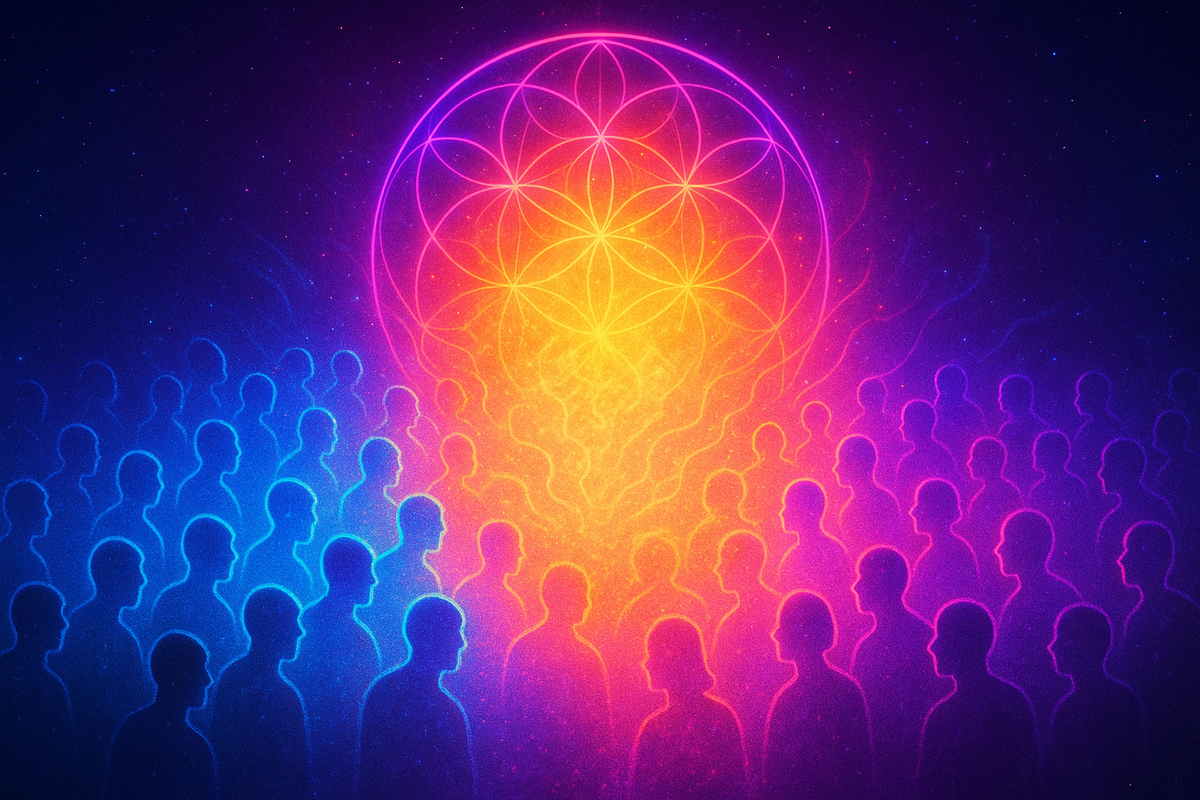
Durkheim Was Right: Collective Effervescence and the Birth of the Sacred
Series: Ritual Entrainment | Part: 3 of 11
In 1912, Émile Durkheim published The Elementary Forms of Religious Life, arguing something that seemed absurd to his contemporaries: religion isn't about belief in supernatural beings. It's about what happens when groups synchronize.
He called it "collective effervescence"—the electric feeling when a crowd achieves unity, when individual consciousness dissolves into collective experience, when something that feels divine emerges from human gathering. And he made a claim that scandalized religious believers and secular scholars alike: the sacred isn't in heaven. It's generated by synchronized collectives. God isn't elsewhere—God is what we become when we entrain.
A century later, neuroscience has caught up. Durkheim was right.
The sacred is real. It's just not where we thought it was.
The Argument: God as Social Fact
Durkheim wasn't attacking religion. He was trying to explain it. His question: if religious experiences are so universal, if every culture develops sacred rituals, if the feeling of the divine is reported across radically different theological systems, what's the common element?
Not the content—the gods vary wildly. Not the doctrines—incompatible cosmologies, contradictory moral systems, mutually exclusive metaphysics. What's constant is the practice: groups gathering, performing synchronized actions, and experiencing states that feel transcendent.
His radical hypothesis: the sacred is what synchronized collectives generate. Religion is the social technology humans developed to create, maintain, and interpret collective effervescent states.
The gods—Yahweh, Shiva, ancestors, spirits—are the representations cultures build to make sense of these genuinely transcendent experiences. But the experience itself precedes and generates the representation. You don't feel collective effervescence because you believe in God. You develop concepts of God because you've experienced collective effervescence and need to explain it.
Durkheim studied Aboriginal Australian rituals—corroborees where groups would dance for hours, days, entering states of what participants described as contact with ancestral beings. He saw that these weren't primitive delusions. They were sophisticated technologies for generating collective states that felt like contact with something beyond individual consciousness because they were beyond individual consciousness.
The transcendence was accurate perception. Just not transcendence of natural law—transcendence of individual cognitive boundaries.
What Collective Effervescence Actually Is
Durkheim lacked the neuroscience vocabulary, but his phenomenological description is eerily precise. Collective effervescence emerges when:
Groups gather in shared physical space. Proximity enables coupling—visual, auditory, electromagnetic, tactile. Distance makes entrainment weak or impossible.
Synchronized activity intensifies. Coordinated movement, unified vocalization, shared rhythm. The coupling mechanisms stack, driving synchronization above the critical threshold.
Individual boundaries attenuate. As entrainment strengthens, the Markov blanket separating "self" from "other" becomes porous. Your nervous system is coupled to theirs. The distinction between individual and collective blurs.
Emotion amplifies. Joy, grief, rage, ecstasy—whatever affect is present intensifies through resonance. Emotions become collective properties, felt by the synchronized system rather than isolated individuals.
Time distorts. The synchronized state feels outside normal temporal flow. Hours pass like minutes. The present expands. Past and future collapse into timeless now.
Something emerges that feels autonomous. The collective takes on qualities that seem to transcend the individuals. It feels like a presence, an entity, a force. Participants describe being "seized," "possessed," "moved by the spirit."
This last point is crucial. Durkheim argued that the feeling of an external power isn't wrong—it's accurate. The power is external to any individual. It's the emergent dynamics of the entrained collective. The group genuinely becomes something more than the sum of its parts.
The Neuroscience Durkheim Couldn't Access
Modern research reveals the mechanisms beneath Durkheim's observations.
When groups synchronize movement—dancing, marching, swaying—motor cortex activity entrains. Neural oscillations phase-lock across individuals. Studies using EEG hyperscanning (recording multiple brains simultaneously) show that synchronized behavior creates inter-brain coherence in motor planning regions.
But it cascades beyond motor systems. Frontal networks involved in self-representation and theory of mind show synchronized activity. Parietal regions processing body boundaries and spatial cognition entrain. The brain areas that normally maintain the "self/other" distinction start oscillating in sync across individuals.
This isn't metaphor—it's measurable coupling of neural dynamics across nervous systems.
At the neurochemical level, synchronized ritual activity triggers coordinated release of bonding hormones (oxytocin), natural opioids (endorphins creating euphoria), and reward signals (dopamine). The group isn't just moving together—they're getting high together, sharing a neurochemical state that reinforces the activity and creates powerful positive associations with the collective.
Research on religious experiences using fMRI shows that intense collective worship activates the same reward circuits as drugs, sex, and food. The brain treats collective effervescence as intrinsically valuable—not because of learned associations, but because synchronized collective states are biologically valuable.
From an evolutionary perspective, groups that could achieve strong synchronization outcompeted groups that couldn't. Synchronized hunting, coordinated defense, collective child-rearing, shared mourning—all required entrainment. Selection favored neural architectures that reward collective coherence.
The sacred feeling isn't arbitrary cultural construction. It's the phenomenology of your brain recognizing successful entrainment with the collective—a state that historically predicted survival and flourishing.
The Birth of Gods from Synchronized Crowds
Here's where Durkheim makes his most provocative claim: gods are personifications of collective effervescent states.
When a group achieves strong synchronization, participants feel the presence of something powerful, autonomous, and beyond individual control. This isn't hallucination—the collective is powerful, is autonomous (no individual controls it), is beyond any single person.
But humans are pattern-matching machines with hyperactive agency detection. We perceive intentional agents even in non-agentive phenomena. Clouds look like faces. Random events feel meaningful. Thunder seems angry.
When you experience the genuine power of collective effervescence—feeling seized by something that moves through the crowd, makes people do things they wouldn't individually do, creates emotions that don't belong to anyone specifically—your brain's best model is: there's an agent here. A being. A presence.
Different cultures give this presence different names and attributes. The Holy Spirit. Dionysus. The ancestors. The kami. Orisha. But the underlying experience is the same: the emergent agency of the synchronized collective, experienced as an autonomous entity.
Durkheim argues this is where religion begins—not with rational theology, but with collective ritual generating effervescent states that get interpreted as contact with divine beings. The theology comes later, as cultures develop systematic accounts of these experiences.
This explains why theological content matters so little for the persistence of religion. Christians, Muslims, Hindus, and Buddhists have incompatible metaphysics, but functionally equivalent ritual practices. The practices persist because they generate the experiences. The theologies are just the interpretive frameworks cultures build around those experiences.
The Profane and the Sacred: Boundary Maintenance
Durkheim distinguished the sacred from the profane not as good versus evil, but as collective versus individual.
The profane is ordinary life—individual action, mundane concerns, instrumental rationality, isolation. The sacred is what the collective generates—ritual time-space, extraordinary states, emotional intensity, connection.
Cultures maintain boundaries between these domains through ritual purity laws, consecrated spaces, special times, and behavioral restrictions. Why? Because mixing undermines both.
If the sacred bleeds into profane life constantly, it loses power. Perpetual ritual becomes background noise. You can't sustain collective effervescence indefinitely—the nervous system needs variation, rest, individual mode.
If the profane contaminates the sacred, ritual efficacy collapses. Trying to conduct business during ceremony, checking phones during worship, treating ritual instrumentally rather than intrinsically—all of these prevent entrainment. You can't synchronize while maintaining individual agendas.
The boundary isn't arbitrary moralizing. It's functional necessity for maintaining the capacity to enter collective states.
Modern secular culture has largely dissolved this boundary. Everything is profane; nothing is sacred. We've collapsed the distinction, leaving no protected space for collective effervescence. The result: widespread reports of meaninglessness, disconnection, and what sociologists call "secular anomie."
Durkheim predicted this. Without regular access to collective effervescent states, humans lose the phenomenological grounding that makes life feel meaningful. Not because we need specific theological content, but because we need regular entrainment with collectives that creates experiences of transcendence and connection.
Totemism: Symbols as Synchronization Anchors
Durkheim's analysis of totemism reveals another insight: sacred symbols function as coordination points for collective attention.
A totem—an animal, plant, or object representing a clan—isn't worshipped because of inherent properties. It's sacred because it's what the group synchronizes around. The totem creates shared focus, enabling collective attention to entrain.
When the clan gathers and directs attention to the totem—through dance, song, story, decoration—they're not worshipping the object. They're using it as the hub for collective synchronization. The totem's power is real, but it's the power of coordinated collective attention, not magic in the object.
This pattern extends beyond traditional totems. National flags, sports team logos, religious icons, corporate brands—all function as totems in Durkheim's sense. They're objects around which groups synchronize attention, generating collective states that get projected onto the symbol.
People don't die for flags because cloth is inherently valuable. They die for flags because the flag represents the collective—the entrained group whose coherence they've experienced as sacred. Desecrating the symbol threatens the coordination mechanism, which threatens the collective itself.
Understanding this defuses some of the mystery around "irrational" devotion to symbols. It's not irrational—it's recognizing that certain objects function as synchronization anchors enabling collective coherence.
Modern Applications: Where Effervescence Survives
Religion's decline in the secular West hasn't eliminated collective effervescence. It's dispersed into new containers.
Music festivals create temporary sacred space—pilgrimage to special sites, ritual dress, synchronized movement to rhythmic music, altered consciousness, communitas with strangers. The language is secular, but the structure is ancient ritual.
Sports fandom generates powerful collective states. Stadiums become temples. Fans perform synchronized chants, coordinated movements, emotional unity. The team functions as totem—the symbol around which the collective synchronizes. The stadium as temple isn't metaphor.
Political rallies leverage collective effervescence for mobilization. Mass gatherings, synchronized chanting, shared emotional intensity, feelings of historical significance. The content varies (left, right, center), but the mechanism is constant: entrainment generating conviction.
Protests and social movements create effervescent states through synchronized action—marching, chanting, coordinated performance. The power participants feel isn't just psychological; it's the genuine emergence of collective agency through synchronization.
Online communities attempt effervescence through digital means—synchronized watching (premieres), coordinated posting (hashtag campaigns), parasocial connection. It's weaker than embodied ritual, but it's something.
What's striking is that these modern forms often work despite participants lacking any theory of what they're doing. People go to raves or rallies because they feel compelled, not because they understand entrainment. The mechanism works whether you know about it or not.
The Dark Side: Collective Effervescence in Service of Horror
Durkheim recognized that collective effervescence is morally neutral. It generates sacred experiences regardless of the collective's values.
A lynch mob is a synchronized collective. Participants report the same phenomenology as religious worshippers: individual boundaries dissolving, being seized by something larger, feeling righteous certainty, extraordinary emotional intensity.
Fascist rallies deliberately leverage entrainment technology—synchronized movement, coordinated chanting, mass spectacle, symbolic focus. Nuremberg wasn't theater; it was ritual designed to generate collective effervescence in service of genocidal ideology.
Cult indoctrination uses entrainment to override individual judgment. Repetitive chanting, coordinated movement, sleep deprivation (which enhances susceptibility to synchronization), isolation from competing influences—all designed to achieve strong entrainment that makes the cult's reality feel sacred and unquestionable.
The mechanism doesn't care about content. Entrain strongly enough and any collective state feels transcendent, right, unquestionable. This is why collective effervescence is simultaneously humanity's greatest social technology and most dangerous vulnerability.
Traditional wisdom recognized this, embedding ritual in ethical frameworks, limiting access to high-intensity practices, creating checks on collective excess. Modern secular ritual often lacks these safeguards, which is why it sometimes metastasizes into extremism.
Religion Without Supernaturalism
Durkheim's analysis suggests a naturalistic account of religion that preserves its functional core while abandoning supernatural metaphysics.
If the sacred is what synchronized collectives generate, and gods are personifications of collective agency, then religious experiences are real without requiring supernatural entities. The transcendence is genuine—it's transcendence of individual cognitive boundaries. The presence is genuine—it's emergent collective dynamics. The divine is genuine—it's what "we" become when properly entrained.
This framework explains why:
- Religious experiences feel real (they are)
- Different religions produce similar phenomenology (same mechanism)
- Ritual matters more than theology (practice generates experience; theology just interprets)
- Communities persist despite doctrinal disagreement (shared practice maintains coherence)
- Losing religion creates meaning crisis (loss of regular collective effervescence)
It also suggests that secular alternatives to religion need to reproduce the functional core: regular, repeated, accessible practices that generate collective effervescent states. Not religion with the serial numbers filed off, but conscious design of entrainment technologies embedded in ethical frameworks.
Some traditions already do this. Certain forms of secular Buddhism focus on practice over metaphysics. Humanist congregations create ritual without theism. Intentional communities build regular synchronized activities. What's needed is broader recognition that this isn't optional—humans require regular collective effervescence the way they require sleep.
Coherence at Collective Scale
In AToM terms, Durkheim identified how coherence scales from individual to collective.
Individual coherence—integrated experience, navigable state-space, meaning as M = C/T—requires functional nervous system organization. But individual coherence is inherently limited. You can't escape your Markov blanket through individual cognition alone.
Collective coherence emerges when individual nervous systems entrain, creating temporary distributed systems with genuinely novel properties. The meaning generated at collective scale isn't reducible to individual meanings summed—it's emergent from the coupled dynamics.
The sacred is the phenomenology of high collective coherence. When a group achieves strong synchronization, participants experience curvature reduction, dimensional expansion, and boundary reconfiguration that they can't achieve individually. It feels transcendent because it is transcendent—it's cognition at a scale your individual brain can't instantiate alone.
Durkheim saw this without the geometric vocabulary. He recognized that collective effervescence generates something genuinely new, genuinely powerful, genuinely meaningful. The mistake was thinking this required supernatural explanation. The reality is stranger and more profound: consciousness can couple. Nervous systems can synchronize. Coherence can scale.
The divine isn't supernatural. It's what we become when we properly entrain. God is what "we" is called when it achieves high coherence.
This is Part 3 of the Ritual Entrainment series, exploring how rhythmic practices synchronize nervous systems and generate collective meaning.
Previous: Entrainment: How Oscillating Systems Learn to Move Together
Next: The Universal Toolkit: Chanting, Drumming, Movement, and Shared Consumption
Further Reading
- Durkheim, É. (1912). The Elementary Forms of Religious Life. Trans. Karen Fields (1995), Free Press.
- Bellah, R. N. (2011). Religion in Human Evolution: From the Paleolithic to the Axial Age. Belknap Press.
- Turner, V. (1969). The Ritual Process: Structure and Anti-Structure. Aldine Publishing.
- Rappaport, R. A. (1999). Ritual and Religion in the Making of Humanity. Cambridge University Press.
- Konvalinka, I., et al. (2011). "Synchronized arousal between performers and related spectators in a fire-walking ritual." PNAS, 108(20), 8514-8519.
- Xygalatas, D., et al. (2013). "Extreme rituals promote prosociality." Psychological Science, 24(8), 1602-1605.
Comments ()