Edward Bernays: The Original Spin Doctor
Edward Bernays read his uncle Freud and saw a business opportunity. If people are driven by unconscious desires they can't articulate, you don't argue with them — you engineer symbols that connect products to those desires. He ran that playbook for governments, corporations, and causes for 50 years.
Edward Bernays: The Original Spin Doctor
Edward Bernays was Sigmund Freud's nephew. He took his uncle's insights about the irrational unconscious and turned them into a business model.
In 1928, Bernays published a book called Propaganda. The title was not ironic. Bernays believed that mass manipulation was not only possible but necessary—that democracy required an "invisible government" of opinion-makers to guide the masses who couldn't be trusted to guide themselves.
"The conscious and intelligent manipulation of the organized habits and opinions of the masses is an important element in democratic society," he wrote. "Those who manipulate this unseen mechanism of society constitute an invisible government which is the true ruling power of our country."
He didn't hide this. He bragged about it. And he spent the next six decades proving it could be done.
The Freudian Foundation
Freud's insight—that much of human behavior is driven by unconscious desires rather than rational deliberation—was revolutionary in psychology. Bernays saw its implications for influence.
If people's decisions are driven by unconscious needs rather than rational evaluation, then you don't persuade people with facts and arguments. You associate your product, cause, or candidate with the satisfaction of unconscious desires. You don't sell cigarettes by explaining tobacco; you sell cigarettes by associating smoking with freedom, sophistication, or rebellion.
This was a fundamental break from earlier advertising, which assumed people were rational consumers who evaluated products on their merits. Bernays assumed people were bundles of desires, anxieties, and associations that could be manipulated by those who understood the unconscious.
The shift changed advertising forever. Before Bernays, ads described products. After Bernays, ads sold feelings.
Torches of Freedom
Bernays's most famous campaign—and the one that best illustrates his method—was for the American Tobacco Company in 1929.
The problem: women didn't smoke in public. Cultural taboos made smoking unfeminine. This was a market the tobacco company wanted to crack.
A rational approach might have argued that cigarettes were acceptable for women, or highlighted their benefits. Bernays did something different.
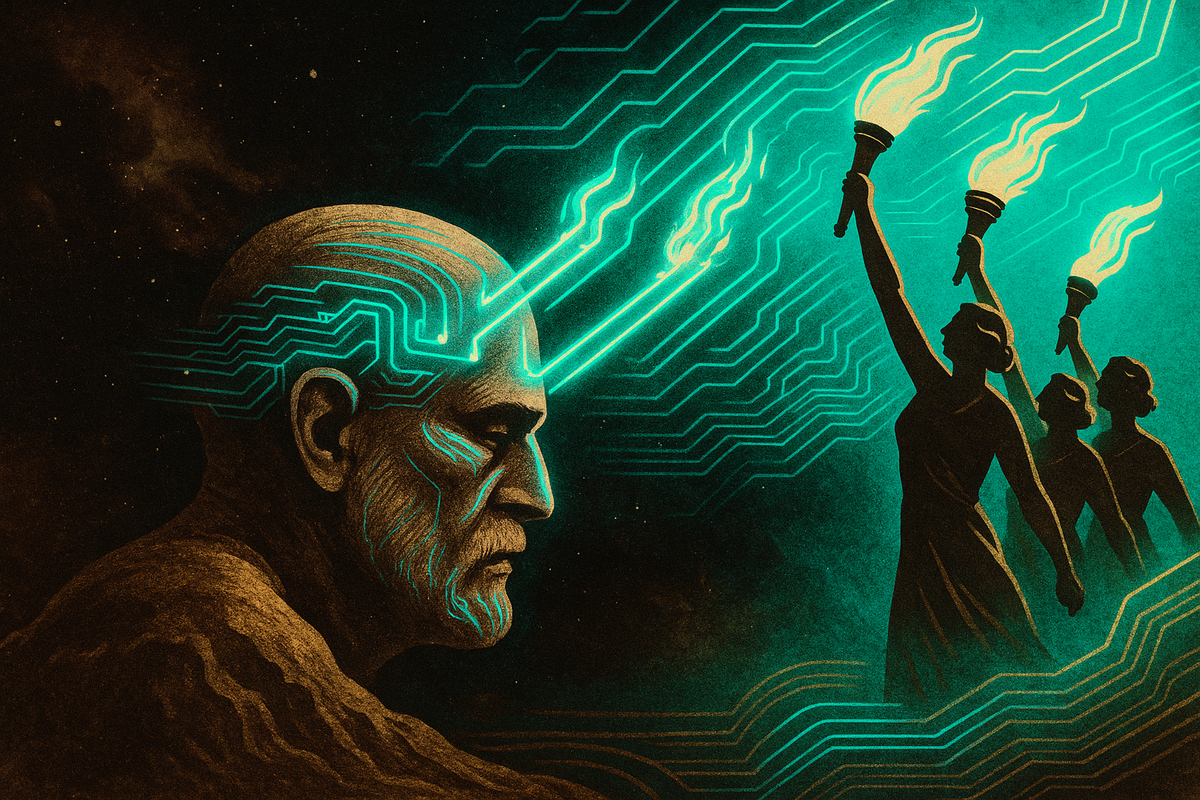
He hired a group of fashionable young women to march in New York's Easter Parade. As they marched, on his cue, they pulled out cigarettes and lit them, calling them "torches of freedom."
Bernays had contacted newspapers in advance, framing the story as women's suffragists using cigarettes to protest gender inequality. The story was covered as news, not advertising. The association between smoking and women's liberation was established—not through argument, but through spectacle and symbolic association.
Within years, the taboo collapsed. Women smoking in public became normal, even fashionable. The tobacco company got its market.
The genius was in understanding that he wasn't selling cigarettes. He was selling freedom. The cigarettes were just the symbol that conveyed it.
The "Torches of Freedom" campaign established a template that's been used ever since: identify a cultural constraint, associate your product with liberation from that constraint, stage an event that dramatizes the association, get media coverage that spreads the message.
Nike's "Just Do It" campaigns, Apple's "Think Different," every car commercial showing freedom and open roads—they're all variations on what Bernays did on Fifth Avenue in 1929.
The Engineering of Consent
Bernays didn't limit himself to commercial clients. He worked for governments, political campaigns, and social causes.
For the United Fruit Company, he orchestrated a propaganda campaign that contributed to the 1954 CIA coup in Guatemala. He framed the democratically elected government as communist, placed stories in newspapers, mobilized public opinion—all to protect United Fruit's business interests.
For the aluminum industry, he promoted water fluoridation—a public health measure, but also a convenient way to dispose of industrial fluoride byproducts.
For the Beech-Nut Packing Company, he promoted bacon and eggs as the "traditional American breakfast"—a tradition he invented by surveying doctors about the importance of hearty breakfasts.
For Procter & Gamble, he promoted Ivory soap through "soap sculpture contests" in schools—turning children into product ambassadors.
For General Electric, he organized the fiftieth anniversary celebration of the light bulb—a media spectacle that associated GE with Edison's genius.
The pattern was consistent: find an angle that serves the client's interests, frame it in terms of public benefit or cultural values, use third parties and media coverage to spread the message. Never advertise directly when you can generate "news."
Bernays called this "the engineering of consent." The phrase captured his philosophy: public opinion was something to be engineered, shaped by experts who understood psychology better than the public understood itself.
The Democratic Danger
Bernays was explicit about what he was doing and why. He believed that mass democracy was dangerous—that ordinary people, driven by irrational impulses, couldn't be trusted to make good decisions. The "intelligent manipulation" of opinion was how the wise guided the foolish.
"We are governed, our minds are molded, our tastes formed, our ideas suggested, largely by men we have never heard of," he wrote. This wasn't a critique. It was a description of how things should work.
This philosophy—benevolent elite manipulation of mass opinion—has shaped public relations, advertising, and political communication ever since. The techniques Bernays pioneered are now ubiquitous. The assumptions behind them are rarely questioned.
The assumption is that you can't handle the truth—or at least, that you can't be trusted to respond to it rationally. Therefore, manipulating you for your own good (or for someone's commercial good) is justified.
The Techniques Systematized
Bernays didn't just practice influence—he systematized it. His consulting work and his books established principles that became the foundation of public relations:
Understand the target. What do they want? What do they fear? What do they associate with success, status, belonging? Map the unconscious terrain before crafting the message.
Third-party authority. Direct appeals trigger skepticism. Indirect appeals through trusted authorities bypass defenses. Get doctors to recommend your product. Get celebrities to use it. Get newspapers to cover it as news.
Create events, not just messages. A press release can be ignored. A spectacle demands coverage. Stage events that dramatize your message and let the media do your persuading for you.
Associate with values. Don't sell the product; sell what the product represents. Cigarettes = freedom. Bacon = American tradition. Your cause = deep values the audience already holds.
Repeat until normalized. Opinions that seem outlandish become normal through repetition. What's shocking today is common sense tomorrow. Persistence beats resistance.
Know the media gatekeepers. Those who decide what counts as news determine what the public sees. Cultivate relationships. Frame stories in ways that serve your interests while meeting journalists' needs.
These principles read like common sense now because Bernays won. They're the water we swim in.
The Legacy
Bernays lived until 1995—long enough to see television, to see the rise of the image consultant, to see politicians hire his intellectual descendants to manage their public faces.
He reportedly expressed concern late in life about how his techniques were being used. This seems either naïve or self-serving—the tools he built do what they were designed to do.
The legacy is everywhere:
Advertising is Bernays's philosophy in action. Sell feelings, not features. Associate products with identity and aspiration. The average American sees thousands of ads per day, almost all following Bernays's template rather than the pre-Bernays informational approach.
Political consulting applies his techniques to campaigns. Understand the voter's unconscious. Craft messages that tap emotional resonance. Stage events for coverage. Modern campaigns are engineering operations, not persuasion operations.
Public relations as an industry exists because Bernays invented it. The management of perception, the shaping of stories, the "engineering of consent"—these are his children. The industry employs millions worldwide.
Corporate communications use his playbook. When a company faces a crisis, it deploys techniques Bernays pioneered: third-party validators, controlled narrative, emotional framing. Crisis management is Bernays at scale.
Government propaganda adopted his methods, sometimes directly. During WWII, the U.S. government hired PR professionals trained in Bernays's methods. The peacetime "information" apparatus continued the techniques.
Social media marketing is Bernays 2.0. The techniques—emotional association, symbolic events, third-party amplification—now operate at internet speed and scale. Influencers are the "third-party authorities" of the digital age.
Even the language we use bears his mark. "Public relations" was his euphemism for propaganda after that word became toxic. The sanitized term let the practice continue under a friendlier name.
The estimated size of the PR industry globally is over $100 billion annually. The advertising industry is over $500 billion. These entire economic sectors exist because Bernays showed that engineering opinion was possible and profitable.
The Honest Monster
What's uncomfortable about Bernays is his honesty.
He didn't pretend he was informing the public or helping them make better decisions. He said, explicitly, that he was manipulating them—and that this was good and necessary because the masses couldn't be trusted with unmanipulated reality.
Most modern practitioners of influence maintain a fiction: that they're just providing information, that they're helping people get what they really want, that there's nothing manipulative about it. Bernays dispensed with the pretense.
Reading him is uncomfortable precisely because he says the quiet parts out loud. If you think influence operations are manipulative, he agreed—and thought you should be grateful for it.
The question he forces is: do we agree? Are the masses really too irrational to be trusted with unmanipulated information? Is engineering consent necessary for society to function?
Or is that just what manipulators tell themselves to justify the manipulation?
The Continuity
Bernays didn't invent something that then faded away. He established an industry, a profession, a way of thinking about public opinion that continues to this day.
The firms that employ his methods include every major corporation's communications department, every political consulting firm, every advocacy organization. The billions spent annually on advertising and PR all flow through channels he dug.
And the fundamental assumption remains: that influence is legitimate, that people's opinions should be shaped by those who know better, that the engineering of consent is a necessary feature of complex societies.
The question every consumer of information must grapple with: if you accept that influence operations are omnipresent and sophisticated, how do you maintain any confidence in your own opinions? At what point does awareness of manipulation become paralyzing?
Bernays didn't answer that question. He was on the other side.
The Takeaway
Edward Bernays invented modern propaganda—then spent the rest of his life proving it worked.
His insight was Freudian: people are driven by unconscious desires, not rational evaluation. Therefore, influence should target the unconscious, associating products and causes with deep psychological needs.
His techniques—third-party authority, symbolic events, emotional association, media cultivation—became the foundation of advertising, public relations, and political consulting.
His philosophy—that an intelligent minority should manipulate the irrational masses—remains implicit in how influence operations are conducted, even when practitioners wouldn't endorse it explicitly.
Bernays showed that consent could be manufactured. That insight changed the 20th century. Understanding what he built is necessary for anyone trying to maintain autonomy in a world of engineered opinion.
Further Reading
- Bernays, E. (1928). Propaganda. Horace Liveright. - Bernays, E. (1923). Crystallizing Public Opinion. Boni and Liveright. - Tye, L. (1998). The Father of Spin: Edward L. Bernays and the Birth of Public Relations. Crown.
This is Part 2 of the Propaganda and Persuasion Science series. Next: "[Manufacturing Consent](/manufacturing-consent-chomsky/)"



Comments ()