Embodied Knowledge: What Resists Articulation and Why
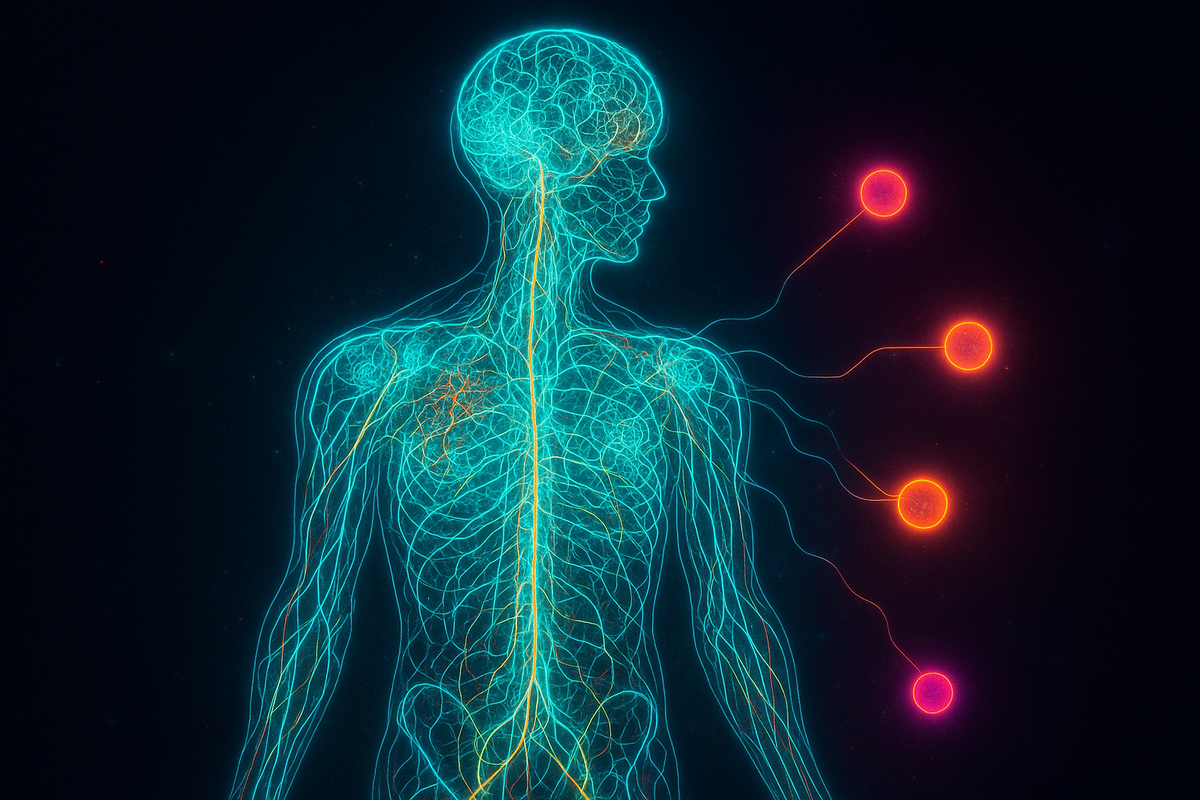
Some knowledge lives in the hands, not the head. Tacit knowledge — Polanyi's term — resists articulation not because it's ineffable, but because language is the wrong medium for transmitting proprioceptive and attentional skill.
Embodied Knowledge: What Resists Articulation and Why
There's a famous passage in the Zhuangzi about a wheelwright who can't teach his son the craft:
"When I chisel a wheel, if I go slow, it's comfortable but doesn't hold firm. If I go fast, it jams and won't fit. Not too slow, not too fast—I get it in my hand and respond with my mind. My mouth can't put it into words. There's an art to it somewhere, but I can't explain it to my son, and he can't get it from me."
This isn't poetic license. It's accurate description of a class of knowledge that fundamentally resists linguistic encoding.
Not because the wheelwright is inarticulate. Because the knowledge lives in coupled perception-action loops below the threshold of explicit awareness.
Series: Esoteric Transmission | Part: 7 of 10
Categories of Embodied Knowledge
Let's be precise about what we mean by "knowledge that resists articulation":
1. Skilled Movement
Examples: Playing an instrument, martial arts, surgery, dance, craft work
What makes it hard to articulate:
The knowledge is stored in cerebellar circuits, motor cortex patterns, and proprioceptive calibration—not in declarative memory systems that interface with language.
A master violinist's fingers know exactly how much pressure to apply, which angle produces which tone quality, how to make micro-corrections in real time. Ask them to explain and they'll describe the phenomenology ("it feels like...") but can't give you the actual motor program.
Why? Because the motor program is compiled below conscious access. It runs automatically once triggered. Making it explicit would slow it down catastrophically.
This is why:
- Athletes describe being "in the zone" where conscious thought disappears
- Surgeons who overthink technique perform worse than those who trust embodied skill
- Musicians learning new pieces practice slowly (conscious) then speed up (letting it go unconscious)
2. Perceptual Expertise
Examples: Wine tasting, art authentication, medical diagnosis from subtle cues, recognizing micro-expressions
What makes it hard to articulate:
Expert perception involves pattern recognition across high-dimensional feature spaces that consciousness can't directly access.
A sommelier detecting specific terroir in wine is processing volatile compounds, tannin structure, acid balance, aromatic complexity—hundreds of dimensions integrated into holistic impression.
They can name major components ("oaky," "fruity," "tannic") but the actual discrimination is pre-linguistic perceptual processing. Their sensory cortex has learned features that most people can't perceive at all.
Same with:
- Chess masters recognizing board patterns (50,000+ stored configurations)
- Radiologists detecting subtle abnormalities (perceptual learning reshapes visual cortex)
- Expert mechanics hearing what's wrong with engines from sound alone
3. Attentional Capacities
Examples: Meditative absorption, sustained concentration, meta-awareness, selective attention control
What makes it hard to articulate:
You're trying to describe how consciousness directs itself—but the describing happens within consciousness using the same faculties you're trying to explain.
A meditator who can sustain unwavering attention on breath for an hour has trained specific attentional control circuits. But explaining how they do it faces recursive problem:
"I notice when attention wanders and bring it back."
"How do you notice?"
"I'm aware of awareness itself..."
"How do you do that?"
Eventually you hit bedrock: the capacity to perform certain cognitive operations can't be fully specified in other cognitive operations.
4. Affective Regulation
Examples: Staying calm under pressure, working skillfully with intense emotion, maintaining equanimity during crisis
What makes it hard to articulate:
Emotion regulation involves interoceptive awareness, vagal tone modulation, and implicit reappraisal strategies that mostly bypass explicit cognition.
Someone with mature affect regulation feels anger rising and... something happens. The anger doesn't escalate. But ask them what they did:
"I just... breathe? And kind of make space for it?"
They're gesturing at somatic operations (vagal brake activation, attention diffusion, body-based allowing) that don't have precise linguistic labels because they evolved before language and operate largely outside it.
5. Relational Attunement
Examples: Therapeutic presence, reading the room, knowing when to push/when to back off, empathic resonance
What makes it hard to articulate:
This involves rapid unconscious processing of micro-cues: facial expressions, prosody, posture, timing, breathing patterns, energetic quality of presence.
A skilled therapist feels when client is about to access something important. They adjust their presence, timing, word choice—but if you ask how they knew, they often can't say.
"I just sensed they were ready."
What they're sensing is complex multivariate pattern integrating dozens of perceptual channels. Conscious mind receives this as felt sense, not explicit analysis.
6. Energetic Sensitivity
Examples: Feeling qi/prana, sensing subtle body phenomena, perceiving "energy" in spaces/people
What makes it hard to articulate:
Controversial category because Western science doesn't have validated frameworks for it. But practitioners across traditions consistently report:
- Feeling flows of warmth/tingling/pressure in body
- Sensing blockages or openings in their own or others' systems
- Perceiving qualities of spaces as "heavy" or "light"
- Detecting shifts in meditative states through somatic markers
From inside, this feels like direct perception of something real. But there's no shared vocabulary because:
- Western language doesn't have precise terms for these phenomenologies
- The experiences are subtle and variable between people
- Scientific frameworks either dismiss them or lack measurement tools
Whether you believe qi exists objectively or is sophisticated interoception, practitioners develop discriminations they can feel but struggle to articulate.
Why Bodies Know Before Minds Can Say
Here's what unites these categories:
They're all processed by systems that evolved before or operate independently of language.
Language is recent (evolutionarily). Motor control, perception, emotion, social cognition—these are ancient, distributed across brain regions that don't natively interface with Broca's area.
When we try to articulate embodied knowledge, we're asking language systems to reverse-engineer operations they didn't design and don't have direct access to.
This creates several problems:
1. Compilation Barrier
Complex skills get compiled into efficient routines that consciousness doesn't track:
- Typing: you can type "the" without thinking about finger sequence
- Driving: you brake before consciously registering danger
- Speaking: you conjugate verbs correctly without reviewing grammar rules
Compiled knowledge is faster, more efficient, and more reliable than conscious execution. But compilation destroys the step-by-step that would make it articulable.
2. Dimensional Reduction
Conscious working memory holds ~7 items. Skilled performance integrates hundreds of variables.
A jazz musician improvising tracks:
- Harmonic structure
- Melodic development
- Rhythmic interplay with band
- Emotional arc of solo
- Audience energy
- Physical feel of instrument
- ...and dozens more
No way to hold all this explicitly. Instead, it's holistically processed and expressed through embodied performance. Afterwards, they can say "it felt right" but can't enumerate the algorithm.
3. Pre-Linguistic Processing
Much embodied knowledge involves subcortical or early sensory processing:
- Fear responses activate amygdala before cortex knows what happened
- Balance adjustments occur cerebellarly without conscious control
- Micro-expressions are detected by fusiform face area before conscious recognition
By the time information reaches language systems, it's already been processed, integrated, and acted upon by systems that don't speak.
4. Tacit Coordination
Many skilled performances require coordination of multiple systems that don't have common code:
Playing piano simultaneously coordinates:
- Visual system (reading music)
- Motor systems (finger movements)
- Auditory system (monitoring sound)
- Timing systems (rhythm)
- Emotional systems (expression)
These systems entrain and coordinate without sending reports to conscious verbal centers. The coordination itself is the knowledge—and it doesn't reduce to instruction manual.
What Language Can and Can't Capture
This doesn't mean embodied knowledge is mystical or impossible to teach. It means language plays specific limited roles:
What language CAN do:
- Point attention: "Focus on the feeling in your belly"
- Provide framework: "This is called jhana; here's what to expect"
- Correct errors: "Your weight is too far forward"
- Name phenomenology: "That tingling is what we mean by qi"
- Sequence steps: "First establish posture, then regulate breath, then..."
What language CAN'T do:
- Transfer the skill itself: Reading about riding a bike doesn't teach balance
- Specify implicit coordination: How exactly do you "just relax and let it flow"?
- Capture compiled expertise: The master's artistry isn't reducible to rules
- Encode perceptual discrimination: "Oakiness" means nothing until you've tasted it
- Replicate felt sense: Describing "absorption" doesn't create the state
Why Transmission Requires Bodies
Now we see why esoteric knowledge demands embodied transmission:
Because the knowledge only exists in enacted coupling between nervous systems.
When student practices near teacher:
-
Teacher's embodied performance provides template
Student's mirror neurons, motor simulation systems, and perceptual processing create internal model of what teacher is doing -
Teacher perceives student's performance and corrects in real-time
"Your breath is too shallow" (teacher perceives what student can't feel yet)
"Soften your jaw" (teacher sees tension student doesn't notice) -
Student's system learns through practice + feedback
Not learning about the skill. Learning the skill itself through repeated enacted performance with correction -
Knowledge gradually becomes embodied in student
After sufficient cycles, student can access the capacity independently. The pattern has transferred from teacher's nervous system to student's.
Text can point. Video can demonstrate. But only shared embodied practice can transmit complex multi-system coordination patterns.
The Limits of Explicit Knowledge
This has implications beyond spirituality:
Medicine: Expert clinicians diagnose from subtle patterns they can't fully articulate. Trying to formalize everything into protocols loses the tacit clinical judgment that comes from experience.
Leadership: Good leaders read group dynamics and timing through embodied attunement. Management books can't transfer this—you learn it by doing it with feedback.
Therapy: Therapeutic presence, empathic attunement, relational repair—these are skilled performances that take years to develop and can't be specified in treatment manuals.
Art: Technique can be taught explicitly, but artistry—the feel for composition, timing, emotional resonance—comes through apprenticeship with masters.
Parenting: Raising children involves constant micro-adjustments based on reading their states, maintaining calm under stress, attuning to their needs. No manual captures this.
In all these domains, we over-rely on explicit knowledge (manuals, training videos, certification tests) and under-invest in embodied transmission (apprenticeship, mentorship, supervised practice).
Result: technically trained people who lack the tacit expertise that makes technique actually work.
What This Means for Learners
If you're trying to develop embodied capacities:
Accept that reading won't get you there
Books are useful for:
- Conceptual frameworks
- Inspiration and motivation
- Error-checking your practice
But the capacity itself only develops through practice.
Seek embodied teachers
Someone who can:
- Demonstrate what you're learning
- Perceive aspects of your performance you can't see
- Provide real-time correction
- Model the integrated coordination you're developing
Practice in their presence
The transmission happens through coupling during shared practice, not through listening to lectures.
Be patient with the learning curve
Embodied knowledge takes time to develop. Months to get basics. Years to develop proficiency. Decades to reach mastery.
No shortcuts. Your nervous system needs thousands of iterations to build the implicit coordination patterns.
Trust the process when words fail
If your teacher says "just feel it" or "it's like... you kind of..." and seems unable to articulate further—that's not inadequacy.
They're pointing at knowledge that lives in their body and will live in yours after sufficient practice. But the knowledge itself doesn't fit in language.
This is Part 7 of the Esoteric Transmission series, exploring how embodied knowledge passes across generations through direct contact.
Previous: Case Studies: Zen Dharma Transmission, Tibetan Empowerment, Sufi Silsila
Next: The Real Thing Problem: Finding Authentic Transmission in Modern Context
Further Reading
- Dreyfus, H., & Dreyfus, S. (1986). Mind Over Machine: The Power of Human Intuition and Expertise. Free Press.
- Polanyi, M. (1966). The Tacit Dimension. University of Chicago Press.
- Varela, F., Thompson, E., & Rosch, E. (1991). The Embodied Mind. MIT Press.
- Collins, H. (2010). Tacit and Explicit Knowledge. University of Chicago Press.
Comments ()