Entrainment: How Everything That Stays Together Learns to Move Together
Entrainment explains how coupled oscillators—from neurons to relationships—find shared rhythms to reduce unpredictability and create coherence across all scales.
Entrainment: How Everything That Stays Together Learns to Move Together
Formative Note
This essay represents early thinking by Ryan Collison that contributed to the development of A Theory of Meaning (AToM). The canonical statement of AToM is defined here.
[The Fundamental Equation: Why Everything from Atoms to Civilizations Follows the Same Math
A foundational AToM essay (but if you’re new, start here 👇) The Hydrogen Atom: Why the Simplest Thing in the Universe Explains Everything Psychology Got Wrong About Balance, Trauma, and Human NatureA foundational AToM essay The One Object That Unlocks Everything Every field has a simple object you learn on day
 ideasthesiaRyan Collison
The Pattern That Propagates
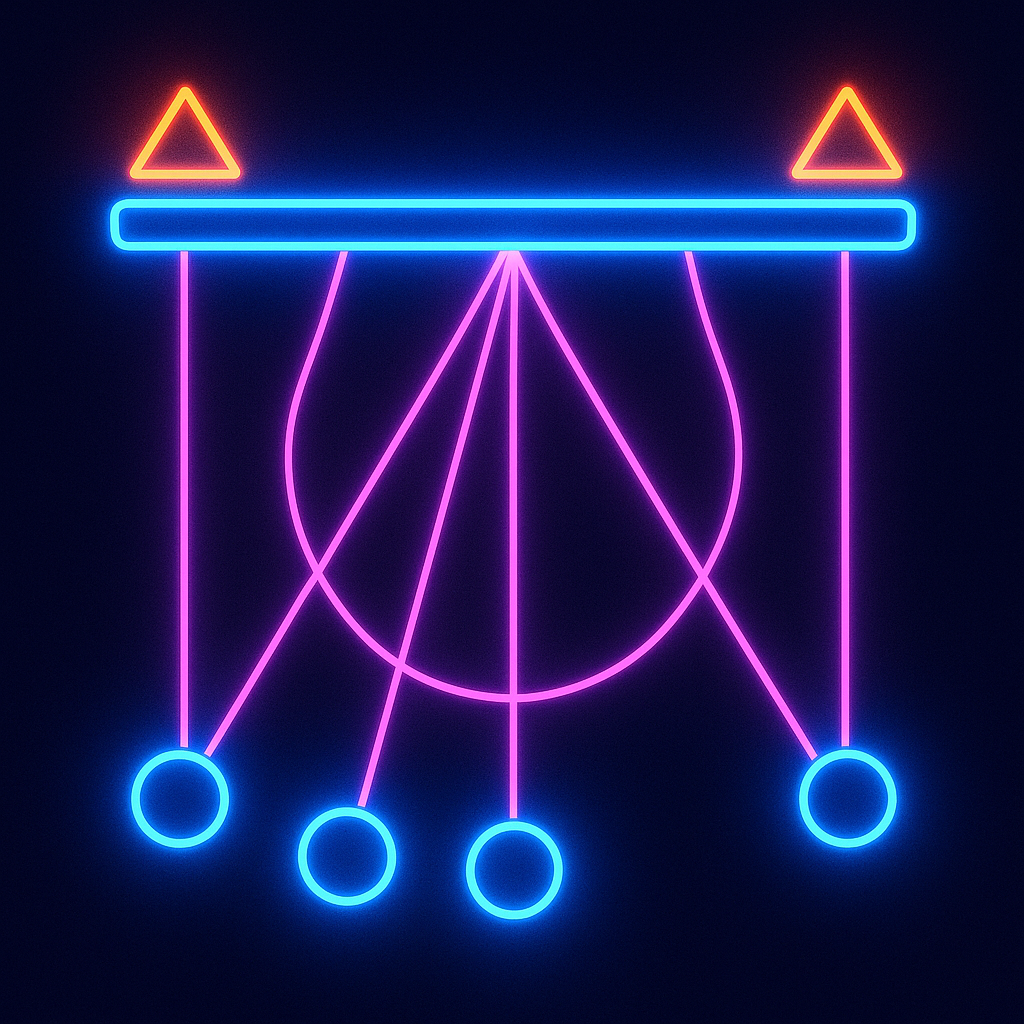
In 1665, Dutch scientist Christiaan Huygens was sick in bed when he noticed something strange. Two pendulum clocks on his wall, swinging independently, gradually synchronized themselves. Within half an hour, they were ticking in perfect unison—not because anyone adjusted them, but because tiny vibrations traveling through the wall coupled their rhythms together. Huygens had discovered entrainment.
He didn’t know it would explain why fireflies flash in unison across entire forests, why women living together sync menstrual cycles, why audiences clap in rhythm without anyone conducting, why your heartbeat matches the person you’re talking to, why cultures collapse when their rituals fail, why trauma makes it impossible to “just calm down,” and why meaning itself is a synchronized pattern across nervous systems.
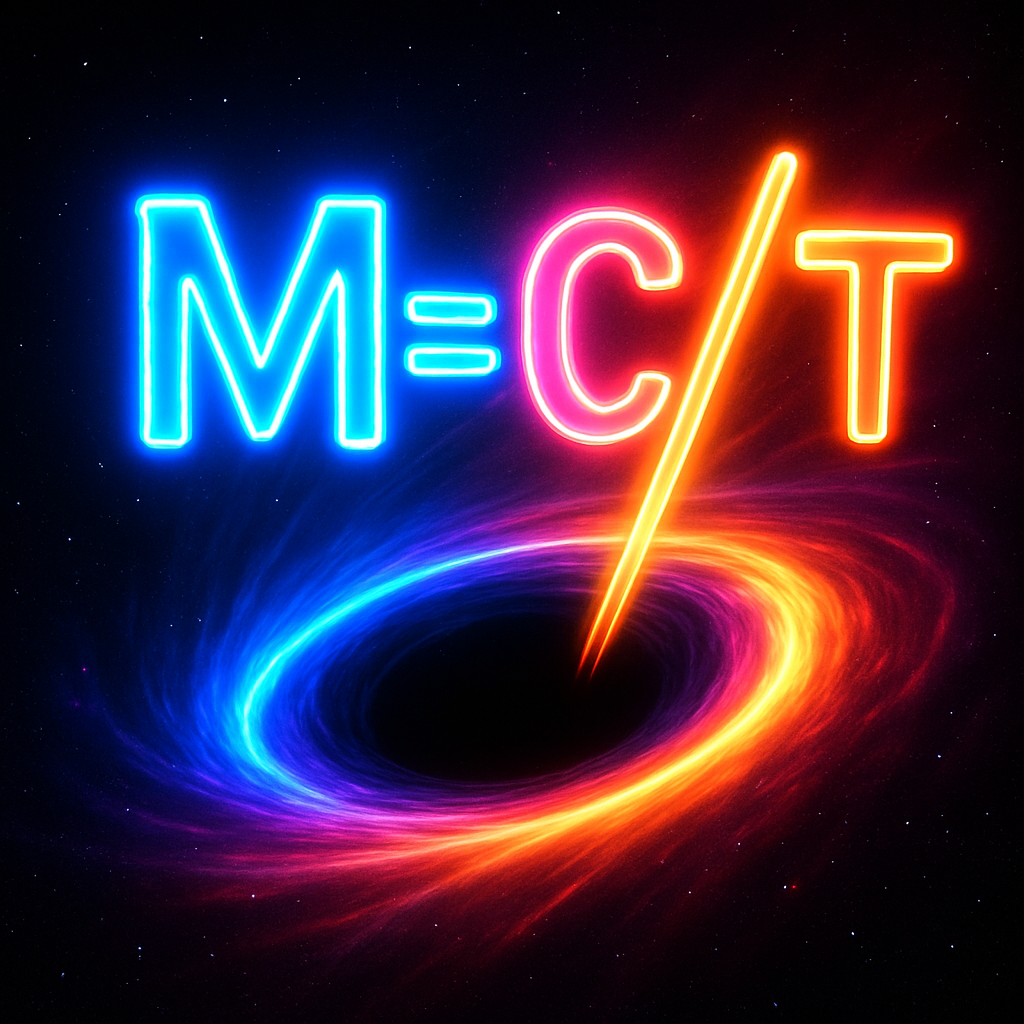
Recall, AToM's Fundamental Equation: M= C/T
Entrainment isn’t a metaphor. It’s the mechanism that changes the variables in the equation. It’s how any system reduces T (trauma, load, unpredictability) and increases C (coherence, integration, alignment).
If M = C / T is the law, entrainment is the engine that drives the ratio.
Hydrogen gives you the minimal pattern of coherence; entrainment shows you how that pattern spreads. Every time two oscillators sync, two people drop into the same rhythm, two institutions align around a shared cadence — the system becomes more coherent and less traumatic. That’s entrainment altering the math.
From pendulums to neurons to partners to nations, entrainment is how coherence climbs upward through scale. It’s how isolated parts stop accumulating tension, start integrating their predictions, and become a functional whole.
And once you see that, you understand the real point:
*Meaning isn’t "just" something inside you. Meaning is the increase of C and the reduction of **T *that happens when your system synchronizes with something beyond itself.
The Physics of Getting In Sync
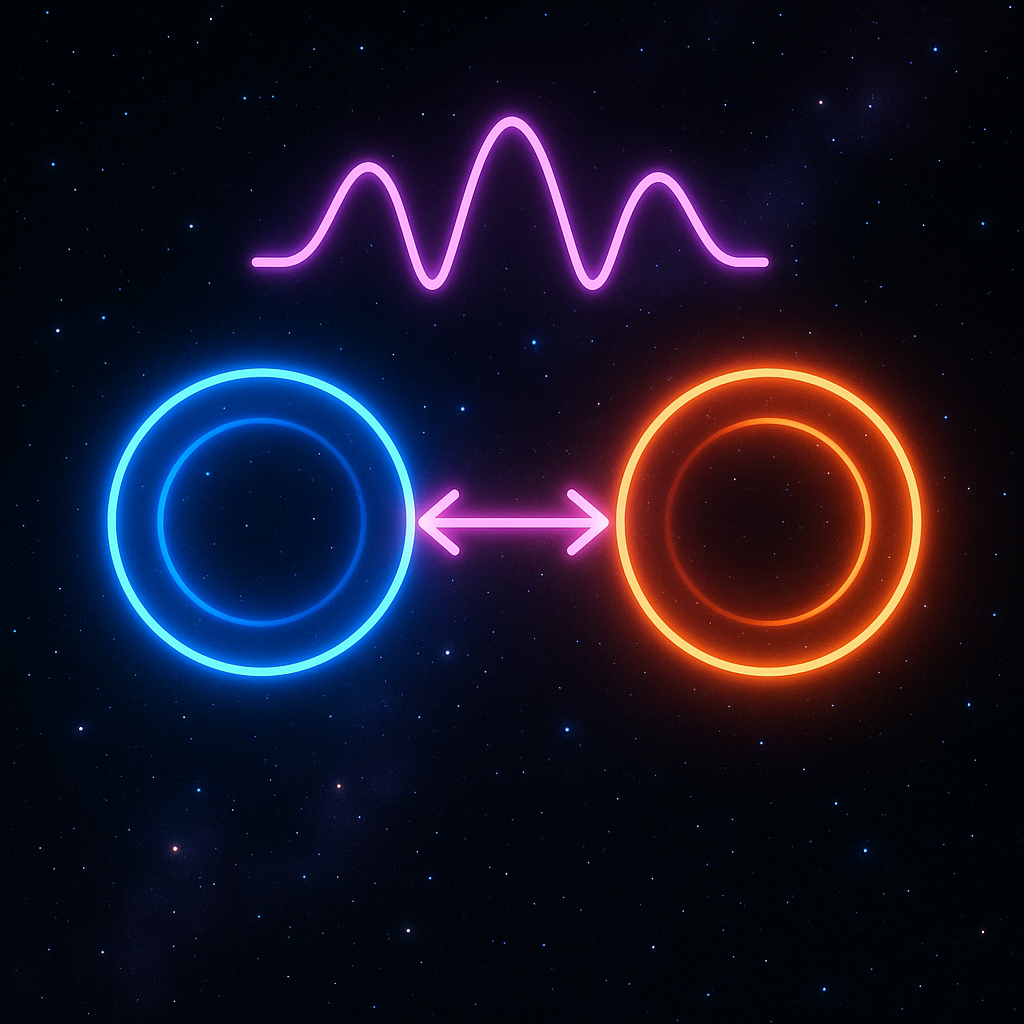
"Coupled oscillators finding a shared frequency" is just physics for having a 'vibe'.
Why do separate things start moving together? Start with the simplest case: two metronomes on a board. Set them ticking at slightly different speeds, then place the board on two soda cans so it can rock slightly. Wait. Within two minutes, the metronomes lock into perfect synchrony—tick, tock, tick, tock—completely in phase.
*This isn’t magic. It’s physics. *
Each metronome’s swing creates a tiny vibration in the board, and that vibration slightly nudges the other metronome. The nudges accumulate until the two systems find a shared rhythm that costs less energy than fighting each other. This is entrainment at its simplest: coupled oscillators finding a shared frequency.
"Coupled oscillators finding a shared frequency" sounds like complex physics. It is and it's also not. That's the whole point. It's the reason a cold drink feels good on a hot day—your overheated body and the cold liquid find equilibrium. It's two people naturally syncing their walking pace. It's why you yawn when someone else yawns. It's a parent rocking a crying baby until both their breathing slows. It's getting in the 'vibe'.
It's what attachment theory has been describing all along without the math: two nervous systems finding a shared rhythm because fighting costs more than syncing. Family systems theory, polyvagal theory, interpersonal neurobiology—they've all been pointing at entrainment.
Now we're just naming it clearly #entrainment.
The same phenomenon appears everywhere.
Fireflies in Southeast Asian forests flash in waves across miles of jungle. Heart cells in a petri dish, initially beating randomly, synchronize within hours. Planets lock into orbital resonances such as Neptune and Pluto’s 3:2 rhythm. Bridge engineers discovered that pedestrians walking across the Millennium Bridge in London entrained to the bridge’s sway, amplifying it until the entire structure became dangerously unstable.
Entrainment doesn’t require intelligence, intention, or awareness. It requires only oscillating systems, some form of coupling, and time. Give those three ingredients, and synchrony emerges automatically. But here’s what makes entrainment more than just physics: it scales. The same principle that synchronizes pendulums also synchronizes neurons, relationships, organizations, and civilizations.
Your Brain Is an Entrainment Engine
The brain's job is coherent entrainment across billions of oscillating neurons.
How do neurons synchronize to create thought? Your brain contains roughly 86 billion neurons, each one firing in its own rhythm. If they all fired independently, you’d have noise—static. But they don’t fire independently. They entrain.
Under the Free-Energy Principle, this is exactly what neurons must do. Synchrony is the cheapest way for the brain to minimize prediction error—lowering T (trauma, uncertainty) while increasing C (coherence, model stability). Neural oscillations lock together because it costs far less energy to process a world with shared timing than a world of independent, competing signals.
Neural synchronization is how your brain works. #entrainment
When you pay attention to something, neurons in your visual cortex start firing together—synchronized spikes at 40 Hz (gamma waves) that bind features into a single object. When you fall asleep, slower rhythms (delta waves at 1–4 Hz) synchronize across your entire cortex. When you’re in deep focus, **theta rhythms **(4–8 Hz) in your hippocampus entrain with gamma bursts, creating the neural signature of learning.
This isn’t just correlation—it’s mechanism. Neurons that fire together wire together (Hebb’s rule), but they can only fire together if they first entrain. Memory formation, pattern recognition, decision-making, and consciousness itself all depend on different brain regions synchronizing their oscillations at the right frequencies. Coherent thought is entrained oscillation.
When entrainment fails, cognition fragments. ADHD involves unstable coupling between brain regions—subsystems that can’t maintain shared rhythms. Epilepsy is pathological over-entrainment, where too many neurons lock into a single unstable rhythm. Dissociation involves regions that should be synchronized becoming disconnected—memory, emotion, and sensation operating in separate, non-communicating rhythms.
Your brain’s job isn’t to “process information” in some abstract sense. It’s to maintain coherent entrainment across billions of oscillating neurons so that a unified you can emerge from the noise.
Your Body Is a Stack of Synchronized Clocks
You feel good when your body entrains multiple 'clocks' between it and the environment.
Your brain isn’t the only system that needs to synchronize. Your entire body is a hierarchy of rhythms, each one trying to entrain with the others so you can function coherently. Physiological entrainment is the body’s fastest way to reduce T (tension load) enough for coherence to stabilize. Literally, it's 'getting the wiggles out'.
At the bottom layer is the circadian rhythm, the 24-hour clock governed by the suprachiasmatic nucleus in your hypothalamus. It sets the master tempo for hormone release, body temperature, and alertness, and it entrains to sunlight—which is why jet lag exists.
Above that are ultradian rhythms, the 90–120 minute cycles that organize sleep stages, attention waves, hunger patterns, digestion, and metabolic shifts. At the top layer sits cardiorespiratory coupling, the moment-to-moment interplay between your breathing rhythm and your heart rate. Inhalation briefly speeds your heart; exhalation slows it. High HRV signals a flexible, responsive autonomic system. Low HRV signals a rigid, fragile one.
When these rhythms entrain properly, you feel grounded, energized at the right times, able to focus, and emotionally stable. When they don’t—when your sleep schedule is chaotic, when screens desynchronize your circadian rhythm, when your ultradian cycles are constantly interrupted, when you sit all day and weaken cardiorespiratory coupling, when chronic stress keeps your autonomic system in high alert—you experience brain fog, irritability, anxiety, and burnout. This isn’t psychological weakness. It’s desynchronization.
Modern life disrupts entrainment constantly. Artificial light pushes your circadian rhythm out of phase. Erratic routines fragment ultradian cycles. Inactivity weakens heart–breath coherence. Notifications and digital overstimulation inject high-frequency noise that destabilizes autonomic integration.
The solution isn’t vague “self-care.” It’s re-entrainment: morning sunlight to re-sync the circadian clock, consistent sleep/wake times to stabilize ultradian cycles, rhythmic movement to strengthen cardiorespiratory coupling, and slow, extended exhales to manually entrain the autonomic system back toward coherence.
Your body already knows how to be coherent. You just have to stop disrupting its rhythms (adapt to the inevitability of the modern environment, but that's later 😉).
Relationships Are Mutual Entrainment
This is dyadic entrainment: two nervous systems coupling into a single "temporary coherence manifold" aka the 'vibe'.
Why can you feel when someone is really listening? Because two people talking don’t just exchange words—they synchronize. In good conversation, heart rates begin to match, breathing patterns align, vocal prosody converges, micro-movements mirror each other, and even brain activity in social regions locks into shared rhythms. This is dyadic entrainment: two nervous systems coupling into a single, temporary coherence manifold.
You can feel it instantly when it’s working. The conversation flows. Pauses feel natural instead of awkward. You finish each other’s sentences without trying. Time behaves strangely—you look up and an hour has passed. You leave feeling clearer, brighter, and more alive than before you walked in.
Psychologists call the first part Theory of Mind—your brain’s ability to track another person’s internal state. When entrainment hits, your ToM model locks onto theirs, reducing uncertainty and lowering T.
But conversation requires a second system that cognitive scientists call interactive alignment. This is the mechanism that keeps the dialogue itself coherent—shared timing, shared wording, shared semantic expectations. When these two systems synchronize, the interaction becomes low-T, high-C across both people and the conversation they’re creating together.
And you can feel just as quickly when it isn’t working. Talking feels like effort. Timing is off—one of you interrupts while the other leaves long, dead gaps. Eye contact feels either too intense or strangely absent. You walk away exhausted after five minutes. The person might not have said anything explicitly wrong, but the rhythm of the exchange—the timing, the tone, the pacing—was misaligned. It wasn’t what they said; it was how they said it. The entrainment failed, and your body registered the incoherence long before your mind formed an explanation. That physical sense of “something is off” is your nervous system detecting mismatched rhythms.
What we call chemistry, rapport, or being on the same wavelength is literal physiological synchrony.
Secure attachment—the developmental foundation of healthy relationships—forms through thousands of micro-entrainment events. A baby cries, the caregiver responds, the baby calms, and the caregiver’s nervous system provides the rhythm the baby cannot generate alone. Over time, the infant internalizes that rhythm. Security is simply successful entrainment repeated until the child can self-regulate.
Relational trauma, by contrast, is failed entrainment—misattunement when the caregiver’s rhythm doesn’t match the child’s needs, inconsistency when synchrony appears and disappears unpredictably (shaping anxious attachment), or absence when no coupling occurs at all (shaping avoidant patterns). The child’s nervous system learns the geometry of connection by the rhythms it can or cannot synchronize with. Misttunement, feeling triggered or being activated** **is simply C dropping or T rising faster than the system can correct.
This is why therapy works. At its core, therapy is re-entrainment: the therapist’s regulated nervous system provides a stable, predictable rhythm; the client’s dysregulated system gradually couples to it; and over time the client’s internal rhythms regain coherence and begin to self-generate. You don’t think your way into secure attachment. You entrain your way into it.
Writing and symbols entrain our memory to meaning.
Culture Is Synchronized Meaning
Scale up from dyads to groups, and entrainment becomes the fabric of culture. Ritual is simply entrainment made explicit. Religious services synchronize bodies as people stand, sit, and kneel in unison. Chanting synchronizes breath and vocalization. Shared meals synchronize eating rhythms and conversational tempo. Holidays create collective peaks against a baseline of routine. These coordinated rhythms aren’t symbolic—they’re physiological, temporal, and social alignment mechanisms.
Every stable culture depends on three entrainment structures: strong baselines—the daily routines, norms, and predictable structures that keep everyone moving on roughly the same temporal grid; synchronized peaks—festivals, ceremonies, and collective celebrations that create shared emotional and temporal landmarks; and shared rhythms—the work schedules, seasonal cycles, and generational transitions that keep the population entrained to a common life-pattern. When those structures weaken, cultures fragment. Without shared rituals, there are no synchronized peaks, and meaning collapses into individualism. When communication tempos become erratic, institutions lose the ability to coordinate and bureaucratic chaos takes over. When narratives diverge, subgroups begin operating on incompatible rhythms, generating polarization.
Music is the purest form of cultural entrainment. The 808 drum machine didn’t just create a sound—it created a global synchronization device. Hip-hop’s 90–100 BPM tempo sits exactly at human walking pace, average speech rhythm, and the natural resonance frequency of heart–breath coupling. Billions of people, across languages and continents, can entrain instantly to that beat.
Before recorded music, entrainment spread through oral storytelling (shared attention and synchronized emotional arcs), through work songs and chants (synchronized labor rhythms), and through religious liturgy (repeated phrases and call-and-response that aligned breathing and affect). Today, global media synchronize attention across time zones, social media create volatile, high-frequency coupling, and AI systems can modulate tempo to match individual bandwidth.
Cultures that maintain coherence are cultures that maintain entrainment. And when civilizations collapse, it is rarely because they ran out of resources or lost wars. Collapse begins when entrainment structures fail—the shared rhythms dissolve, the population desynchronizes, and society fragments into subsystems that can no longer stay in phase with one another.
Cultures exist to stabilize coherence and prevent runaway trauma. Ritual, music, myth, and norms are just large-scale entrainment technologies that keep a civilization in a high coherence, low-curvature, low-trauma cycle.
Music is the purest form of cultural entrainment.
Why “Just Calm Down” Doesn’t Work
Trauma as entrainment failure
Here’s the thing most people misunderstand about trauma: you can’t just decide to feel safe. Trauma isn’t a thought problem. It’s an entrainment problem. When someone experiences overwhelming stress, their autonomic nervous system gets stuck in dysregulated rhythms. Some people stay in chronic hyperarousal—sympathetic dominance, shallow rapid breathing, elevated heart rate. Others fall into chronic hypoarousal—shutdown, flattened affect, dissociation. Many oscillate between the two, trapped in unstable switching that never settles. The system has simply lost the ability to entrain to calm.
This is why “safety” alone never works. A traumatized person can know they’re safe, can describe it, can rationalize it, and still feel like they’re in danger—because their nervous system hasn’t re-entrained to a rhythm that matches the environment. You can see this in the physiology: low HRV signals reduced flexibility; respiratory patterns become jagged and unsustainable; autonomic responses become rigid, stuck in fight/flight or freeze. The body cannot return to baseline because its timing loops are broken.
And this isn’t just trauma.
Most modern epidemics—substance use disorder, the opioid crisis, compulsive overeating, pornography addiction, doomscrolling, gambling, shopping, binge–restrict cycles—are all forms of maladaptive entrainment.
The system finds a rhythm that temporarily stabilizes internal chaos, but the rhythm is destructive. Opioids entrain the nervous system to an artificial safety signal; stimulants entrain attention; sugar entrains reward prediction; high-density digital media entrains the orienting reflex. Compulsions aren’t random—they are crude, desperate attempts to create coherence when healthy entrainment has failed.
Drugs are just pharmocological entrainment, for good or bad.
This is also why SSRIs, benzodiazepines, mood stabilizers, and medication-assisted treatment (MAT) work the way they do. They are not “fixing chemicals.” They are pharmacological entrainment tools—artificial regulators that smooth oscillations, widen tolerances, and impose temporary rhythmic stability on systems that cannot generate it on their own. Medication creates coherence scaffolding. It doesn’t teach the system to entrain, but it buys time so entrainment can happen.
And the same is true on the social side. Twelve-step programs, recovery communities, group therapy, and support circles all work because they are tribal entrainment systems. They provide predictable rituals, shared stories, consistent tempos, collective regulation, and cross-brain synchrony. People don’t recover alone because nervous systems don’t recover alone. They need the stabilizing field of other regulated humans—the same way pendulums need the same wall beam.
Traditional trauma therapy often fails because it tries to fix the story or the thoughts instead of the rhythm. Cognitive reframing, narrative processing, and insight-based work don’t touch the timing loops that drive autonomic state. You can’t out-think a timing problem. Trauma is stored in oscillatory patterns, not sentences. Polyvagal Theory makes this explicit: if the vagus nerve is locked in defense mode, the cortex has no leverage. Until the body’s rhythms shift, safety cannot be “understood.”
It has to be entrained.
Somatic therapies go straight to the timing layer. Breathwork manually re-entrains the autonomic system by shifting vagal tone and heart–breath coherence. EMDR uses bilateral stimulation as a forced rhythmic coupling device that pulls the system out of rigid attractors. Somatic Experiencing titrates arousal in oscillations—up a little, down a little—retraining the nervous system to move flexibly instead of locking into collapse or panic. These aren’t metaphors; they are literal interventions on oscillatory dynamics.
Relational therapies operate on the same principle. A regulated therapist becomes a stabilizing metronome—a source of predictable rhythmic signals in vocal prosody, facial expression, breathing cadence, and affective timing. The client’s system gradually couples to that stable signal. Over time, repeated rupture-and-repair cycles rebuild the organism’s capacity for social entrainment, which Polyvagal Theory calls the “social engagement system.” Therapy works not because of insight, but because the nervous system finally finds another nervous system steady enough to sync with.
If the vagus nerve is locked in defense mode, the cortex has no leverage.
Physiological interventions are entrainment tools in disguise. **HRV training **increases the system’s temporal flexibility by smoothing heart–breath coupling. Cold exposure resets autonomic tone by forcing a predictable downshift through the vagal brake. Rhythmic movement—*yoga, martial arts, dance, distance running—*imposes an external tempo the internal system can lock onto, restoring coherence in systems that have forgotten their native rhythm. Even SSRIs and MAT function as pharmacological entrainment, smoothing oscillations chemically so the system can begin to coordinate again.
And cognitive therapies—CBT, DBT, ACT—are not exceptions. They are cognitive entrainment protocols. Repetition of new thoughts, new interpretations, and new attention patterns forces cortical rhythms into more stable loops. It’s not the “belief” that heals; it’s the rhythmic rehearsal of a new prediction that eventually entrains the predictive machinery itself. Active inference research already shows that thought patterns are oscillatory dynamics. CBT works because it stabilizes the timing of top-down predictions.
Across modalities, the principle is the same:* trauma heals when timing is restored*. The goal isn’t to “process” trauma in the abstract. The goal is to restore the system’s ability to entrain—to move fluidly between activation and rest, to couple with safe others, to align interoception with context, to stabilize HRV, to soften defensive reflexes, and to synchronize internal rhythms with the outside world.
Healing is not intellectual insight.
Healing is rhythmic reorganization.
Healing is entrainment regained.
Entrainment Is How Coherence Propagates
The mechanism behind everything that stays together
Go back to hydrogen for a moment. High school chemistry shows you the electron as a dot orbiting like a tiny planet—a clean loop in space. That's not what's happening. The electron is actually a probability cloud, a three-dimensional field of "where it might be found," with the highest density near certain orbital shells. It's not locked into one path. It exists across multiple possibilities simultaneously until something forces it to collapse into a definite position. The proton-electron relationship isn't rigid—it's a dynamic probability distribution held stable by electromagnetic attraction. The atom doesn't "negotiate," but it also doesn't mechanically orbit. It maintains coherence across a field of possibilities.
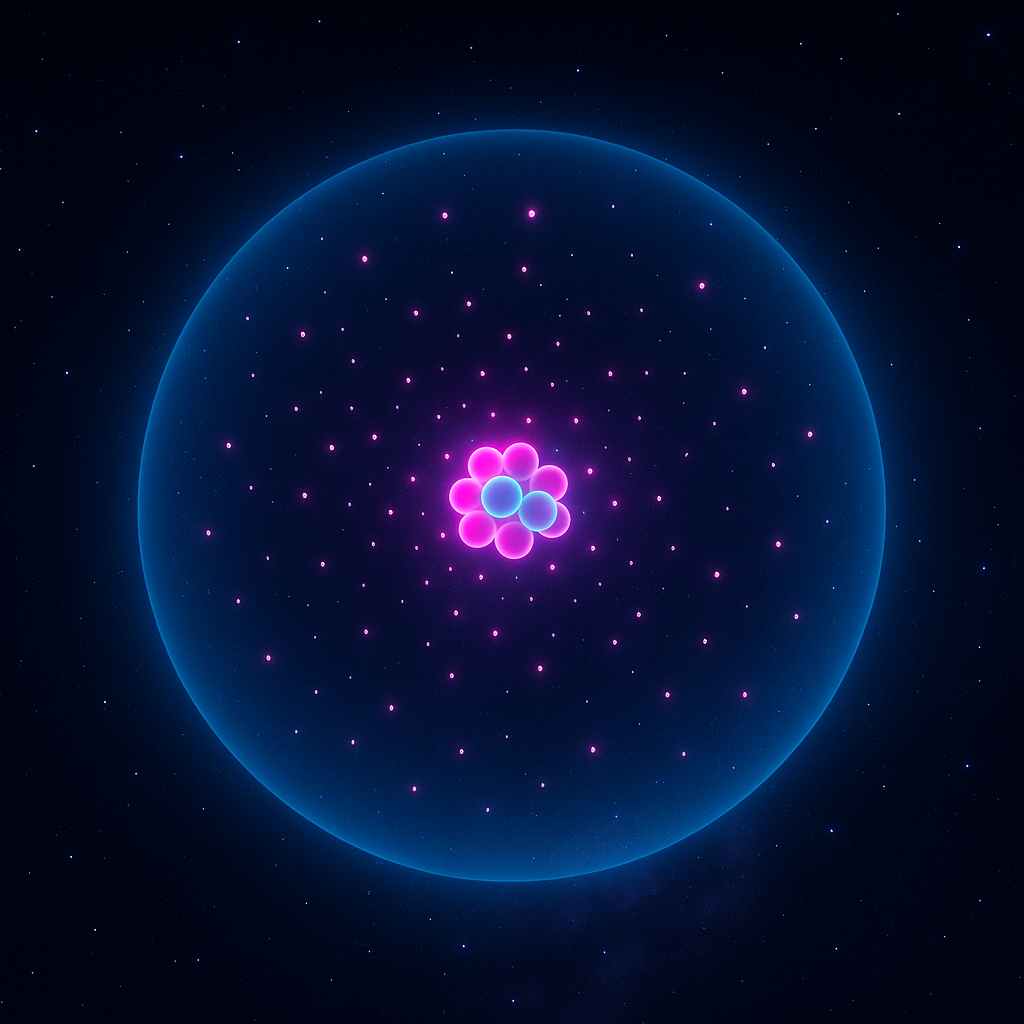
An electron exists in a 3D sphere of probabilities, not a fixed orbit.
At every scale of human life, coherence depends on entrainment. Neurally, billions of oscillating neurons must synchronize or thought fragments into noise. Physiologically, circadian, ultradian, and cardiorespiratory rhythms must align or health degrades. Relationally, two nervous systems must couple into a shared rhythm or connection dies. Organizationally, communication tempos must stay coordinated or institutions drift into fragmentation and bureaucratic chaos. Culturally, shared narratives, rituals, and temporal structures must synchronize large populations or societies fracture into incompatible rhythms.
Entrainment is the mechanism that makes coherence possible. Without entrainment, neurons fire randomly and consciousness dissolves; body clocks drift and exhaustion follows; relationships desynchronize and loneliness takes over; organizations lose tempo and collapse under coordination failures; cultures lose shared rhythm and polarize into incoherent subsystems. Entrainment isn’t optional—it’s how complexity stays organized.
And here is the key insight: entrainment costs energy, but fighting ***entrainment ***costs more. Two metronomes fighting to maintain separate rhythms eventually synchronize because it’s energetically cheaper than resisting. Two people in a relationship who fight synchrony—fighting timing, tone, pacing, emotional rhythms—generate friction, exhaustion, and eventually separation. An organization that cannot synchronize communication rhythms burns resources on coordination problems until the whole structure buckles under its own inefficiency.
Across the universe, from physics to physiology to culture, the same rule holds: systems conserve energy by entraining. The universe favors synchronized systems.
Why Entrainment Unlocks AToM
The missing link between hydrogen and meaning
You started with hydrogen—the simplest structure that stays coherent.
Next, you understood meaning is M=C/T.
Now you understand entrainment—the mechanism that spreads that structure upward, from particles to people to civilizations. Next comes coherence, the geometry of systems that work, and then trauma, the collapse that happens when they don’t. But entrainment is the pivot point that makes everything else possible.
In math terms, it is the path in any system that leads to increasing coherence or resolving trauma within the equation to arrive at meaning. In human terms, why we need to find an understanding to feel there is meaning in our suffering.
Coherence is maintained through entrainment. Trauma is healed through entrainment. Meaning propagates through entrainment. Entrainment is how hydrogen’s barbell structure becomes a human life, a relationship, a culture.
You can’t understand trauma without understanding what breaks when the rhythms stop matching.
You can’t understand healing without understanding how synchronization reconstructs coherence.
And you can’t understand meaning without recognizing that it isn’t something isolated minds generate—it emerges when systems synchronize.
Meaning is not a thing you possess.
Meaning is a rhythm you share.
Once you see entrainment, your questions shift.
“Why can’t I focus?” becomes “What rhythms am I failing to entrain with?”
“Why does this relationship feel off?” becomes “Where is the synchrony breaking?”
“Why does modern life feel so exhausting?” becomes “What ***entrainment ***structures have we lost?”
Entrainment is the engine.
Coherence is what it builds.
Trauma is what happens when it breaks.
And meaning is what emerges when it works.
Welcome to A Theory of Meaning
Comments ()