Gene-Culture Coevolution
Most animals are shaped by their environment. Humans reshape their environment — and that feedback loop has been quietly rewriting our genome for thousands of years. Gene-culture coevolution is the theory of how.
Gene-Culture Coevolution
Humans are evolutionary freaks. We're the only species with cumulative culture, the only ones whose knowledge builds across generations, the only ones who can transmit complex skills through teaching rather than just imitation. We're also the only species whose cultural practices have driven our own genetic evolution in historical time.
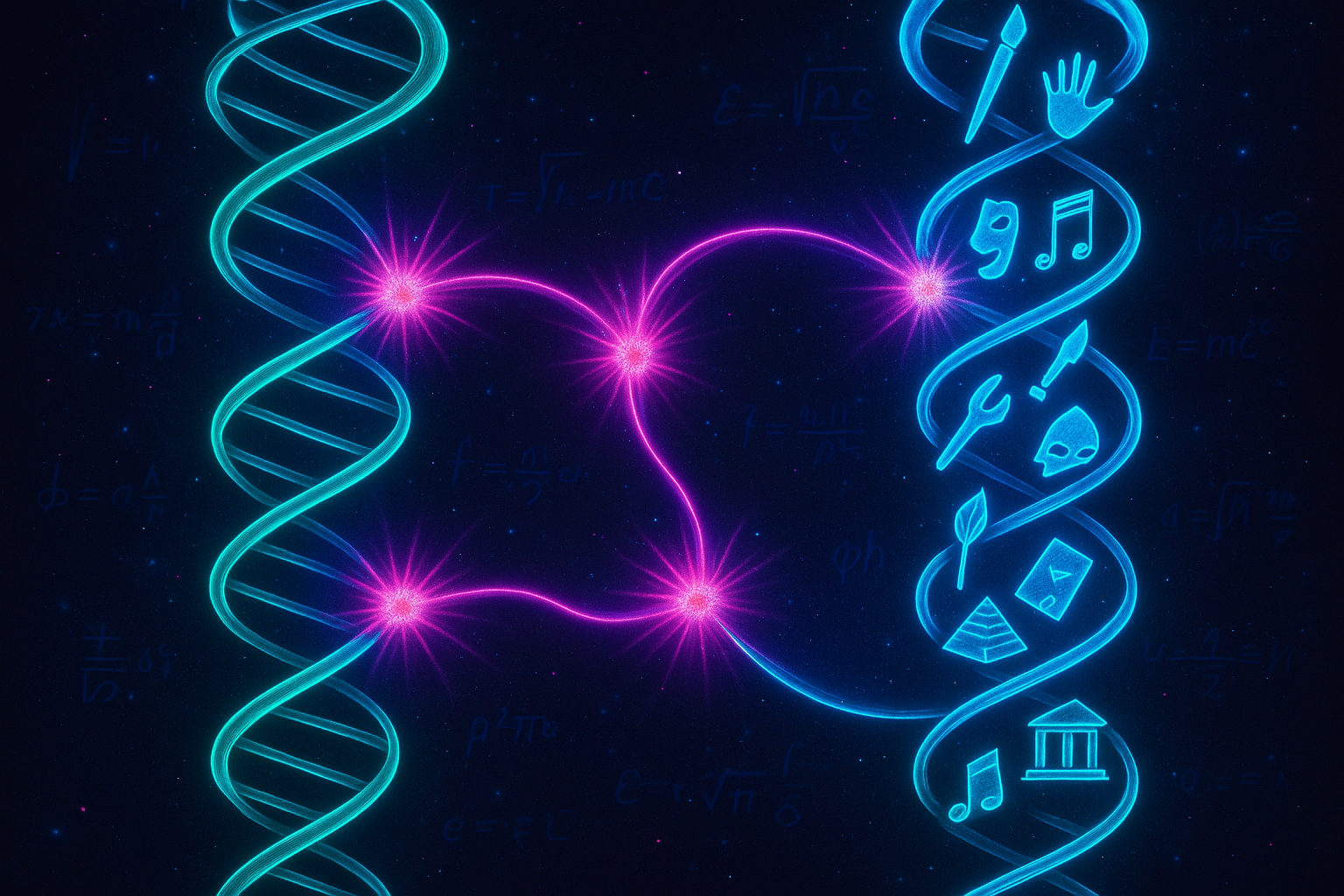
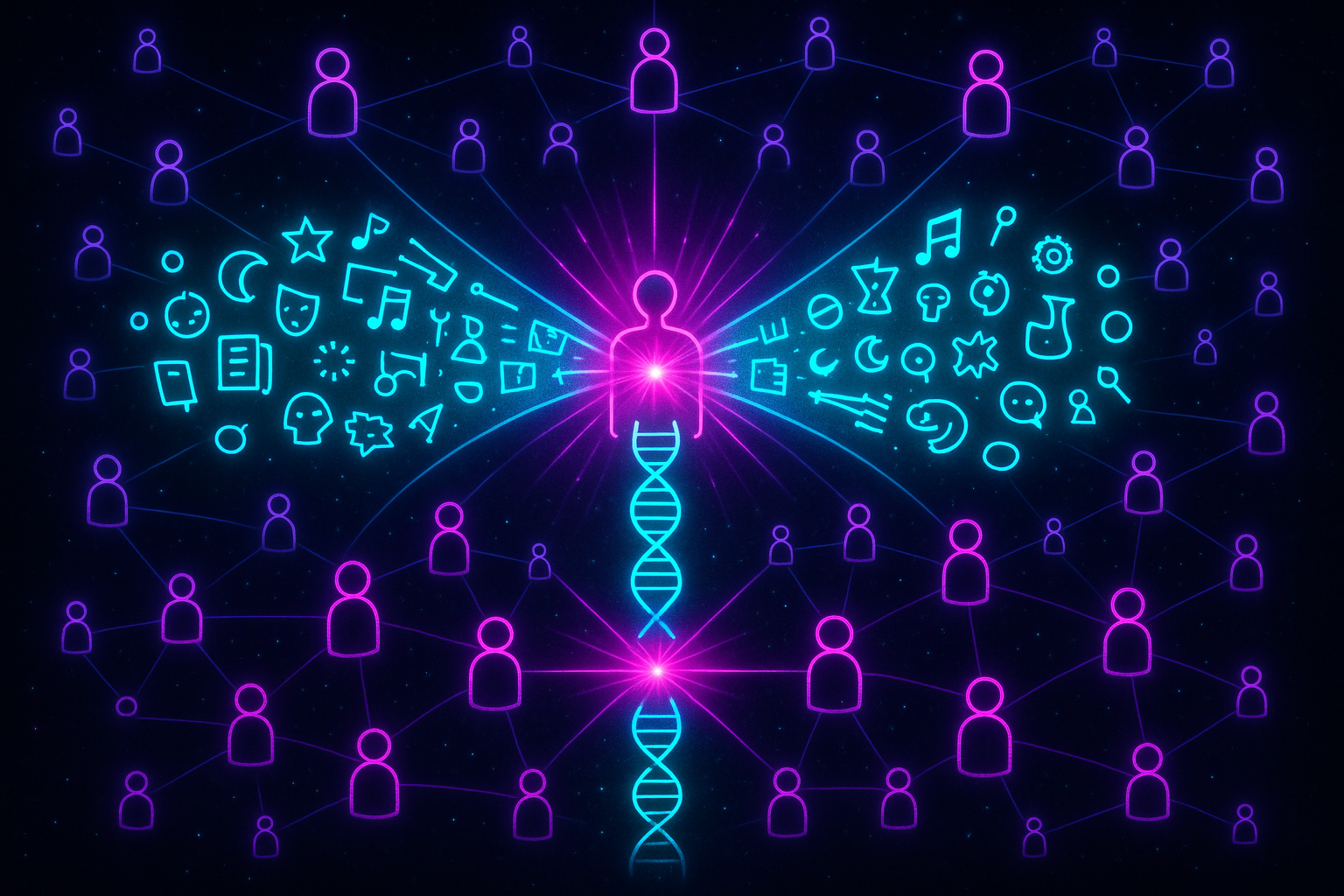
Dairy farming changed our genes. Language changed our brains. Social norms shaped our emotions. Culture isn't just something humans do on top of biology. It's a second evolutionary stream that feeds back into the first, creating a uniquely human form of inheritance where genes and culture evolve together.
This is dual inheritance theory: the recognition that to understand humans, you need to track two interacting systems of heredity, not just one.
Why This Matters for Coherence
Humans maintain coherence across biological and cultural scales simultaneously. Your nervous system entrains to language rhythms your genes didn't anticipate. Your endocrine system responds to status hierarchies that didn't exist in the ancestral environment. You're a hybrid system where biological and cultural coherence mechanisms interpenetrate.
Understanding gene-culture coevolution helps us understand how coherence propagates across both genetic and memetic channels, how humans became capable of maintaining stable complexity at scales no other species achieves, and why human meaning is irreducibly biosocial.
Articles in This Series


Comments ()