The Geography of Power
Before ideology, before armies, there is geography. The shape of a river valley, the height of a mountain pass, the width of a navigable coast — these features have determined which civilizations rise and which collapse. Geography isn't destiny, but it's close.
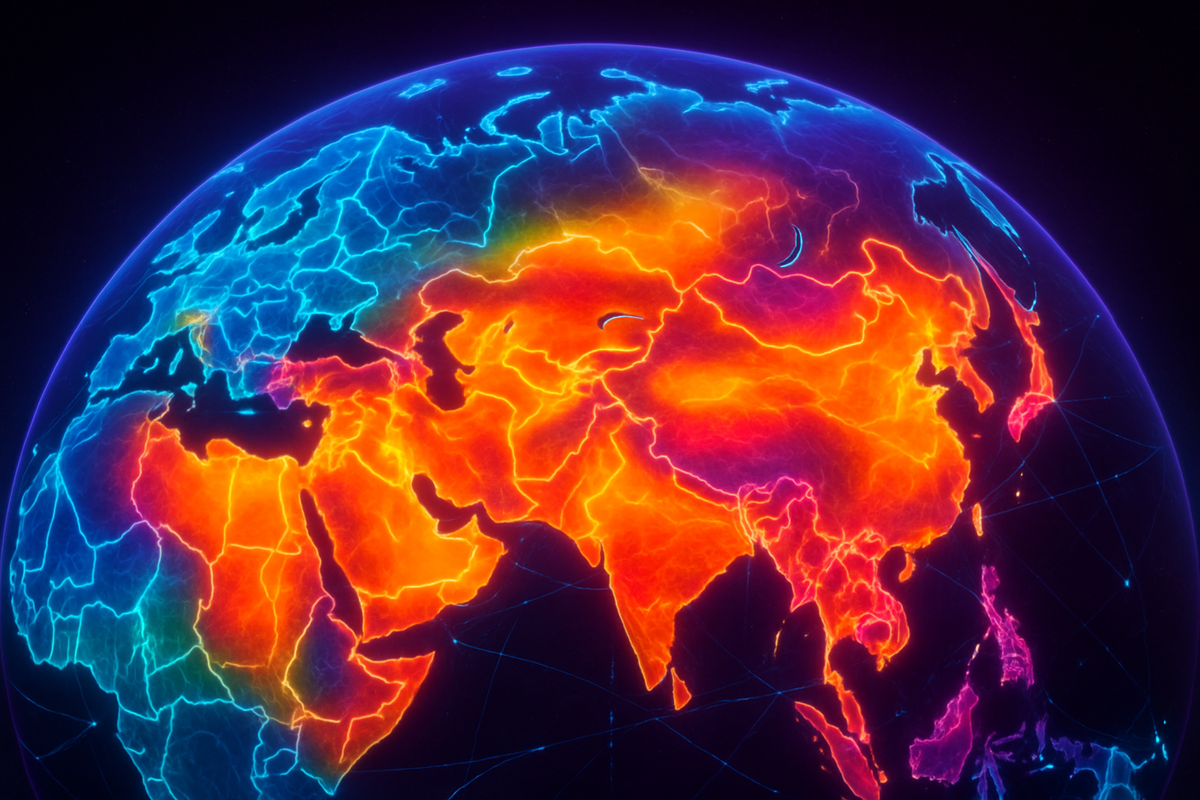
The Geography of Power
Why Maps Explain More Than History Books
Here's a question that should bother you: Why did Europe colonize Africa instead of the reverse?
Standard answers invoke technology, institutions, or culture. But there's a layer beneath all of them that rarely gets credit: geography.
Europe has navigable rivers that flow into the sea. Africa has rivers blocked by waterfalls and rapids. Europe has a climate where horses survive. Africa has the tsetse fly. Europe has a coastline fractured into peninsulas and natural harbors. Africa has a smooth coast with few good ports.
These aren't just facts. They're constraints. And constraints shape what's possible before any king makes a decision or any general draws up a battle plan.
Geography doesn't determine history. But it determines the terrain on which history happens.
The Core Insight
There's an uncomfortable truth that geopolitical analysts know and most political commentators ignore: some problems have no solutions because the map won't allow them.
Russia has no warm-water port that isn't choke-pointed by someone else's territory. This is why Russia has fought wars over Crimea since Catherine the Great. It's why they invaded Ukraine in 2022. The politics change. The geography doesn't.
China's entire western border is mountains and deserts—natural barriers that make invasion from that direction nearly impossible. But the South China Sea? Open water. Whoever controls those shipping lanes controls China's economic oxygen.
The United States has something no other great power in history has had: two oceans for moats and weak neighbors on both borders. This is why American foreign policy can afford to be optional. Geography gave America a cheat code.
You cannot understand geopolitics without understanding geography. The map isn't just where things happen. It's why they happen.
The Series
[Mountains, Rivers, and Ports](/geography-determines-history/) — Introduction to geographic determinism. What features matter, why they matter, and where the theory breaks down.
[Mackinder and Spykman: Heartland Theory](/mackinder-spykman-heartland/) — The 20th century's most influential geopolitical frameworks. Why controlling the Eurasian "heartland" was supposed to mean controlling the world—and whether that's still true.
[Peter Zeihan: Contemporary Geopolitics](/peter-zeihan-geopolitics/) — Modern analysis of demographics, energy, and trade. The argument that America's best days are ahead because everyone else's geography is worse.
[Tim Marshall: Prisoners of Geography](/tim-marshall-prisoners-geography/) — Accessible introduction to how maps explain conflicts. Why Russia wants buffers, why China fears encirclement, why the Middle East can't stabilize.
[Hydraulic Civilizations](/hydraulic-civilizations-wittfogel/) — Wittfogel's thesis: large-scale irrigation requires centralized control. The geographic origins of despotism—and why some rivers produce empires.
[The Resource Curse](/resource-curse-dutch-disease/) — Why oil-rich countries are often poor. The paradox of abundance and the "Dutch disease" that makes resources a trap.
[Climate and Conflict](/climate-conflict-drought/) — Environmental factors in warfare. From the droughts that collapsed the Maya to the Syrian civil war's climate trigger.
[Synthesis: The Terrain Beneath Politics](/geography-politics-synthesis/) — Integrating the frameworks. How to read a map and see the power dynamics it contains.
Why This Matters Now
We're in an era of geopolitical upheaval. The post-WWII order is fragmenting. Supply chains are weaponized. Climate change is redrawing agricultural zones. Demographics are inverting in ways that will reshape power within decades.
To understand any of it, you need to understand the terrain beneath the headlines.
Maps aren't just representations of power. They're explanations of it.
Begin with [Mountains, Rivers, and Ports](/geography-determines-history/), the introduction to why geography shapes what politics can and cannot do.

Comments ()