Graph RAG
Vector databases were supposed to solve AI’s knowledge problem. Just embed your documents, store them, retrieve relevant chunks, and feed them to your language model. Simple, right?
Except it doesn’t work for complex questions. Vector retrieval fails at multi-hop reasoning, misses contextual relationships, and can’t connect dots across separate documents. Your AI agent can find individual facts but can’t reason about how they relate.
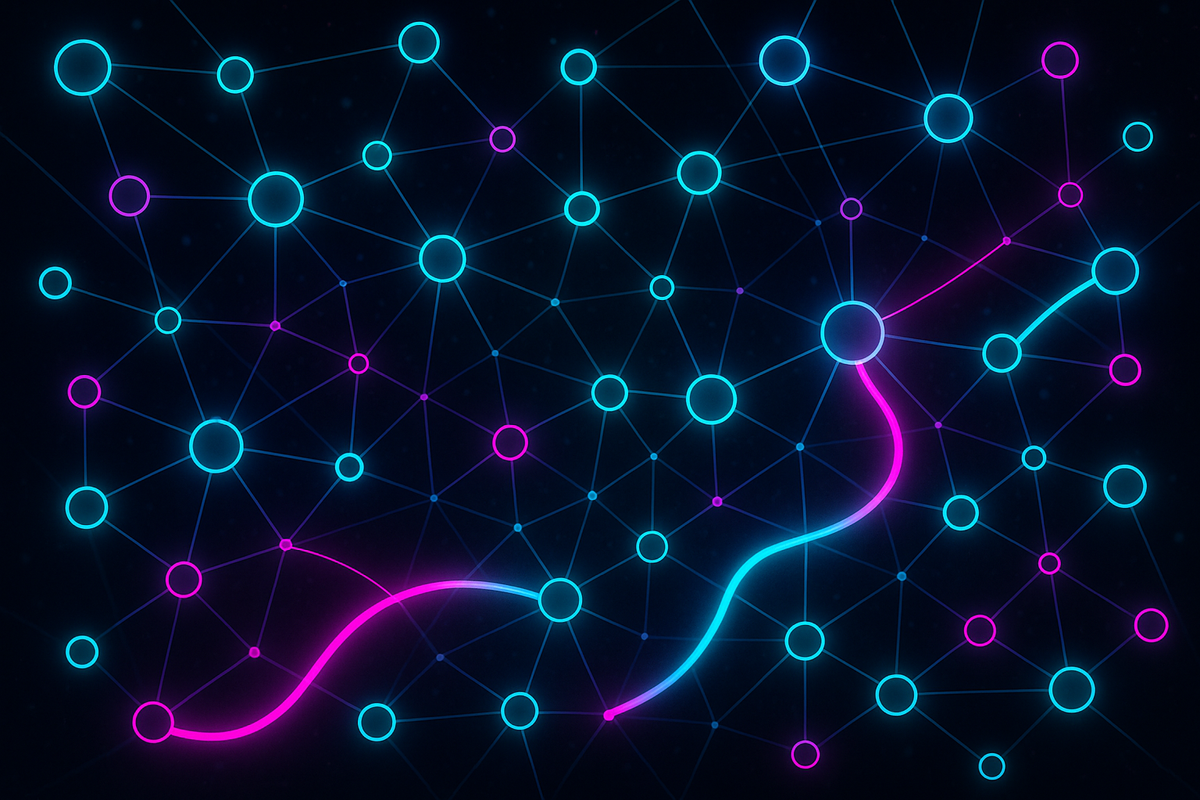
Knowledge graphs solve this. By representing information as structured networks of entities and relationships, Graph RAG enables the kind of reasoning that naive vector search can’t touch: following chains of inference, discovering unexpected connections, and maintaining coherent understanding across vast knowledge bases.
Why This Matters for Coherence
Knowledge isn’t just a bag of facts. It’s a structured web of relationships. Coherent reasoning requires maintaining that structure—tracking how concepts relate, how evidence accumulates, and how conclusions follow from premises. Graph RAG provides the infrastructure for exactly this kind of structured coherence in AI systems.
Understanding Graph RAG helps us understand what knowledge representation looks like when optimized for reasoning rather than just retrieval.
What This Series Covers
This series explores knowledge graph retrieval and its implications for building AI agents that reason coherently. We’ll examine:
- What goes wrong with naive vector retrieval
- How knowledge graphs represent structured information
- Building graphs automatically from unstructured documents
- Multi-hop reasoning and complex query answering
- Microsoft’s GraphRAG implementation and lessons learned
- Best practices for hybrid vector-graph retrieval
- Production engineering challenges at scale
- Connections between Graph RAG and active inference
- What graph retrieval teaches us about structured coherence
By the end of this series, you’ll understand why the question “How should AI systems represent knowledge?” has an answer that’s about relationships as much as facts—and how to build systems that maintain coherent knowledge at scale.
Articles in This Series
- Beyond Vector Search: Why Graph RAG Is the Future of AI Retrieval
- The Limits of Naive RAG: Why Your AI Agent Can’t Reason
- Knowledge Graphs 101: Nodes, Edges, and Semantic Structure
- Building Knowledge Graphs from Documents: Extraction Pipelines
- Multi-Hop Reasoning: How Graphs Enable Complex Queries
- Microsoft GraphRAG: Architecture and Lessons Learned
- Hybrid Retrieval: Combining Vectors and Graphs
- Graph RAG at Scale: Production Engineering Challenges
- Graph RAG Meets Active Inference: Knowledge as Generative Model
- Synthesis: What Graph RAG Teaches About Structured Coherence
Part of the FRONTIER SCIENCE collection. For more on AI systems that maintain coherence, see Active Inference Applied and Mechanistic Interpretability.
Comments ()