Your Second Brain Lives in Your Gut (And It's Been Talking to Your First One All Along)
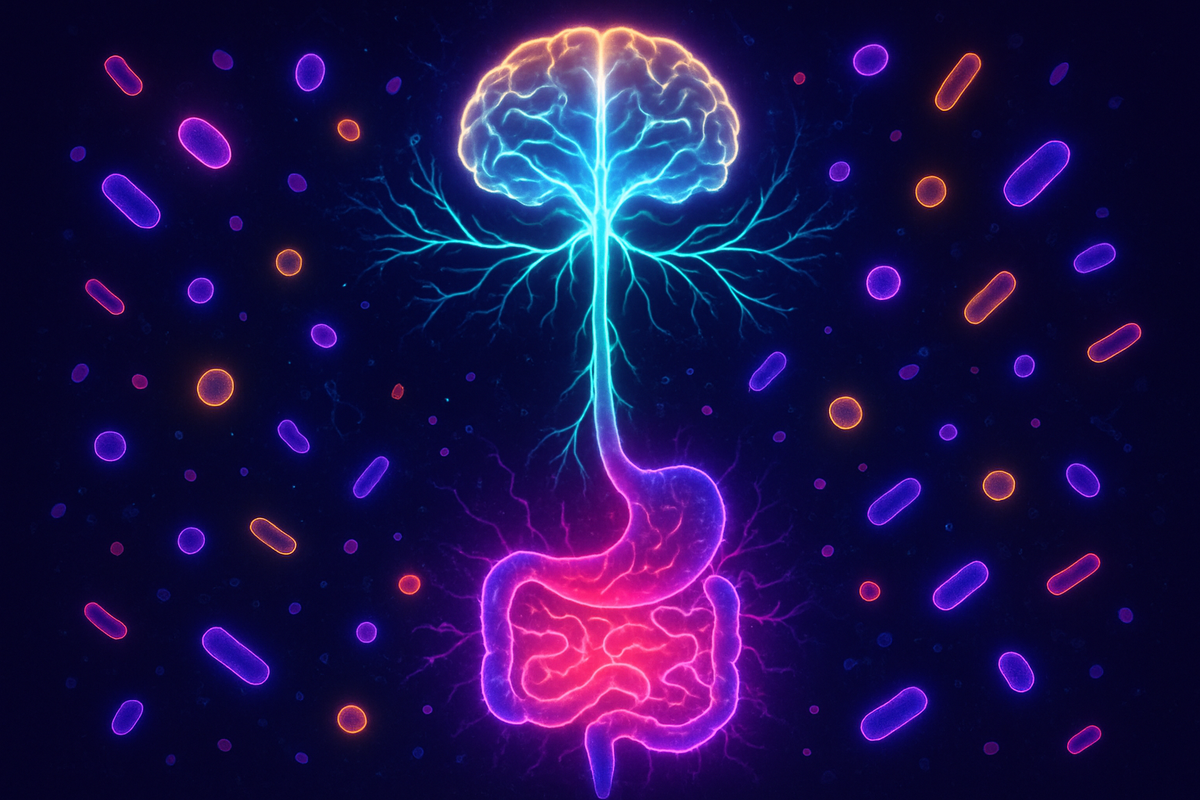
Your gut has its own nervous system — 500 million neurons that have been in constant dialogue with your brain since before you were born. The gut-brain axis isn't a metaphor; it's a two-way highway.
Your Second Brain Lives in Your Gut (And It's Been Talking to Your First One All Along)
Series: Microbiome Revolution | Part: 2 of 8 Primary Tag: FRONTIER SCIENCE Keywords: gut-brain axis, vagus nerve, enteric nervous system, serotonin, microbiome, mental health
The Hundred Million Neurons You Forgot About
Here's something that should genuinely shock you: wrapped around your gastrointestinal tract is a nervous system so complex it can operate entirely without input from your brain. The enteric nervous system contains somewhere between 200 and 600 million neurons—roughly the same as a dog's brain. It can sense, process, and respond to its environment completely autonomously. This isn't a metaphor. It's not your "second brain" in some poetic sense. It's your second brain in the literal sense that it's a self-contained neural network capable of coordinating complex behaviors without headquarters weighing in. Cut the vagus nerve—the primary communication cable between gut and brain—and your gut keeps doing its job. It has its own reflexes, its own sensory processing, its own decision-making architecture. We call it the enteric nervous system, but for most of human history, we called it intuition. That "gut feeling" you get? That's not imagination. It's computation. The enteric nervous system makes decisions about motility (how fast to move food), secretion (what enzymes to release), blood flow (which regions need resources), and immune response (what to attack, what to ignore). These decisions happen constantly, processed by a neural network that evolved specifically to handle the incredibly complex chemistry of digestion. And here's where it gets interesting: this neural network is in constant dialogue with trillions of bacteria. The microbiome doesn't just live in your gut—it interfaces with your gut's brain.
The Vagus Nerve: Biological Information Superhighway
The vagus nerve is the longest cranial nerve in your body, running from your brainstem all the way down to your intestines. Its name comes from the Latin word for "wandering," and wandering is exactly what it does—branching into your heart, lungs, liver, and throughout your entire digestive system. But here's the detail that changes everything: 80% of the fibers in the vagus nerve are afferent. That means they carry information up to the brain, not down from it. Your gut isn't waiting for instructions. It's sending reports. Constantly. About what you ate, what bacteria are present, what immune challenges are brewing, what nutrients are being absorbed. Your brain is getting a continuous stream of information from 200 million neurons monitoring the 30-foot chemical processing plant in your abdomen. And crucially, bacteria can hack this communication line. Certain gut bacteria produce neurotransmitters—the same molecules your brain uses to think and feel. Lactobacillus and Bifidobacterium species produce GABA, the primary inhibitory neurotransmitter that calms neural activity. Escherichia (yes, E. coli) and Bacillus produce norepinephrine. Multiple species produce dopamine and serotonin. Wait. Back up. Serotonin.
The 95% You Never Knew About
Pop quiz: where is most of your body's serotonin made? If you said "the brain," you're in good company. You're also wrong. 95% of your body's serotonin is produced in your gut. Not your brain. Your gut. The molecule that antidepressants are designed to preserve, the neurotransmitter most associated with mood and wellbeing, is overwhelmingly manufactured in your digestive system. For decades, we assumed serotonin was purely a brain chemical. The fact that there was a lot of it in the gut seemed like an evolutionary quirk—maybe it helped with digestion somehow, but surely the real serotonin action was happening in the brain. Then researchers at Caltech, led by Elaine Hsiao, showed that gut bacteria are essential for serotonin production. Germ-free mice have dramatically reduced serotonin levels. Introduce specific bacteria, and serotonin production normalizes. The bugs aren't just living in the same space as serotonin-producing cells—they're regulating the production process. This rewrites the story of depression, anxiety, and mood disorders. Not completely—brain chemistry still matters—but it adds a chapter that was entirely missing. When we talk about "chemical imbalances" in mental health, we may have been looking at the wrong organ. Or rather: we may have been looking at one node in a distributed system and thinking we were seeing the whole picture.
The Inflammation Connection
Your gut is the largest interface between your internal body and the external world. More surface area than your skin, processing material from outside your body continuously. It's also ground zero for your immune system—roughly 70% of your immune cells are stationed in and around your digestive tract. This makes evolutionary sense. Food is the most consistent source of potential pathogens you'll encounter. Every meal is a security screening. But immune activation doesn't stay local. When your gut immune system detects a threat—real or perceived—it releases inflammatory signaling molecules called cytokines. These cytokines can cross the blood-brain barrier. And when they do, they change how your brain functions. Low-grade chronic inflammation has been linked to depression, anxiety, cognitive decline, and even neurodegenerative diseases. The gut-brain axis isn't just about neural communication—it's about immunological communication. Your gut's assessment of danger propagates to your brain through the bloodstream. Here's where the microbiome becomes critical: different bacterial compositions create different inflammatory profiles. Some bacterial species strengthen the gut barrier, reducing inflammation. Others weaken it, creating a "leaky gut" where bacterial products cross into the bloodstream and trigger systemic immune responses. The composition of your microbiome—which bacteria dominate, which are missing, how diverse the population is—directly influences the inflammatory load your brain has to deal with. Inflammation is the hidden variable connecting diet, gut health, and mental health.
Psychobiotics: Medicine's New Frontier
In 2013, researchers introduced a term that would have been laughed out of any serious psychiatric conference a decade earlier: psychobiotics. These are probiotics—live bacteria—that confer mental health benefits when consumed in adequate amounts. The evidence is now substantial enough that the term isn't laughable anymore. It's a research field. Ted Dinan and John Cryan at University College Cork have been at the forefront of this work. In one landmark study, they gave healthy volunteers either a probiotic containing Bifidobacterium longum or a placebo for four weeks. The probiotic group showed reduced cortisol levels (the stress hormone), lower self-reported anxiety, and better performance on memory tasks. They also showed changes in brain activity patterns on EEG. Four weeks. A bacterium. Measurable changes in brain function. Other studies have shown that specific probiotic strains can reduce symptoms of depression, decrease social anxiety, improve stress resilience, and even alter the way the brain processes emotional information. This isn't alternative medicine hopeful thinking—it's published in journals like Gastroenterology, Brain, Behavior, and Immunity, and Translational Psychiatry. The field is young and full of replication challenges. Which strains matter? What doses? How long does treatment take? How much variation exists between individuals? These questions are far from answered. But the fundamental finding—that ingested bacteria can measurably alter brain function and behavior—is now established science. We've entered an era where the treatment for some mental health conditions might be a carefully selected microbe.
Diet, Mood, and the Speed of Change
If bacteria influence brain function, and diet influences bacteria, then diet influences brain function through the microbiome. This chain of logic has launched thousands of studies. And the findings are striking. Changes in diet can alter the composition of your microbiome within 24-48 hours. Not permanently—your baseline community tends to reassert itself—but measurably. A high-fiber diet feeds bacteria that produce short-chain fatty acids, which have anti-inflammatory effects and support gut barrier integrity. A high-fat, high-sugar diet favors bacteria that increase inflammation and metabolic dysfunction. Epidemiological studies consistently find that Mediterranean-style diets—rich in fiber, fermented foods, olive oil, and fish—are associated with lower rates of depression and anxiety. Traditional Japanese and Nordic diets show similar patterns. Meanwhile, highly processed Western diets correlate with higher mental health problems. These correlations don't prove causation—lots of things correlate with diet. But intervention studies are filling in the blanks. The SMILES trial in Australia randomly assigned people with major depression to either dietary counseling (toward a Mediterranean-style pattern) or social support. After 12 weeks, the diet group showed significantly greater improvement in depressive symptoms. The effect size was larger than many pharmaceutical interventions. Food is not just fuel. Food is information—to your microbiome, to your gut-brain axis, to the inflammatory systems that shape your mental state. What you eat literally changes the composition of your internal ecosystem, which changes the signals being sent to your brain.
What Stress Does to Your Gut (And Vice Versa)
The gut-brain axis is bidirectional. Your gut influences your brain, but your brain also influences your gut—dramatically. Stress hormones alter gut motility, change the permeability of the intestinal barrier, shift the composition of the microbiome, and modulate immune function. Ever had digestive issues during a period of intense stress? That's not psychosomatic in the dismissive sense. That's your hypothalamic-pituitary-adrenal axis directly restructuring your gastrointestinal environment. And here's the vicious cycle: stress disrupts the microbiome, disrupted microbiome increases inflammation, inflammation signals to the brain, the brain perceives more threat, stress hormones increase, the microbiome disrupts further. Each direction of causation feeds the other. This might explain why chronic stress and gut problems so often co-occur. IBS. IBD. Functional dyspepsia. These conditions cluster with anxiety and depression at rates far above what chance would predict. The traditional interpretation was psychological—stress makes people focus on bodily sensations, or gut symptoms cause worry. But the gut-brain axis offers a different story: these are different manifestations of the same dysregulated system. The microbiome is a key node in the stress response. Not the only one—HPA axis dysfunction, neurotransmitter imbalances, and neural circuit changes all matter—but a node we've been ignoring for decades.
Individual Variation: Why Your Microbiome Isn't Mine
One of the most challenging findings in microbiome research is the sheer diversity between individuals. Your microbiome fingerprint is more unique than your genome. The same probiotic that calms one person's anxiety might do nothing for another. This variability explains why so many gut-brain interventions show modest effects in population studies—they're averaging across wildly different basins of attraction. What works depends on what's already there, which species are competing for resources, which metabolic pathways are active, and how the host immune system is calibrated. The future of psychobiotics probably isn't one-size-fits-all probiotic pills. It's personalized microbial medicine—mapping individual microbiomes, identifying specific deficits or imbalances, and intervening with precision. We're not there yet. The tools exist, but the algorithms connecting microbial profiles to interventions are primitive. Right now, we're in the "try some yogurt and see if it helps" phase of microbiome psychiatry. Better than nothing. A long way from precision.
The Coherence Frame
From a coherence perspective, the gut-brain axis makes perfect sense. The body is a multi-scale coupled system. Your 37 trillion human cells aren't the only agents in the system—your 38 trillion bacterial cells are participants too. They don't just occupy space; they communicate. They produce signals, respond to signals, and shape the collective behavior of the whole. Mental health, in this view, isn't purely a brain phenomenon. It's an emergent property of a system that includes brain, body, bacteria, behavior, and environment—all coupled, all co-regulating, all contributing to the attractor landscape you experience as mood. The serotonin in your gut isn't separate from the serotonin story in your brain. The inflammation in your intestines isn't unrelated to the fog in your thinking. The bacteria that colonized you in infancy aren't irrelevant to your adult psychology. It's all one system. Which means healing, too, might be multi-scale. Not just pharmaceutical intervention at the brain level, but dietary intervention at the gut level, stress reduction at the nervous system level, social connection at the environmental level. Different points of entry into the same coupled dynamics. The gut-brain axis isn't a curiosity. It's a case study in why coherence—understanding systems through their coupling patterns—matters for understanding minds.
What You Can Do Today
The research is far enough along to offer some practical guidance, even if the personalized microbiome medicine revolution is still years away: Fiber matters. The bacteria most associated with positive mental health outcomes thrive on fiber—particularly diverse plant fiber. The gut-brain axis doesn't respond to fiber supplements the same way it responds to actual vegetables, legumes, and whole grains. Diversity of plant intake correlates with microbiome diversity, which correlates with resilience. Fermented foods are underrated. Sauerkraut, kimchi, yogurt, kefir, miso—these aren't just traditional foods preserved for convenience. They're delivery vehicles for beneficial bacteria and the metabolites those bacteria produce. A Stanford study found that high-fermented-food diets increased microbiome diversity and reduced inflammatory markers. Stress reduction isn't optional. If you're chronically stressed, you're chronically disrupting your gut. Meditation, exercise, sleep, social connection—these aren't luxuries. They're infrastructure maintenance for the system that produces your mental state. Antibiotics have costs. This isn't anti-medicine—antibiotics save lives. But they also carpet-bomb your microbiome. Every course of antibiotics resets your internal ecosystem. The research on antibiotic-associated psychiatric effects is still emerging, but the mechanism is clear: you can't disrupt the microbiome without disrupting the gut-brain axis.
Further Reading
- Cryan, J.F. & Dinan, T.G. (2012). "Mind-altering microorganisms: the impact of the gut microbiota on brain and behaviour." Nature Reviews Neuroscience.
- Mayer, E.A. (2016). The Mind-Gut Connection. Harper Wave.
- Hsiao, E.Y. et al. (2013). "Microbiota modulate behavioral and physiological abnormalities associated with neurodevelopmental disorders." Cell.
- Jacka, F.N. et al. (2017). "A randomised controlled trial of dietary improvement for adults with major depression (the 'SMILES' trial)." BMC Medicine.
- Dinan, T.G. & Cryan, J.F. (2017). "The Microbiome-Gut-Brain Axis in Health and Disease." Gastroenterology Clinics of North America.
This is Part 2 of the Microbiome Revolution series, exploring how trillions of bacteria shape your body and mind. Next: "Fecal Transplants: The Surprisingly Effective Medicine You Don't Want to Think About."


Comments ()