The Light Triad: Psychology's Counter-Model
Psychology spent decades cataloguing narcissism, Machiavellianism, and psychopathy. The light triad is the formal attempt to characterize the other pole: people who treat others as ends, not means.
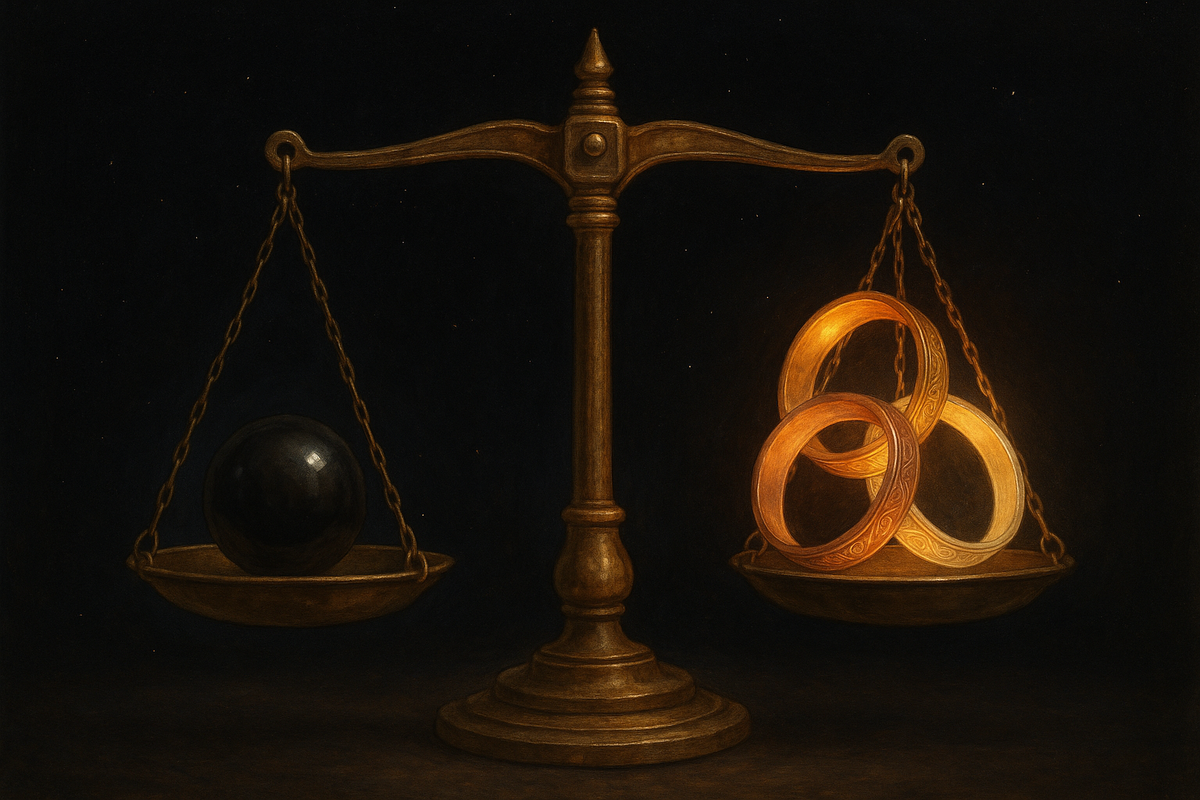
The Light Triad: Psychology's Counter-Model
After eight articles mapping the darkness—narcissists, psychopaths, Machiavellians, sadists, dark empaths—you start wondering if kindness is just naivety that hasn't been punished yet. If empathy is a vulnerability waiting to be weaponized.
Here's the thing: the light exists too, and it has structure.
Psychologist Scott Barry Kaufman and colleagues identified three traits that cluster together and predict genuine prosocial behavior: faith in humanity, humanism, and Kantianism. Not "low dark traits"—that's just absence. This is presence. A distinct personality constellation that predicts who actually treats people well, not from self-interest but from fundamental orientation.
This isn't ideology. It's personality science identifying what makes someone reliably decent across contexts.
What the Light Triad Measures
Three dimensions that cluster together statistically and predict prosocial behavior:
1. Faith in Humanity
People are fundamentally good and worthy of trust. Not blind optimism—high scorers assume good intentions until proven otherwise, believe others will reciprocate kindness, and see potential for growth in everyone.
This predicts cooperation, helping strangers, extending trust. It's the psychological precondition for institutions that run on mutual goodwill.
Dark personalities see people as selfish and exploitable. Faith in humanity flips that: cooperation is possible, and kindness isn't stupidity.
2. Humanism
Every human has intrinsic dignity. Not utility-based respect, but treating people as ends rather than means. Valuing diversity, opposing dehumanization, resisting hierarchies that rank humans.
This predicts reduced prejudice and resistance to exploitation. It's what makes you recoil when someone treats a waiter like garbage.
Dark traits produce status-based behavior—charm for superiors, contempt for subordinates. Humanism produces status-invariant respect. The waiter and the CEO get the same baseline consideration.
3. Kantianism
Treat others as you'd want to be treated, guided by universal principles. Named after Kant's categorical imperative—act only on principles you'd will as universal law.
Follow ethical rules even when inconvenient. Refuse to exploit even when you'd get away with it. Stay consistent in private and public. Be honest even when lying would help.
This predicts trustworthiness and low rates of cheating. You don't become a different person when no one's watching.
Dark traits, especially Machiavellianism, treat ethics situationally—rules are tools to deploy or discard. Kantianism inverts that: principles constrain you even when breaking them would benefit you.
Not Just "Low Dark"
Light and Dark Triad scores correlate negatively but aren't perfect opposites. You can score low on dark traits—not manipulative, not cruel—without scoring high on light traits. You're not especially compassionate or principled either.
That's most people: self-interested but not malevolent, pragmatic but not altruistic.
Low dark is functional prosociality—you cooperate because that's how social life works. High light is motivated prosociality—you actively reduce suffering and treat people with dignity because it's intrinsically right.
Low dark: cautious trust, rule-following to avoid punishment, neutral view of others. High light: proactive faith, principled action even when costly, seeing inherent worth in everyone.
Both beat high dark. But they're psychologically distinct.
What Produces Light Traits?
Secure attachment. When caregivers are consistently responsive in early childhood, you learn the world is safe, people are trustworthy, and vulnerability doesn't lead to exploitation. This produces adults who extend trust and maintain faith in humanity even after encountering bad actors.
Dark traits correlate with insecure attachment—early environments that punished vulnerability or rewarded manipulation.
Moral identity. High light scorers report that moral principles are central to their identity—not add-ons, but core organizing values. When honesty and compassion are "who I am," violating those principles feels like self-betrayal. The constraint is internal.
Dark personalities compartmentalize ethics. High light personalities integrate them. Violating principles damages self-coherence.
Communal orientation. Light traits predict seeing relationships as mutual benefit rather than zero-sum competition. Another person's gain isn't your loss. Cooperation produces value exceeding individual effort. Generosity generates reciprocity.
Dark traits predict zero-sum thinking—resources are finite, relationships are transactional, your success threatens mine.
Here's the key: the game you think you're playing shapes the game everyone else plays with you. Zero-sum games reward dark traits. Positive-sum games reward light traits.
How Light Traits Show Up
Status-invariant kindness. Remember the 360-degree test for dark traits? How you treat low-status people reveals character because strategic masking falls away when there's nothing to gain.
High light people treat everyone consistently well. The waiter gets the same consideration as the CEO. Not performance—trait-level stability.
Costly honesty. High Kantianism predicts truth-telling in high-stakes contexts—admitting mistakes that harm your reputation, refusing to lie when deception would help. When honesty conflicts with self-interest, they choose honesty. Not martyrdom—violating that principle feels worse than the cost of truth.
Dark traits: strategic honesty. Truth when useful, lies when advantageous. Light traits: honesty as default.
Long-term relational investment. High light scorers sustain friendships across decades, maintain difficult family contact, invest in relationships with no strategic value. They prioritize relational health over instrumental outcomes.
Dark personalities burn through people and move on.
Functional guilt. High light individuals experience appropriate guilt when they violate principles or harm others—and that guilt drives behavior change. They apologize specifically, make amends, adjust behavior.
Dark personalities show reduced guilt and superficial apologies. When they apologize, it's strategic—reputation repair, not genuine remorse.
Can You Cultivate Light Traits?
Dark traits are stable—high heritability, resistant to intervention. Light traits show moderate stability but significant environmental influence.
What works:
- Compassion training: Mindfulness interventions increase empathy and prosocial motivation
- Moral exemplar exposure: Observing people who embody light traits strengthens moral identity
- Secure relationships: Forming secure attachments in adulthood shifts relational blueprints toward trust
- Value commitment: Explicitly identifying core values strengthens Kantianism—ethics become identity-constitutive
- Expanding concern: Practices that increase identification with broader groups enhance humanism
Most interventions produce temporary state effects—compassion spikes that fade without ongoing practice. Sustained trait change requires long-term practice, environmental support, and identity integration.
Dark traits resist change partly because many environments reward them. Light traits cultivate more easily when environments reward cooperation, punish exploitation, and provide secure relationships.
You can't will yourself into high light traits overnight. But you can practice behaviors that embody them and gradually shift your relational orientation.
Can You Have Both?
Light and Dark Triad traits are strongly negatively correlated (r = -.50 to -.70). High light predicts low dark. But the correlation isn't perfect—there's space for mixed profiles.
Strategic altruists score moderate-high on both humanism and Machiavellianism. They genuinely value human dignity but think strategically about relationships. This produces effective altruism—compassion guided by strategic impact maximization—and principled pragmatism. Not hypocrisy. Integration of values with real-world constraints.
Principled narcissists score high on Kantianism and moderate-high on narcissism. They follow rigid ethical principles but demand admiration. This produces self-righteousness, judgmental rigidity, and performative ethics. Unstable combination—narcissistic needs conflict with Kantian principles.
Most high light scorers are low dark. The traits form opposing relational strategies—you can't sustainably exploit people while treating them with dignity.
Why Light Traits Matter
Dark personalities are coherence parasites—they stabilize themselves through your destabilization.
Light traits produce coherence synergy. High light individuals stabilize your predictive models through honesty and consistency. You know where you stand. They reduce collective prediction error by behaving as expected. They enhance group coherence through trust and reciprocity.
Where dark traits produce relational entropy—chaos, unpredictability—light traits produce relational order. Your nervous system doesn't work overtime tracking inconsistencies or defending against attacks.
Interactions with high light people are energizing, not depleting. Not because they're charismatic but because your predictive models run smoothly. Expectations align with reality. Trust is rewarded. Reciprocity flows.
You feel more yourself, not less, after interacting with them.
Context Determines Everything
Neither light nor dark traits are universally adaptive. Context determines which strategies succeed.
Dark traits thrive in: low accountability, zero-sum competition, short-term interactions, opacity, rewarded exploitation. High-stakes finance, political warfare, anonymous online spaces. Here, exploitation works and prosociality is penalized. The honest person loses to the liar.
Light traits thrive in: high accountability, positive-sum cooperation, long-term relationships, transparency, punished exploitation. Tight-knit communities, sustained collaborations, high-trust cultures. Here, prosociality is rewarded and exploitation backfires. The honest person builds trust.
The feedback loop problem: Systems drift toward rewarding whichever traits dominate the population.
If dark individuals concentrate in power, they reduce accountability, increase zero-sum competition, shorten time horizons, reduce transparency. The environment becomes increasingly hospitable to dark traits and hostile to light traits. Prosocial people burn out or leave. The system becomes more toxic over time.
If light individuals shape institutions, they build accountability, foster cooperation, prioritize sustainability, increase transparency. The environment becomes hospitable to light traits and hostile to dark traits. Exploiters face consequences. The system becomes more prosocial.
Societies that select for dark traits in leadership—rewarding manipulation, tolerating exploitation, punishing whistleblowers—are societies in coherence collapse. They're selecting against the traits that enable trust, cooperation, and coordination.
The Light Triad isn't just individual psychology. It's institutional design philosophy. What traits do your systems reward? Who succeeds in your organization—the Machiavellian or the honest collaborator?
The answer determines whether you're building coherence or entropy.
The Measurement
Unlike dark traits, Light Triad self-reports are reliable. High light individuals answer honestly even when it doesn't flatter them.
Sample items from the Light Triad Scale:
- "I think people are mostly good."
- "I think all human beings are worthy of respect."
- "I won't misrepresent myself to get ahead."
Scoring high predicts greater life satisfaction, higher relationship quality, increased altruism, and better mental health. Scoring low doesn't make you bad—most people cluster in the moderate range. Decent, cooperative, but not especially driven by compassion or principle.
The Bottom Line
Dark traits succeed in unstable, low-trust, zero-sum environments. Light traits succeed in stable, high-trust, positive-sum environments.
The question isn't "which traits should everyone have?" It's what environments are we building, and what traits are we selecting for?
If you want functional institutions and societies that don't collapse into cynicism—build systems that reward light traits and punish dark traits. Accountability, transparency, long-term thinking, prosocial incentives.
If you tolerate environments where manipulation succeeds and honesty is penalized—don't be surprised when dark personalities accumulate power and relational coherence collapses.
The Light Triad maps what prosocial personality looks like when it's not just absence of darkness but presence of positive orientation—faith in humanity, universal dignity, principled action.
The question is whether we're building the kind of world where those traits can flourish—or selecting against them, one compromise at a time.
Series: Dark Personality Science | Part: 9 of 10
This is Part 9 of the Dark Personality Science series, exploring the psychology of traits that predict exploitation and harm. Next: "Dark Personalities and the Geometry of Exploitation."
Further Reading
- Kaufman, S. B., Yaden, D. B., Hyde, E., & Tsukayama, E. (2019). "The Light vs. Dark Triad of Personality: Contrasting Two Very Different Profiles of Human Nature." Frontiers in Psychology, 10, 467.
- Mikulincer, M., & Shaver, P. R. (2007). Attachment in Adulthood: Structure, Dynamics, and Change. New York: Guilford Press.
- Aquino, K., & Reed, A. (2002). "The self-importance of moral identity." Journal of Personality and Social Psychology, 83(6), 1423-1440.
- Clark, M. S., & Mills, J. R. (2012). "A theory of communal (and exchange) relationships." In P. A. M. Van Lange, A. W. Kruglanski, & E. T. Higgins (Eds.), Handbook of Theories of Social Psychology (pp. 232-250). Sage.
- Balliet, D., & Van Lange, P. A. M. (2013). "Trust, conflict, and cooperation: A meta-analysis." Psychological Bulletin, 139(5), 1090-1112.
- Kteily, N., Bruneau, E., Waytz, A., & Cotterill, S. (2015). "The ascent of man: Theoretical and empirical evidence for blatant dehumanization." Journal of Personality and Social Psychology, 109(5), 901-931.
- Levine, E. E., & Schweitzer, M. E. (2015). "Prosocial lies: When deception breeds trust." Organizational Behavior and Human Decision Processes, 126, 88-106.
- Mack, T. D., Hackney, A. A., & Pyle, M. (2011). "The relationship between psychopathic traits and attachment behavior in a non-clinical population." Personality and Individual Differences, 51(5), 584-588.
- Condon, P., Desbordes, G., Miller, W. B., & DeSteno, D. (2013). "Meditation increases compassionate responses to suffering." Psychological Science, 24(10), 2125-2127.
- Aquino, K., Freeman, D., Reed, A., Lim, V. K. G., & Felps, W. (2011). "Testing a social-cognitive model of moral behavior." Journal of Personality and Social Psychology, 97(1), 123-141.
- Steger, M. F., Bundick, M. J., & Yeager, D. (2012). "Understanding and promoting meaning in life." In R. M. Lerner, J. V. Lerner, et al. (Eds.), Positive Youth Development (pp. 100-118). Wiley.
- Singer, T., & Ricard, M. (2015). Caring Economics: Conversations on Altruism and Compassion, Between Scientists, Economists, and the Dalai Lama. Picador.
- Tangney, J. P., Stuewig, J., & Mashek, D. J. (2007). "Moral emotions and moral behavior." Annual Review of Psychology, 58, 345-372.
- Jonason, P. K., & Kavanagh, P. (2010). "The dark side of love: Love styles and the Dark Triad." Personality and Individual Differences, 49(6), 606-610.
Comments ()