Longevity Science
The Biology of Why We Age—And Whether We Have to
For most of human history, aging was fate. You were born, you grew, you declined, you died. The trajectory was fixed. The timeline might vary—disease, accident, fortune—but the direction never did. Entropy always won.
That story is changing.
In the past two decades, longevity science has transformed from fringe speculation into one of the most heavily funded areas of biomedical research. Billions of dollars flow into companies like Altos Labs, Calico, and Unity Biotechnology. Nobel laureates have pivoted their careers toward understanding why we age. And the findings are strange: aging isn't just wear and tear. It's a regulated process—which means it might be malleable.
This series explores the frontier of longevity biology. Not the hype. Not the supplements. The actual science of what aging is, why it happens, and what interventions might slow, stop, or even reverse it.
The Series
The Nine Hallmarks of Aging — The framework that unified the field. Nine interconnected processes that drive biological aging—and how they feed each other.
Is Aging a Disease? — The controversial question. If aging is programmed, it can be reprogrammed. If it's just damage, we can only manage decline.
Zombie Cells and the Drugs That Kill Them — Senescent cells accumulate with age and poison their neighbors. Senolytics might be the first true anti-aging drugs.
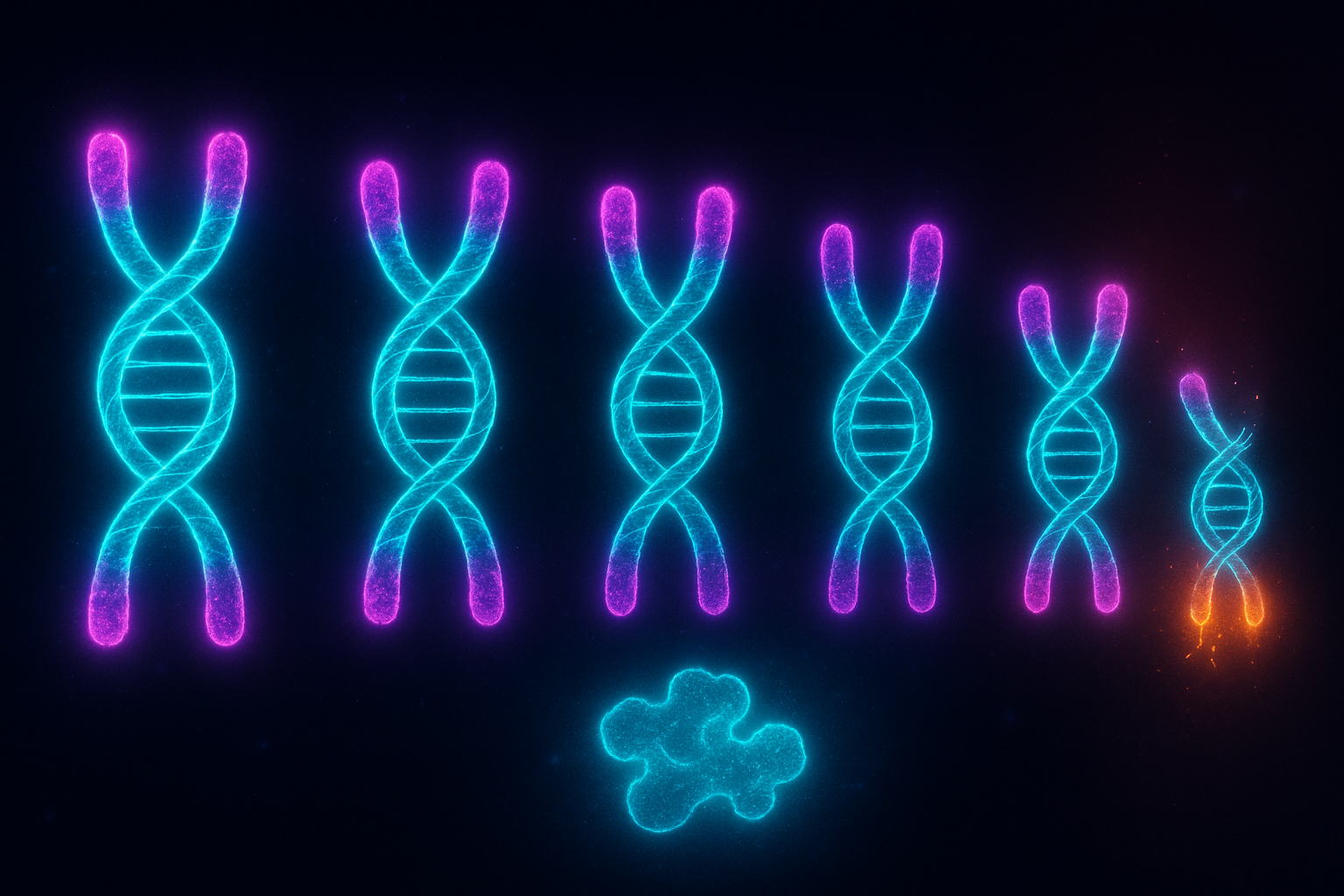
Telomeres and the Hayflick Limit — Your cells can only divide so many times. The molecular clock that counts down—and what happens when we try to reset it.
Why Eating Less Extends Life — Caloric restriction is the most robust longevity intervention in biology. The mechanisms are finally becoming clear.
The Longevity Gold Rush — Altos Labs, Calico, Unity, and the billionaire bet on reversing aging. What they're doing and whether it will work.
Lifespan vs. Healthspan: A Synthesis — Living longer means nothing if those years are decline. What the science suggests about extending the good years.
The Coherence Frame
Aging is a loss of coherence. Young systems maintain themselves—repairing damage, clearing waste, preserving information. Aged systems lose this capacity. The feedback loops that kept things stable begin to fail. Entropy accumulates.
Longevity interventions, at their core, are attempts to restore coherence—to help biological systems maintain themselves longer. Whether through removing senescent cells, restoring epigenetic information, or mimicking the signals of caloric restriction, the goal is the same: keep the system self-organizing for longer.
The question isn't whether we'll extend human lifespan. We already have—dramatically—through public health and medicine. The question is whether we can extend healthspan: the years of vitality, not just the years of breathing. That's where the frontier lies.
Begin with The Nine Hallmarks of Aging, the framework that changed how we understand biological decline.

Comments ()