Machiavellianism: The Strategic Manipulator
Machiavellianism: The Strategic Manipulator
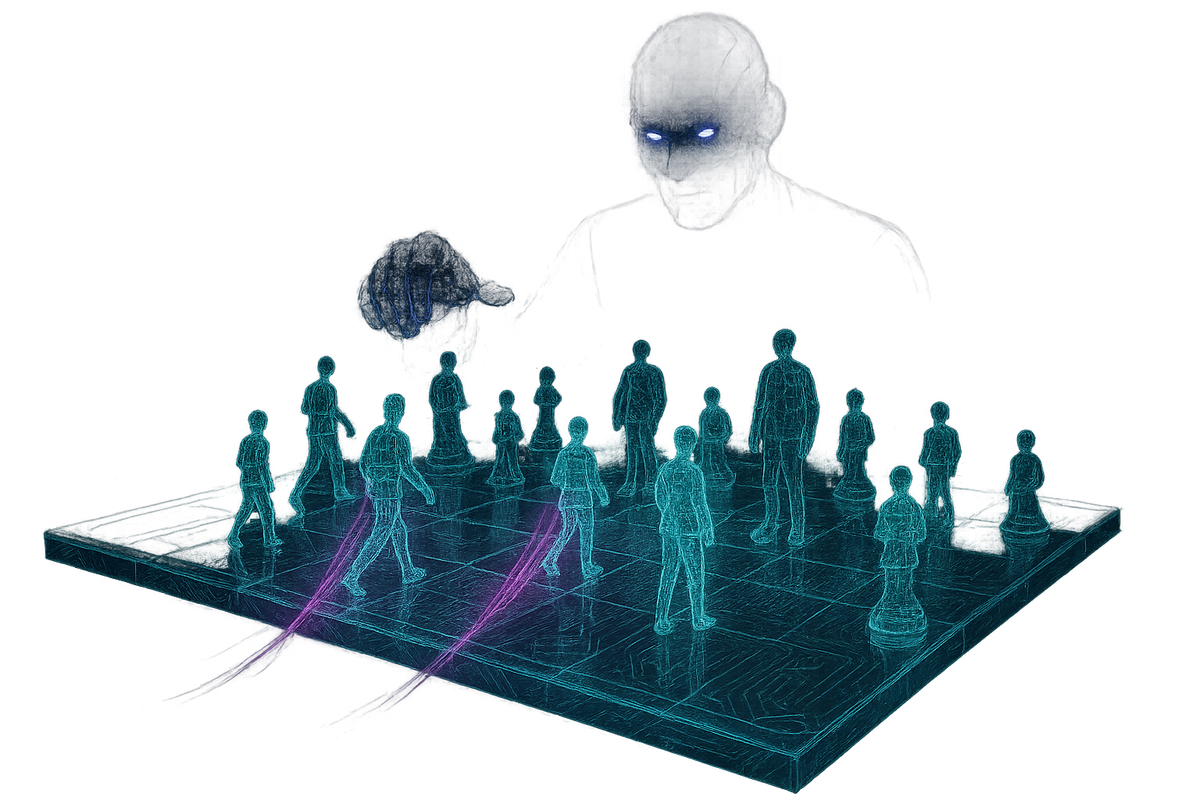
The narcissist needs your admiration now. The psychopath doesn't care what you feel. But the Machiavellian? They're playing chess while you're playing checkers—and they started the game six months before you sat down.
Machiavellianism is the dark trait of strategic manipulation. Where narcissists are reactive and psychopaths impulsive, Machiavellians are deliberate. They don't explode when insulted—they file it away. They don't charm everyone—just the useful ones. They see relationships as portfolios and emotions as tools. You're not a person to them. You're a resource.
Named after Niccolò Machiavelli's The Prince, Machiavellianism describes a personality optimized for long-term advantage through manipulation, deception, and emotional coldness. Machiavellians are patient, controlled, and terrifyingly effective at exploiting people who think everyone plays fair.
The scary part? They're not obvious. They don't rage like narcissists. They're not impulsive like psychopaths. They're the calm, reasonable one in the room—which is exactly why you won't spot them until it's too late.
The Core Traits: Strategy Over Emotion
Cynical worldview: Everyone's playing an angle. Trust is for suckers. Morality is just how weak people control strong ones. Machiavellians believe this bone-deep—not as pessimism, but as operating reality.
Strategic manipulation: Psychopaths con you today. Machiavellians position you for exploitation six months from now. They identify goals, map social terrain, execute multi-step plans. The manipulation isn't opportunistic—it's architectural.
Emotional detachment: They experience emotions at low intensity and suppress them strategically. Insult them? Filed away for later use. Praise them? They evaluate its utility. Emotional composure is their edge.
Long-term orientation: Where psychopaths want immediate reward and narcissists want immediate validation, Machiavellians play the long game. They delay gratification, build relationships instrumentally, position for future advantage.
Low empathy, high social intelligence: They understand what you feel without feeling it themselves. That's the deadly combination—cognitive empathy intact, affective empathy absent. They read you perfectly but aren't moved by what they see.
Reputation management: They care intensely about how they're perceived—not for validation, but because reputation is leverage. They're trustworthy to some, intimidating to others, invisible when useful.
Moral flexibility: Lying, betraying, exploiting—these aren't violations, they're tools. The question isn't "Is this wrong?" but "Does this work?" Ethics are instrumental.
Adaptability: If dominance works, they dominate. If submission works, they submit. If honesty works, they're honest. The strategy adapts to context.
Machiavellianism is strategic selfishness plus emotional coldness plus social intelligence. It's devastatingly effective in environments where trust is rewarded short-term but accountability is weak long-term.
How to Spot Them: Behavioral Signatures
In conversation: They ask everything, reveal nothing. You leave feeling like you made a deep connection—then realize they extracted your life story while you learned nothing meaningful about them. The intimacy was asymmetric. The information flow was one-way.
In conflict: They don't escalate emotionally. Everyone else is defensive, angry, hurt. They're calm, assessing, pivoting. They might apologize strategically (to defuse), counterattack with damaging information (to dominate), or withdraw entirely (to reposition). The response is tactical, never emotional.
In relationships: Utility over affection. They're charming to high-status people, indifferent to low-status ones. Friendships are portfolios—diversified, maintained instrumentally, liquidated when no longer useful. If your status drops, watch how fast they disappear.
In deception: They lie smoothly. No micro-expressions. No over-explaining. They layer truths with falsehoods to build credibility, and they maintain lies consistently over time. The best Machiavellian lies are 90% truth wrapped around a 10% strategic falsehood.
In competition: They undermine quietly. Spread doubt, withhold information, position rivals for failure while maintaining plausible deniability. You fail—they win—and no one can prove they sabotaged you. The knife wound is invisible until you're already bleeding out.
In emotional situations: Your vulnerability is their opportunity. They offer comfort that builds loyalty, advice that makes you dependent, empathy displays that extract information. You think they care. They're collecting data.
In groups: They identify power structures instantly and align with whoever holds leverage. They don't lead overtly—they influence from adjacency. The advisor. The connector. The "reasonable voice." They're never at the front taking fire—they're three steps back, pulling strings.
The signature isn't any single behavior—it's strategic positioning across contexts. Every interaction serves their interests. Every disclosure is calculated. And the emotional temperature stays cool no matter what's happening.
Machiavellianism vs. Psychopathy: Different Predators
Both manipulate. Both lack guilt. But they're built differently.
Psychopaths are impulsive, present-focused, socially aggressive. They want immediate gratification and take impulsive risks. They con you today. They burn bridges. They don't learn from consequences—they repeat failed strategies. Think tactical predator: opportunistic, reactive, high-risk.
Machiavellians are controlled, future-focused, socially intelligent. They delay gratification and mitigate risks. They position you for exploitation six months from now. They maintain useful relationships. They adapt based on what works. Think strategic competitor: planned, deliberate, risk-managed.
Psychopaths leave obvious wreckage. Machiavellians leave you wondering what happened.
Machiavellianism vs. Narcissism: Different Engines
Both manipulate. But the why is completely different.
Narcissists need admiration and validation. Manipulation serves ego protection. They're emotionally reactive—rage when threatened, elation when praised. Their self-concept is inflated, fragile, externally validated. They want to be seen as special. They'll sabotage shared goals if their ego is threatened.
Machiavellians want power and resources. Manipulation serves goal achievement. They're emotionally detached—composed regardless of feedback. Their self-concept is realistic, stable, internally validated. They want actual power, visibility optional. They'll honor agreements that serve their interests.
The narcissist is playing for emotional supply. The Machiavellian is playing for strategic position.
You'll know it's a narcissist when everything becomes about their self-image. You'll know it's a Machiavellian when you realize every interaction advanced their goals—and you can't quite pinpoint how.
Why It Works: The Machiavellian Advantage
Trust defaults: We're biologically wired to assume good faith in repeated interactions—it's how cooperation evolved. Machiavellians exploit this hard-wired tendency. They establish trust over weeks or months, then defect when stakes are high. By the time you realize the betrayal, they're gone with what they wanted.
Reciprocity exploitation: They give small favors that create disproportionate obligation. You feel indebted for minor help, repay with major concessions. The investment-to-return ratio is wildly asymmetric—but you don't notice until you've already paid.
Status heuristics: We defer to confident, composed people. Machiavellians project competence through emotional control. They're not the smartest person in the room—just the calmest, which we mistake for wisdom. Composure reads as capability even when it's just coldness.
Information asymmetry: They gather more than they reveal. They know your weaknesses, goals, constraints. You know what they've chosen to show. Asymmetry is leverage. And they never level the playing field.
Plausible deniability: Did they sabotage you or did it just fail? Did they spread rumors or did people draw their own conclusions? The harm is real. The culpability is deniable. You can't prove intent, so you can't hold them accountable.
Low emotional cost: Most people feel guilt, shame, anxiety when exploiting others. Machiavellians don't. The psychological brake on exploitation? They don't have it. They experience no internal resistance to doing what benefits them at your expense.
The Machiavellian advantage isn't intelligence or charisma—it's strategic patience plus emotional coldness. They wait longer, plan deeper, feel less. In environments with weak accountability and high competition, this configuration wins.
When It's Adaptive vs. Pathological
Not all Machiavellian behavior is pathological. Some environments reward it—or require it.
Politics. Coalition-building, perception management, outmaneuvering rivals. High Machiavellian politicians win because they navigate social terrain strategically, not idealistically.
Negotiation. Diplomacy, dealmaking, labor disputes. The best negotiators score high on Machiavellianism—they manage information, deceive tactically, position patiently.
Law. Trial attorneys manipulate juries. Defense attorneys represent guilty clients without moral conflict. These are Machiavellian competencies.
Intelligence work. Espionage requires deception, strategic relationships, emotional detachment, long-term planning. High Machiavellian traits aren't pathological—they're job requirements.
High-stakes business. Mergers, acquisitions, competitive markets where errors cost millions. Successful CEOs often score higher on Machiavellianism than average.
Survival contexts. Prisons. War zones. Unstable governments. When prosocial behavior gets you killed, Machiavellian traits (strategic deception, emotional suppression, tactical alliances) keep you alive.
The key distinction: Can you toggle it contextually?
High-functioning people deploy Machiavellian strategies when necessary (negotiations, competitive contexts) and suppress them in cooperative ones (intimate relationships, collaborative work).
Pathological Machiavellianism is when you can't turn it off—when every relationship becomes instrumental, every interaction strategic, every emotional expression calculated. You can't cooperate authentically even when it would serve you.
Adaptive Machiavellianism is a tool. Pathological Machiavellianism is a cage.
Detection Patterns
Asymmetric disclosure: They ask detailed questions, reveal little. Conversations feel intimate but are informationally one-sided.
Strategic inconsistency: Pro-X with Group A, anti-X with Group B. Beliefs calibrated for influence, not genuine.
Calm under pressure: When everyone else is activated, they're composed. Looks like maturity. Might be detachment.
Relational scorekeeping: They track favors and expect repayment. Generosity comes with strings.
Selective warmth: Charming to high-status people, indifferent to low-status ones. Warmth calibrates to utility.
Outcome over ethics: They don't care how goals are achieved—only that they're achieved. Results justify means.
Controlled vulnerability: When they share something personal, it's strategic—building trust, testing reactions. Genuine vulnerability is absent.
No emotional contagion: Your distress doesn't affect their state. They respond appropriately but aren't moved. The empathy is performed.
Retrospective realization: Months later, you realize every interaction positioned them advantageously. Favors were investments. Advice advanced their agenda.
The signature is strategic coherence across contexts. Every behavior serves their interests. No randomness. No genuine altruism. All signal, no noise.
The Coherence of Control
Machiavellians maintain internal coherence through goal-directed strategy rather than emotional connection.
External goal anchoring: Most people derive meaning from relationships, values, emotional states. Machiavellians anchor coherence in goal achievement. Their self-concept isn't contingent on others' opinions—it's contingent on winning. This makes them psychologically resilient to criticism but also fundamentally disconnected from meaning beyond the scoreboard.
Emotional simplification: They suppress emotional complexity, reducing internal conflict. No tension between self-interest and empathy, ambition and guilt. Flattened emotional landscape. Efficient decision-making. But also no access to the emotional depth that creates genuine human connection.
Instrumental relating: Relationships aren't sources of coherence through connection. They're coherence resources—tools for goals. This prevents relational dependence. Also prevents intimacy. You can't love someone you're using. You can't trust someone who sees you as a means.
Predictive advantage: They model others strategically, not emotionally. Predict behavior from incentives, not feelings. Coherence through control—they know what you'll do because they know what you want. Until they encounter someone who doesn't operate transactionally. Then their model breaks.
Low shame, high agency: Without guilt or shame, they don't experience coherence disruption after ethical violations. They act without internal friction, maintain psychological coherence while exploiting others. The brake on antisocial behavior? They don't have it. And they don't miss it.
The Machiavellian trades affective depth for strategic efficiency. Intimacy for leverage. Meaning for power.
It works—until it doesn't. The strategy succeeds in competitive, low-accountability environments. It fails when genuine trust, long-term cooperation, or intimacy matter. And it leaves the person coherent but hollow—effective but disconnected from the relational sources of human meaning.
Machiavellianism is coherence through control. But control isn't connection. And without connection, coherence is just optimized loneliness.
What's Next
We've mapped three corners of the dark personality space:
- Psychopathy: Emotional coldness, impulsivity, tactical predation
- Narcissism: Fragile grandiosity, validation-seeking, ego defense
- Machiavellianism: Strategic manipulation, emotional detachment, long-term positioning
Next: when and why these traits succeed. Malevolent creativity. Detection science. The Light Triad. And coherence parasitism—how dark personalities destabilize your coherence to maintain theirs.
The narcissist is reactive. The psychopath is impulsive. The Machiavellian is deliberate.
You won't spot them by emotional outbursts or grandiose displays. You'll spot them when you look back and realize every move was strategic, every disclosure calculated, every relationship instrumental.
That's what makes them the most dangerous player in the room—you won't realize you're in the game until they've already won.
Series: Dark Personality Science | Part: 6 of 10
This is Part 6 of the Dark Personality Science series, exploring the psychology of traits that predict exploitation and harm. Next: "Malevolent Creativity: Why Dark Traits Succeed."
Further Reading
- Christie, R., & Geis, F. L. (1970). Studies in Machiavellianism. New York: Academic Press.
- Jones, D. N., & Paulhus, D. L. (2009). "Machiavellianism." In M. R. Leary & R. H. Hoyle (Eds.), Handbook of Individual Differences in Social Behavior (pp. 93-108). New York: Guilford Press.
- Paulhus, D. L., & Williams, K. M. (2002). "The dark triad of personality: Narcissism, Machiavellianism, and psychopathy." Journal of Research in Personality, 36(6), 556-563.
- Dahling, J. J., Whitaker, B. G., & Levy, P. E. (2009). "The development and validation of a new Machiavellianism scale." Journal of Management, 35(2), 219-257.
- Wilson, D. S., Near, D., & Miller, R. R. (1996). "Machiavellianism: A synthesis of the evolutionary and psychological literatures." Psychological Bulletin, 119(2), 285-299.
- Wastell, C., & Booth, A. (2003). "Machiavellianism: An alexithymic perspective." Journal of Social and Clinical Psychology, 22(6), 730-744.
- Furnham, A., Richards, S. C., & Paulhus, D. L. (2013). "The dark triad of personality: A 10 year review." Social and Personality Psychology Compass, 7(3), 199-216.
- Rauthmann, J. F., & Will, T. (2011). "Proposing a multidimensional Machiavellianism conceptualization." Social Behavior and Personality, 39(3), 391-403.
Comments ()