Mind Uploading: Science or Fantasy?
The pitch is seductive: scan a brain, run it on a computer, live forever. The reality is thornier. Mind uploading sits at the collision of neuroscience, philosophy of identity, and raw compute limits.
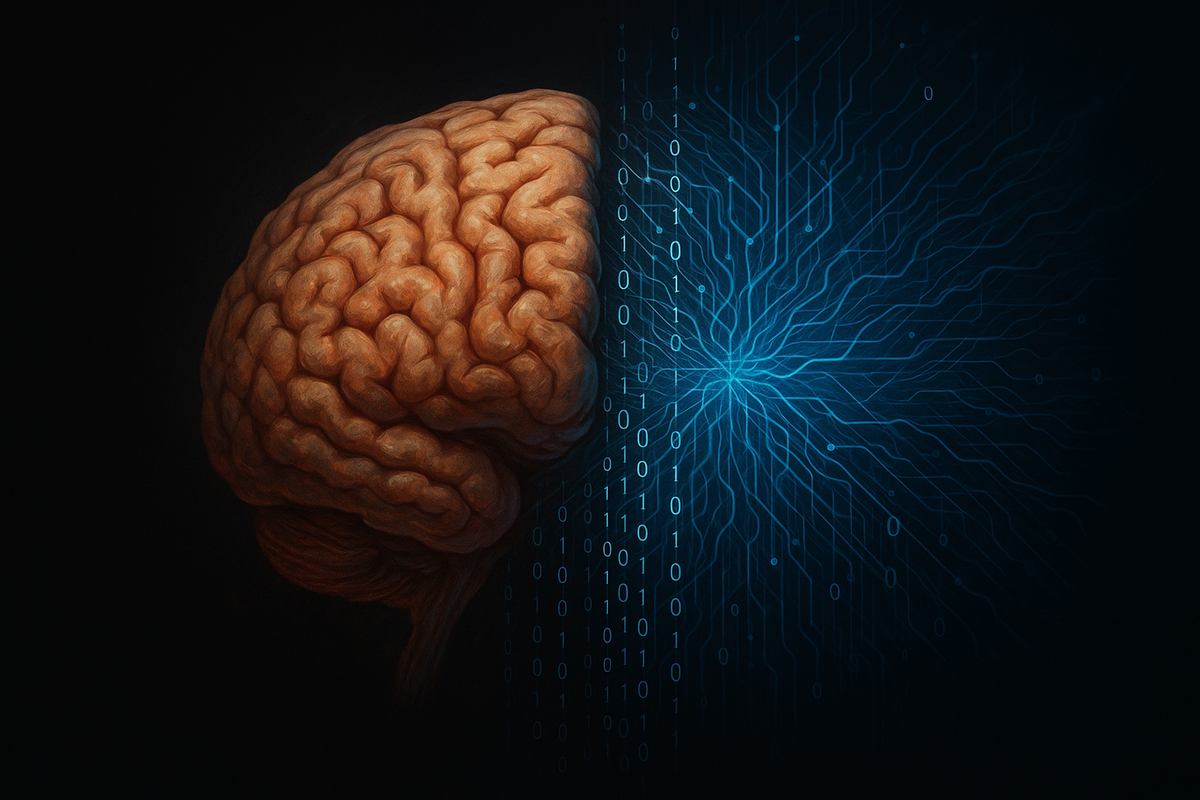
Mind Uploading: Science or Fantasy?
Let's go to the edge. Everything we've discussed so far—Neuralink's electrodes, Synchron's stentrode, motor prosthetics, sensory restoration, cochlear implants—is real. Working. Demonstrated in humans. The technology is at different stages of development, but it exists. Now let's talk about something that might be fantasy: uploading your mind to a computer. The idea is simple enough to state. Your brain is a physical system running a pattern of activity. That pattern is, somehow, you—your memories, personality, consciousness. If you could copy that pattern to a different substrate—a computer, perhaps—wouldn't the copy also be you? Wouldn't you, in some sense, continue to exist even after your biological brain dies? People who take this seriously call it "whole brain emulation." People who think it's fantasy call it science fiction dressed up as futurism. People who haven't thought about it much call it "mind uploading" and assume it's inevitable. So which is it? The honest answer: we don't know. But there are reasons to take it seriously—and reasons for skepticism.
The Case for Feasibility
Here's the argument that mind uploading is possible in principle: The brain is physical. Every neuroscientist believes this. Consciousness arises from brain activity. The brain is made of atoms, following physical laws. There's no magic, no soul substance, no non-physical ingredient. Physical systems can be copied. In principle, any physical system can be replicated if you know enough about its structure and dynamics. We copy information all the time. We simulate physical systems with increasing accuracy. The brain, being physical, should be copiable. Computation is substrate-independent. A calculation running on silicon gives the same answer as the same calculation running on paper or in a brain. If consciousness is computation—if the pattern is what matters, not the specific physical implementation—then consciousness should be implementable on any suitable substrate. Therefore: Given sufficient technology, you could scan a brain at sufficient resolution, extract the relevant information, and run an equivalent process on a computer. The result would be a conscious mind, continuous with the original. This is the transhumanist dream. Ray Kurzweil predicts it by 2045. Nick Bostrom has written extensively about its implications. Kenneth Hayworth, a neuroscientist at HHMI's Janelia Research Campus, is actively working toward it. These are not random cranks. They're serious people making an argument that, while speculative, is not obviously wrong.
The Technical Requirements
Mind uploading would require: scanning 86 billion neurons and 100 trillion synapses at sufficient resolution (current tech can't do this), preserving or scanning the brain without destroying it, understanding what level of detail actually matters for consciousness (we don't), massive computational power, and somehow validating that the result is actually conscious (we have no way to verify consciousness from outside). Each requirement is either very hard or unsolved. Together, they're far beyond current capability. Mind uploading isn't impossible. It's very, very difficult.
The Skeptical Arguments
Not everyone thinks mind uploading is even theoretically possible. Here are the objections: We don't understand consciousness. This is the big one. We have no scientific theory of how physical processes give rise to subjective experience. Without such a theory, we can't know what aspects of the brain are relevant to consciousness. We might copy the brain perfectly and get a philosophical zombie—a system that behaves like it's conscious but has no inner experience. The brain isn't just computation. The brain is wet, dynamic, embodied. Hormones wash through it. It's connected to a body with a heart rate and gut feelings and a constant stream of interoceptive data. Maybe consciousness requires embodiment. Maybe a digital simulation, lacking a body, would be fundamentally different from—or incapable of being—a conscious mind. Identity doesn't transfer. Even if you successfully copied your brain pattern to a computer, in what sense would that be you? The original would still die. The copy would have your memories, but it would be a new entity, not a continuation of you. Mind uploading might create a descendant, not an afterlife. Quantum effects might matter. Some physicists (notably Roger Penrose) argue that consciousness depends on quantum mechanical processes in neurons that can't be classically computed. If true, you couldn't simulate a brain on a classical computer—you'd need a quantum computer with properties we don't know how to build. The substrate matters more than we think. Even if we could perfectly replicate brain structure and dynamics on silicon, maybe the experience would be different. Maybe there's something about biological neurons—some property we don't know about—that's essential for consciousness as we experience it. None of these objections are proven. But they highlight how much we don't know.
Kenneth Hayworth and the Evangelists
Kenneth Hayworth is perhaps the most visible serious scientist working toward mind uploading. He's a neuroscientist at Janelia, a prestigious research campus funded by the Howard Hughes Medical Institute. He's also a co-founder of the Brain Preservation Foundation. Hayworth's approach is methodical. He argues that the first step isn't uploading—it's preservation. If we can preserve brain structure perfectly at death, we can scan it later when technology improves. The immediate goal is to develop preservation protocols good enough to maintain the information that defines a person. His foundation has offered prizes for demonstrated brain preservation techniques. In 2018, they awarded a prize to researchers who showed they could preserve a whole pig brain with ultrastructure intact. This is proof of concept: the physical substrate of a brain can be fixed in place, in principle scannable someday. Hayworth is realistic about timelines. He doesn't expect to be uploaded himself. He hopes to be preserved well enough that future technology can reconstruct him. He's betting on an unknown future technology making his preserved brain meaningful. Is this reasonable or delusional? It depends on what you think about the technical requirements and philosophical objections above. Hayworth isn't promising success. He's making a bet with better odds than simply dying.
The Cryonics Gamble
A few hundred people are currently cryopreserved; a few thousand are signed up. Cryopreservation causes massive damage—ice crystals, membrane rupture, protein denaturation. The scientific mainstream is skeptical. Advocates argue the information isn't destroyed, just scrambled. Future technology might infer the original structure. Cryonics is not a backup plan. It's a lottery ticket.
The Philosophical Puzzles
Mind uploading forces us to confront ancient questions: What makes you you? Is psychological continuity enough when physical continuity is disrupted completely? If a computer simulates a mind, is there actually experience happening—or just processing that looks like experience from outside? These aren't abstract puzzles. If identity doesn't transfer, uploading creates a copy but doesn't save you. If consciousness requires biology, uploads might be philosophical zombies. The technology might work and the project still fail—because the premises are wrong.
The Timeline
When might mind uploading be possible, if ever? Optimists (like Kurzweil) point to exponential progress in computing and predict milestones within decades. Scanning technology is improving. Computing power is increasing. AI is advancing. Project the curves forward and the destination arrives by mid-century. Pessimists argue that the curves might not continue, that fundamental barriers (like the need to understand consciousness) might never be overcome, and that mind uploading is centuries away if it's possible at all. Realists note that we don't know enough to estimate. The history of technology predictions is full of overconfidence. Mind uploading requires solving multiple hard problems simultaneously. Any timeline is pure speculation. The honest answer is: we have no idea. It could be 30 years, 300 years, or never.
What Mind Uploading Means for Neural Interfaces
Even if mind uploading is never achieved, thinking about it clarifies what neural interfaces are actually doing. Every BCI is a partial interface between biological brain and external system. Neuralink reads from a few thousand neurons. Future devices might read from millions. At some point, the "external system" becomes extensive enough that it's doing significant cognitive work. At that point, you're not just using a tool—you're distributing yourself across substrates. This is a gradual version of mind uploading. Not a sudden transition to digital existence, but a progressive blurring of the line between biological cognition and extended cognition. Maybe full uploading is the wrong frame. Maybe the future is augmentation, extension, hybridization—consciousness remaining biological but increasingly supported, enhanced, and backed up by digital systems. Mind uploading might be unnecessary if brain-computer interfaces get good enough.
The Real Question
Here's what mind uploading really asks: what are you? Are you your body? Your brain? A pattern of information? A continuous stream of experience? Something else entirely? Neural interfaces are slowly forcing us to answer these questions empirically, not just philosophically. As we read more from brains and write more to them, as we blur the line between biological and technological cognition, the boundaries of selfhood become practical questions with practical stakes. Mind uploading is the extreme case. It pushes the question to its limit: if everything physical is replaced, but the pattern continues, is that you? We don't know. We may never know. But the fact that we're asking—that serious scientists are working on it, that real money is being invested, that the philosophical implications are being debated—suggests we're in a different era than any before. The question of what we are is no longer purely philosophical. Technology is about to give us experimental data. Whether that leads to mind uploading, extended cognition, or something we haven't imagined yet—the journey has begun.
The Emotional Core
Underneath all the technical discussion, there's something very human going on. People want to continue existing. We don't want to die. We don't want the people we love to die. We wish we could keep the minds of brilliant scientists, beloved artists, treasured grandparents. Mind uploading, at its heart, is a response to mortality. It's the same impulse that created religion, that built pyramids, that funds anti-aging research. The desire to persist. Is that desire realistic? Maybe not. Maybe consciousness is inherently tied to biological brains and cannot be copied. Maybe personal identity requires physical continuity. Maybe the whole project is a sophisticated denial of death. Or maybe not. Maybe we'll figure it out. Maybe future humans will look back at our era the way we look at people who died before antibiotics—victims of a problem that would eventually be solved. The uncertainty is genuine. And the stakes are absolute. If mind uploading works, death becomes optional. If it doesn't, we're back to the same mortality that has always defined the human condition. Kenneth Hayworth is willing to bet on the former. He's not crazy—he's just taken seriously a possibility that most people dismiss without examining. If there's even a small chance that brain preservation leads to future revival, the expected value might favor the bet. Or it might be an elaborate coping mechanism, an expensive lottery ticket, a way to avoid confronting the reality of death. We can't know yet. That's the honest answer. We can't know.
What to Take Away
If you walk away from this article remembering one thing, let it be this: mind uploading is not obviously impossible, but it's also not obviously possible. The people working on it are not deluded, but they also don't have proof. The whole question turns on issues—the nature of consciousness, the requirements for identity, the limits of computation—that we haven't solved. The practical implications: For neural interfaces: The speculative future of mind uploading suggests directions for near-term research. High-resolution brain mapping, brain preservation techniques, and increasingly sophisticated brain-computer interfaces all contribute to the knowledge base that would be needed for uploading, even if uploading itself never becomes possible. For philosophy: Mind uploading forces us to operationalize questions about identity and consciousness. What would count as success? What would prove that an upload is conscious? These questions clarify what we're actually asking when we debate the nature of mind. For personal planning: Should you sign up for cryonics? That's your call. The expected value calculation depends on probabilities we can't estimate. But thinking through the question reveals what you believe about consciousness, identity, and the value of continued existence. For society: If mind uploading ever becomes possible, the social implications are staggering. Immortality for those who can afford it? Digital afterlives? The ability to run multiple copies of a person? We should be thinking about governance frameworks now, even if the technology is distant. The edge of neural interfaces touches questions that have occupied philosophers and theologians for millennia. We're not going to resolve them in this article or in this lifetime. But we can acknowledge that the questions are now engineering questions, not just armchair speculation. The boundary between science fiction and science is thinner than you think. And it's moving.
Comments ()