The Minimal Genome: How Simple Can Life Be?
Strip away everything non-essential and what's left? Syn3.0 — Craig Venter's engineered minimal cell — answers that with 473 genes. Alarmingly, about a third of them have no known function.
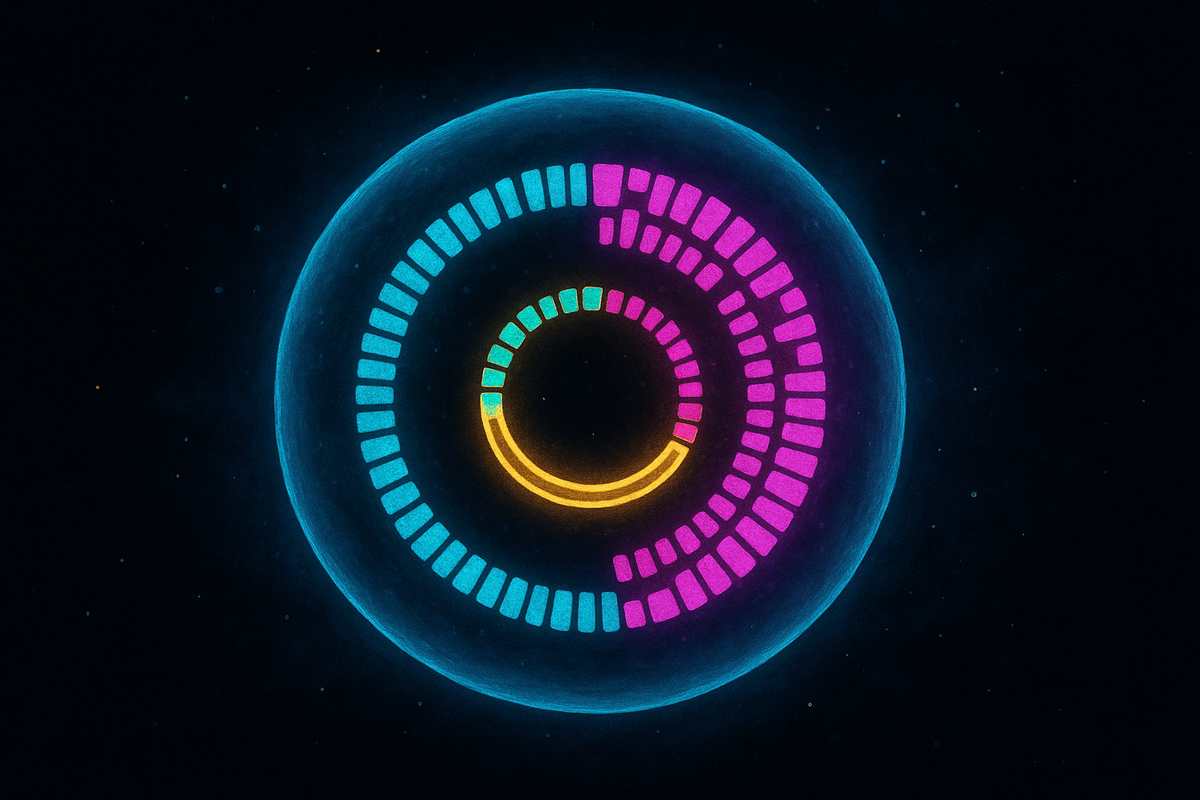
The Minimal Genome: How Simple Can Life Be?
In 2010, Craig Venter's team announced they had created the first synthetic cell. They had chemically synthesized an entire bacterial genome—over a million base pairs—assembled it piece by piece, and transplanted it into a cell whose original genome had been removed. The synthetic genome booted up. The cell divided. It was alive. The organism was called JCVI-syn1.0, named after the J. Craig Venter Institute. It was essentially a copy of an existing bacterium, Mycoplasma mycoides, but built from scratch. The genome was written by humans, not evolved by nature. That was proof of concept. The real question came next: how small could you make it? If you're going to design life from the ground up, you need to know what's essential. What genes can you delete and still have something that lives? What's the minimal genome? Venter's team spent the next six years finding out. The answer was surprising. Life was both simpler and more mysterious than anyone expected.
The Starting Point
Venter chose Mycoplasma as his starting material for a reason. Mycoplasmas are already minimal. They're parasitic bacteria that live inside host cells, where many nutrients are provided. Over evolutionary time, they've shed genes they don't need—relying on the host instead. Mycoplasma genitalium has about 525 genes and a genome of 580,000 base pairs. That's one of the smallest known genomes for any self-replicating organism. (Viruses are smaller, but they need host cells to reproduce—they're not independent life forms.) Even so, 525 genes seemed like more than should be necessary. Theoretical estimates suggested maybe 250-300 genes would be enough for life. Could you strip away the rest? The team started with Mycoplasma mycoides, which has about 900 genes—larger than M. genitalium, but it grows faster and is easier to work with. The goal was to delete genes systematically and see what was actually essential.
The Approach
How do you figure out which genes are essential? One approach: knock them out one at a time and see if the cell survives. This is called transposon mutagenesis. You insert a piece of DNA that disrupts genes randomly, then see which disruptions the cell can tolerate. Genes that can never be disrupted without killing the cell are essential. Genes that can be disrupted are non-essential. The team did this systematically. They mapped which genes were essential, which were non-essential, and which fell somewhere in between (cells could survive without them, but grew poorly). But here's the problem: essentiality isn't always individual. Some genes are non-essential on their own but essential in combination. Gene A and Gene B might each be deletable, but if you delete both, the cell dies. Redundancy, backup systems, overlapping functions. This made the project much harder. You couldn't just delete all non-essential genes and expect the cell to work. The genome had to be designed as a system, not just a list.
JCVI-syn3.0
In 2016, the team published their achievement: JCVI-syn3.0, a cell with only 473 genes and a genome of 531,000 base pairs. This was smaller than any natural self-replicating cell. It was alive—it metabolized, grew, and divided. It was viable. But it was weird. The cells grew slowly—about three hours per division, compared to 20 minutes for E. coli. They were pleomorphic—highly irregular in shape, with variable sizes. They were fragile. The minimal cell worked, but barely. It was life on the edge. 473 genes. That's what it takes. That's the answer to "how simple can life be?"—at least for now.
The Mystery Genes
Here's the most interesting result: the team didn't understand what 149 of those genes did. About one-third of the genes in the minimal genome had no known function. They were essential—delete them and the cell dies—but nobody knew why. These genes had been catalogued in databases as "hypothetical proteins" or "unknown function." Theorists had assumed they weren't important. Evolution sometimes keeps junk around. Maybe these genes were vestigial. They weren't vestigial. They were essential. Delete them, cell dies. This was humbling. After decades of molecular biology, billions of dollars in research, we had mapped entire genomes and characterized thousands of proteins. And still, one-third of the genes in the simplest possible cell were mysterious. We don't understand life as well as we thought.
Quasi-Essential Genes
The initial Syn3.0 was almost too minimal. The cells were slow-growing, irregular, and hard to work with. Not a great engineering chassis. The team went back and added some genes that weren't strictly essential but improved fitness. The result was JCVI-syn3A: 493 genes, still extremely minimal, but more robust. Cells grew faster, divided more regularly, and were easier to manipulate. This highlights a distinction: essential genes are those without which the cell dies. But there are "quasi-essential" genes—ones the cell can survive without, but not well. For practical purposes, you might want to keep them. The absolute minimum isn't necessarily the practical minimum. Engineering needs margins.
What the Genome Contains
Let's inventory what's in JCVI-syn3A. Information processing: Genes for replication (copying DNA), transcription (making RNA), and translation (making proteins). The ribosome alone requires about 100 genes. This is the core of the genetic system—the part that reads and executes the genetic code. Cell membrane: Genes for synthesizing lipids and maintaining the membrane. The cell needs a boundary. It needs to control what goes in and out. Energy metabolism: Genes for generating ATP. Even the simplest cell needs energy. Cofactor and vitamin synthesis: Pathways for making essential small molecules. Protein folding and transport: Chaperones that help proteins fold correctly. Systems that move proteins to where they're needed. Cell division: Genes for actually splitting into two cells. Unknown: The 149 mystery genes. The minimal cell can't do many things. It can't synthesize all its own amino acids—it needs them from the environment. It can't handle many stresses. It's utterly dependent on a rich growth medium. But it's alive. It reproduces. That's the threshold.
What We Learned
The minimal genome project taught several lessons. Life is remarkably compact. 473 genes is not many. For comparison, E. coli has about 4,300 genes. Humans have about 20,000. The minimal cell is orders of magnitude simpler—yet still alive. But not as simple as predicted. Theoretical estimates suggested 250-300 genes might be enough. In practice, you need more. The redundancy and robustness built into real cells aren't free—they require genetic investment. We don't understand many essential genes. The mystery genes are a reminder of how much remains unknown. Essential doesn't mean understood. Minimal isn't optimal. Syn3.0 worked, but barely. Practical engineering needs more margin. The chassis that synthetic biologists actually use (E. coli, yeast, etc.) have larger genomes because they're more robust. Building clarifies. The effort to construct a minimal genome revealed relationships that pure analysis missed. Building is a way of knowing.
The Philosophical Implications
Is JCVI-syn3.0 "artificial life"? In some sense, yes. The genome was designed and synthesized by humans. No cell with that exact genome ever existed before. It's a human creation. In another sense, no. The components are all natural biological molecules. The cell uses the same genetic code as all other life. The design was based on an existing organism. It's not alien—it's a modification of the deeply familiar. The line between "natural" and "artificial" blurs here. We synthesized a genome that's very similar to one that evolved. We created something new that's also very old—built from components that have existed for billions of years. This is what synthetic biology does. It remixes nature. The boundaries we draw—natural vs. artificial, created vs. evolved—turn out to be more porous than they seemed. JCVI-syn3.0 is not a new kind of life. It's a new instance of the old kind—authored, for the first time, by humans.
From Minimal to Maximal
The minimal genome project was about subtraction. What can you remove? The flip side is addition. Once you have a minimal chassis, what can you add? This is where synthetic biology becomes engineering. You start with a simple, well-characterized cell. You add genes to give it new capabilities: produce a drug, sense an environmental signal, perform a computation. The minimal cell becomes a foundation. The mystery genes become research targets—figure out what they do, and you understand life better. The synthetic approach generates insight. Venter's team continues to work on Syn3.0 derivatives. Others are building minimal cells from different starting points. The minimal genome isn't one thing—it depends on the environment you're designing for. The minimal cell is a beginning, not an end.
The Question Remains
What is life, at minimum? JCVI-syn3.0 gives a provisional answer: 473 genes, about 530,000 base pairs, encoding the functions needed for a cell to maintain itself and reproduce in a rich environment. But this is minimal life under specific conditions. In harsher environments, you'd need more genes—for stress response, for synthesizing nutrients you can't get from the medium. The minimum depends on context. And the mystery genes remind us that even this provisional answer is incomplete. We can build a minimal cell without understanding why it works. That's both the power and the humility of the synthetic approach. We can write life before we can read it. We can construct what we don't yet comprehend.
Further Reading
- Gibson, D. G., et al. (2010). "Creation of a Bacterial Cell Controlled by a Chemically Synthesized Genome." Science.
- Hutchison, C. A., et al. (2016). "Design and synthesis of a minimal bacterial genome." Science.
- Glass, J. I., et al. (2017). "Essential genes of a minimal bacterium." Molecular Systems Biology.
- Venter, J. C. (2013). Life at the Speed of Light: From the Double Helix to the Dawn of Digital Life. Viking.
This is Part 2 of the Synthetic Biology series. Next: "Directed Evolution: Engineering Enzymes."


Comments ()