Network Contagion
The mathematics of infectious disease maps almost perfectly onto the spread of ideas, emotions, and behaviors through social networks. Network contagion theory gives you the tools to understand — and sometimes predict — how cultural change actually propagates.
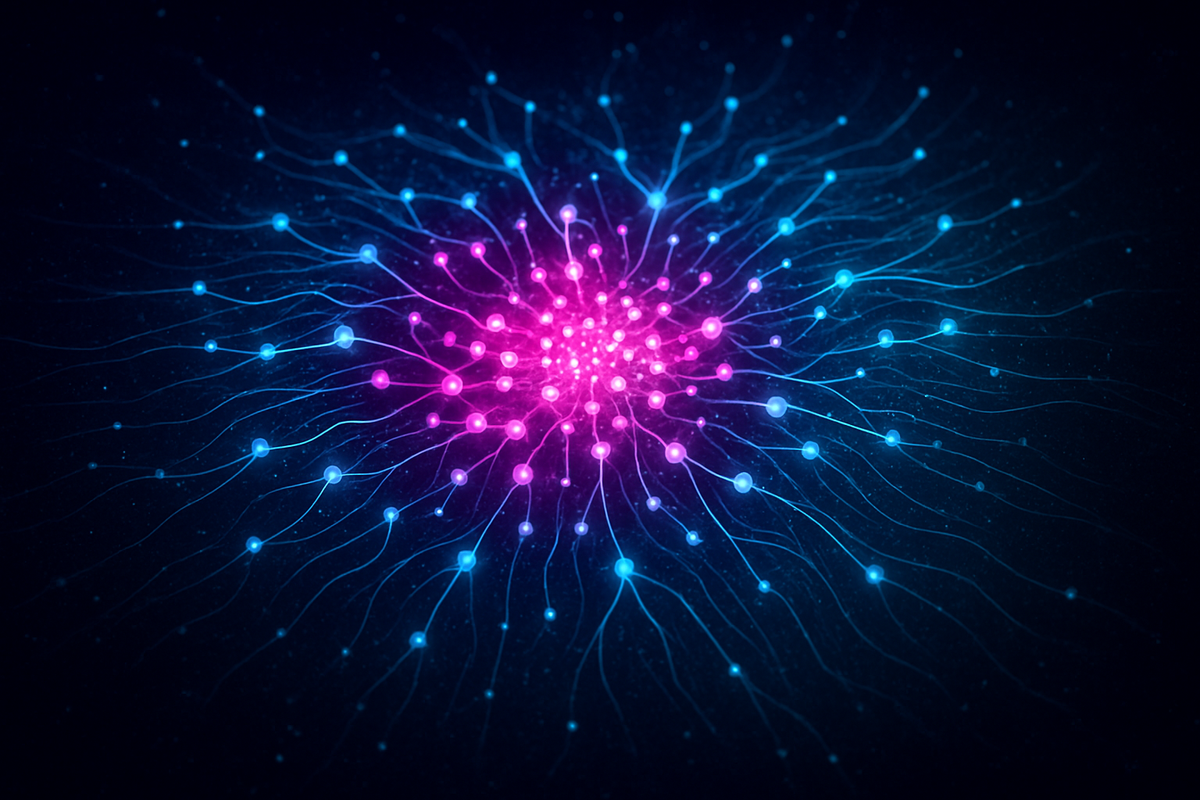
Network Contagion
Your opinions feel like yours. They're not. They're infections—caught from the people around you, spreading through networks you can't see, following rules that have nothing to do with truth or logic.
This isn't metaphor. It's network science.
Over the past two decades, researchers have discovered that beliefs, behaviors, and emotions spread through social networks in ways that look remarkably like disease transmission. Your political views, your happiness, your likelihood of getting divorced, your weight—all of these are contagious. Not because your friends persuade you. Because the network structure itself shapes what propagates and what dies.
This series explores how ideas infect minds, how networks determine what spreads, and what this means for everything from viral marketing to political polarization to public health.
What You'll Learn
Nicholas Christakis and James Fowler mapped the hidden networks in our lives and discovered that your friend's friend's friend affects your happiness—three degrees of separation, three degrees of influence.
Damon Centola overturned the conventional wisdom about viral spread. Simple contagions (information) spread through weak ties. Complex contagions (behavior change) require reinforcement from multiple sources.
The Facebook emotional contagion study demonstrated—controversially—that manipulating your feed can manipulate your mood. The implications haven't stopped unfolding.
Information cascade theory explains why everyone suddenly believes the same thing—and why those beliefs can be completely detached from evidence.
Network topology—the shape of our connections—determines what can spread and how fast. Small-world networks, scale-free networks, and clustered networks all behave differently.
R0 for ideas applies epidemiological models to belief spread. Some ideas are measles-level contagious. Others are like rabies—scary but hard to catch.
Why This Matters Now
Social media didn't create network contagion. It accelerated it, amplified it, and made it visible. The same dynamics that spread innovations through villages now spread disinformation through continents in hours.
Understanding contagion dynamics is no longer optional. It's how political campaigns are won. It's how products go viral. It's how conspiracy theories become mass movements. It's how emotions ripple through populations.
The good news: the same science that explains how bad things spread also explains how good things can spread. The networks aren't inherently evil. They're channels. What flows through them is up to us—if we understand how they work.
Series Overview
1. [Your Opinions Aren't Yours](/opinions-social-contagion/) — How beliefs spread through networks 2. [Nicholas Christakis: Connected](/christakis-connected-networks/) — The research that mapped social contagion 3. [Simple vs Complex Contagions](/simple-complex-contagions/) — Why some things spread differently 4. [Emotional Contagion](/emotional-contagion-mood/) — How moods propagate through networks 5. [Information Cascades](/information-cascades-herding/) — Why everyone follows everyone else 6. [Network Topology: Small Worlds](/network-topology-small-worlds/) — How network structure shapes spread 7. [R0 for Ideas](/r0-ideas-viral-beliefs/) — Epidemiological models for belief spread 8. [Synthesis: Engineering What Spreads](/network-contagion-synthesis/) — Implications and applications
This is the hub page for the Network Contagion series, exploring how ideas, emotions, and behaviors spread through social networks—and what that means for influence, change, and the future of collective belief.
Comments ()