Neural Interfaces
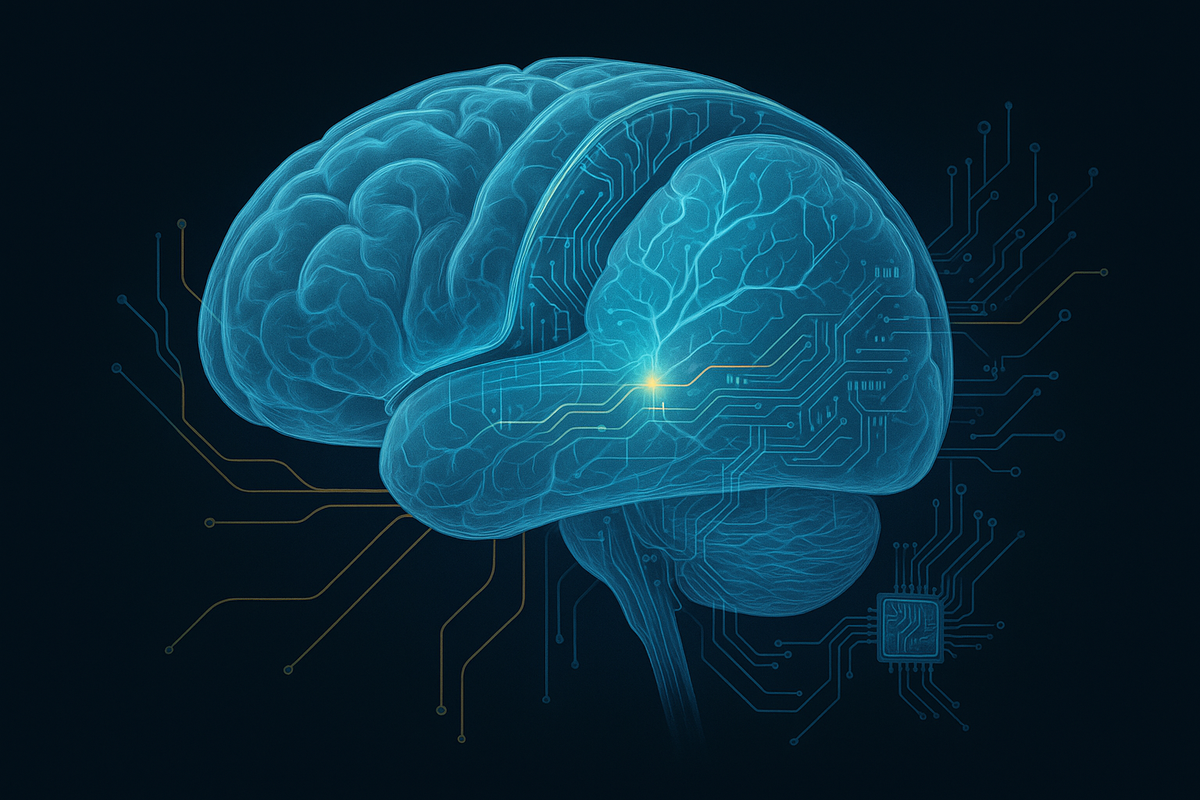
Neurons communicate in electrical spikes. Brain-computer interfaces intercept those spikes — translating intent into cursor movement, speech, or robotic limb control. The technology is already restoring function in paralyzed patients. What comes after medical applications is the harder question.
Neural Interfaces
The Line Between Brain and Machine Is Already Blurring
The Core Insight
Your brain is an electrical organ. Neurons communicate through voltage spikes—tiny electrical pulses that propagate across networks of billions of cells. Those spikes encode everything: perception, memory, intention, consciousness. We're learning to read those spikes. And increasingly, we're learning to write them. Cochlear implants have been restoring hearing for forty years—they convert sound into electrical signals and feed them directly into the auditory nerve. Deep brain stimulation treats Parkinson's tremors in hundreds of thousands of patients. Experimental systems let paralyzed people control robotic arms, type messages, and browse the web using nothing but neural activity. The technology is crude. We're recording from thousands of neurons when the brain has 86 billion. The signals are noisy. The implants degrade over time. We don't fully understand what we're reading. But it works. And it's getting better fast.
The Series
The State of the Art — What brain-computer interfaces can actually do right now. The mature technologies and the experimental frontiers. Neuralink: Musk's Bet on the Brain — The N1 implant, the first human patients, the vision and the controversy. Synchron: The Less Invasive Alternative — The stentrode approach that doesn't require open brain surgery. Threading electrodes through blood vessels. Motor Prosthetics: Restoring Movement — How BCIs give paralyzed patients control back. The research from BrainGate and beyond. Sensory Feedback: Restoring Touch — Adding sensation to prosthetic limbs. Making artificial hands that can feel. Cochlear Implants: The Success Story — Forty years of proven neural interface technology. What worked and why. Deep Brain Stimulation — Pacemakers for the brain. Treating Parkinson's, depression, and OCD with targeted electrical stimulation. Mind Uploading: Science or Fantasy? — The speculative frontier. Whole brain emulation, substrate independence, and whether consciousness can be copied. Synthesis: The Cyborg Future — Where brain-machine interfaces are heading. What it means for identity, privacy, and what humans might become.
Why This Matters Now
The first generation of neural interfaces is medical: restoring lost function to people with disabilities. But the technology won't stop there. Enhancement is coming. Memory augmentation. Direct brain-to-brain communication. Sensory expansion beyond human limits. The same electrodes that let Noland control a cursor could theoretically let anyone interface directly with information, with machines, with other minds. The question isn't whether we'll merge with our technology. The question is how, and who decides. The brain is an electrical organ. We're learning to speak its language.
Begin with The State of the Art to understand what neural interfaces can actually do—and what's coming next.


Comments ()