Neurodiversity as Interface Variation: Different Perceptual Manifolds
The deficit framing assumes a standard interface some people fail to run. Interface Theory breaks that: each perceptual system is a fitness-relevant compression, and different compressions suit different contexts. Autism, ADHD, and dyslexia look different from that vantage point.
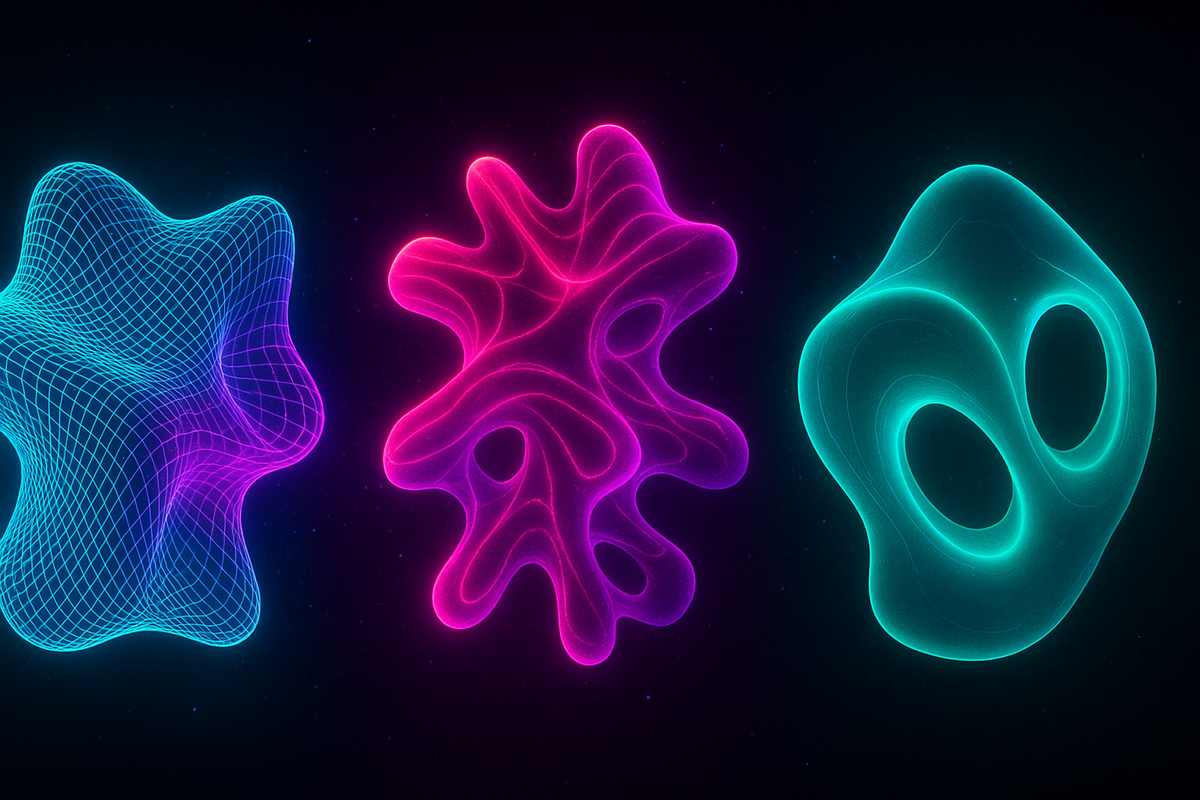
Neurodiversity as Interface Variation: Different Perceptual Manifolds
Series: Interface Theory | Part: 8 of 10
What if autism isn't a deficit but a different desktop? What if ADHD doesn't mean your attention is broken, but that your perceptual interface is optimized for different fitness payoffs?
These aren't rhetorical questions designed to make you feel better about neurodivergence. They're the logical implications of Donald Hoffman's Interface Theory of Perception—the radical claim that evolution shaped perception not to reveal reality, but to hide it behind adaptive interfaces. If perception is fundamentally a species-specific, fitness-tuned user interface rather than a veridical window onto objective reality, then neurodivergent perception isn't "wrong." It's a different interface configuration.
And just as macOS and Windows both successfully navigate the same underlying hardware through radically different user experiences, different neurotypes might represent alternative perceptual manifolds—distinct ways of compressing reality's complexity into actionable structure.
This reframing transforms neurodiversity from medical pathology into interface variation. Not "better" or "worse," but differently optimized. Different fitness functions producing different perceptual solutions.
Fitness Beats Truth: The Theorem That Changes Everything
Hoffman's Fitness Beats Truth theorem is ruthlessly simple: An organism that perceives fitness payoffs outcompetes an organism that perceives truth. Always. Across all evolutionary game simulations, truth-seeking strategies go extinct while fitness-oriented perception dominates.
This isn't philosophy. It's mathematics. Evolutionary game theory proves that natural selection doesn't care about reality—it cares about reproductive success. Your perceptual system is optimized to maximize fitness, not to reveal the territory behind the map.
The implications ripple outward: If perception is fundamentally non-veridical, then there is no "correct" perceptual interface against which to measure deviation. There are only different interfaces shaped by different fitness landscapes.
Consider the standard narrative around autism: "difficulties with social communication," "restricted interests," "sensory sensitivities." All deficit language, all measured against a neurotypical baseline assumed to be veridical perception of social reality.
But through the Interface Theory lens, this flips. The neurotypical interface evolved to compress social fitness payoffs—coalition formation, status hierarchy navigation, rapid inference of others' mental states. These were overwhelmingly fitness-relevant in ancestral environments. But that doesn't mean neurotypical social perception reveals truth about other minds. It means neurotypical perception evolved an interface optimized for extracting social fitness information efficiently.
The autistic interface might be optimized for different fitness payoffs: pattern detection, systematic thinking, precision over social consensus, decreased susceptibility to social manipulation. Not deficit. Different optimization.
Perceptual Manifolds: Different Ways to Compress Reality
In mathematics, a manifold is a space that locally resembles Euclidean space but may have a different global structure. Your perceptual system is essentially a dimensionality reduction algorithm—collapsing the impossibly high-dimensional space of physical reality into a low-dimensional interface you can actually navigate.
The desktop metaphor illustrates this perfectly: Your computer screen doesn't show you voltage patterns in transistors. It shows you icons, folders, files—a perceptual manifold optimized for the fitness function of "accomplish tasks on this machine." The underlying reality (hardware states) is compressed into an actionable interface.
Different neurotypes construct different perceptual manifolds. Not because their sensory inputs are fundamentally different (though sensitivity thresholds vary), but because their dimensionality reduction algorithms—their perceptual compression schemes—extract different features as salient.
Consider ADHD. The standard deficit model: "attention deficit," "inability to sustain focus," "distractibility." But through the manifold lens:
The ADHD interface might be optimized for rapidly shifting attention across a broader perceptual field rather than sustained narrow focus. In ancestral environments with unpredictable threats or opportunities, this could be fitness-enhancing. A perceptual system that flags novelty more aggressively, that resists sustained tunnel vision, that maintains peripheral awareness—this isn't broken attention. It's attention tuned to a different fitness landscape.
William James, writing in 1890, captured something essential:
"My experience is what I agree to attend to. Only those items which I notice shape my mind."
If your perceptual interface notices different items—flags different features as salient, compresses reality along different dimensions—then your experiential manifold will have fundamentally different geometry.
Not wrong geometry. Different geometry.
The Sensory Interface: Precision and Compression Tradeoffs
Sensory processing differences are perhaps the most obvious manifestation of interface variation. Autistic individuals frequently report heightened sensory sensitivity—sounds feel louder, lights feel brighter, textures feel more intense. The deficit framing: "sensory processing disorder," "sensory overload."
But consider this through predictive processing—the Bayesian brain framework where perception is prediction, not passive reception. Your brain constantly generates predictions about incoming sensory data and compares them to actual inputs. The precision assigned to prediction errors determines how much each sensory signal updates your model of the world.
In computational terms, precision is inverse variance—how much you weight a particular signal. High precision means that signal gets taken seriously. Low precision means it gets explained away as noise.
The neurotypical interface might use broad, low-precision priors for sensory input: The brain predicts average sensory environments and heavily discounts prediction errors that fall within expected ranges. This is computationally efficient and reduces sensory overwhelm, but it also means you miss a lot of actual information in the signal.
The autistic interface might maintain higher precision on sensory prediction errors. This means more information gets through, less gets pre-filtered. The result: richer sensory experience, better detection of subtle patterns, but also greater vulnerability to sensory overload because the compression algorithm is less aggressive.
Physicist and autism researcher Temple Grandin describes thinking in pictures—rich, detailed visual representations rather than abstract verbal reasoning. Not deficit. Different compression format. High-fidelity sensory encoding at the cost of higher processing load.
This becomes a precision-compression tradeoff:
- High precision = Rich detail, subtle pattern detection, sensory overwhelm risk
- Low precision = Efficient filtering, reduced overwhelm, missed information
Neither is "correct." They're different design choices in interface architecture.
Social Interfaces: Theory of Mind as Perceptual Inference
Much of the neurodiversity discourse centers on Theory of Mind—the ability to infer others' mental states. The standard finding: autistic individuals perform worse on false-belief tasks and other ToM measures. The standard interpretation: deficit in mentalizing ability.
But Interface Theory forces a different question: What if Theory of Mind isn't about accurately perceiving others' mental states, but about efficiently compressing social information for fitness-relevant action?
Neurotypical social cognition involves rapid, automatic social inference based on minimal cues—microexpressions, tone, posture, gaze direction. This system evolved under intense selection pressure because navigating social coalitions was fitness-critical. Natural selection built a dedicated interface for extracting social fitness payoffs.
But this interface isn't veridical. It's predictive, heuristic-driven, often wrong. You project intentions, motives, beliefs onto others based on fragmentary data and strong priors shaped by your own social experience. This works well enough in familiar social environments—the fitness landscapes that shaped the interface—but it's fundamentally a lossy compression algorithm.
The autistic social interface might use a different inference strategy: Less reliance on automatic heuristics, more explicit reasoning, reduced projection of one's own mental states onto others. This produces systematic differences:
- Slower social inference (less automatic)
- Less confident social predictions (higher uncertainty)
- Reduced susceptibility to false consensus effects (less projection)
- Better performance in contexts where explicit rules exist
- Worse performance in contexts requiring rapid, implicit social navigation
Cognitive scientist Uta Frith and her colleagues have proposed that autistic cognition involves weak central coherence—a tendency to process details rather than extracting gist. But reframe this: Weak central coherence might be reduced top-down prediction, which increases bottom-up signal fidelity. You see more of what's actually there rather than what your priors tell you should be there.
In social contexts, this means less automatic mind-reading (which is often projection), more explicit analysis. Not deficit. Different algorithm.
Executive Function: Different Control Architectures
Executive function differences—planning, working memory, cognitive flexibility, inhibitory control—are common across multiple forms of neurodivergence. ADHD in particular is characterized as "executive dysfunction." But executive function is ultimately about cognitive control architecture: How does the system allocate attention, sequence actions, override default responses?
The neurotypical control system seems optimized for sustained goal pursuit with resistance to distraction. This makes sense if you're navigating fitness landscapes where delayed gratification and long-term planning produce payoffs (agriculture, social status accumulation, multi-step projects).
But ADHD executive function might be optimized for rapid context-switching and opportunistic attention allocation. In fitness landscapes with unpredictable reward structures, high exploration rates, and variable attention demands, this could outperform sustained focus strategies.
Recent research on ADHD suggests it's associated with steeper delay discounting—stronger preference for immediate over delayed rewards. The deficit framing: impulsivity, inability to defer gratification. But delay discounting is also context-dependent: In volatile environments where future rewards are uncertain, immediate gratification is the rational strategy.
From an interface perspective, ADHD might represent a control architecture tuned to higher environmental volatility. The system expects the reward landscape to change, so it maintains broader attention distribution and faster switching thresholds. This produces "distractibility" in stable environments where sustained focus is optimal, but it also produces advantages in fast-changing contexts where rigid focus is maladaptive.
Researcher Russell Barkley has proposed that ADHD involves deficits in "behavioral inhibition"—the ability to suppress responses. But suppression is costly. It requires metabolic resources and attention. If your interface predicts that suppressing the current response means missing alternative opportunities, reduced inhibition might be adaptive.
This isn't just theoretical. Studies show ADHD individuals often excel in crisis situations, high-novelty environments, and creative tasks requiring associative leaps—all contexts where rapid switching and reduced inhibition are advantages, not deficits.
Autism and Predictive Precision: The Intense World Theory
One of the most promising neuroscientific models of autism is the Intense World Theory proposed by neuroscientists Henry and Kamila Markram. Their hypothesis: autism involves hyper-functioning neural microcircuits, leading to hyper-perception, hyper-attention, and hyper-memory.
In predictive processing terms: The autistic interface assigns higher precision to sensory prediction errors and lower precision to top-down priors. This means the system is less constrained by learned expectations and more driven by actual sensory data.
The result:
- Richer, more detailed sensory experience
- Better detection of subtle patterns and anomalies
- Reduced susceptibility to perceptual illusions (which rely on strong priors)
- Greater cognitive load from processing unfiltered information
- Social difficulty because social cognition relies heavily on top-down prediction
But notice what this does: It inverts the deficit framing. Autism isn't failure to perceive properly. It's perceiving more, filtering less, staying closer to actual sensory input rather than collapsing into predicted gist.
Temple Grandin, reflecting on her own autistic experience, writes:
"I think in pictures. Words are like a second language to me... When somebody speaks to me, his words are instantly translated into pictures."
This isn't impairment. It's operating at a different level of representation—closer to sensory detail, further from abstract compression. High-fidelity encoding.
The Intense World model suggests that autistic individuals might withdraw from overwhelming sensory/social environments not because they can't process them, but because they process them too well—without sufficient predictive dampening. The interface hasn't failed. It's working as designed, but optimized for different information priorities.
Interface Variation and Fitness Landscapes
Here's the critical question Interface Theory forces us to ask: Fitness-relevant for what landscape?
The neurotypical interface is optimized for fitness payoffs that dominated human evolutionary history: social coalition formation, status hierarchy navigation, delayed gratification in agricultural contexts, verbal communication in densely social environments.
But evolutionary landscapes are heterogeneous. Different ecological niches select for different adaptive strategies. And human cognitive diversity might represent adaptive variation across fitness landscapes.
Consider hunter-gatherer societies, which represent the vast majority of human evolutionary history. These groups required cognitive specialization: trackers (pattern recognition, attention to detail), navigators (spatial memory), storytellers (social intelligence, verbal fluency), toolmakers (systematic thinking, fine motor control).
Anthropologist Penny Spikins argues that prehistoric societies likely not only tolerated but valued what we'd now call neurodivergent cognition:
"The same traits that might be labeled as 'different' today—intense focus, exceptional memory, pattern recognition—would have been valuable in Paleolithic contexts."
ADHD traits—novelty-seeking, risk-taking, rapid attention switching—might be adaptive in nomadic, high-uncertainty environments. Autism traits—systematic thinking, reduced social conformity, attention to detail—might be adaptive in contexts requiring technical skill, precision, independence from group consensus.
Modern post-industrial environments strongly select for specific cognitive profiles: sustained focus, abstract verbal reasoning, rapid social navigation, executive function in structured contexts. Those whose interfaces aren't optimized for these particular fitness payoffs get labeled disordered.
But the mismatch isn't between "normal" and "broken." It's between interface architecture and environmental demands. The same ADHD interface that produces "impairment" in classroom settings might produce advantages in emergency response, entrepreneurship, or creative improvisation. The same autistic interface that produces "social deficits" might produce advantages in programming, research, pattern analysis, or any domain where truth matters more than consensus.
Interface Theory predicts this: Different fitness landscapes should produce different interface solutions. Neurodiversity is what you'd expect if human cognition evolved under heterogeneous selection pressures, maintaining variation rather than converging on a single optimal design.
Coherence Across Different Manifolds
In AToM (A Theory of Meaning) terms, coherence is the fundamental measure of system integrity—how well different components fit together, how efficiently the system navigates its state space, how stable its dynamics are under perturbation.
Meaning, in this framework, equals coherence over time: M = C/T. A system generates meaning by maintaining integrated structure across temporal scales.
Neurodivergent individuals often report feeling like they don't fit, like they're fundamentally misaligned with their environment. The standard interpretation: internal dysfunction. But Interface Theory suggests another reading: Your interface is coherent, but you're embedded in an environment optimized for different interface architectures.
The internal geometry of autistic cognition can be highly coherent—systematic, logical, internally consistent. But when this interface collides with social environments optimized for neurotypical prediction strategies, coherence between system and environment breaks down.
Similarly, ADHD cognition maintains internal coherence through rapid context-switching and opportunistic attention allocation. But when embedded in educational or workplace environments demanding sustained narrow focus, the mismatch produces friction.
The suffering isn't from broken interfaces. It's from interface-environment mismatch.
And here's where the real insight lands: If we recognize perceptual manifolds as fundamentally diverse, we can start designing environments that support coherence across multiple interface types. Not by "fixing" neurodivergent individuals to match neurotypical norms, but by expanding the range of viable environments.
This is already happening:
- Workplaces offering flexible hours and remote options (ADHD-friendly)
- Educational approaches emphasizing multiple learning modalities (autism-friendly)
- Open-plan offices being rejected for sensory reasons (accommodating high-precision interfaces)
- Rise of hyper-focused "deep work" cultures (matching sustained attention interfaces)
These aren't accommodations for deficit. They're recognition of legitimate interface diversity.
From Pathology to Variation
The medical model of neurodivergence assumes a veridical baseline—"normal" perception, cognition, and behavior—against which divergence is measured as disorder. But Interface Theory dissolves this baseline.
If evolution sculpts perception to maximize fitness rather than reveal truth, then no interface is veridical. Neurotypical perception is as constructed, as fitness-tuned, as any other neurotype. It's not closer to "reality." It's optimized for different fitness payoffs within particular environments.
This transforms the entire framing:
Medical Model:
- Neurotypical = Normal perception of reality
- Neurodivergent = Impaired perception requiring treatment
Interface Model:
- Neurotypical = Interface optimized for particular fitness functions (social coalition, verbal reasoning, delayed gratification)
- Neurodivergent = Interface optimized for different fitness functions (pattern detection, systematic thinking, rapid switching)
Neither is veridical. Both are constructed interfaces compressing reality in fitness-relevant ways.
This doesn't mean neurodivergence never causes suffering. Interface-environment mismatch is real. Sensory overwhelm is real. Executive function challenges are real. But the solution isn't "fix the broken interface." It's reduce mismatch by expanding environmental diversity.
And sometimes, yes, individuals choose interventions that shift their interface toward configurations that function better in their actual environment. That's fine. But it's a pragmatic choice about navigation, not correction of objective dysfunction.
The key insight: There is no view from nowhere. All perception is from somewhere—a particular configuration, optimized for particular payoffs, embedded in particular environments. Neurodiversity is what cognitive variation looks like when you drop the assumption of veridical perception.
The Ethics of Interface Diversity
Once you see neurodivergence as interface variation rather than deficit, ethical questions shift.
Should autistic children be subjected to intensive behavioral interventions designed to make them appear more neurotypical? In the medical model: yes, because you're correcting dysfunction. In the interface model: maybe not, because you're forcing one type of interface to mimic another, potentially at great cost to internal coherence.
Should ADHD be treated with stimulants that increase sustained focus? In the medical model: obviously, because you're correcting attention deficits. In the interface model: it depends, because you're chemically shifting interface parameters toward one configuration, which helps with environmental fit but might reduce advantages in other domains.
The interface model doesn't give easy answers, but it recenters the locus of the "problem." Instead of asking "how do we fix broken individuals?", we ask "how do we support coherence across diverse interfaces?" and "what environments allow multiple interface types to thrive?"
This connects to the neurodiversity movement's rallying cry: "Nothing about us without us." Interface Theory provides the scientific grounding for what neurodivergent advocates have been saying all along—they're not broken versions of neurotypical people. They're people with different perceptual manifolds navigating a world designed for interfaces they don't have.
Recognition of interface diversity implies:
- Design environments for multiple interface types, not one assumed standard
- Stop treating neurotypical processing as veridical baseline
- Allow individuals to modify their own interfaces (or not) based on their lived experience
- Measure impairment not by deviation from norm, but by interface-environment coherence
This is the same principle that drives accessibility design: You don't "cure" wheelchair users, you build ramps. You don't "fix" the Deaf, you support sign language. Interface Theory extends this logic to cognitive diversity: You don't "normalize" neurodivergent perception, you design for perceptual variation.
Conclusion: The Liberation of Interface Thinking
Donald Hoffman's Interface Theory makes a simple, devastating claim: evolution shaped perception to hide reality, not reveal it. Everything you perceive is a species-specific, fitness-tuned user interface.
Apply this to neurodiversity and the entire edifice of deficit-framing collapses. There is no "correct" interface. There are only interfaces optimized for different fitness landscapes.
Autism isn't failure to perceive social reality—it's a different social interface, likely with higher sensory precision and reduced top-down prediction. ADHD isn't attention deficit—it's attention calibrated to higher volatility fitness landscapes. Dyslexia isn't broken reading—it's visual-spatial processing optimized for pattern recognition over sequential symbol processing.
Each neurotype is a perceptual manifold—a different way of compressing reality's overwhelming complexity into navigable structure. Different compression algorithms extract different features as salient, maintain different precision weightings, optimize for different fitness functions.
The suffering many neurodivergent individuals experience isn't from broken interfaces. It's from interface-environment mismatch. And the solution isn't to "fix" the interface. It's to expand the range of viable environments.
This is what Interface Theory offers neurodiversity: liberation from pathology through recognition of legitimate variation. Not all interfaces are the same. And that's not a bug. That might be the whole point of having nervous systems built by evolutionary pressures that don't care about truth—only about what works in particular contexts.
Your reality is always an interface. The question isn't whether your interface is "correct." The question is: What is it optimized for, and does your environment support that optimization?
And perhaps most importantly: If we recognize that all perception is constructed interface, never veridical reality, then we can start building worlds that support more than one way of perceiving.
Further Reading
- Hoffman, D. D., Singh, M., & Prakash, C. (2015). "The Interface Theory of Perception." Psychonomic Bulletin & Review, 22(6), 1480-1506.
- Palmer, C. J., Lawson, R. P., & Hohwy, J. (2017). "Bayesian approaches to autism: Towards volatility, action, and behavior." Psychological Bulletin, 143(5), 521-542.
- Markram, H., Rinaldi, T., & Markram, K. (2007). "The Intense World Syndrome: An alternative hypothesis for autism." Frontiers in Neuroscience, 1(1), 77-96.
- Spikins, P. (2009). "Autism, the integrations of 'difference' and the origins of modern human behaviour." Cambridge Archaeological Journal, 19(2), 179-201.
- Van de Cruys, S., et al. (2014). "Precise minds in uncertain worlds: Predictive coding in autism." Psychological Review, 121(4), 649-675.
- Grandin, T., & Johnson, C. (2005). Animals in Translation: Using the Mysteries of Autism to Decode Animal Behavior. Harcourt.
This is Part 8 of the Interface Theory series, exploring how evolution shaped perception to maximize fitness rather than reveal truth.
Previous: Psychedelics and the Dissolution of the Interface
Next: The Hard Problem Meets the Interface: Consciousness and Coherence
Comments ()