Neuroinflammation: When Your Brain's Immune System Attacks
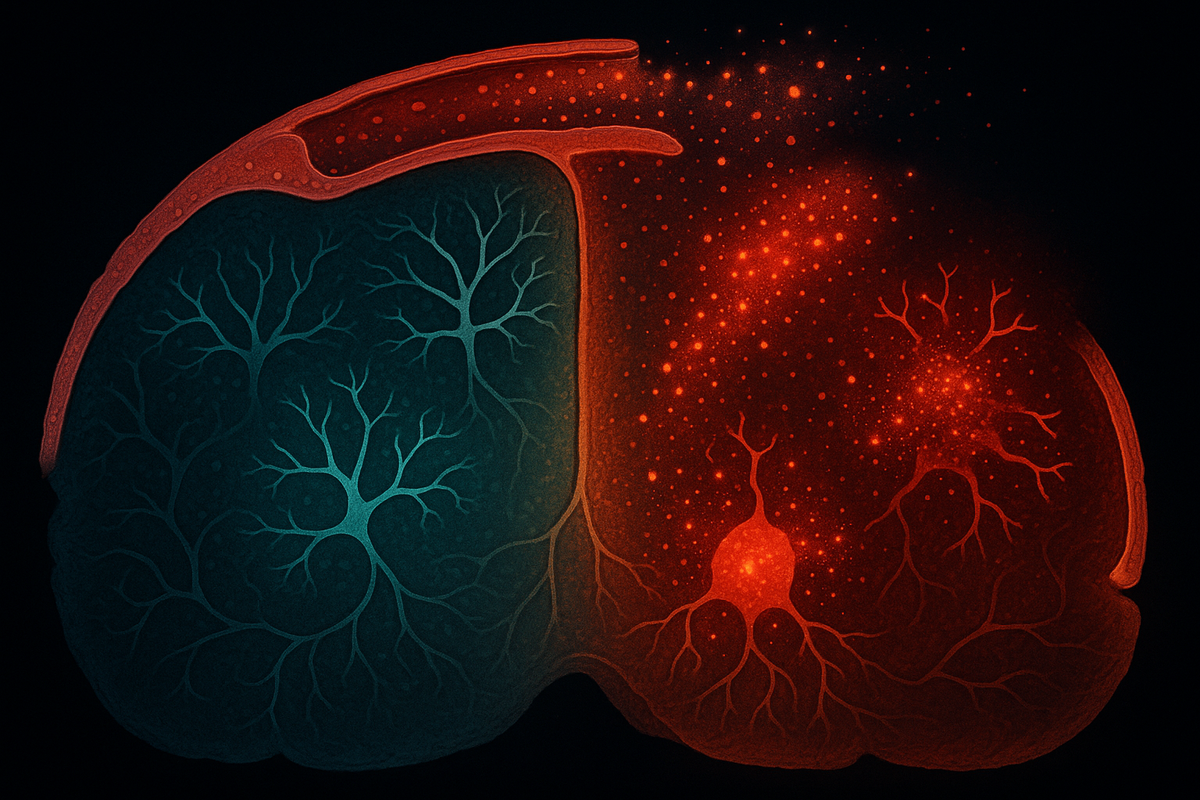
The brain has its own immune cells — microglia — and when they stay in attack mode too long, the collateral damage looks a lot like psychiatric illness. Neuroinflammation is now a serious hypothesis for depression, Alzheimer's, and schizophrenia, reframing mental illness as partly an immune problem.
Neuroinflammation: When Your Brain's Immune System Attacks
Here's a question that would have seemed crazy twenty years ago: What if depression is an inflammatory disease? The classic explanation for depression is a neurotransmitter imbalance—not enough serotonin, not enough norepinephrine, circuits that aren't firing correctly. The treatments follow logically: SSRIs boost serotonin, SNRIs boost norepinephrine, and patients feel better. Sometimes. But the drugs don't work for everyone. About a third of depressed patients don't respond to standard antidepressants. And the neurotransmitter theory has never quite explained why depression correlates with so many other conditions—autoimmune diseases, diabetes, heart disease, chronic infections. Why would a "brain chemical imbalance" travel with diseases of the body? The emerging answer: because depression might be, at least partly, an immune response gone wrong. Neuroinflammation—chronic, low-grade immune activation in the brain—is being implicated in conditions from depression to Alzheimer's to schizophrenia. The brain's immune system, once thought to be isolated and quiet, is anything but.
The Cytokine Theory of Depression
In the 1990s, doctors noticed something strange about patients receiving interferon therapy. Interferon-alpha is a cytokine—an immune signaling molecule—used to treat hepatitis C and certain cancers. It activates the immune system powerfully. And a remarkable number of patients on interferon developed depression. Not just sadness from being sick—clinical depression, often severe, sometimes suicidal. When you inject a potent immune activator, people get depressed. That's not consistent with depression being purely a brain-chemical problem. Researchers started looking at depressed patients who weren't on interferon. What they found: elevated inflammatory markers. Depressed patients, as a group, have higher levels of cytokines like IL-6, TNF-alpha, and CRP in their blood. Not everyone. Not massively elevated. But statistically, reliably, there. And the relationship goes both ways. People with chronic inflammatory conditions—rheumatoid arthritis, inflammatory bowel disease, psoriasis—have much higher rates of depression than the general population. Is that just because being sick is depressing? Partly. But the correlation remains even after controlling for disability and pain. The cytokine theory of depression: inflammation somewhere in the body sends signals to the brain, microglia become activated, and the resulting neuroinflammation disrupts mood circuits. How? Several mechanisms have been identified:
- Inflammatory signals alter neurotransmitter synthesis. Cytokines shift tryptophan metabolism away from serotonin production and toward other pathways.
- Activated microglia release their own inflammatory molecules inside the brain, creating local damage.
- Inflammation reduces neuroplasticity—the brain's ability to form new connections and adapt—which is thought to be important for recovery from depression.
- Inflammatory states correlate with changes in the reward circuitry, potentially explaining the anhedonia (inability to feel pleasure) that characterizes depression.
None of this means inflammation causes all depression. Depression is heterogeneous—different patients may have different underlying biology. But for a substantial subset, inflammation appears to be part of the causal chain.
Alzheimer's: The Inflammation Angle
Alzheimer's disease has been defined by two pathological features: amyloid plaques (clumps of beta-amyloid protein outside neurons) and tau tangles (twisted fibers inside neurons). The amyloid hypothesis has dominated the field for decades—clear the plaques, cure the disease. It hasn't worked. Drug after drug successfully cleared amyloid plaques but failed to improve cognition or slow decline. Patients still got worse. Something was missing. Enter neuroinflammation. Microglia cluster around amyloid plaques. They're trying to clear the debris—that's their job. But in Alzheimer's, they seem stuck in a chronically activated state, releasing inflammatory molecules that damage neurons. The plaques might be the initial trigger, but the sustained microglial inflammation might be what actually kills brain cells. Genetic evidence supports this. The TREM2 gene codes for a receptor on microglia. Variants that impair TREM2 function dramatically increase Alzheimer's risk. If microglial function is impaired, the disease gets worse—suggesting that what microglia do (or fail to do) matters as much as the plaques themselves. The new hypothesis: Alzheimer's involves a vicious cycle. Plaques accumulate. Microglia activate to clear them. The activation becomes chronic. Inflammatory damage kills neurons. Dying neurons release more signals that activate more microglia. The cycle spirals. This doesn't mean amyloid is irrelevant—maybe early amyloid clearance, before chronic inflammation sets in, would help. But it suggests that targeting inflammation directly might be a complementary strategy. Trials of anti-inflammatory approaches in Alzheimer's have had mixed results, but the hypothesis is far from dead. The immune system that was supposed to protect the brain may be contributing to its destruction.
Schizophrenia and the Infection Connection
The story of schizophrenia and inflammation is even stranger. There's a long-observed correlation: people who were exposed to infections during fetal development—especially in the second trimester—have higher rates of schizophrenia. Maternal flu during pregnancy is a risk factor. So are certain other infections. Why would prenatal infection increase schizophrenia risk two decades later? One hypothesis: maternal immune activation. When a pregnant woman fights an infection, her immune system releases cytokines. Those cytokines can cross the placenta and affect fetal brain development. The infection itself might never reach the fetus—but the immune response does. Animal studies support this. When pregnant mice are injected with immune-activating molecules (not actual pathogens), their offspring show brain and behavioral abnormalities resembling aspects of schizophrenia—altered dopamine signaling, reduced social behavior, impaired cognition. The fetal brain, developing during a period of intense neural migration and circuit formation, may be especially vulnerable to inflammatory signals. Disruption at this stage could create vulnerabilities that don't manifest until adolescence, when the brain undergoes another wave of remodeling. This doesn't mean schizophrenia is an "infection." It means the immune environment during development shapes brain trajectory, and disruptions to that environment—whether from infection, autoimmune conditions, or other causes—can increase risk for psychiatric disorders later.
The Sickness Behavior Connection
When you get the flu, you don't just have a fever and congestion. You feel terrible in a specific way: fatigue, loss of appetite, social withdrawal, difficulty concentrating, disturbed sleep, depressed mood. This isn't random—it's sickness behavior, an organized response to infection that's conserved across mammals. It's driven by cytokines acting on the brain. Sickness behavior serves a purpose. Fatigue and withdrawal keep you from expending energy that should go to fighting infection. Loss of appetite (which can starve certain pathogens) and fever (which impedes their reproduction) are adaptive. The brain orchestrates a whole-body response to infection. The symptoms of sickness behavior look a lot like depression: low energy, anhedonia, social withdrawal, cognitive impairment. The overlap isn't coincidental. The hypothesis: depression, at least in some cases, is sickness behavior triggered inappropriately—the brain responding as if there were an infection when there isn't one, or responding to low-grade chronic inflammation that never resolves. This would explain why depression is often accompanied by physical symptoms (pain, fatigue, sleep disturbance). It would explain the correlation with inflammatory diseases. It would explain why anti-inflammatory medications sometimes help depression when antidepressants don't. Depression might be your brain doing what it evolved to do in response to infection—just at the wrong time.
The Microglia Spectrum
Microglia aren't just "on" or "off." They exist in multiple functional states. Resting/surveilling: In the healthy brain, microglia constantly sample their environment, extending and retracting processes. They're not inactive—they're monitoring. Pro-inflammatory (M1-like): When they detect damage or pathogens, microglia shift to a state that releases inflammatory cytokines, recruits other immune cells, and kills threats. This is protective short-term but damaging if sustained. Anti-inflammatory/reparative (M2-like): Microglia can also shift to states that promote tissue repair, clear debris, and resolve inflammation. Healthy resolution of immune responses depends on this transition. In chronic neurological and psychiatric conditions, microglia may be stuck in pro-inflammatory states—never transitioning to repair, continuously releasing damaging molecules. Understanding what controls these transitions is a major research focus. Some emerging therapies aim to modulate microglial state—pushing them from damaging to reparative phenotypes. This is speculative but represents a new therapeutic direction that would have been unthinkable when the brain was considered immune-privileged.
The Gut-Brain-Immune Axis
The immune-brain connection extends beyond the brain itself. The gut contains trillions of bacteria—the microbiome—and it also contains most of the body's immune cells. The gut wall is a major interface between the immune system and the external world (technically, the contents of your gut are "outside" your body). Emerging research connects gut microbiome composition to brain inflammation and mental health. Certain gut bacteria produce molecules that influence immune function. Gut inflammation can trigger systemic inflammation. And systemic inflammation can affect the brain. This "gut-brain-immune axis" is still being worked out, but early findings are striking. Germ-free mice (raised without gut bacteria) have abnormal brain development and behavior. Probiotics can sometimes affect mood in humans. Fecal transplants have shown promise in some psychiatric conditions. The brain isn't isolated. It's embedded in a body with an immune system that's embedded in a microbial ecosystem. Understanding mental health may require understanding all three.
Therapeutic Implications
If neuroinflammation contributes to psychiatric and neurological conditions, new treatments become possible. Anti-inflammatory medications. NSAIDs, minocycline (an antibiotic with anti-inflammatory properties), and other anti-inflammatory agents have been tested as add-ons to standard treatments for depression, schizophrenia, and Alzheimer's. Results are mixed but some positive signals exist, especially in patients with elevated inflammatory markers. Targeting specific cytokines. Drugs that block specific inflammatory molecules (like TNF-alpha inhibitors used in rheumatoid arthritis) are being explored for psychiatric applications. Some patients with psoriasis have reported improved mood when treated with biologics—though formal trials are needed. Modulating microglia. Drugs that shift microglia from pro-inflammatory to reparative states could be transformative—if we can develop them. This is technically challenging because microglia are inside the brain and similar drugs might affect peripheral immune function. Lifestyle interventions. Exercise reduces inflammation. Diet affects inflammation. Sleep deprivation increases inflammation. The lifestyle factors known to affect mental health may work partly through immune mechanisms. None of this means anti-inflammatory drugs will replace antidepressants or that Alzheimer's is "just" inflammation. The picture is complex. But the immune system is now part of the picture—and that opens new doors.
The New Paradigm
Twenty years ago, the brain was thought to be immunologically isolated, psychiatric disorders were thought to be neurotransmitter imbalances, and neurodegenerative diseases were thought to be problems of protein aggregation. Now: the brain has an active immune system. Psychiatric disorders involve immune dysfunction. Neurodegeneration involves chronic inflammation. The lines between immunology, neuroscience, and psychiatry are dissolving. This doesn't replace previous understanding—neurotransmitters still matter, protein aggregates still matter, neural circuits still matter. But it adds another layer. The immune system isn't just a separate system that occasionally causes autoimmune diseases. It's integrated into brain function, development, and dysfunction. The brain's defenders can become its attackers. Understanding how—and stopping it when necessary—is the new frontier.
Further Reading
- Miller, A.H. & Raison, C.L. (2016). "The role of inflammation in depression." Nature Reviews Immunology.
- Heneka, M.T. et al. (2015). "Neuroinflammation in Alzheimer's disease." Lancet Neurology.
- Estes, M.L. & McAllister, A.K. (2016). "Maternal immune activation: implications for neuropsychiatric disorders." Science.
- Dantzer, R. et al. (2008). "From inflammation to sickness and depression." Nature Reviews Neuroscience.
This is Part 5 of the New Neuroscience series. Previous: "Glial Cells: The Other Half of Your Brain." Next: "The Default Mode Network: Your Brain on Autopilot"—the network that activates when you're doing nothing, and what it reveals about the self.


Comments ()