Nostradamus and Pattern-Matching: Why We See Prophecy
His predictions always seem to come true after the fact. That's not because Nostradamus was gifted — vague language plus pattern-hungry brains equals inevitable prophecy.
Nostradamus and Pattern-Matching: Why We See Prophecy
Series: Anomalous Cognition | Part: 6 of 9 Primary Tag: FRONTIER SCIENCE Keywords: prophecy, Nostradamus, hindsight bias, confirmation bias, pattern recognition
Nostradamus predicted Hitler. He predicted 9/11. He predicted the COVID pandemic.
Or did he?
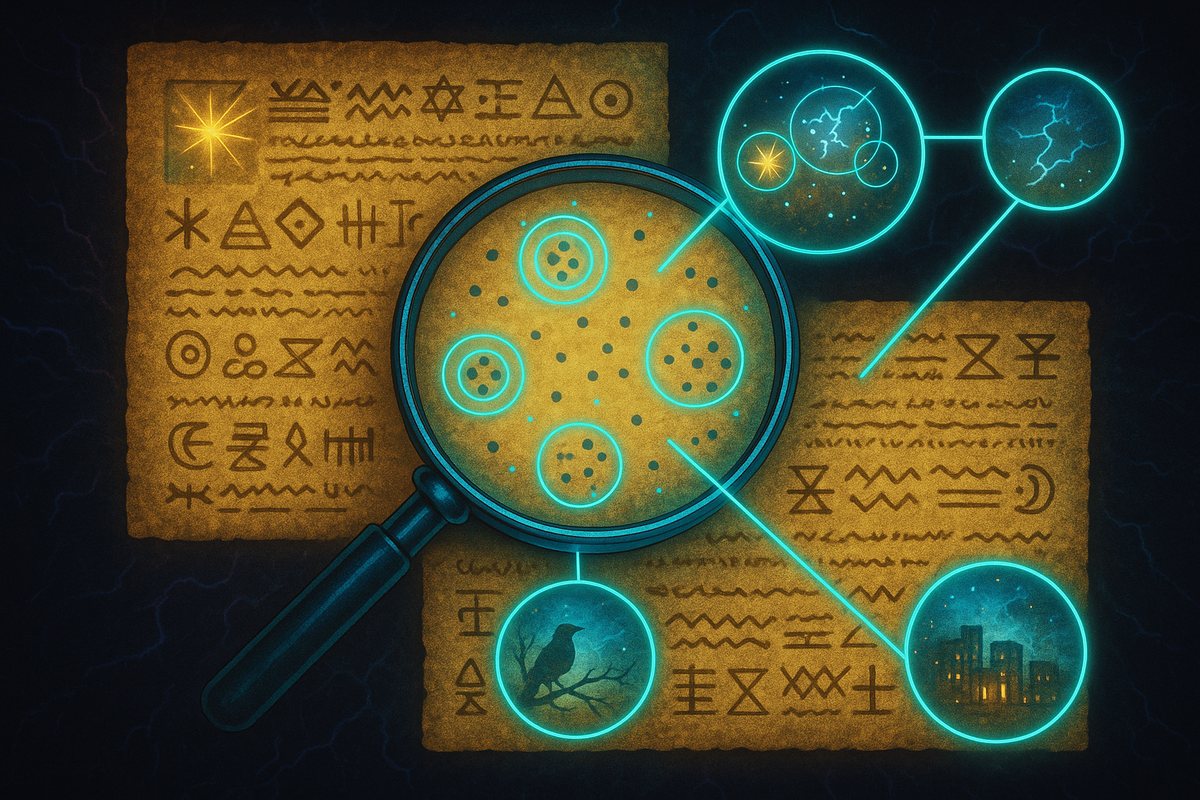
The 16th-century French astrologer wrote nearly a thousand quatrains—vague, symbolic, often deliberately obscure verses. People have been finding "fulfilled prophecies" in them ever since.
But here's the thing: prophecy is almost always identified after the fact. The quatrain only matches the event once you already know what happened. Before the event, nobody recognized the prediction.
This tells us something important—not about prophecy, but about human cognition. Our brains are pattern-seeking engines, and they find patterns whether or not the patterns are real.
The Nostradamus Method
Michel de Nostredame published his Prophecies in 1555. They consist of 942 quatrains organized into "centuries" (groups of 100). The verses are written in a mixture of French, Latin, Greek, and obscure symbolism.
A typical quatrain:
> The blood of the just will be demanded of London, > Burnt by fire in the year '66: > The ancient Lady will fall from her high place, > And many of the same sect will be killed.
This is often claimed to predict the Great Fire of London in 1666. The match seems impressive—London, fire, 1666.
But examine it more closely:
- What is "the blood of the just"? How does that match the Great Fire? - Who is "the ancient Lady"? (Interpreters say St. Paul's Cathedral—but how would anyone know that in advance?) - What "sect" was killed? (The fire killed few people; this doesn't match.)
The quatrain mentions London and fire and '66. Once you know about the 1666 fire, those elements stand out. The parts that don't match fade into the background.
This is the Nostradamus method: write vague enough verses, and eventually something will match some part of them.
Hindsight Bias
Hindsight bias is the tendency to see past events as more predictable than they actually were.
Once we know what happened, we can't easily imagine not knowing. We think, "Of course that was going to happen—it's obvious in retrospect." We forget how uncertain things were before.
Applied to prophecy:
- After the event, we notice the quatrain elements that match. - Before the event, those same elements are among thousands of possibilities. - We don't notice all the quatrains that DIDN'T match anything. - We forget all the events that weren't "predicted."
Hindsight bias makes prophecy seem accurate because we can only evaluate it after the fact, when matching elements stand out.
Confirmation Bias
Confirmation bias is the tendency to search for, interpret, and remember information that confirms our beliefs.
If you believe Nostradamus was a prophet: - You'll look for quatrains that seem to match events - You'll interpret vague language to fit known events - You'll remember the "hits" and forget the misses - You'll share the impressive matches, not the failures
If you don't believe: - You'll focus on the quatrains that don't match anything - You'll notice how the "matches" require strained interpretation - You'll observe that nobody predicted events in advance
Neither approach is fully objective. But the believer's approach generates impressive-seeming prophecies from random noise.
The Texas Sharpshooter Fallacy
Imagine someone shoots at a barn, then paints a target around the bullet holes. Every shot is a bullseye!
This is the Texas Sharpshooter fallacy: defining the target after the fact to match where the shots already landed.
Prophecy interpretation works the same way:
1. Write 942 vague quatrains 2. Wait for events to happen 3. Find quatrains that vaguely match the events 4. Declare those prophecies "fulfilled" 5. Ignore the other 900+ quatrains that matched nothing
You can always find matches in a large enough dataset, especially if the "predictions" are vague. The test should be: can you identify the prophecy BEFORE the event? With Nostradamus, the answer is almost always no.
The Vagueness Factor
Nostradamus's quatrains are deliberately obscure. He wrote in multiple languages, used anagrams, employed astrological and alchemical symbolism, and avoided specific names and dates.
This vagueness is a feature, not a bug:
Specific predictions fail visibly. If Nostradamus had written "A man named Adolf Hitler will rule Germany in 1933-1945," we could easily check it. If wrong, he'd be discredited.
Vague predictions can't fail. If you write about "Hister" near "the river" with "eagles," you can later claim Hitler, the Danube, and Nazi Germany—but the connection is only clear in retrospect.
Multiple interpretations ensure eventual matches. With 942 quatrains, each interpretable many ways, there are thousands of possible "predictions." Some will match future events by chance.
Good prediction makes specific claims that can be verified or falsified. Nostradamus did the opposite—and that's why he's still considered a prophet five centuries later.
The Pattern-Seeking Brain
Why are we so good at finding patterns in noise?
Evolutionary advantage: Our ancestors who detected patterns—predator tracks, seasonal changes, cause-and-effect relationships—survived and reproduced. False positives (seeing patterns that aren't there) are less costly than false negatives (missing real patterns). Evolution tuned our brains for pattern detection, even at the cost of seeing illusions.
Agency detection: We evolved to assume intentionality. Rustling bushes might be a predator. Better to assume an agent and be wrong than to assume nothing and be eaten. This transfers to prophecy: we assume intentional meaning in random text.
Narrative coherence: We understand the world through stories. Stories have foreshadowing. When something happens, we naturally look for earlier hints, turning coincidences into prophecies.
Meaning-seeking: Random events feel unsatisfying. If a disaster happens, we want it to mean something. Fulfilled prophecy provides meaning—the event was part of a larger plan.
These cognitive tendencies are normal and often useful. But they generate false positives: prophecies that feel real but aren't.
How to Test a Prophet
If you want to know whether prophecies are genuine:
Demand specificity. Vague predictions that can match many outcomes are worthless. Real prediction requires naming specific events, people, places, and dates.
Require pre-registration. The prediction must be recorded before the event, with a clear statement of what would count as fulfillment.
Count the misses. How many predictions failed? A prophet with a 5% hit rate isn't a prophet—they're a guesser.
Check for post-hoc interpretation. Was the match identified before or after the event? Post-hoc matching is easy; pre-event identification is hard.
Control for base rates. Some events (wars, disasters, leader deaths) are common. Predicting vague versions of common events isn't impressive.
By these standards, Nostradamus fails. So do essentially all historical and contemporary "prophets." The pattern-seeking brain is fooled; the rigorous test reveals random noise.
Why This Matters
Understanding prophecy illusions matters beyond debunking Nostradamus:
It reveals cognitive biases. The same biases that create false prophecies affect how we interpret news, evaluate political claims, assess risks, and make decisions. Knowing about hindsight and confirmation bias helps in many domains.
It protects against manipulation. Con artists and cult leaders exploit our prophecy-seeking tendencies. Understanding the psychology inoculates you against manipulation.
It clarifies what real prediction looks like. Science makes predictions—specific, testable, risky predictions. That's different from vague prophecy. Knowing the difference helps distinguish science from pseudoscience.
It's interesting in itself. Why do humans see prophecy in noise? How does the brain construct meaning from randomness? These are fascinating questions about cognition.
The Honest Position
Nostradamus was not a prophet. Neither was anyone else who made vague predictions interpreted post-hoc.
This isn't closed-minded skepticism. It's applying reasonable standards. If genuine prophecy existed, it would make specific predictions identifiable in advance. It doesn't.
What exists instead: pattern-seeking brains finding meaning in noise. That's interesting too—but it's psychology, not precognition.
The future remains unwritten. And our tendency to read it into the past says more about us than about time.
Further Reading
- Shermer, M. (2012). The Believing Brain. St. Martin's Griffin. - Kahneman, D. (2011). Thinking, Fast and Slow. Farrar, Straus and Giroux. - Randi, J. (1993). "Nostradamus: The Prophet for All Seasons." Skeptical Inquirer. - Gilovich, T. (1991). How We Know What Isn't So. Free Press.
This is Part 6 of the Anomalous Cognition series. Next: "Synchronicity: Meaningful Coincidence or Apophenia?"
Comments ()