Number Theory Explained
Number theory asks deceptively simple questions about integers — so pure they need no measurement, no experiment, no approximation. Just logic and whole numbers. Fermat scribbled a margin note in 1637 that took 358 years to resolve. That's the character of this field.
In 1637, Pierre de Fermat scribbled a note in the margin of a book. He claimed to have a proof that x^n + y^n = z^n has no positive integer solutions when n > 2. "I have discovered a truly marvelous proof," he wrote, "which this margin is too narrow to contain."
He died without writing it down. For 358 years, the greatest mathematicians in history tried and failed to prove it. Andrew Wiles finally succeeded in 1995—using techniques Fermat couldn't possibly have known.
Was Fermat bluffing? Did he have a simpler proof that's still undiscovered? We'll never know.
That's number theory. Questions a child can understand. Answers that require centuries of mathematical machinery. The simplest objects—whole numbers—hiding infinite depth.
Why Integers Are Interesting
You might think whole numbers are boring. 1, 2, 3... what's to study?
Everything.
- Which numbers are prime? We've been asking for 2,300 years and still can't fully predict them.
- Is every even number the sum of two primes? Goldbach conjectured it in 1742. Still unproven.
- Are there infinitely many twin primes (primes that differ by 2)? We don't know.
- What's the pattern in the primes? The Riemann Hypothesis—maybe the most important unsolved problem in mathematics—is really a question about this.
Number theory is elementary questions with non-elementary answers. Gauss called it "the queen of mathematics" because it pursues beauty for its own sake.
Then it became the foundation of internet security.
The Cryptography Connection
Every time you buy something online, number theory protects your credit card.
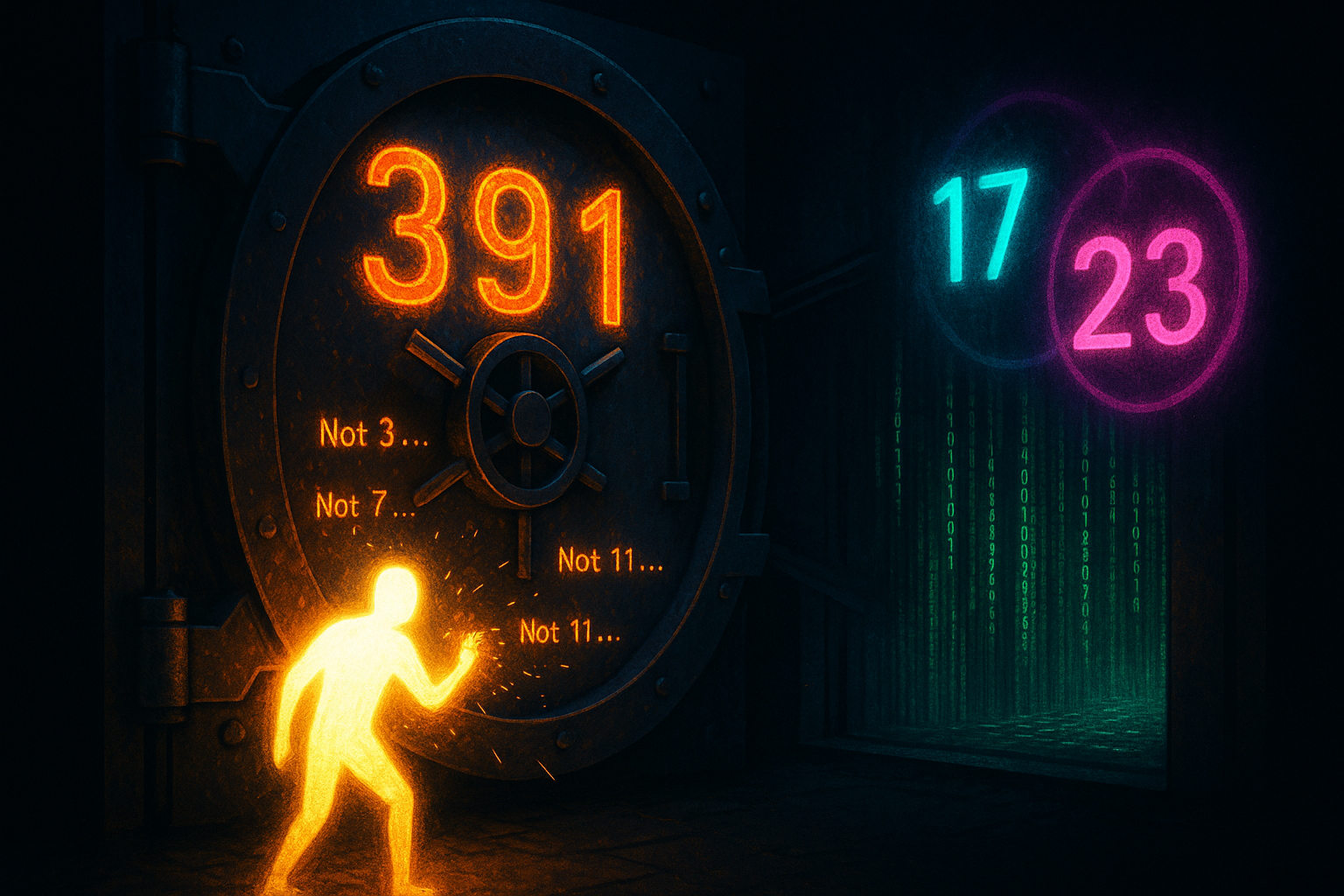
RSA encryption—the backbone of internet security—works because factoring large numbers is hard. Multiplying two 100-digit primes takes milliseconds. Factoring the result back into those primes would take longer than the age of the universe.
The "useless" theory became critical infrastructure. The queen found a kingdom.
What This Series Covers
The Building Blocks:
- What Is Number Theory? — The queen of mathematics
- Prime Numbers — The atoms of arithmetic
- The Fundamental Theorem of Arithmetic — Why every number has a unique prime fingerprint
The Operations:
- Divisibility Rules — Patterns hiding in the digits
- Greatest Common Divisor — What numbers share
- Least Common Multiple — When cycles synchronize
The Deep Structure:
- Modular Arithmetic — Clock math and the mathematics of remainders
- Congruences — When different numbers are secretly the same
- Fermat's Little Theorem — The shortcut that powers cryptography
The Applications:
- Cryptography — How number theory protects your secrets
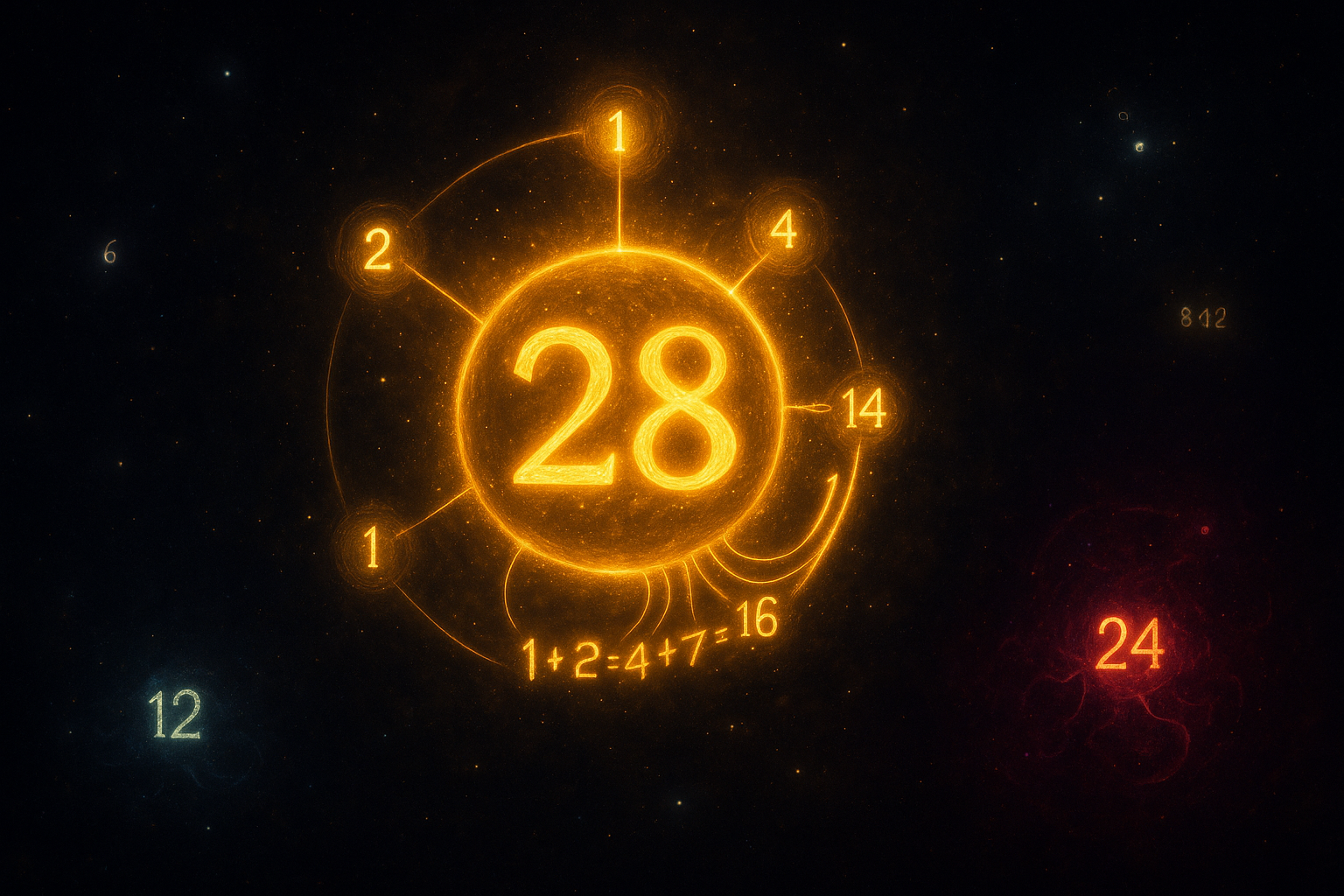
- Perfect Numbers — Numbers that equal the sum of their parts
- Synthesis — The infinite structure hiding in integers
The Obsession
Number theorists have a reputation. Hardy called number theory "the purest of the pure" because it seemed to have no applications. Ramanujan saw patterns in numbers that still haven't been fully explained. Erdős published more papers on number theory than anyone in history, living out of a suitcase, showing up at mathematicians' doors saying "my brain is open."
There's something about integers that captures people. Maybe it's because they're the first mathematics we learn, and we spend the rest of our lives discovering we never understood them at all.
This is the hub page for the Number Theory series, exploring the hidden structure of whole numbers and their patterns.
The Series

Comments ()