Your Opinions Aren't Yours: They're Infections
You didn't reason your way to most of your opinions — you caught them. Research in social contagion shows that beliefs spread through networks via exposure and reinforcement, following epidemiological patterns that have nothing to do with logic or evidence.
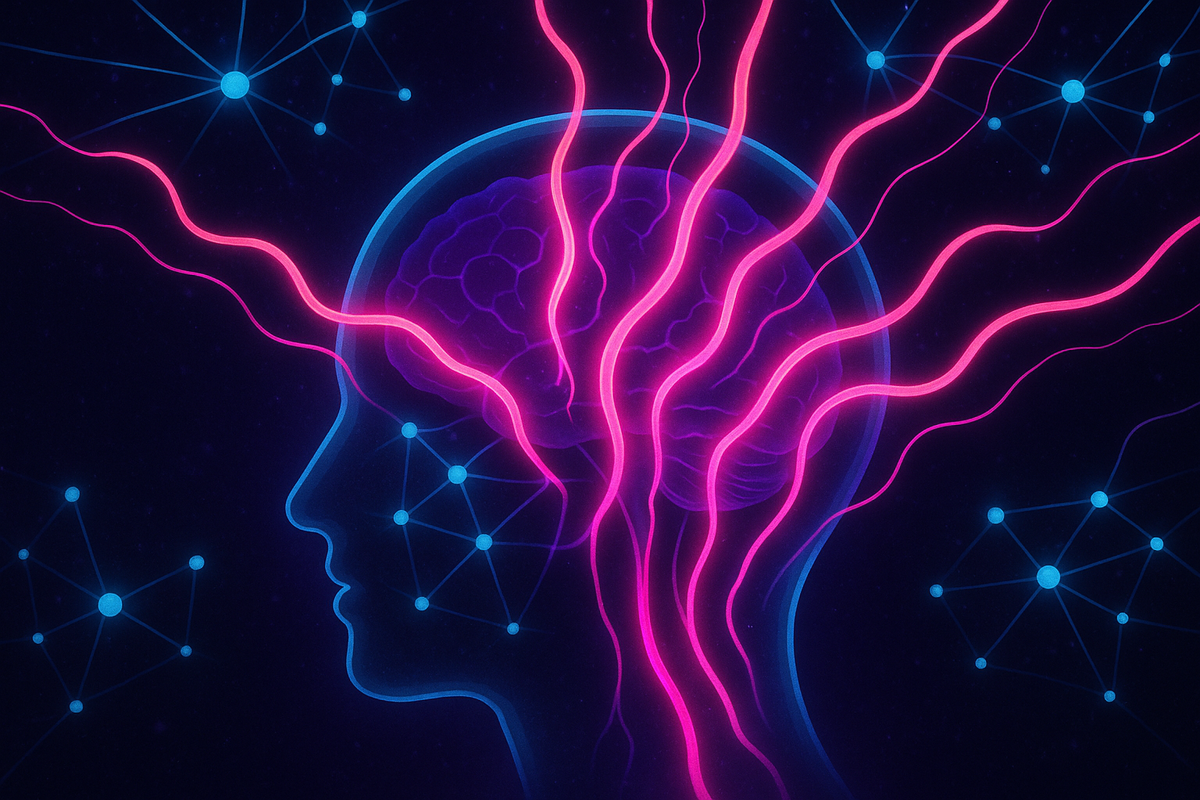
Your Opinions Aren't Yours: They're Infections
In 2012, Facebook ran an experiment on 689,003 users without telling them. For one week, the company manipulated what appeared in people's News Feeds. Some users saw fewer positive posts from their friends. Others saw fewer negative posts. Then Facebook measured what those users posted themselves.
The results were unambiguous: people who saw more negative content posted more negative content. People who saw more positive content posted more positive. Emotions were contagious—spreading through the network like a virus, jumping from person to person through nothing more than exposure to words on a screen.
The study caused an uproar about ethics and consent. But the finding itself wasn't controversial among researchers. They'd known for years that emotions spread through networks. What surprised them was the scale. What surprised them was how little exposure it took. What surprised them was that it worked even when the "contact" was purely digital, stripped of facial expressions, tone of voice, physical presence.
Your feelings are not entirely yours. They're partly inherited from your network.
This is the starting point for understanding social contagion—and it goes far beyond emotions. Your political opinions, your health behaviors, your likelihood of getting divorced, your career choices, your very sense of what's normal and what's possible—all of these spread through networks in ways that look remarkably like disease transmission.
I'm going to show you the research. It's going to change how you think about free will, influence, and the boundaries of the self.
The Framingham Heart Study Accident
The science of social contagion emerged from an accident.
The Framingham Heart Study is one of the longest-running medical studies in history. Since 1948, researchers have tracked the health of residents of Framingham, Massachusetts—originally to understand cardiovascular disease. They collected data on everything: weight, blood pressure, cholesterol, smoking, exercise. And crucially, they tracked social connections. Each participant was asked to name a close friend who could help researchers stay in contact if they moved.
In 2007, Nicholas Christakis and James Fowler realized they were sitting on a goldmine. The Framingham data didn't just track individual health—it tracked a social network over decades. They could see who was friends with whom, and how health outcomes spread through that network over time.
What they found was startling.
Obesity spread through the network like a contagion. If your friend became obese, your own risk of obesity increased by 57%. If your friend's friend became obese—someone you might not even know—your risk still increased by 20%. The effect extended to three degrees of separation.
This wasn't just correlation. Christakis and Fowler controlled for shared environments, for the tendency of similar people to become friends, for every confound they could think of. The effect persisted. Something was actually spreading through the network.
But here's the part that made epidemiologists pay attention: the spread followed network structure, not geography. Your next-door neighbor's weight had no effect on yours. Your friend across the country did. The connections weren't physical. They were social. The network topology mattered more than physical proximity.
What Spreads and How
The Framingham data revealed contagion effects for:
Obesity. Your friend becoming obese increases your risk by 57%. Your friend's friend: 20%. Three degrees out: still measurable.
Smoking cessation. When someone quit smoking, it triggered cascades of quitting through their network. Entire clusters would quit together—not because of shared interventions, but because the behavior spread.
Happiness. This was the most surprising. A happy friend increases your probability of being happy by 25%. A happy friend of a friend: 10%. Happy three degrees out: 6%. The spread of happiness through networks was as robust as the spread of obesity.
Divorce. Your friend getting divorced increases your own divorce probability by 75%. Your friend's friend: 33%. The "social contagion of divorce" was real and measurable.
Loneliness. Lonely people made their friends lonelier. Those friends made their friends lonelier. Loneliness spread—and crucially, it spread to the edge of the network and then got expelled. Lonely people were pushed to the periphery, where their contagion effects were contained.
The pattern was always the same: three degrees of influence, declining with distance, following social topology rather than geography.
Christakis and Fowler called this the "three degrees of influence rule." Your friends affect you. Your friends' friends affect you. Your friends' friends' friends affect you. Beyond that, the signal fades into noise. But within those three degrees, you're connected to a thousand people whose states are shaping yours.
The Infection Model
Here's what makes social contagion so unsettling: it works more like disease transmission than like persuasion.
When you catch the flu, you don't decide to get sick. You don't weigh arguments about whether fever is a good idea. You're exposed, you're infected, you manifest symptoms. The process happens beneath the level of conscious decision-making.
Social contagion is similar. You don't decide to become happier because your friend is happy. You don't consciously choose to gain weight because your social circle gained weight. You don't reason your way to loneliness because your friends are lonely. You're exposed, and you change.
The mechanisms aren't fully understood, but researchers have identified several:
Normative influence. What your network does becomes your sense of what's normal. If everyone around you smokes, smoking seems normal. If everyone around you runs marathons, sedentary life seems deviant. You don't think about it—you absorb it.
Emotional contagion. Humans automatically mimic the emotional expressions of people around them. This happens in milliseconds, beneath conscious awareness. Your face starts to match your friend's face. Your physiology follows your face. Your mood follows your physiology. You literally catch feelings.
Information cascade. When you see others making choices, you update your beliefs about what's true and good. If everyone's buying Bitcoin, maybe they know something you don't. If everyone's worried about crime, maybe crime really is getting worse. You infer from behavior, and you often infer wrong.
Network externalities. Some behaviors become more valuable when others adopt them. Speaking English is more useful when more people speak English. Using Facebook is more useful when more people use Facebook. The spread creates its own momentum.
None of these mechanisms require you to be persuaded. They don't require arguments or evidence. They just require exposure. You're not convinced. You're infected.
The Network Is the Message
This is where it gets interesting for anyone trying to understand why people believe what they believe.
The traditional model of opinion formation assumes autonomous agents weighing evidence and reaching conclusions. Maybe they're influenced by charismatic leaders or compelling arguments, but the basic unit is the individual mind processing information.
Network contagion suggests something different. The structure of your network constrains what beliefs you're likely to hold. Not because the network forces you, but because you're continuously exposed to the beliefs of the people you're connected to, and that exposure shapes your own beliefs through mechanisms you can't see and didn't choose.
Your political opinions aren't the product of careful reasoning about policy. They're heavily predicted by the political opinions of your social network. You think they're yours because you can construct arguments for them. But the arguments came after the opinions. The opinions came from exposure.
This isn't cynicism. It's empirical. Studies of political attitude change consistently find that people adopt the positions of their social networks, then construct justifications. The reasoning follows the belief. The belief follows the network.
The medium isn't just the message. The network is the message.
The Three Degrees Rule and Its Limits
Why three degrees? Why does influence decay after friends of friends of friends?
Christakis and Fowler proposed several mechanisms. One is simple signal degradation—like a game of telephone, the message gets corrupted with each transmission. Your friend's happiness affects you strongly, but the signal of their friend's happiness is filtered through your friend's behavior, attenuated and distorted.
Another is the limits of social ties. The average person has about 150 meaningful social connections—Dunbar's number. Your friend's friend's friend is likely someone you don't know at all. At four degrees of separation, you're dealing with strangers, and the social channel closes.
But there's a deeper point. Three degrees of influence means you're connected to about a thousand people whose emotional and behavioral states are actively shaping yours. You know maybe 150 of them. The other 850 are shadows—people whose existence you're barely aware of, whose happiness is nonetheless nudging your happiness, whose beliefs are seeping into your beliefs through intermediaries.
This is the hidden network. The people you've never met who are nonetheless part of the system that shapes you.
The Speed Problem
Here's what the Framingham data couldn't show: how fast does contagion spread?
The study tracked changes over years. It could detect that obesity spread through networks, but it couldn't clock the transmission in real-time. The Facebook emotional contagion study changed that. One week. Measurable effects. The infection happened fast.
And Facebook was 2012. Since then, the networks have accelerated further. Twitter arguments spread in minutes. TikTok trends spread in hours. The same contagion dynamics that operated across years in Framingham now operate across news cycles.
The human brain evolved for village-scale networks with glacial change rates. We're now embedded in global networks with viral dynamics. Our psychological immune systems—the mechanisms that might have provided some resistance to social contagion—can't keep up.
When a belief or emotion spreads through a network faster than people can consciously evaluate it, you get the conditions for mass hysteria. Not because people are stupid. Because the infection rate exceeds the resistance rate. The network overwhelms individual judgment.
This is why understanding contagion dynamics matters now more than ever. The networks are faster, denser, and more pervasive than anything humans have experienced. The contagion is accelerating.
Why This Should Terrify You (And Then Liberate You)
The terror is obvious. If your beliefs are largely products of your network, what happens to concepts like authenticity, autonomy, personal responsibility? If your happiness is 25% determined by whether your friend is happy, are you even a separate person?
The liberation is subtler but real.
First: you can choose your network. Not completely—some connections are given—but substantially. The people you follow on social media, the communities you join, the friends you invest in. If networks shape beliefs and emotions, then choosing your network is choosing your future self.
Second: understanding the mechanism gives you some immunity. When you feel a sudden strong opinion about something you haven't thought about, you can ask: where did this come from? Who in my network believes this? Am I thinking, or am I catching?
Third: if contagion works, positive contagion works too. The same dynamics that spread obesity spread healthy behavior. The same dynamics that spread polarization spread tolerance. The same dynamics that spread loneliness spread connection. The networks are neutral. What spreads through them is not inevitable.
This is why this series matters. Social media has made us more networked than any humans in history. The contagion dynamics that used to operate over years now operate over hours. Understanding how beliefs and behaviors spread through networks isn't academic—it's survival.
What's Coming
Over the next seven articles, we're going to dissect the science of network contagion:
Christakis and Fowler's research in depth—how they measured social contagion and what they found about the structure of influence.
Simple versus complex contagions—Damon Centola's crucial insight about why some things spread through weak ties and others require reinforcement.
Emotional contagion—the mechanisms by which moods spread, from mimicry to the Facebook study to mass psychogenic illness.
Information cascades—how everyone comes to believe the same thing even when the evidence is weak, and why cascades are fragile.
Network topology—small-world networks, scale-free networks, and how the shape of the network determines what can spread.
R0 for ideas—applying epidemiological models to belief spread, and what that tells us about which ideas are contagious.
Synthesis—how to engineer what spreads, from public health campaigns to viral marketing to social movements.
By the end, you'll never look at your opinions the same way again. You'll see the network behind the beliefs. You'll understand that the battle for minds is a battle over network structure, not just over arguments.
And you'll have tools to think about what you want to spread—and what you want to resist catching.
The Question That Changes Everything
Here's what I want you to carry forward through this series:
When you encounter a strongly held belief—in yourself or others—ask: What network is this belief optimized for?
Not "is this belief true?" That question assumes beliefs are adopted based on truth-tracking. They're often not. The better question is: What social environment would make this belief advantageous to hold? What network structure would spread it?
Beliefs that spread through networks are beliefs that serve network functions. Tribal markers that signal group membership. Emotional contagions that create solidarity. Information cascades that coordinate behavior. The content of the belief matters less than its network fitness.
This doesn't mean all beliefs are equally false. Some beliefs spread because they're true and useful. But many beliefs spread because they're contagious—because they have the right emotional valence, the right social signaling value, the right memetic structure to propagate.
Once you see this, you can't unsee it. Every opinion piece, every trending topic, every viral post—you'll see the network behind it. You'll see the contagion dynamics. You'll see what's spreading and why.
That's what this series is for. Not to make you cynical about beliefs. To make you literate in the networks that carry them.
Further Reading
- Christakis, N. A., & Fowler, J. H. (2009). Connected: The Surprising Power of Our Social Networks and How They Shape Our Lives. Little, Brown. - Kramer, A. D., Guillory, J. E., & Hancock, J. T. (2014). "Experimental evidence of massive-scale emotional contagion through social networks." PNAS. - Centola, D. (2018). How Behavior Spreads: The Science of Complex Contagions. Princeton University Press.
This is Part 1 of the Network Contagion series. Next: "[Nicholas Christakis: Connected](/christakis-connected-networks/)"
Comments ()