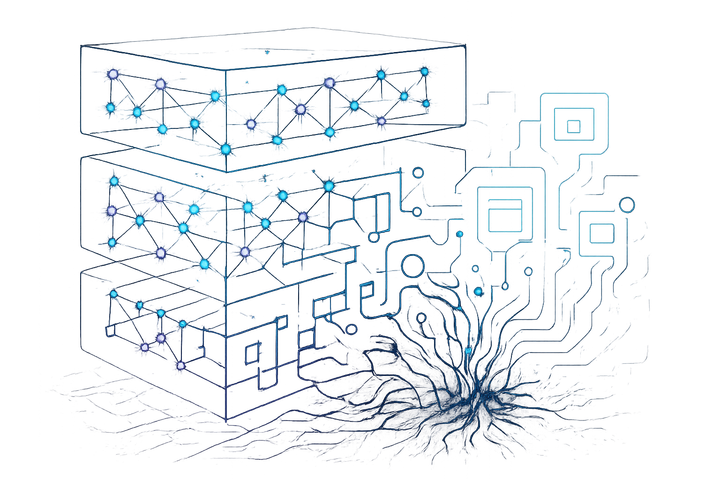
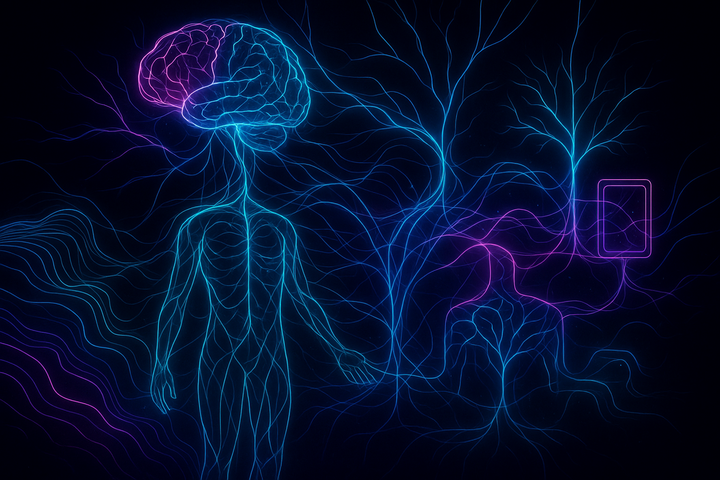
Mechanistic Interpretability Neural networks are black boxes — until you crack them open circuit by circuit. Mechanistic interpretability is the science of reverse-engineering what AI systems actually compute, one feature at a time.
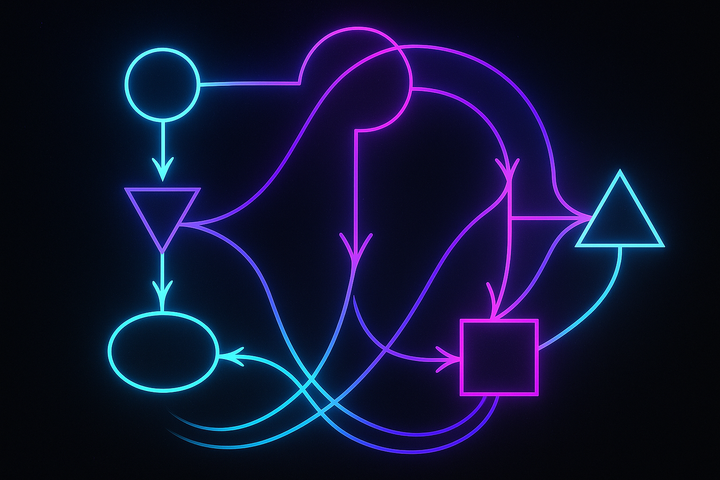
Applied Category Theory Category theory was dismissed as 'abstract nonsense' for decades. Now it's being applied to neural networks, quantum mechanics, database design, and natural language. The abstraction wasn't the problem — we just hadn't found enough things it applied to.
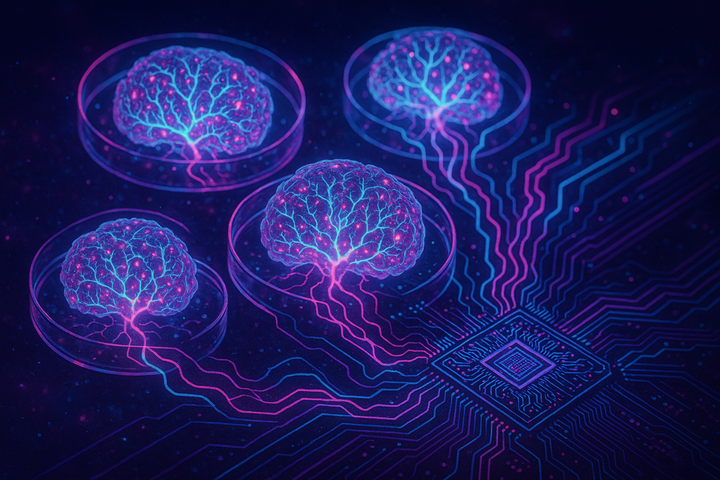
Organoid Intelligence Lab-grown human brain organoids learned to play Pong faster and with less energy than silicon-based AI. Organoid intelligence isn't science fiction—it's raising real questions about biological substrates, consciousness, and what 'learning' actually means.
Basal Cognition Michael Levin's work on bioelectric fields suggests that single cells solve spatial problems and make decisions—without any neurons. Cognition, it turns out, may predate the brain by hundreds of millions of years.
Autopoiesis and Second-Order Cybernetics What makes a cell alive but a flame not? Maturana and Varela's autopoiesis gives a rigorous answer: living systems are self-producing. This idea became the foundation for coherence science and embodied cognition.
4E Cognition 4E cognition argues that thinking is not just computation inside a skull. Minds are embodied in biology, embedded in environment, enacted through interaction, and extended into tools and artifacts — and that changes everything.
The Free Energy Principle Karl Friston's Free Energy Principle proposes that any self-organizing system — a cell, a brain, a person — must minimize the gap between its predictions and reality. Survival is, at bottom, approximate inference.