Platform as Ecology: How Algorithms Shape Mythic Evolution
Darwin's finches evolved different beaks to fit different niches. Memes evolve different structures to fit different platforms. The algorithm isn't neutral distribution — it's an evolutionary pressure that determines which stories survive.
Platform as Ecology: How Algorithms Shape Mythic Evolution
Series: Digital Folklore | Part: 3 of 10
Finches on the Galápagos Islands evolved different beak shapes because each island had different food sources. Same ancestor, different selection pressures, divergent evolution.
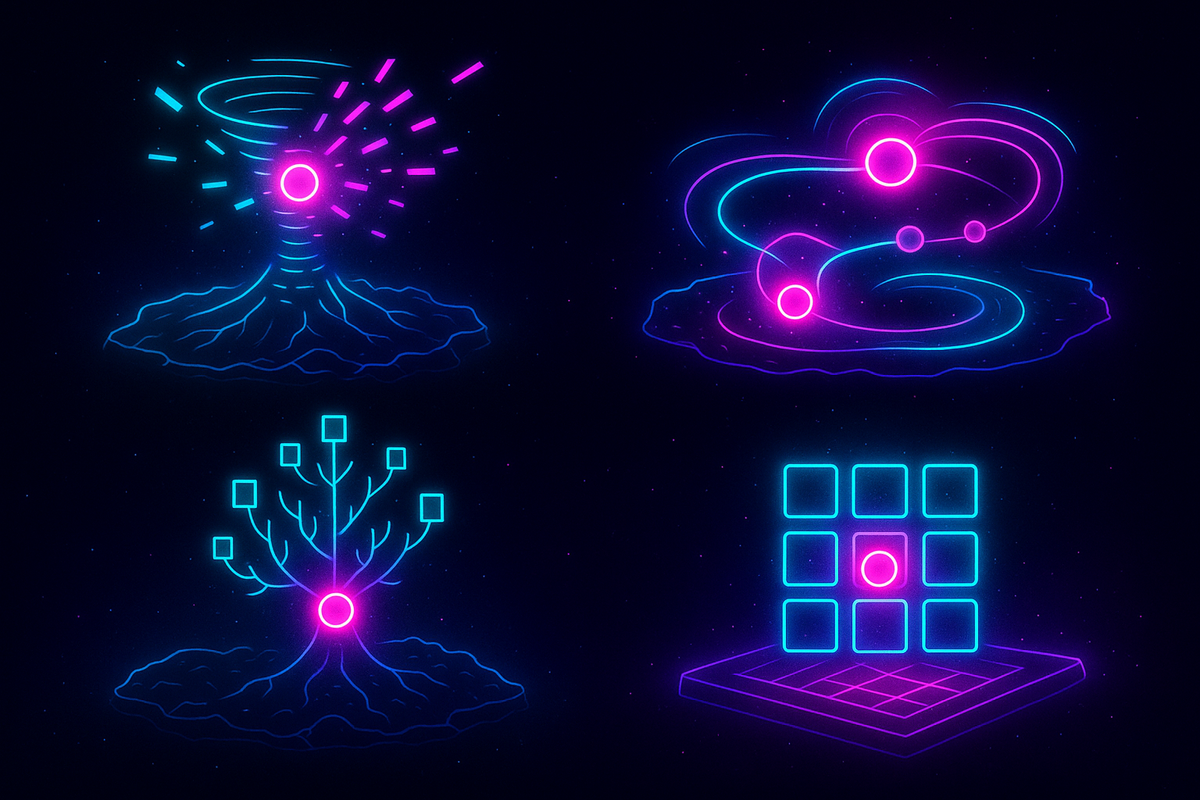
Twitter, TikTok, Reddit, Instagram are digital islands. Same underlying cognitive machinery, different algorithmic pressures, divergent memetic evolution. The myths that thrive on Twitter don't survive on TikTok. The folklore of Reddit would die on Instagram. Each platform is a distinct selection environment, breeding content optimized for its particular constraints.
Understanding platform ecology isn't optional knowledge for the digitally curious—it's essential literacy for anyone trying to navigate contemporary culture. Because the platform doesn't just carry the message. It shapes what messages are possible.
The Algorithmic Bottleneck
In oral cultures, myths spread person-to-person. The selection pressure was straightforward: does this story make people want to retell it? Does it stick in memory? Does it serve a function worth transmitting?
In digital culture, there's a bottleneck between creation and audience: the algorithm. Content doesn't spread merely because humans find it compelling. It spreads because it satisfies algorithmic criteria—engagement metrics, retention curves, click-through rates, share velocity.
This creates a new selection dynamic. Content evolves to maximize algorithmic fitness, not just human resonance. And different algorithms select for different traits.
The result: platform-specific folklore. Myths that are native to one platform feel alien on another. The structure, pacing, tone, complexity, and emotional register all differ because they evolved under different pressures.
Let's examine the major ecosystems.
Twitter: The Compression Engine
Selection Pressure: Character limit (now 280, originally 140), chronological/algorithmic feed emphasizing recency, quote-tweet and reply dynamics rewarding argumentation.
Mythic Forms That Thrive:
Aphorisms and hot takes. Twitter rewards compression. Complex ideas must be collapsed into punchy statements. Nuance is a liability—it reduces shareability. The platform breeds pithy wisdom and inflammatory oversimplification in equal measure.
Thread culture. Because single tweets are constrained, the "thread" emerged—numbered tweets creating extended argument. This format breeds a specific rhetorical style: hook in the first tweet, buildup through numbered sequence, often a call-to-action or link at the end.
Quote-tweet warfare. The platform architecture makes disagreement visible and central. Mythemes that encode conflict, tribal boundaries, and ideological positioning thrive. "Dunking" becomes a genre. Memes spread through combat.
Main character syndrome. Every day someone becomes the focus of collective attention—usually negative. This creates a mythic pattern: transgression, exposure, pile-on, disappearance. It's a secularized ritual of scapegoating, performed daily.
Why This Happens: Twitter's feed prioritizes engagement. Controversy drives engagement. Emotional intensity drives engagement. Moral outrage drives engagement. The algorithm selects for content that triggers strong reactions, particularly negative ones. The folklore that survives is optimized for polarization.
TikTok: The Attention Arena
Selection Pressure: Algorithm shows content to non-followers based on early retention metrics, "For You" page emphasizing watch time and completion rate, audio-visual format requiring immediate hook.
Mythic Forms That Thrive:
Fifteen-second hooks. If the first three seconds don't grab attention, the video dies. TikTok mythology is ruthlessly optimized for immediate engagement. No slow burns. No context-building. Hook first, context maybe.
Audio-meme coupling. Sounds become templates. A viral audio clip gets remapped onto infinite visual contexts, creating mytheme propagation through audio rather than image. The sound carries the meaning; the visual provides variation.
Duet and stitch culture. TikTok's architecture enables direct response through duet (side-by-side) and stitch (clip and respond). This creates call-and-response patterns, mythic dialogues, and distributed storytelling.
Algorithmic mysticism. Because the algorithm is opaque and seemingly arbitrary, folk theories emerge about what makes content go viral. Creators develop superstitious practices—specific posting times, engagement rituals, belief in algorithmic favor or disfavor.
Trend cycles. Trends on TikTok emerge and die within days. The platform selects for novelty and rapid iteration. Yesterday's format is already stale. This creates a churn rate where only the most adaptive creators survive.
Why This Happens: TikTok's algorithm optimizes for one thing: keeping you watching. It doesn't care about follower relationships or social graph. It cares about retention. Content that hooks fast, holds attention, and triggers completion or multiple views wins. The result is hyper-compressed, emotionally intense, algorithmically legible content.
Reddit: The Nested Consensus Machine
Selection Pressure: Subreddit structure creating distinct subcultures, upvote/downvote system rewarding in-group consensus, comment threading enabling extended discussion.
Mythic Forms That Thrive:
Long-form text. Unlike Twitter and TikTok, Reddit rewards depth. Well-researched comments get upvoted. Detailed explanations succeed. The platform's structure supports nuance in ways that feed-based platforms don't.
In-group signaling. Each subreddit develops its own mythology, references, inside jokes, and norms. Content succeeds by demonstrating fluency in the local culture. Cross-posting the same content to different subreddits often fails because local context matters.
Copypasta and recurring references. Reddit loves formulaic responses. "And my axe!" "I also choose this guy's wife." These phrases become ritualized responses, folkloric callbacks that signal belonging.
AMA culture. The "Ask Me Anything" format creates a specific mythic structure: the expert/celebrity offers knowledge, the community asks questions, hierarchical structure emerges through upvoting. It's a democratized oracle.
Moderation as priesthood. Subreddit moderators function as gatekeepers, establishing and enforcing community norms. This creates distinct cultural islands with their own mythologies and taboos.
Why This Happens: Reddit's upvote system rewards content that the existing community endorses. This creates conformity pressure and cultural coherence within subreddits, but also insularity. The mythology is self-reinforcing—what gets upvoted defines what belongs, which shapes what gets posted.
Instagram: The Aesthetic Curation Platform
Selection Pressure: Visual-first format, algorithmic feed prioritizing aesthetically coherent profiles, story ephemera vs. permanent grid, influencer economy.
Mythic Forms That Thrive:
Visual coherence. Instagram rewards curated aesthetics. Your grid should have a "vibe." This creates pressure toward visual homogeneity and brand consistency. Mythology becomes aesthetic—lifestyle narratives told through curated imagery.
Aspirational narratives. The platform breeds myths of success, beauty, travel, productivity. The folklore is overwhelmingly positive (or performatively positive), because negativity disrupts aesthetic flow.
Story vs. grid mythology. The ephemeral story format enables different content than the permanent grid. Stories can be raw, unpolished, authentic. The grid must be curated. This dual structure creates split mythologies—the polished public narrative and the "real" behind-the-scenes.
Influencer archetypes. Instagram breeds specific character types: the wellness guru, the fitness transformer, the travel wanderer, the aesthetic minimalist. These become mythic templates that creators inhabit.
Why This Happens: Instagram's algorithm prioritizes visual appeal and engagement, but within the context of a follower-based system that rewards brand building. The mythology that emerges is aspirational, aesthetic, and curated—because that's what the platform's structure incentivizes.
Cross-Platform Mythology
Here's where it gets interesting: the same mytheme behaves differently across platforms.
Consider a political argument:
- Twitter: Compressed into a hot take, triggers quote-tweet combat, spreads through outrage
- TikTok: Performed as a 60-second monologue with tight editing, emotional intensity, audio hook
- Reddit: Expanded into a researched comment with sources, gets upvoted in sympathetic subreddit, downvoted elsewhere
- Instagram: Might not spread at all, or gets reframed as aesthetic activism (protest imagery, social justice graphics)
Same underlying argument. Four different mythic forms. Each optimized for its ecosystem.
Or consider a piece of folklore—a urban legend, a conspiracy theory, a moral panic:
- Twitter: Spreads as viral thread, fragments into competing interpretations, becomes tribal marker
- TikTok: Gets dramatized, remixed with horror aesthetics, spawns duet reactions
- Reddit: Gets debunked or amplified depending on subreddit, long-form investigation in r/UnresolvedMysteries
- Instagram: Becomes aesthetic content (creepy image posts, story series)
The folklore is the same. The expression is radically different.
The Evolutionary Pressure
What this means: platforms aren't neutral carriers of culture. They're evolutionary environments that shape what culture looks like.
Content creators adapt to platform constraints. Successful formats get copied. Unsuccessful ones die. Over time, each platform develops a distinct memetic ecosystem with its own:
- Selection pressures (what the algorithm rewards)
- Dominant forms (what formats succeed)
- Cultural norms (what the community expects)
- Mythic archetypes (what narratives recur)
And users who move between platforms often experience whiplash. What makes sense on TikTok feels cringe on Reddit. What's nuanced discussion on Reddit is too long for Twitter. What's aesthetically coherent on Instagram feels performative on TikTok.
You're not imagining it. You're experiencing cross-ecosystem incompatibility. Different selection pressures breed different forms.
The Monopoly Problem
Here's the concerning part: a small number of platforms control most digital folklore. Twitter, TikTok, Instagram, YouTube, Reddit—maybe a dozen platforms—mediate the majority of contemporary myth-making.
This creates:
Algorithmic monoculture risk. If a few algorithms determine what spreads, they determine what mythology survives. And those algorithms optimize for engagement, not coherence, truth, or human flourishing.
Platform dependency. When a platform dies or changes its algorithm (RIP Vine, Tumblr post-NSFW ban, Twitter post-Musk), entire folkloric ecosystems collapse. Cultural memory gets lost.
Narrative homogenization. Despite surface diversity, platform constraints create underlying uniformity. TikTok content all feels like TikTok content. Twitter discourse all feels like Twitter discourse. The grammar of possibility narrows.
Corporate control of mythology. Platforms are owned by companies optimizing for profit. They shape the selection environment to maximize engagement and ad revenue. This makes contemporary myth-making subject to corporate interests in ways traditional folklore never was.
Conscious Navigation
Understanding platform ecology enables strategic participation:
Know the environment. What does this platform select for? What forms thrive here? What's the algorithmic pressure?
Recognize platform-specific mythology. Don't mistake the form for the content. The hot take isn't the idea—it's the idea compressed to fit Twitter's constraints.
Cross-platform translation. The same message may need radically different forms for different platforms. Not because you're being inconsistent, but because you're adapting to different ecosystems.
Resist monoculture. Engaging with multiple platforms, decentralized spaces, and non-algorithmic media creates healthier memetic diversity.
And most importantly: remember that the platform shapes the mythology. The outrage you feel on Twitter might not reflect reality—it might reflect what Twitter's algorithm surfaces. The aspiration you feel on Instagram might be manufactured by the platform's aesthetic pressures. The urgency you feel on TikTok might be the product of retention optimization.
The myths are real. The emotions are real. But the selection environment is artificial, designed to maximize engagement, not truth or coherence.
In the next article, we'll explore how fandoms function as distributed ritual systems—creating collective coherence through shared mythology, interpretive traditions, and participatory practices. They're doing what religions have always done, but through different infrastructure.
This is Part 3 of the Digital Folklore series, exploring memes, fandoms, and world-building as contemporary mythology.
Previous: The Meme as Mytheme: Units of Cultural Transmission Then and Now
Next: Fandom as Distributed Ritual: How Participatory Culture Creates Collective Coherence
Further Reading
- Gillespie, T. (2018). Custodians of the Internet: Platforms, Content Moderation, and the Hidden Decisions That Shape Social Media. Yale University Press.
- Bucher, T. (2018). If...Then: Algorithmic Power and Politics. Oxford University Press.
- Tufekci, Z. (2017). Twitter and Tear Gas: The Power and Fragility of Networked Protest. Yale University Press.
Comments ()