Polyvagal Embodiment
Your nervous system isn't a single system — it's three evolutionary layers stacked together. Freeze is oldest, fight-or-flight came next, social engagement is newest. Polyvagal theory maps how these layers interact, why trauma hijacks older circuits, and what it takes for a body to feel safe.
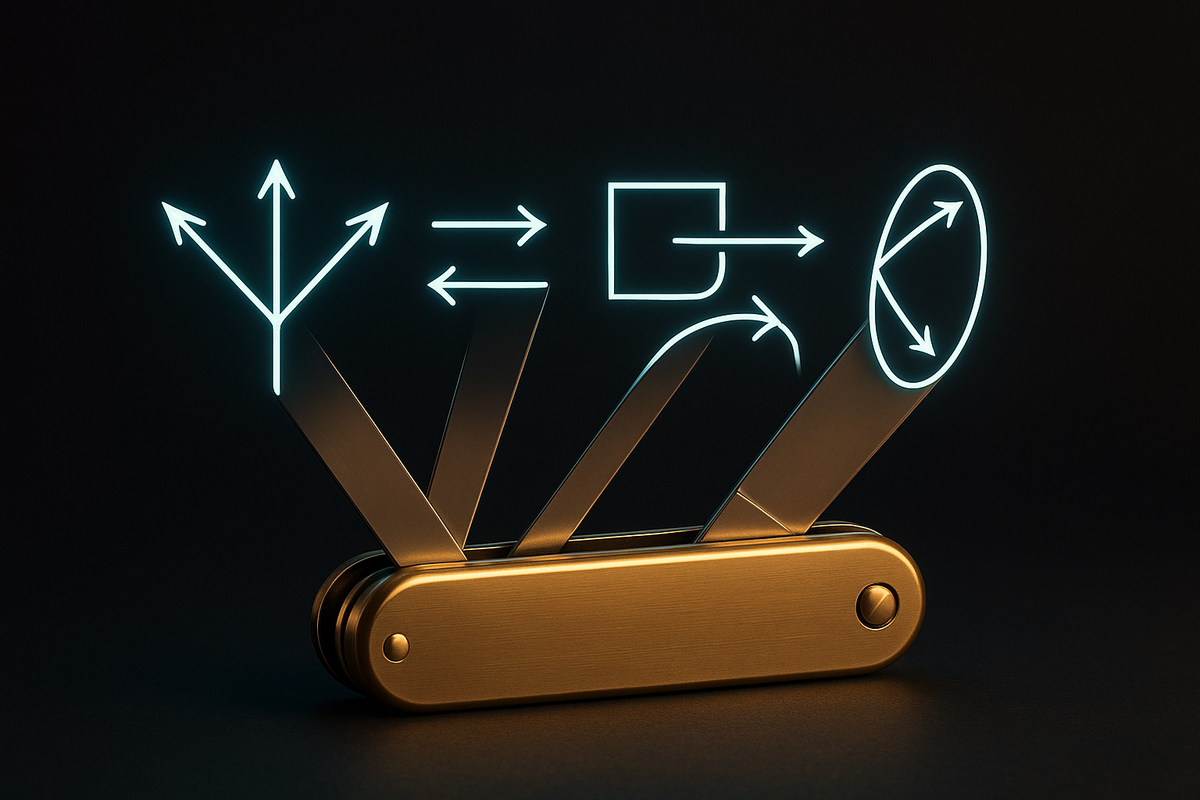
Your nervous system is running ancient code. Three layers of autonomic response—freeze, fight-or-flight, and social engagement—stack on top of each other, each one a different era's solution to the problem of staying alive. Stephen Porges calls this the polyvagal hierarchy, and it changes everything about how we understand stress, connection, trauma, and healing.
This isn't psychology. It's evolutionary physiology. Your vagus nerve—the "wandering nerve" that connects brain to gut to heart—carries the signatures of 500 million years of survival strategies. Understanding how these systems interact isn't just intellectually interesting. It's the key to understanding why you can't think your way out of threat, why co-regulation isn't optional, and why modern life keeps triggering circuits designed for environments that no longer exist.
Why This Matters for Coherence
Coherence isn't just a cognitive phenomenon. It's embodied. Your heart rate variability, your respiratory patterns, your vagal tone—these are measurable signatures of how well your nervous system is maintaining coherent oscillation. When coherence breaks down, it breaks down in your body first.
Polyvagal theory provides the biological substrate for understanding coherence at the organismal level. It explains why certain interventions work (breathwork, co-regulation, somatic therapy) and why others fail (pure cognitive reframing when you're in dorsal vagal shutdown). It's the bridge between abstract theory and lived nervous system experience.
What This Series Covers
This series translates polyvagal theory into coherence geometry, showing how autonomic states are patterns of oscillatory organization. We'll examine:
- The three-layered autonomic hierarchy and its evolutionary logic
- Why cognition goes offline under threat
- Heart rate variability as a measurable coherence proxy
- Interoception and when body signals become noise
- The breath-heart coupling that gives you manual override
- Cross-frequency coupling and the stack of biological rhythms
- Trauma as oscillatory pattern, not just memory
- The three failure modes: lock, collapse, and chaotic oscillation
- Why you can't simply "go back" (hysteresis in nervous systems)
- Somatic therapies as rhythm repair
- Co-regulation as nervous system coupling
- Modern life as systematic coherence disruptor
Articles in This Series

Comments ()