Precognition: Can We Know the Future?
Daryl Bem ran nine experiments that appeared to show people responding to stimuli before they appeared. The paper passed peer review at a top journal. Then the replication attempts began — and the story got complicated in the best possible way.
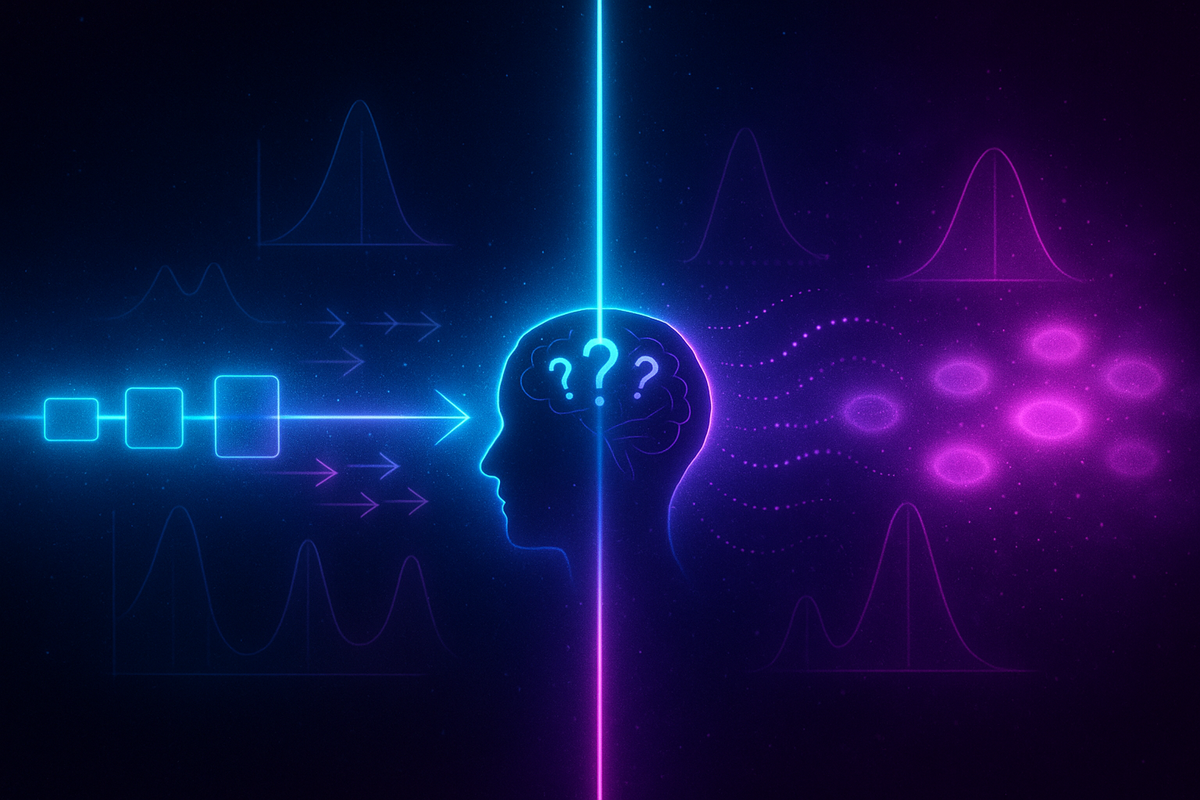
Precognition: Can We Know the Future?
Series: Anomalous Cognition | Part: 2 of 9 Primary Tag: FRONTIER SCIENCE Keywords: precognition, Daryl Bem, presentiment, replication crisis, psi research
In 2011, a distinguished social psychologist published a paper claiming to demonstrate precognition—the ability to know events before they happen.
Daryl Bem's paper, "Feeling the Future," appeared in a mainstream psychology journal. It reported nine experiments, eight of which found statistically significant evidence that people could be influenced by events that hadn't happened yet.
The paper wasn't in a fringe journal. It wasn't by an unknown researcher. It was peer-reviewed, methodologically conventional, and used standard statistical techniques. And it claimed to overturn our understanding of time and causation.
The reaction was explosive. And the aftermath became a pivotal moment in psychology's replication crisis.
Bem's Experiments
Bem's approach was clever: he took well-established psychological phenomena and ran them backward in time.
Experiment 1 (Precognitive Detection of Erotic Stimuli): Participants tried to guess which of two curtains hid a picture. The picture's position was determined randomly after the guess. For erotic images, hit rates were slightly but significantly above chance. For neutral images, they weren't.
Experiment 8 (Retroactive Facilitation of Recall): Participants studied a list of words, were tested, and then practiced a subset of words. Bem found that participants performed better on the post-test for words they would practice later—as if future practice influenced past recall.
Experiment 9 (Retroactive Habituation): Bem took a standard habituation paradigm and reversed it, finding evidence that participants habituated to images they would see in the future.
The effects were small—around 53% where chance would predict 50%—but across eight experiments, the statistical significance was clear. By conventional standards, this was evidence for precognition.
The Statistical Problem
Bem used standard frequentist statistics. His results reached the conventional threshold (p < .05) for significance. By the rules psychologists had been using for decades, he had demonstrated his effect.
But those rules were already under scrutiny.
The problem of optional stopping: Bem collected data until he reached significance, then stopped. This is legitimate under some interpretations but inflates false positive rates.
The garden of forking paths: There are many ways to analyze data—different measures, different exclusion criteria, different statistical tests. If you try enough paths, you'll find significance by chance.
Publication bias: Bem reported his positive results. Were there negative studies in his file drawer? He says no, but we can't verify.
Low prior probability: If the prior probability of precognition is very low (as physics suggests), then even statistically significant results are likely to be false positives. This is Bayesian reasoning that frequentist statistics doesn't capture.
Bem's paper became a case study in why psychology needed reform. If standard methods could "prove" precognition, something was wrong with standard methods.
The Replication Attempts
The scientific response was appropriate: replicate the experiments.
Multiple teams attempted to reproduce Bem's findings:
Ritchie, Wiseman & French (2012): Failed to replicate three of Bem's experiments. Published in PLOS ONE after being rejected by journals that published the original.
Galak et al. (2012): Seven replication attempts across multiple laboratories. No evidence for precognition.
Meta-analyses: Results are mixed. Some find weak overall evidence; others don't. The pattern is consistent with publication bias, experimenter effects, or a genuine but unreliable phenomenon.
The replication failures don't definitively refute Bem. Maybe the effect exists but is fragile—sensitive to experimenter belief, participant characteristics, or unknown factors. Proponents argue that psi effects have always been hard to replicate.
But they seriously weaken the case. If precognition is real, it should replicate in properly conducted studies. The fact that it mostly doesn't suggests the original findings were artifacts.
Presentiment Research
A different line of precognition research studies presentiment—physiological responses to future stimuli.
The protocol: show participants a series of images, some calm and some emotionally arousing (violent, erotic, disturbing). Monitor their physiological responses (skin conductance, heart rate, pupil dilation) before each image appears.
The claim: participants show stronger physiological arousal a few seconds before emotional images, even though the image selection is random and occurs after the physiological measurement.
Dean Radin at the Institute of Noetic Sciences has been the main researcher. His meta-analysis reports a small but significant effect.
Critics note: - Effect sizes are tiny - Not all studies replicate - The physiological measures are noisy - Randomization quality varies - Publication bias is likely
The presentiment literature is similar to the ganzfeld telepathy research: a small statistical signal that persists but could be methodological artifact.
The Physics Problem
Precognition faces a challenge that telepathy doesn't: it seems to violate fundamental physics.
Telepathy, if real, would require an unknown information channel. Weird, but not inherently impossible. Maybe there's a field or force we haven't discovered.
Precognition requires backward causation—effects before causes. This isn't just an unknown mechanism; it conflicts with everything we know about time.
Objection: Maybe the future influences the past through some quantum effect we don't understand.
Response: Quantum mechanics does have time-symmetric equations, but it doesn't allow information to travel backward. The randomness of quantum measurements ensures that backward-in-time effects can't be used to send signals.
Objection: Maybe physics is wrong or incomplete.
Response: Maybe. But extraordinary claims require extraordinary evidence, and the precognition evidence is—at best—small statistical anomalies.
The lack of physical mechanism means precognition requires not just new psychology but new physics. The bar for acceptance should be correspondingly high.
What the Evidence Shows
Honestly assessed:
The Bem studies: Probably statistical artifacts, given replication failures and methodological critiques. The original findings are best explained by p-hacking, selective reporting, and problems with frequentist inference that the paper itself helped expose.
Presentiment research: A small effect that persists in meta-analyses but could be explained by publication bias, experimenter effects, or unidentified flaws. Not convincing evidence for precognition.
The overall picture: No reliable, large-effect, independently-replicated evidence for knowing the future before it happens.
This doesn't prove precognition is impossible. It shows that the claimed evidence doesn't meet the standard we should require for such an extraordinary claim.
The Replication Crisis Connection
Bem's paper was a catalyst for psychology's methodological reckoning.
If standard methods could produce evidence for precognition, then either precognition is real or the methods are broken. Most scientists—correctly, I think—concluded the methods were broken.
This spurred: - Pre-registration: Specifying analyses before data collection, preventing p-hacking - Registered reports: Journals committing to publish based on methods, regardless of results - Open data: Making raw data available for verification - Power analysis: Ensuring studies have enough participants to detect real effects
Bem's legacy might be methodological reform more than evidence for psi. His paper exposed problems that needed exposing.
My Position
I don't believe in precognition. The prior probability is too low, the physical mechanisms are impossible, and the evidence is too weak.
But I'm grateful for the research.
It forced psychology to confront its methodological problems. It demonstrated that our statistical tools can mislead us. It showed that peer review and publication in prestigious journals don't guarantee truth.
These lessons apply far beyond psi research. They apply to social psychology, medicine, nutrition, economics—any field that uses statistics to draw conclusions from noisy data.
The precognition debate was a gift, even if precognition itself isn't real.
Further Reading
- Bem, D.J. (2011). "Feeling the future: Experimental evidence for anomalous retroactive influences on cognition and affect." Journal of Personality and Social Psychology. - Ritchie, S.J., Wiseman, R., & French, C.C. (2012). "Failing the future: Three unsuccessful attempts to replicate Bem's 'Retroactive Facilitation of Recall' effect." PLOS ONE. - Wagenmakers, E.-J. et al. (2011). "Why psychologists must change the way they analyze their data." Journal of Personality and Social Psychology. - Radin, D. (2006). Entangled Minds. Paraview. (Pro-psi perspective)
This is Part 2 of the Anomalous Cognition series. Next: "Near-Death Experience: The Neuroscience of Dying."
Comments ()