Quantum Coherence vs Cognitive Coherence: Same Word Different Meanings?
Quantum cognition borrows the word "coherence" from physics, but the meaning shifts. Quantum coherence is about superposition and phase relationships. Cognitive coherence is about whether your beliefs hang together. Mapping the analogy carefully reveals what carries over — and what doesn't.
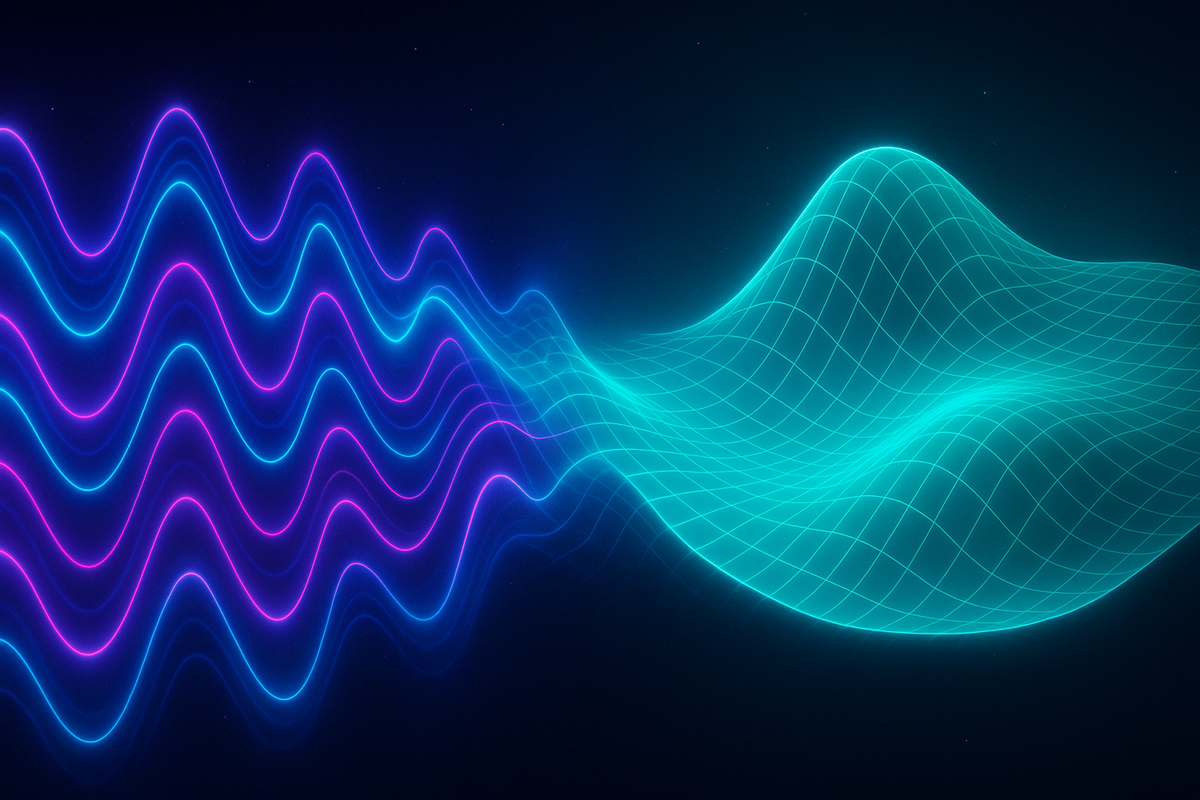
Quantum Coherence vs Cognitive Coherence: Same Word Different Meanings?
Series: Quantum Cognition | Part: 7 of 9
In physics, coherence means phase alignment. In psychology, it means something else entirely. The fact that quantum cognition uses both terms is either deeply confusing or deeply revealing.
This is not a semantic accident. When Jerome Busemeyer and Peter Bruza titled their foundational 2012 book Quantum Models of Cognition and Decision, they inherited a vocabulary problem that continues to generate confusion. Physicists mean one thing by coherence. Cognitive scientists mean another. And when you try to map quantum formalisms onto cognitive phenomena, you're forced to clarify: which kind of coherence are we talking about?
The answer matters. Because if quantum cognition is just borrowing mathematical tools—using Hilbert spaces and probability amplitudes as convenient calculational devices—then "quantum coherence" in cognition is a metaphor. But if there's a deeper relationship, if the mathematics captures something structural about how minds work, then the distinction between quantum coherence and cognitive coherence becomes a productive tension rather than a source of confusion.
This article clarifies the relationship. We'll define both terms precisely, examine what transfers and what doesn't, and show how the AToM framework's notion of coherence (M = C/T) relates to both.
What Quantum Coherence Actually Means
In quantum mechanics, coherence refers to the maintenance of definite phase relationships between components of a quantum state.
A quantum system in superposition exists in multiple states simultaneously—not because we don't know which state it's in, but because it genuinely occupies all of them at once. The coherence of this superposition is what enables interference effects: the ability of probability amplitudes to add and subtract, creating the characteristic patterns that distinguish quantum from classical probability.
Mathematically, a coherent quantum state can be written as:
|ψ⟩ = α|A⟩ + β|B⟩
where α and β are complex-valued amplitudes with definite phase relationships. When we measure this state, the probability of observing outcome A is |α|², and the probability of observing B is |β|². But before measurement, the system is not secretly in one state or the other—it's in both, with the phases of α and β determining how the states interfere.
Decoherence is what happens when this phase relationship is destroyed. When a quantum system interacts with its environment in ways that entangle it with external degrees of freedom, the relative phases randomize. The superposition doesn't "collapse" in a single moment—it gradually smears out into a mixed state that behaves classically. The system still exists in multiple states, but the coherence—the definite phase relationship—is gone.
This is why quantum computers need to be isolated: heat, stray electromagnetic fields, and cosmic rays all cause decoherence, destroying the delicate phase relationships that enable quantum computation.
In summary: quantum coherence = phase alignment in superposition states. Decoherence = loss of phase alignment due to environmental interaction.
What Cognitive Coherence Actually Means
Now consider how the word "coherence" is used in cognitive science, psychology, and neuroscience. It means something completely different.
When we say a person's beliefs are coherent, we mean they fit together logically, without internal contradiction. When we say a narrative is coherent, we mean the events follow a comprehensible sequence. When we say a personality is coherent, we mean the person's behaviors, values, and self-concept align in a recognizable pattern.
This is coherence as integration across parts. It's about relationships, consistency, mutual fit. A system is coherent to the extent that its components reinforce rather than contradict each other.
In the AToM framework, this is formalized as coherence geometry: the curvature of the manifold in state-space that determines how stable a system's trajectory is. High curvature means instability—contradictions, tensions, competing attractors pulling in different directions. Low curvature means smooth flow, integration, predictability. Coherence in this sense is not about phase alignment in a wave function. It's about the geometric structure of how system states relate to each other over time.
Aaron Antonovsky's concept of Sense of Coherence (SOC) captures this well. He defined it as "a global orientation that expresses the extent to which one has a pervasive, enduring though dynamic feeling of confidence that (1) the stimuli from one's internal and external environments are structured, predictable, and explicable; (2) resources are available to meet the demands; (3) these demands are challenges worthy of engagement."
That's cognitive coherence: comprehensibility, manageability, meaningfulness. It has nothing to do with phase relationships between probability amplitudes.
So we have a problem: quantum cognition borrows quantum mathematics, which includes the concept of quantum coherence (phase alignment), and applies it to cognitive phenomena where coherence means something else entirely (integration, consistency, meaning).
Are these two meanings related, or is this just terminological collision?
The Mathematical Overlap: What Actually Transfers
Here's where it gets interesting. When quantum cognition models use Hilbert space formalism, they're not claiming that brains literally maintain quantum superpositions in the physical sense. They're claiming that the mathematical structure of quantum probability better captures cognitive phenomena than classical probability.
The key insight: interference effects in cognition resemble interference effects in quantum mechanics, even if the mechanisms are completely different.
Consider the conjunction fallacy, covered in Part 2 of this series. Linda is described as outspoken, concerned with social justice, and a philosophy major. People rate "Linda is a bank teller and active in the feminist movement" as more probable than "Linda is a bank teller."
This violates classical probability, where P(A ∧ B) ≤ P(A) always. But it makes perfect sense in quantum probability, where the context (the description of Linda) creates an initial state that, when "measured" by the question, produces interference between the bank-teller state and the feminist state.
Busemeyer and Bruza model this as:
P(feminist ∧ teller) = P(feminist) + P(teller) + 2√[P(feminist) × P(teller)] cos θ
The interference term—the cos θ part—allows the conjunction to exceed either component when θ is small. This is mathematically identical to the quantum double-slit experiment, where the probability of hitting a point on the screen includes an interference term from both slits.
But notice: this doesn't require quantum coherence in the physical sense. There's no claim that Linda's mental representation is a literal quantum superposition with phase-coherent probability amplitudes. The claim is weaker and stronger: weaker because it's not about physical mechanism, stronger because it's about mathematical structure.
The structure that transfers is contextuality: the property that joint probability distributions cannot be factored into context-independent marginals. In quantum mechanics, this follows from the Heisenberg uncertainty principle and the non-commutativity of observables. In cognition, it follows from the fact that asking one question changes the state that answers the next question.
This is where quantum coherence and cognitive coherence connect: both involve sensitivity to context and non-separability of components.
In quantum mechanics, coherence means that measuring one part of an entangled system instantly affects another part—not through any physical signal, but because the system is genuinely non-separable. In cognition, coherence (in the AToM sense) means that changing one belief, one emotion, one somatic state ripples through the entire system because the parts are coupled, not independent.
The mathematics of Hilbert spaces captures this non-separability. That's what transfers. Not the physical mechanism of phase alignment, but the relational structure of how components affect each other.
What Doesn't Transfer: Physical Mechanisms
Here's what doesn't transfer from quantum coherence to cognitive coherence: the physical substrate.
Quantum coherence requires isolation. Decoherence happens at scales of nanometers and picoseconds in biological systems. The brain is warm, wet, and noisy—exactly the environment that destroys quantum superpositions. There are speculative proposals about quantum effects in microtubules (Penrose and Hameroff's Orchestrated Objective Reduction theory) or in photosynthesis (where quantum coherence does seem to play a role), but the evidence for functionally relevant quantum coherence in neural computation is, as of 2026, minimal.
This doesn't invalidate quantum cognition models. Because quantum cognition is not a claim about physical mechanism—it's a claim about mathematical structure. The models work at the algorithmic level (in Marr's famous three-level framework: computational, algorithmic, implementational). They describe the structure of cognitive probability, not the neural circuits that implement it.
Classical neural networks, for instance, can exhibit behavior that follows quantum probability rules without any quantum physics. The key is having a high-dimensional state space where context affects measurement outcomes. You don't need actual superposition; you need a rich enough representational space that probing one part changes the rest.
So when we talk about "coherence" in quantum cognition models, we're not talking about phase alignment of neural oscillations (though that's also a thing—see research on gamma-band synchronization and neural coherence). We're talking about the mathematical property that the model uses non-commuting operators and Hilbert space geometry.
The confusion arises because the same word—coherence—appears in three different domains:
- Quantum coherence (physics): Phase alignment in superposition states
- Neural coherence (neuroscience): Synchronized oscillations across brain regions
- Cognitive coherence (psychology/AToM): Integration and consistency across mental states
Quantum cognition borrows from (1) to model (3), without necessarily claiming anything about (2).
The AToM Bridge: Coherence as Geometry
The AToM framework offers a unifying perspective: coherence is a geometric property that can manifest at multiple scales and in multiple substrates.
M = C/T: Meaning equals Coherence over Time (or Tension).
This formula doesn't care whether the coherence is quantum-mechanical, neural-oscillatory, or psychological. It describes a structural property: how well does the system maintain integrated, low-curvature trajectories in its state space?
At the quantum level, decoherence increases curvature—the system's trajectory becomes unpredictable, branching into a statistical mixture rather than following a single path through Hilbert space.
At the neural level, loss of synchronized oscillations increases curvature—brain regions fall out of sync, and the cognitive system fragments.
At the psychological level, contradiction and tension increase curvature—beliefs don't fit together, emotions conflict with actions, and the sense of self becomes unstable.
All three are instances of the same geometric pattern: coherence as the inverse of state-space curvature.
What quantum cognition contributes to this picture is a precise mathematical apparatus for modeling the middle layer—the cognitive/algorithmic level where interference, contextuality, and order effects live. It gives us tools to formalize why asking questions in different orders produces different answers (order effects), why conjunctions can seem more probable than their components (conjunction fallacy), and why seemingly irrational decisions follow lawful patterns when viewed through quantum probability.
The deep insight: these phenomena aren't irrational noise. They're signatures of a different kind of rationality—one where context matters, where questions interfere with each other, and where the whole is genuinely more than the sum of the parts.
That's coherence in the cognitive sense: the system's parts are entangled (in the informal, not strictly quantum-mechanical sense) such that touching one affects all the others. And quantum mathematics gives us a way to model that entanglement rigorously.
When the Metaphor Becomes Structural
So is quantum coherence in cognition a metaphor or a structural isomorphism?
The answer depends on what you mean by "metaphor."
If you mean "quantum cognition claims the brain literally performs quantum computation with phase-coherent superpositions," then no, it's not a metaphor—it's a false claim. The brain almost certainly doesn't work that way.
But if you mean "quantum cognition uses quantum mathematics as a mere analogy, with no deeper connection to the phenomena it describes," then that's also wrong. The mathematics captures real structure. It's not decorative. It predicts phenomena that classical models can't: order effects, conjunction fallacies, violations of the sure-thing principle.
The right way to think about it: quantum cognition is a structural mapping. It identifies isomorphisms between the mathematical structure of quantum probability and the structure of cognitive uncertainty.
The key isomorphism: non-commutativity. In quantum mechanics, measuring position and then momentum gives a different result than measuring momentum and then position. In cognition, asking "Do you think Linda is a feminist?" and then "Do you think she's a bank teller?" gives different joint probabilities than asking in the reverse order.
This isn't because neurons are quantum oscillators. It's because cognitive states are context-dependent, and the order of questions changes the context.
Quantum mathematics is the right tool because it was designed to handle exactly this kind of contextuality. Classical probability assumes that joint distributions can be factored into independent marginals. Quantum probability doesn't. That's what makes it quantum—not the physical substrate, but the relational structure.
In AToM terms, this is coherence as relational integrity: the way components of a system maintain definite relationships to each other even as the system evolves. In quantum mechanics, those relationships are phase alignments. In cognition, they're semantic associations, emotional valences, belief dependencies.
Different mechanisms, same geometry.
Practical Implications: Why This Matters Beyond Semantics
Why does this distinction matter? Because it shapes how we apply quantum cognition models in practice.
If we think quantum coherence in cognition is literal—that brains maintain quantum superpositions—then we'd expect interventions that affect neural coherence (e.g., transcranial magnetic stimulation, certain drugs) to affect quantum cognitive phenomena. The evidence doesn't support this.
But if we think quantum coherence in cognition is structural—that the mathematics captures relational patterns—then we'd expect interventions that affect context to matter. And they do.
Priming, framing, question order, emotional state—all of these change the "measurement context" in ways that quantum models predict. Classical models struggle with these effects because they assume context-independent probabilities. Quantum models handle them naturally because the context is part of the state vector.
This has direct applications in decision science, therapy, and AI design:
Decision science: Understanding that preferences are context-dependent (not just revealed by context, but created by context) changes how we design choice architectures. It suggests that nudging isn't just about biasing existing preferences—it's about shaping the interference terms that determine how preferences form.
Therapy: Understanding that beliefs are entangled (changing one ripples through others) suggests interventions that target belief networks rather than isolated cognitions. This is closer to how coherence-focused therapies like Internal Family Systems or Coherence Therapy actually work—they address the geometry of belief systems, not just individual beliefs.
AI design: Understanding that intelligent systems need contextual, non-commutative representations suggests architectures beyond simple Bayesian networks. It points toward models that maintain relational structure in high-dimensional spaces—exactly what modern transformer architectures do, often without realizing they're approximating quantum-like dynamics.
The clarity about what kind of coherence we're talking about—quantum (phase), neural (oscillatory), or cognitive (geometric)—determines which interventions make sense and which predictions follow.
Further Reading
- Busemeyer, J. R., & Bruza, P. D. (2012). Quantum Models of Cognition and Decision. Cambridge University Press.
- Pothos, E. M., & Busemeyer, J. R. (2013). "Can quantum probability provide a new direction for cognitive modeling?" Behavioral and Brain Sciences, 36(3), 255-274.
- Khrennikov, A. (2010). Ubiquitous Quantum Structure: From Psychology to Finance. Springer.
- Wang, Z., et al. (2014). "Context Effects Produced by Question Orders Reveal Quantum Nature of Human Judgments." Proceedings of the National Academy of Sciences, 111(26), 9431-9436.
- Antonovsky, A. (1987). Unraveling the Mystery of Health: How People Manage Stress and Stay Well. Jossey-Bass.
- Friston, K. (2010). "The free-energy principle: a unified brain theory?" Nature Reviews Neuroscience, 11(2), 127-138.
This is Part 7 of the Quantum Cognition series, exploring how non-classical probability structures shape human thought.
Previous: Where Quantum Cognition Meets Active Inference: Precision Weighting as Superposition
Next: Clinical Implications of Quantum Cognition: From Theory to Therapy
Comments ()