Zombie Cells and the Drugs That Kill Them
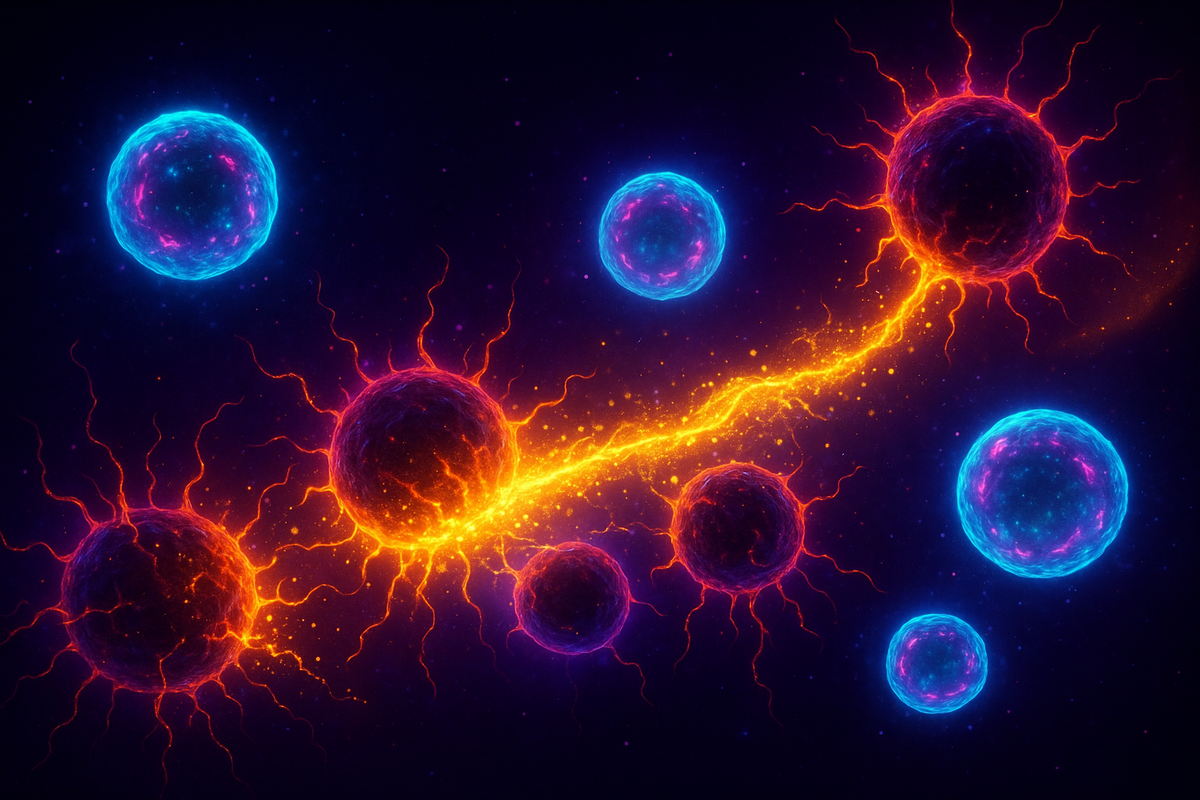
Senescent cells are biological zombies: they've stopped dividing but linger in tissues, leaking inflammatory signals that damage neighboring cells. Senolytic drugs can selectively clear them — and in mice, the results are striking.
Zombie Cells and the Drugs That Kill Them
Series: Longevity Science | Part: 3 of 7 Primary Tag: FRONTIER SCIENCE Keywords: senolytics, senescent cells, SASP, dasatinib, quercetin, aging, fisetin
What Senescent Cells Are
Senescent cells are cells that have permanently exited the cell cycle. They can't divide anymore. But they're not dead—they're metabolically active, consuming resources, taking up space, and doing something far worse: secreting a toxic cocktail of inflammatory signals. Why cells become senescent:
- Telomere shortening: After too many divisions, telomeres become critically short, triggering a DNA damage response that stops the cell cycle.
- DNA damage: Unrepairable DNA lesions—double-strand breaks, certain mutations—can push cells into senescence.
- Oncogene activation: When cancer-promoting genes turn on inappropriately, senescence acts as an emergency brake.
- Oxidative stress: High levels of reactive oxygen species can induce senescence.
- Epigenetic disruption: Loss of proper gene regulation can trigger the senescent state.
Senescence is fundamentally a tumor suppression mechanism. A cell that might become cancerous is safer if it stops dividing. Better a zombie than a cancer cell. In young organisms, this tradeoff works. Senescent cells arise occasionally, the immune system clears them efficiently, and tissue function remains intact. But with age, two things go wrong: senescent cells accumulate faster, and the immune system clears them slower. The population of zombie cells grows.
The SASP: Why Zombie Cells Are Toxic
If senescent cells just sat there quietly, they might be tolerable. They don't. Senescent cells secrete a complex mixture of inflammatory cytokines, growth factors, proteases, and other signaling molecules. This is the Senescence-Associated Secretory Phenotype (SASP)—and it's spectacularly harmful. SASP effects include:
- Chronic inflammation: The inflammatory cytokines (IL-6, IL-1β, TNF-α, and many others) create a persistent low-grade inflammatory state. This "inflammaging" is implicated in virtually every age-related disease.
- Tissue remodeling: Matrix metalloproteinases in the SASP degrade extracellular matrix, disrupting tissue structure and function.
- Bystander senescence: Some SASP factors can induce senescence in neighboring cells, creating a spreading effect. One senescent cell can poison its neighborhood into becoming senescent.
- Stem cell dysfunction: The SASP impairs stem cell function in nearby niches, reducing regenerative capacity.
- Paradoxical cancer promotion: While senescence itself prevents cancer in the affected cell, the SASP can promote cancer in surrounding cells by creating an inflammatory, growth-factor-rich environment.
The evolutionary logic is thought to be wound healing. In acute injury, senescence and the SASP help coordinate tissue repair—signaling immune cells, promoting temporary inflammation, and eventually triggering clearance of damaged tissue. But chronic senescent cell accumulation perverts this acute response into a persistent pathological state.
The Accumulation Problem
Young bodies have senescent cells. Injury, infection, and normal tissue turnover all produce them. But young immune systems are efficient senescent cell hunters. Macrophages, NK cells, and T cells recognize and eliminate senescent cells, keeping their numbers low. With age, this balance shifts: 1. More production: Accumulated damage, more telomere attrition, more oncogenic stress → more cells becoming senescent 2. Less clearance: Immunosenescence—aging of the immune system itself—reduces the capacity to eliminate senescent cells 3. SASP-induced spread: Existing senescent cells induce bystander senescence, accelerating accumulation The result: exponential accumulation. By old age, senescent cells can comprise 15-30% of cells in some tissues. That's not a minor population—it's a substantial fraction of the tissue, all secreting inflammatory signals. Map the diseases of aging onto the tissues with high senescent cell burden, and you see patterns: osteoarthritis (senescent cartilage cells), atherosclerosis (senescent vascular cells), pulmonary fibrosis (senescent lung fibroblasts), neurodegeneration (senescent glial cells). The correlation isn't proof, but it's suggestive.
The Mayo Proof-of-Concept
The 2011 Mayo experiment, led by Jan van Deursen and Darren Baker, used a clever genetic system. They engineered mice to express a "suicide gene" specifically in cells expressing p16Ink4a—a protein highly expressed in senescent cells. When given a drug that activated the suicide gene, senescent cells throughout the body died. The mice were a progeroid model—genetically engineered to age faster than normal—but the results were striking:
- Lifespan extended
- Cataracts delayed
- Muscle wasting reduced
- Fat loss (a sign of aging) prevented
- Physical function improved
A follow-up study in 2016 extended this to normal (non-progeroid) aging mice with similar results. Clearing senescent cells starting in middle age extended healthspan and modestly extended lifespan. The genetic approach was proof of concept, not therapy—you can't engineer humans with kill switches. But it established the target: senescent cells are causal contributors to aging, not just markers. Kill them, and you reduce aging. Now the race was on to find drugs that could do what the genetic system did.
Senolytics: The Hunt for Drugs
Senolytics are drugs that selectively kill senescent cells while sparing healthy cells. The selectivity is crucial—you don't want to kill all cells, just the zombie ones. The first senolytic drugs emerged from asking: what keeps senescent cells alive? They've stopped dividing and they're damaged—why don't they just die? The answer: anti-apoptotic pathways. Senescent cells upregulate survival signals that protect them from programmed cell death. They're clinging to life through specific molecular mechanisms. Block those mechanisms, and the cells lose their survival advantage. They die; healthy cells don't (because healthy cells aren't relying on those emergency survival pathways). Dasatinib + Quercetin (D+Q): The first widely studied senolytic combination. Dasatinib is a cancer drug (a tyrosine kinase inhibitor); quercetin is a plant flavonoid found in onions and apples. Together, they hit multiple anti-apoptotic pathways that senescent cells depend on. In mice, D+Q clears senescent cells, improves physical function in aged animals, extends healthspan, and modestly extends lifespan. The effect is rapid—a few doses, not chronic treatment. Fisetin: Another flavonoid, found in strawberries and apples. Even better senolytic activity than quercetin in some studies. Extends healthspan and lifespan in mice. Attractive because it's a natural compound with a good safety profile. Navitoclax (ABT-263): A BCL-2 family inhibitor originally developed for cancer. Potent senolytic activity but also kills platelets, causing bleeding issues. Being refined with more selective variants. Other candidates: UBX0101 (for osteoarthritis), various cardiac glycosides, FOXO4-DRI peptide, and more are in development.
Human Trials: Early Days
As of now, senolytic human trials are in early stages. The results are preliminary but intriguing: Idiopathic pulmonary fibrosis (IPF): A small open-label trial of D+Q in IPF patients showed improved physical function (6-minute walk distance) after treatment. IPF involves senescent cell accumulation in the lungs; clearing them seemed to help. Diabetic kidney disease: A pilot study showed D+Q reduced senescent cell markers in adipose tissue and skin of diabetic kidney disease patients. Alzheimer's disease: Trials are underway testing whether senolytics improve cognitive function by clearing senescent glial cells in the brain. Osteoarthritis: UBX0101, a senolytic targeting joints, showed promise in early trials but failed a Phase 2 trial—likely due to delivery issues rather than mechanism failure. No senolytic has been approved for any indication yet. The trials are small. The endpoints are exploratory. But the field is young, and the pipeline is active.
The Dosing Question
Here's something unusual about senolytics: they might work best given intermittently, not continuously. Most drugs require continuous dosing because they modulate ongoing processes. But senolytics kill cells—an irreversible event. Once a senescent cell is dead, it's dead. You don't need to keep killing it. The proposed regimen: hit-and-run. Take senolytics periodically (monthly? yearly?) to clear accumulated senescent cells, then stop until they accumulate again. This intermittent dosing might reduce side effects and cost while maintaining efficacy. Animal studies support this. Mice given intermittent D+Q show sustained benefits. The senescent cell population doesn't immediately rebound after clearance. This has practical implications. A yearly or monthly senolytic "treatment" rather than daily pills. A very different model from most chronic disease management.
Concerns and Unknowns
Senolytics aren't risk-free, and the unknowns are substantial: Do we need some senescent cells? Senescence plays roles in wound healing, tumor suppression, and embryonic development. Aggressively eliminating all senescent cells might have unintended consequences. The intermittent dosing approach might mitigate this—allowing beneficial acute senescence while clearing chronic accumulation. Off-target effects: Current senolytics aren't perfectly selective. Dasatinib is a cancer drug with its own side effects. Navitoclax causes thrombocytopenia. Natural compounds like quercetin and fisetin are generally safe but have their own biological activities beyond senolytic effects. Translation to humans: Mice aren't humans. Many interventions that extend mouse lifespan fail in humans. We don't know yet whether senolytic effects will translate. Long-term consequences: We don't know what happens if you take senolytics for decades. Will chronic use have cumulative harms? Will senescent cell populations adapt? Biomarker limitations: We don't have great ways to measure senescent cell burden in living humans. This makes it hard to know if treatments are working at the cellular level. The field is moving cautiously—or should be. The hype around senolytics is substantial, and some clinics are already offering off-label senolytic treatments with minimal evidence. The responsible path is rigorous clinical trials with proper endpoints.
DIY Senolytics: The Wild West
Because quercetin and fisetin are available as supplements, and dasatinib is available (with a prescription) for cancer, some people aren't waiting for clinical trials. A biohacker underground has emerged, experimenting with senolytic regimens based on preclinical data. This is understandable—if you're aging and the science looks promising, why wait for the FDA? But it's also risky. The doses used in animal studies don't translate directly to humans. The safety of long-term intermittent dosing is unknown. And individual responses vary. The pragmatic advice: if you're going to experiment, be informed. Understand what the preclinical evidence actually shows. Track biomarkers if possible. Don't combine with other drugs without considering interactions. And recognize you're an experiment of one, with all the limitations that implies. The better advice: wait for clinical trial results. They're coming. The science is moving fast.
The Bigger Picture
Senolytics represent something new in longevity science: a drug class that targets a root cause of aging rather than a specific disease. If senolytics work in humans as they work in mice, they might:
- Delay multiple age-related diseases simultaneously
- Improve healthspan even without extending lifespan
- Work synergistically with other interventions (caloric restriction mimetics, NAD+ precursors, etc.)
- Transform how we think about aging—from inevitable decline to manageable condition
The zombie cells were always there. We just didn't know they were the problem. Now we do, and we're learning to kill them. Whether that transforms human aging or turns out to be another overhyped intervention, only time and trials will tell. But the target is validated. Senescent cells drive aging. Clearing them helps. The rest is engineering.
Further Reading
- Baker, D.J. et al. (2011). "Clearance of p16Ink4a-positive senescent cells delays ageing-associated disorders." Nature.
- Baker, D.J. et al. (2016). "Naturally occurring p16Ink4a-positive cells shorten healthy lifespan." Nature.
- Kirkland, J.L. & Tchkonia, T. (2020). "Senolytic drugs: from discovery to translation." Journal of Internal Medicine.
- Xu, M. et al. (2018). "Senolytics improve physical function and increase lifespan in old age." Nature Medicine.
- Justice, J.N. et al. (2019). "Senolytics in idiopathic pulmonary fibrosis: Results from a first-in-human, open-label, pilot study." EBioMedicine.
This is Part 3 of the Longevity Science series, exploring the biology of aging and interventions to extend healthspan. Next: "Telomeres and the Hayflick Limit."


Comments ()