Skin, Mouth, and Beyond: The Other Microbiomes
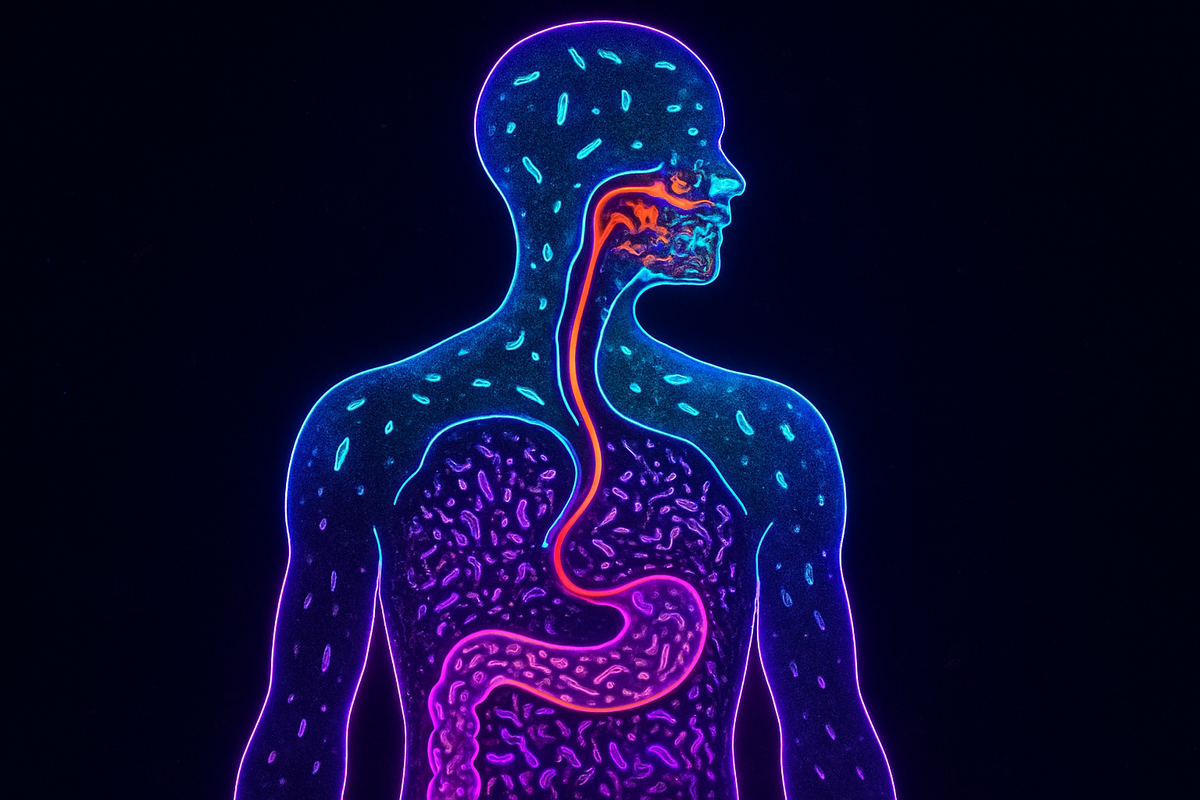
The gut microbiome is famous, but your skin hosts 1,000+ bacterial species, your mouth harbors 700, and your lungs — once thought sterile — have their own ecosystem. Each one plays a distinct role in health and disease.
Skin, Mouth, and Beyond: The Other Microbiomes
Series: Microbiome Revolution | Part: 7 of 8 Primary Tag: FRONTIER SCIENCE Keywords: skin microbiome, oral microbiome, body sites, microbial ecology, biogeography
The Skin: Your Body's Largest Organ and Oldest Interface
Skin is the organ we most take for granted. It's just... there. A wrapper. A boundary. But skin is also an ecosystem. Roughly 1 trillion bacteria live on human skin, representing around 1,000 different species. Add fungi, viruses (both phages and human viruses), and archaea, and you have a complex community shaped by the peculiar conditions of different skin regions. Oily sites (face, scalp, upper back): Dominated by Cutibacterium acnes (formerly Propionibacterium acnes), a bacterium that feeds on sebum—the oily substance your sebaceous glands produce. Cutibacterium is present on nearly everyone's skin, and it's the bacterium most associated with acne. But here's the twist: most people carry C. acnes without getting acne. The difference may lie in strain variation, skin conditions that favor pathogenic behavior, or immune responses. Moist sites (armpits, groin, between toes): Different environment, different bacteria. Corynebacterium and Staphylococcus species dominate. These bacteria metabolize sweat, producing the compounds we recognize as body odor. The reason deodorant works is that it shifts the microbial community or suppresses bacterial activity. Dry sites (forearms, legs, hands): The harshest environment for microbes—low moisture, fluctuating temperature, frequent mechanical disturbance. These sites have the most diverse communities but lower total bacterial density. They're ecological generalists, not specialists. The skin microbiome is incredibly personalized. Your bacterial fingerprint is distinctive enough to identify you from a surface you've touched. Identical twins raised together have more similar skin microbiomes than unrelated people, but still not identical. Diet, hygiene practices, cosmetic products, medications, and environment all shape your skin's bacterial residents.
What Skin Bacteria Actually Do
For decades, dermatology mostly treated skin bacteria as either pathogens to eliminate or irrelevant bystanders. Neither is quite right. Colonization resistance: Like gut bacteria, skin bacteria compete with pathogens for nutrients and space. A healthy, diverse skin microbiome makes it harder for invaders like Staphylococcus aureus (including MRSA) to establish infection. When the skin microbiome is disrupted—by antibiotics, harsh antiseptics, or immune dysfunction—opportunistic pathogens find purchase. Immune training: Skin bacteria interact with the immune system continuously. They help calibrate immune responses, distinguishing harmful invasion from harmless colonization. Germ-free mice have abnormal skin immune development. The immune system learns its environment partly through microbial signals. Barrier function: Some skin bacteria produce antimicrobial peptides that directly kill pathogenic bacteria. Others produce metabolites that support skin barrier integrity. The microbiome isn't just sitting on the skin; it's participating in skin function. Odor production: Let's not pretend this doesn't matter. Body odor is almost entirely produced by bacterial metabolism of sweat. The bacteria that dominate your armpits determine how you smell. This has evolutionary implications—body odor is part of mate selection in mammals—and practical implications for anyone who's ever wondered why some people smell worse than others.
Skin Diseases: Microbiome Perspective
Multiple skin conditions now have documented microbiome connections: Eczema (atopic dermatitis): Eczema patients consistently show altered skin microbiome composition, with reduced diversity and overgrowth of Staphylococcus aureus. During eczema flares, S. aureus abundance spikes. Whether this is cause or consequence is debated, but colonization with S. aureus early in life predicts eczema development. Clinical trials of microbiome-targeted therapies (applying beneficial bacteria to skin) have shown promising early results. Acne: C. acnes is necessary but not sufficient for acne. What seems to matter is which strains of C. acnes dominate, how the skin's immune system responds, and the overall bacterial community context. Antibiotic treatment for acne kills C. acnes but also disrupts the broader skin ecosystem, potentially explaining why acne often recurs after antibiotic courses end. Psoriasis: Another condition with microbiome alterations. Psoriatic skin has different bacterial, fungal, and viral communities than healthy skin. Some researchers propose that microbial dysbiosis contributes to the chronic inflammation that characterizes psoriasis. Wound healing: The microbiome of chronic wounds differs from healing wounds. Biofilms—communities of bacteria encased in protective matrix—form on chronic wounds and resist treatment. Managing the wound microbiome is increasingly recognized as part of wound care. The pattern across these conditions: disrupted skin microbiome, reduced diversity, overgrowth of potentially harmful species, impaired barrier and immune function. Sound familiar? It's the same pattern we see in gut disorders.
The Oral Microbiome: Second Most Studied, Second Most Complex
Your mouth hosts the second-largest and second-most-studied microbial community in your body. Roughly 700 bacterial species have been identified in the human oral cavity, though any individual carries perhaps 200-300 at a time. The mouth is an ecological patchwork. Different surfaces have different communities: Teeth: Hard, non-shedding surfaces that accumulate biofilms—what we call dental plaque. Dominated by Streptococcus species initially, with increasing complexity as plaque ages. The composition of mature dental plaque is remarkably stable across individuals, despite huge variation in diet and hygiene. Tongue: The rough surface of the tongue dorsum harbors bacteria that differ from tooth plaque. Tongue bacteria include species that reduce nitrate from diet to nitrite, which is converted to nitric oxide in the stomach. This pathway may have cardiovascular benefits—athletes who use mouthwash (killing oral bacteria) show reduced exercise performance because they lose nitrate-nitric oxide conversion. Gingiva (gums): The gum line is where things get dangerous. The pocket between gum and tooth is an oxygen-poor environment that can harbor anaerobic bacteria. When these bacteria overgrow and cause inflammation, you get periodontal disease—which isn't just a mouth problem. Saliva: A constantly flowing ecosystem containing bacteria washed from all oral surfaces. Saliva microbiome is the easiest to sample (spit in a tube) and provides a rough overview of oral microbial composition.
Periodontal Disease and Systemic Health
Gum disease sounds trivial. It's not. Periodontal disease is the most common chronic inflammatory condition in humans. It ranges from gingivitis (reversible gum inflammation) to periodontitis (destruction of the bone and tissue supporting teeth). Severe periodontitis affects about 10% of the global population. But here's what makes it systemically important: periodontal disease associates with cardiovascular disease, diabetes, adverse pregnancy outcomes, rheumatoid arthritis, and Alzheimer's disease. These associations are robust and reproducible across studies. People with periodontitis have higher rates of heart attack and stroke. Treating periodontal disease improves glycemic control in diabetics. Pregnant women with periodontitis have higher rates of preterm birth. How could mouth bacteria affect your heart or your brain? Several mechanisms: Bacteremia: Every time you chew, brush your teeth, or get dental work, oral bacteria enter your bloodstream. In healthy mouths, this is transient and harmless. In periodontitis, chronic bacterial entry occurs, and inflammatory bacteria like Porphyromonas gingivalis can be detected in atherosclerotic plaques. Systemic inflammation: Chronic periodontal infection elevates inflammatory markers throughout the body. C-reactive protein, IL-6, and other inflammatory molecules are higher in people with periodontitis. This chronic inflammation may contribute to cardiovascular disease, insulin resistance, and other conditions. Specific bacterial effects: P. gingivalis has been found in Alzheimer's disease brains. It produces enzymes called gingipains that can damage brain tissue. Whether this is causal or correlational is actively debated, but the observation that a mouth bacterium can reach the brain and potentially cause damage is startling. The practical implication: oral hygiene isn't just about preventing cavities. It's potentially about systemic health maintenance. Flossing might actually be cardiovascular exercise.
The Respiratory Microbiome
Your lungs were long thought to be sterile. They're not. The lower respiratory tract has a sparse but real microbial community, populated partly by microaspiration from the oral cavity (we all breathe in small amounts of saliva and oral bacteria), partly by direct inhalation of airborne microbes. The healthy lung microbiome is low-diversity, dominated by bacteria similar to oral species. Respiratory diseases associate with altered lung microbiome: Asthma: Asthmatic airways have different bacterial communities than healthy airways. Certain bacteria may promote or suppress airway inflammation. COPD: Chronic obstructive pulmonary disease shows lung microbiome changes, with increased Haemophilus, Pseudomonas, and Streptococcus species. Cystic fibrosis: CF lungs develop dramatically altered microbiomes dominated by pathogenic bacteria like Pseudomonas aeruginosa, which causes chronic infection and progressive lung damage. COVID-19: Studies during the pandemic showed that COVID severity associated with lung microbiome composition. Whether microbiome differences predisposed to severe disease or resulted from it remains unclear. The lung microbiome is harder to study than gut or skin—you can't just swab it without invasive procedures. But the field is advancing, and the principle holds: respiratory surfaces host microbial communities that influence local and systemic health.
The Urogenital Microbiomes
Vaginal microbiome: One of the least diverse human microbiomes. In most healthy women of reproductive age, the vaginal microbiome is dominated by Lactobacillus species—sometimes a single species comprises >90% of the community. Lactobacilli produce lactic acid, keeping vaginal pH low (around 3.5-4.5) and inhibiting pathogenic bacteria and yeast. Reduced Lactobacillus dominance—a condition called bacterial vaginosis (BV)—affects roughly 30% of women at any given time. BV involves overgrowth of diverse anaerobic bacteria, with symptoms ranging from none to discharge and odor. BV increases risk of sexually transmitted infections, preterm birth, and pelvic inflammatory disease. The vaginal microbiome also plays a crucial role in newborn colonization. Babies born vaginally are exposed to maternal vaginal bacteria, which seed the infant gut. This is why birth mode affects infant microbiome development and subsequent health. Urinary microbiome: For a long time, urine was considered sterile. Standard culture techniques couldn't grow anything. But enhanced culture methods and DNA sequencing revealed that urine contains bacteria—a urinary microbiome. Its role in health and disease is still being characterized, but urinary tract conditions from UTIs to overactive bladder show microbiome associations. Male genital microbiome: Less studied, but real. The penile skin microbiome differs from other body sites and changes with circumcision status. Whether it influences STI transmission or other health outcomes is under investigation.
How the Sites Connect
These aren't isolated ecosystems. They're connected. Gut-oral axis: Oral bacteria are constantly swallowed. Most don't survive stomach acid, but some colonize the gut. People with periodontal disease have oral bacteria detectable in their gut. The mouth and gut microbiomes are in constant communication via swallowing. Skin-gut axis: Skin bacteria can influence systemic immune responses that affect gut inflammation. The reverse is also true—gut inflammation can manifest in skin conditions. Eczema and gut dysbiosis commonly co-occur. Oral-lung axis: The lung microbiome is largely seeded by oral microaspiration. Oral health influences respiratory health through this route. Maternal-infant transmission: The mother's vaginal, skin, and gut microbiomes colonize the infant at birth and during breastfeeding. The newborn microbiome is the sum of maternal microbial gifts. The body is an interconnected microbial network. What happens at one site can influence others. This has implications for treatment—addressing a skin condition might require addressing gut health, or vice versa.
The Personalized Landscape
One of the most striking findings across body-site microbiome research is personalization. Your microbiome fingerprint is uniquely yours. The Human Microbiome Project sampled 242 healthy adults at 18 body sites over time. They found:
- Body sites are more different from each other than the same site is between people (your gut is more different from your skin than your gut is from my gut)
- But within sites, individual variation is substantial
- Individual microbiomes are relatively stable over time—your microbiome at 18 months is recognizably similar to your microbiome today
- Life events (antibiotics, diet changes, illness) can shift composition, but there's often a return toward baseline
This stability and personalization suggests the microbiome isn't random. It's configured to each individual—by genetics, early life exposure, diet, environment, and history. Your microbiome is yours.
What This Means Practically
The body-site perspective suggests several practical principles: Skin: Don't sterilize unnecessarily. Harsh antiseptics and antibiotic soaps disrupt skin microbiome without clear benefit for healthy skin. Mild cleansing preserves the ecosystem. Moisturizing supports barrier function. Mouth: Oral hygiene matters more than we thought—not just for teeth, but potentially for systemic health. But mouthwash that kills "99.9% of bacteria" also kills beneficial bacteria, including those producing nitric oxide precursors. Targeted oral care might beat scorched-earth approaches. Respiratory: Don't smoke. Beyond all the other reasons, smoking devastates the respiratory microbiome. Nasal rinsing (saline irrigation) for chronic sinus conditions may help restore microbial balance. Vaginal: Douching disrupts the vaginal microbiome and increases BV risk. The vagina generally doesn't need "cleaning"—it maintains itself when left alone. General: The microbiomes at different body sites are part of one interconnected system. Gut health may influence skin, oral health may influence lungs, and addressing one site in isolation may miss the bigger picture.
The Coherence View
The body-site microbiome perspective reinforces the coherence frame. The human body isn't one ecosystem—it's a nested hierarchy of ecosystems, each with its own dynamics, all coupled to each other and to the host. Health, in this view, isn't the absence of microbes. It's the presence of coherent microbial communities at each site—communities that maintain themselves, resist invasion, support local tissue function, and communicate appropriately with host systems. Disease often involves disruption of this coherence—overgrowth of single species, loss of diversity, breakdown of community structure. Whether the site is gut, skin, mouth, or lung, the pattern recurs. Understanding the body as a multi-site microbial ecosystem suggests that interventions, too, might need to be multi-site. A skin condition might benefit from gut intervention. A respiratory issue might improve with oral care. The systems are coupled. Treating them as isolated may miss the point.
Further Reading
- Grice, E.A. & Segre, J.A. (2011). "The skin microbiome." Nature Reviews Microbiology.
- Wade, W.G. (2013). "The oral microbiome in health and disease." Pharmacological Research.
- Human Microbiome Project Consortium. (2012). "Structure, function and diversity of the healthy human microbiome." Nature.
- Ravel, J. et al. (2011). "Vaginal microbiome of reproductive-age women." PNAS.
- Hajishengallis, G. & Chavakis, T. (2021). "Local and systemic mechanisms linking periodontal disease and inflammatory comorbidities." Nature Reviews Immunology.
This is Part 7 of the Microbiome Revolution series, exploring how trillions of bacteria shape your body and mind. Next: "Living With Your Multitudes: A Coherence Synthesis."



Comments ()