Synchronicity: Meaningful Coincidence or Apophenia?
Your brain is a prediction machine that hates loose ends. When two unrelated events coincide dramatically, it reaches for meaning. Jung built a theory around this feeling. Modern neuroscience explains it as a feature — and a bug — of how the brain constructs reality.
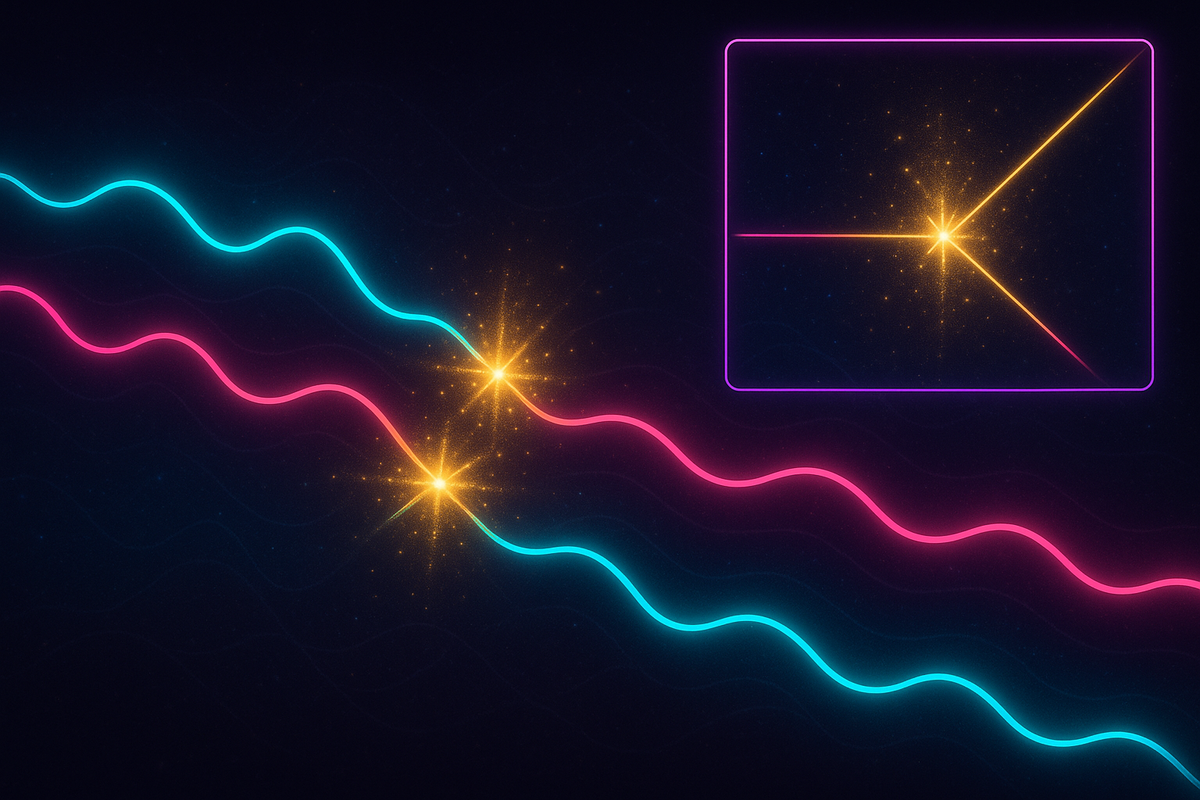
Synchronicity: Meaningful Coincidence or Apophenia?
Series: Anomalous Cognition | Part: 7 of 9 Primary Tag: FRONTIER SCIENCE Keywords: synchronicity, Jung, meaningful coincidence, apophenia, probability, cognitive bias
You're thinking about someone you haven't talked to in years. The phone rings. It's them.
You dream about an old friend. The next day, you learn they died that night.
You're struggling with a decision. You open a random book to a passage that speaks directly to your dilemma.
These experiences feel meaningful—too perfect to be chance. Carl Jung called them synchronicities: "meaningful coincidences" that defy causal explanation but carry psychological significance.
Are synchronicities evidence of something beyond ordinary reality? Or are they what happens when pattern-seeking brains encounter coincidences?
Jung's Concept
Carl Jung developed the concept of synchronicity in collaboration with physicist Wolfgang Pauli. Jung was convinced that some coincidences were too meaningful to dismiss as chance.
His definition: synchronicity is "the simultaneous occurrence of a certain psychic state with one or more external events which appear as meaningful parallels to the momentary subjective state."
Key elements:
Acausality: The events aren't connected by cause and effect. The phone doesn't ring BECAUSE you were thinking about the person. There's no mechanism linking inner state to outer event.
Meaning: The coincidence feels personally significant. It's not just that two events happened together; they fit together in a way that speaks to your life.
Parallelism: The inner (psychic) and outer (physical) events mirror each other. Your thought and the phone call aren't causally related but are thematically related.
Jung saw synchronicity as evidence for an underlying order beyond ordinary causation—what he called the "unus mundus" (one world) where psyche and matter are unified at a deep level.
The Statistical Reality
From a statistical perspective, coincidences are inevitable.
The law of large numbers: With enough events, any outcome will eventually occur. You interact with thousands of people, have thousands of thoughts, experience thousands of days. Some thought-event pairs will match by pure chance.
The birthday paradox: In a group of just 23 people, there's a 50% chance two share a birthday. Our intuitions about probability are often wrong. "Unlikely" events are more likely than they feel.
Selection bias: We remember the hits (thinking of someone and they call) and forget the misses (thinking of someone and nothing happens). This dramatically inflates our sense of how often coincidences occur.
The Littlewood's Law: Statistician John Littlewood estimated that with reasonable assumptions, a person should expect a one-in-a-million event to happen about once a month. "Miracles" are statistically ordinary.
The math says: given the number of events in your life, striking coincidences will happen. No special explanation required.
Apophenia
Apophenia is the tendency to perceive meaningful connections between unrelated things. It's what makes us see faces in clouds, messages in random noise, and patterns in stock charts.
Synchronicity experiences may be apophenia applied to personal experience:
1. You have a thought or experience 2. An unrelated event occurs 3. Your brain, pattern-seeking by nature, finds a connection 4. The connection feels meaningful because your brain constructed it as meaningful 5. You experience synchronicity
The meaning isn't in the world; it's generated by your mind. The coincidence is real; the significance is constructed.
This doesn't mean the experience is worthless. The meaning your brain finds might reveal something about your unconscious concerns, your preoccupations, your psychological state. Jung himself might agree with this—he saw synchronicity as psychologically informative even if its metaphysics were uncertain.
Why Coincidences Feel Special
Several psychological factors make coincidences feel more meaningful than they should:
The uniqueness fallacy: We experience our own lives from inside, with full access to every thought and feeling. We don't experience others' lives this way. So coincidences in our own life feel specially selected for us, even though everyone experiences similar coincidences.
Emotional intensity: Coincidences involving important topics (love, death, career) feel more significant. This is because WE care about these topics, not because the universe is targeting them.
Narrative construction: Our minds naturally weave events into stories. Stories have foreshadowing, themes, meaning. We impose story structure on random events.
Availability bias: Recent and vivid events are easier to recall. A striking coincidence is memorable; thousands of non-coincidences are not.
Confirmation of worldview: If you believe in synchronicity, meaningful coincidences confirm your belief. You notice them more, interpret ambiguous cases as synchronicities, and share them with others who reinforce your interpretation.
The Parapsychological Question
Could synchronicity involve something genuinely paranormal?
Some proposals:
Psi-mediated synchronicity: Maybe telepathy or precognition subtly influences events, creating meaningful coincidences. Your thought about the person and their call are connected by psi, not physical causation.
Quantum entanglement: Maybe consciousness is connected through quantum processes, creating correlations without signals. (This is scientifically dubious—quantum entanglement doesn't work this way—but it's a popular speculation.)
Collective unconscious: Jung proposed that individual psyches are connected through a collective unconscious. Maybe synchronicities emerge from this deeper unity.
These proposals share a problem: they lack evidence beyond the coincidences themselves. If we already have a statistical explanation (coincidences happen), adding a paranormal mechanism is unnecessary. Occam's razor favors the simpler explanation.
The Psychological Value
Even if synchronicity is "just" coincidence plus apophenia, it might have value.
Attention direction: When you experience a synchronicity, you notice something. The noticed thing might be genuinely important—not because the universe is sending a message, but because your unconscious highlighted something your conscious mind was neglecting.
Decision support: Synchronicities can help break decision paralysis. The "sign" you receive isn't causally related to your decision, but it might give you permission to act on what you already know you want.
Meaning-making: Finding meaning is psychologically important. If synchronicities help you construct a meaningful life narrative, that has value—independent of whether the synchronicity is metaphysically real.
Self-exploration: Asking "why did I notice this particular coincidence?" can reveal hidden concerns and preoccupations. The synchronicity becomes a prompt for reflection.
This is the pragmatic approach: synchronicity's subjective significance might matter more than its objective reality.
The Honest Position
I don't believe synchronicities are caused by anything paranormal.
The statistical explanation is sufficient: with enough events, coincidences happen. Apophenia makes them feel meaningful. Selection bias makes them memorable. The experience is real; the causal connection is illusory.
But I don't dismiss the experiences as worthless. They can: - Reveal what your unconscious is processing - Provide psychological momentum for decisions - Prompt valuable reflection - Contribute to life narrative and meaning
The meaning you find in a coincidence is genuine meaning—it just comes from you, not from the universe. That's still meaningful.
Jung himself might have been content with this. He was primarily interested in psychological significance, not metaphysical proof. The question "is synchronicity real?" might be less important than "what does this synchronicity mean to you?"
Cultivating Useful Coincidence
If coincidences are inevitable, you can position yourself to notice useful ones:
Increase exposure: More experiences mean more coincidence opportunities. Travel, meet people, read widely, try new things.
Stay open: Rigid expectations narrow attention. Openness allows you to notice unexpected connections.
Reflect on what you notice: When something strikes you as synchronous, ask why. What does it reveal about your current concerns?
Don't over-interpret: Coincidence plus apophenia doesn't equal cosmic message. Use synchronicities as prompts, not commands.
Remember the misses: Keep perspective by noting how often meaningful connections don't happen. This calibrates your sense of probability.
The universe isn't sending you messages. But your mind is always finding patterns. You might as well put those patterns to good use.
Further Reading
- Jung, C.G. (1952). Synchronicity: An Acausal Connecting Principle. Bollingen Series. - Falk, R. (1989). "Judgment of coincidences: Mine versus yours." American Journal of Psychology. - Griffiths, T.L. & Tenenbaum, J.B. (2006). "Optimal predictions in everyday cognition." Psychological Science. - Shermer, M. (2008). "Patternicity: Finding Meaningful Patterns in Meaningless Noise." Scientific American.
This is Part 7 of the Anomalous Cognition series. Next: "Consciousness and the Paranormal: The Hard Problem Connection."
Comments ()