Test-Time Compute Scaling
It turns out you don't always need a bigger model—just one that's allowed to think longer. Test-time compute scaling lets smaller networks outperform larger ones by trading training cost for inference depth. The economics are strange and the implications are significant.
Test-Time Compute Scaling
For years, AI progress followed a simple law: train bigger models, get better performance. Pour more compute into pretraining, and capabilities scaled predictably. Then OpenAI discovered something that changes everything: you can also scale by thinking harder at inference time.
This is test-time compute scaling—the realization that extending the reasoning process when the model is actually being used can produce dramatic improvements in capability, sometimes rivaling what would have required orders of magnitude more pretraining compute.
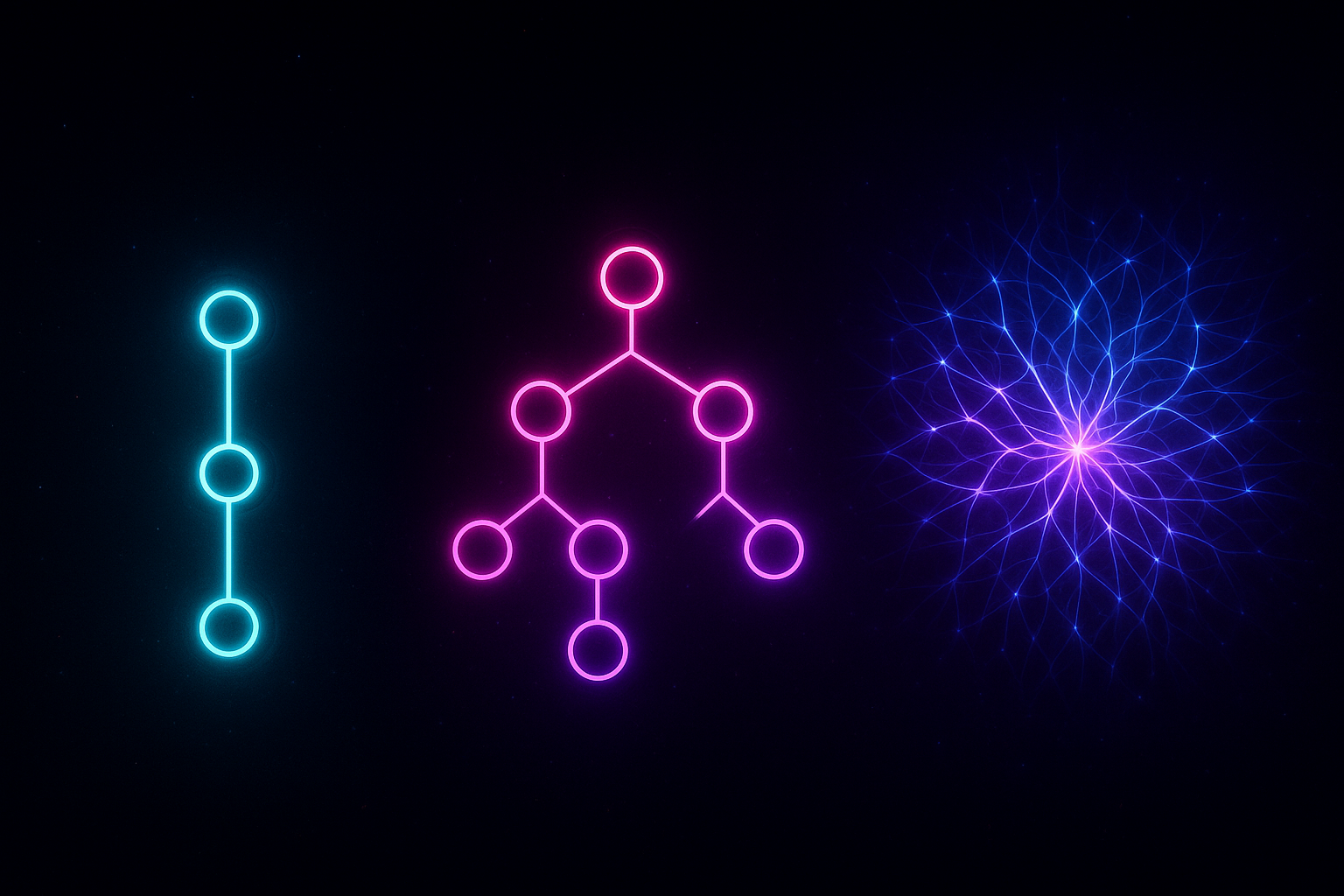
The o1 model that shocked researchers in 2024 didn't just answer questions. It thought about them—spending computational resources on chain-of-thought reasoning, self-correction, and tree search before settling on answers. And the results were extraordinary.
Why This Matters for Coherence
Coherence isn't instantaneous. It emerges through process: exploring possibilities, checking consistency, refining understanding, and integrating evidence. Test-time compute scaling formalizes this intuition: intelligence isn't just about what you know, but about how thoroughly you think through what you're trying to figure out.
Understanding inference-time scaling helps us understand what thinking looks like when formalized as computational process—and what it means for systems to maintain coherence through extended reasoning.
Articles in This Series







Comments ()